A logistical tour de force that is revitalising the station district
Texte Philippe Selke
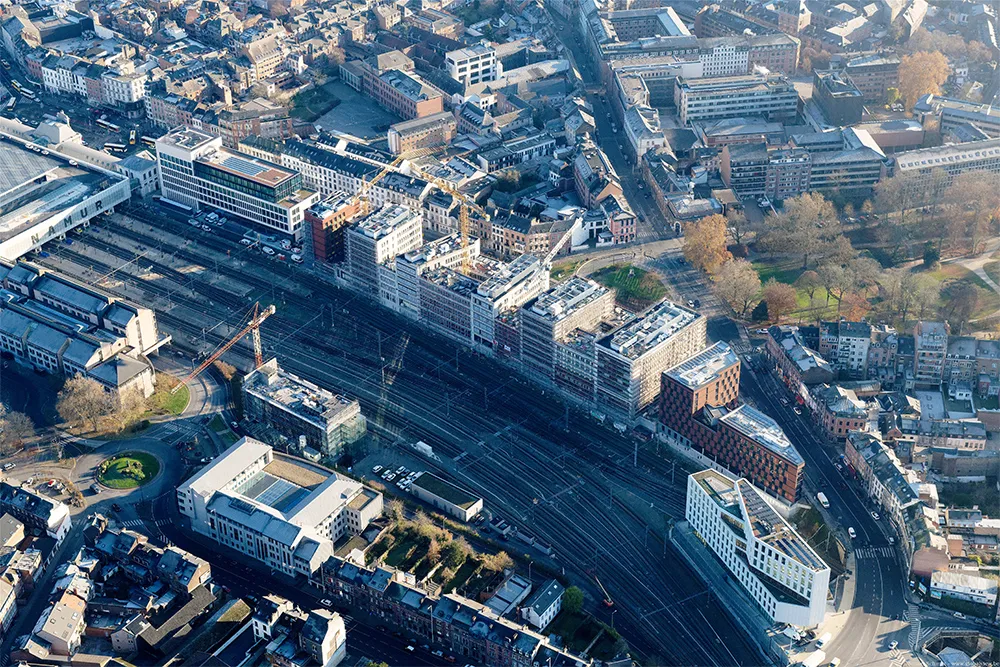
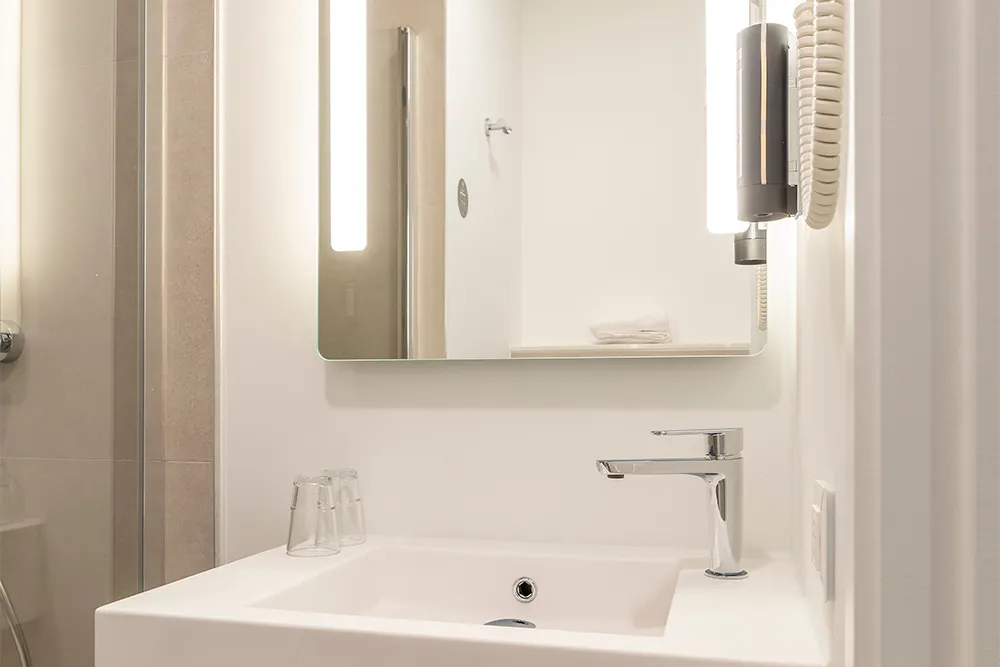
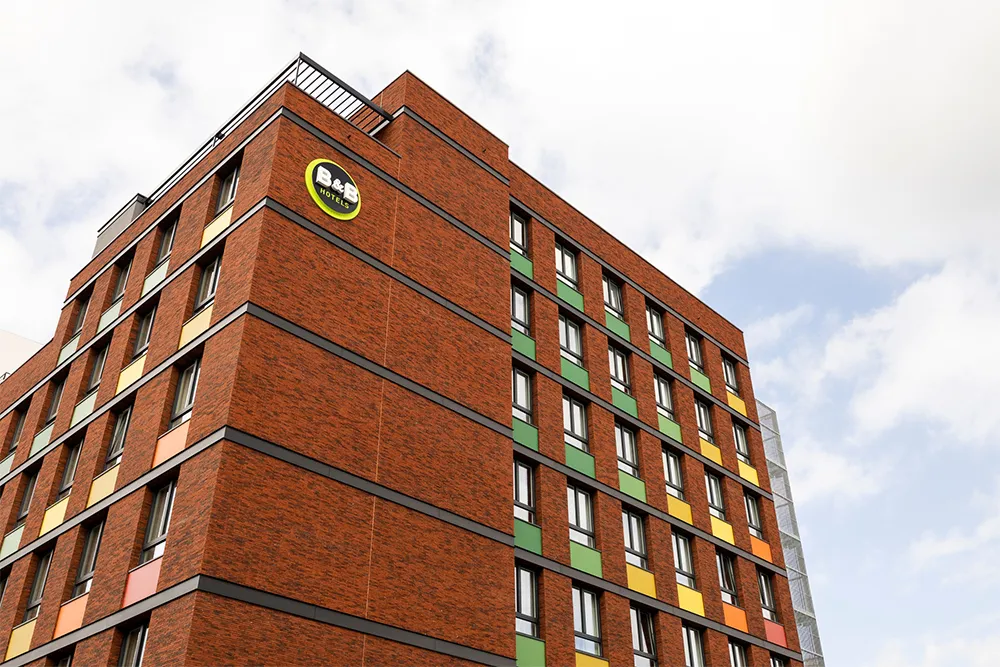
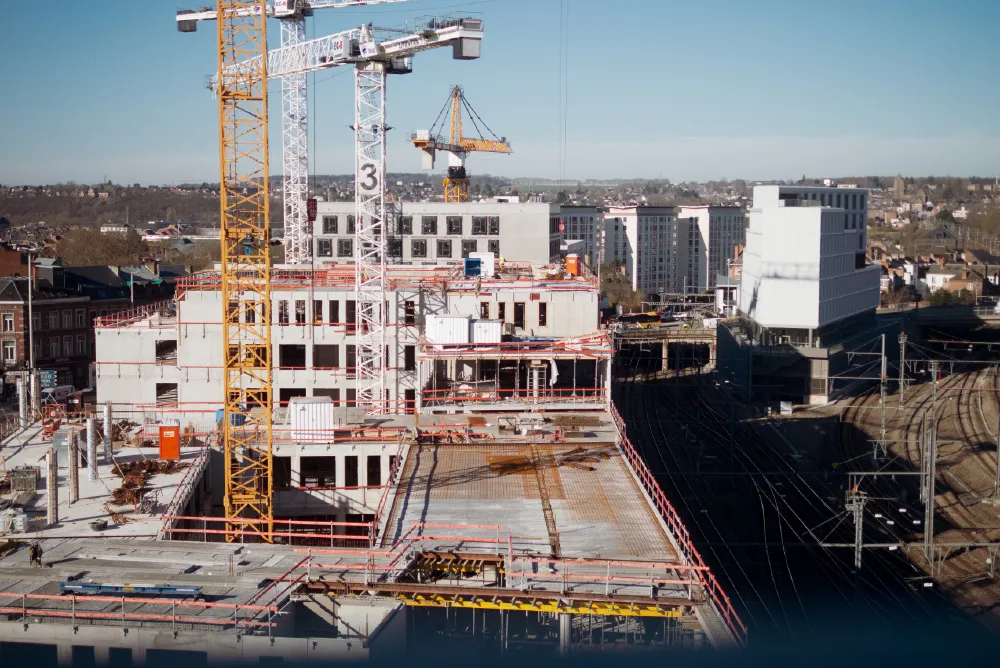
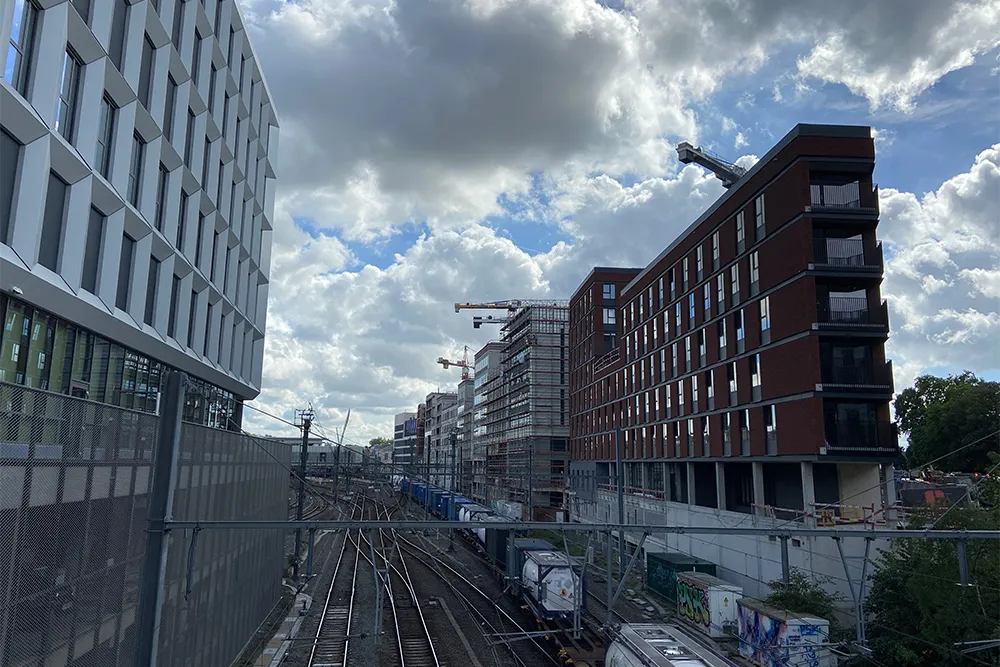
In the Walloon capital, the AXS project by Ghent-based developer Baltisse, sometimes informally dubbed “La Courgette” because of the shape of the site wedged between railway tracks and the boulevard, comprises a 105-room hotel (B&B Hotels), student accommodation (Xior), five office buildings and an underground car park with 388 spaces. Construction of this BREEAM Very Good-certified development was completed in three years by a consortium of contractors BPC, Wust and Thomas & Piron Bâtiment, a feat matched to the scale of the challenges involved.
In just a few years, the north side of Boulevard Mélot in Namur has emerged from its slumber and taken on a modern look, from the station to the Walloon headquarters of Belfius (built by Thomas & Piron Bâtiment). Work on the AXS project began on 16 November 2020, and it is now nearing completion with the handover of the last office buildings. The two buildings with the most pressing deadlines were the student residence (block G), where the slab over basement level -1 had to be completed by August 2021, with another company responsible for constructing the building itself using prefabricated elements, and the hotel (block A) at the other end of the site, beside the station, which was handed over in February 2023. The office buildings followed, with volumes F and E handed over at the end of August. The handover of volumes D to B took place very recently, in October.
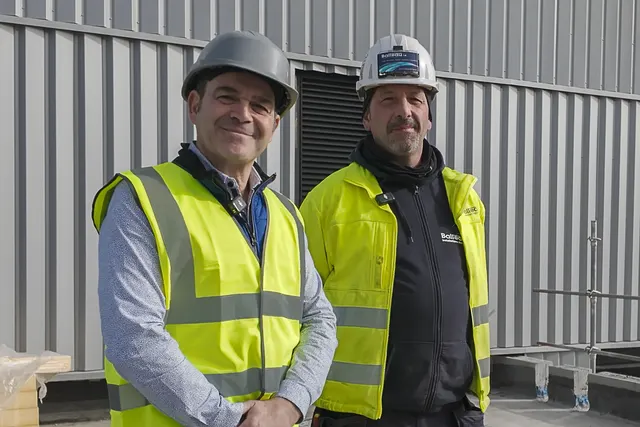
On a site remediated by the client, the project was built under the direction of Xavier Mottart, Construction Director at BPC. The various responsibilities and site management roles were shared between the three partners, with Pol Bartholomé, Project Manager at Wust, in charge of the structural works, while Julien Pertoldi, Site Manager at Thomas & Piron Bâtiment, was responsible for the fit-out.
Logistical constraints by the truckload
Pol Bartholomé: “Right at the start of the project, we realised that the catenary foundations encroached on our client’s site and therefore on our worksite, in the area of the hotel. SNCB dismantled and moved what needed to be moved in a single weekend.”
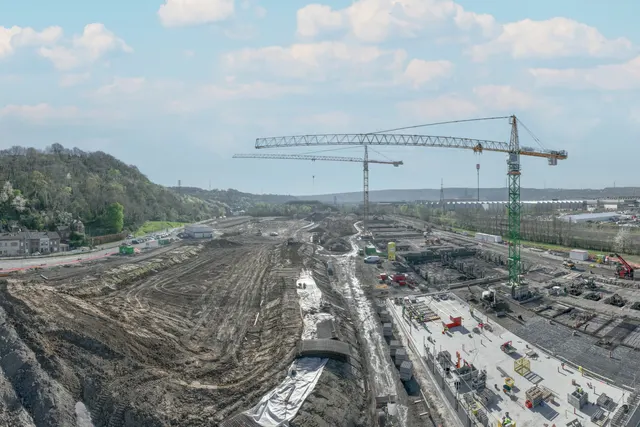
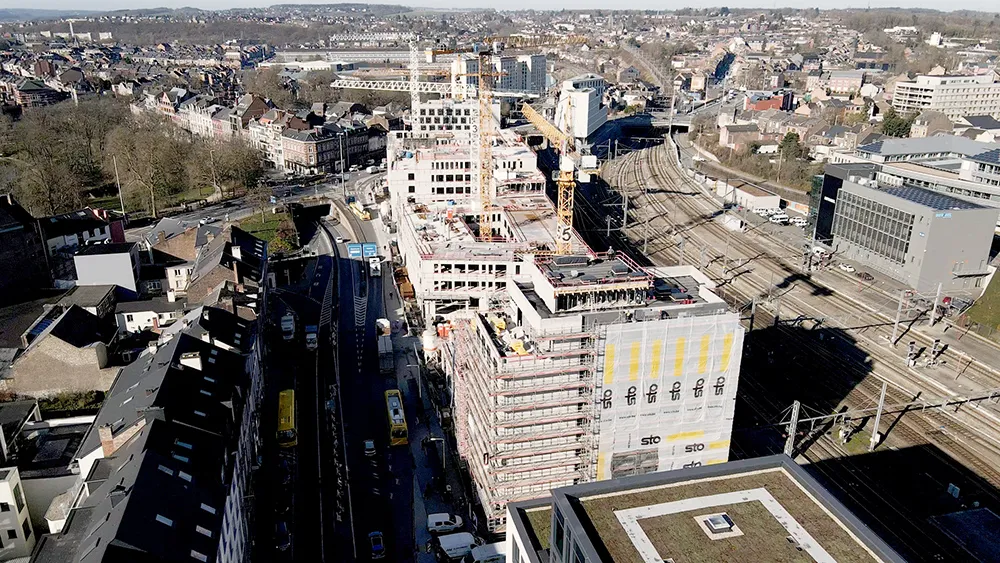
Xavier Mottart: “During the structural works, we had to keep adapting to make the site accessible, moving a ramp several times. The elongated shape of the site, wedged between the railway and a very busy boulevard, did not help. We could not park on the boulevard under any circumstances, particularly as temporary bus stops had been set up there following work to move the bus station onto the roof of the train station… We had 5 tower cranes and 4 unloading areas. We therefore had to draw up precise unloading schedules using online applications, which our subcontractors and suppliers had to follow to the letter. We also had to ensure that the slab we were building could support not only our materials, but the delivery trucks themselves! Fortunately, we were able to count on the cooperation of Namur police and TEC, both of whom were well aware of the situation and pragmatic.”
The site also had to adapt to unforeseen issues with the utility works for the project, which had themselves been affected by other works on the boulevard.
Proven construction methods and tried-and-tested techniques
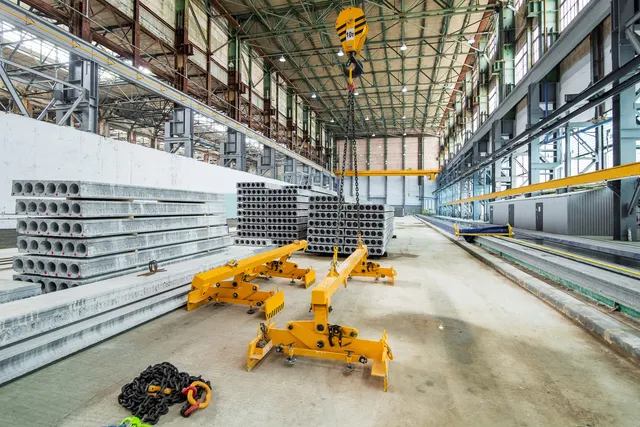
The 5 office buildings combine a range of construction techniques: precast twin walls in the basements and for the stair cores, columns originally planned as prefabricated elements but ultimately cast in situ to free up the cranes, precast reinforced concrete beams, hollow-core slabs, filigree slabs and cast-in-situ concrete. The façades were made from precast concrete panels, insulated using the StoTherm Vario system and clad in a range of materials: brick slips, light-coloured ventilated ceramic cladding or lacquered aluminium sheet cladding. Julien Pertoldi: “The ceramic cladding required a great deal of study and liaison with the manufacturers and installers to ensure the system was fit for purpose and could be approved by the inspection bodies. This type of cladding is not very common, and it was a first for all three of us.”
Apart from this aspect, the challenge was purely logistical. Xavier Mottart: “Companies like ours are used to large-scale projects, so completing a project of this size in 3 years is nothing exceptional. On a site accessible from all sides, it could have gone faster. You simply put more people on the job. Here, it was impossible to increase the pace, which was limited by access to the unloading areas.” “
During the structural works, between 70 and 90 workers were on site.
During the fit-out phase, the peak workforce reached 250.
Thomas & Piron Bâtiment also handled the sanitary installations as part of the building services. Julien Pertoldi: “Even though we have the qualified staff in sufficient numbers to take on all the building services for this project, we considered it more sensible to focus on the sanitary installations.”
Limiting risks
The project was affected by COVID during the structural works, then the war in Ukraine had a major impact on the fit-out, with price increases of up to 30% for some products. Several of the many subcontractors faced shortages. Julien Pertoldi: “For almost two years, we had to factor these circumstances into our thinking and our operations, while still meeting the requirements of the design team. For the joinery, for example, we worked with 3 subcontractors who sourced their products from different suppliers.”
The three construction partners, speaking as one: “Whenever we ran into problems, we had the same view on how to solve them. Our partnership worked well from the outset, both between us and between our management teams. We were all pulling in the same direction!”
Project details
Client
Baltisse
Architect
Montois Partners Architects
Consulting engineers
Setesco (structural engineering) and Matriciel (building services, energy performance and BREEAM)
Main contractor
SM BPC Namur, Wust, Thomas & Piron Bâtiment
Question about this story? Ask your question
Keep following this
Get an email when a new story is published. No account needed.
- ThemeLow-carbon transport and mobility
- SubjectConstruction