Grants are still available in Wallonia

On 1 October, a new renovation support scheme comes into force. Promoting a public scheme is not our job: that is not the role of a trade federation. Correcting a misconception that is costing our businesses dearly, however, very much is. And the misconception is persistent: “Anyway, grants are a thing of the past.” No. Support for renovation has not disappeared. It is changing shape.
Words & photos: Embuild Wallonie
A few figures sum up what the period we have just been through has taught us. 72% of our businesses have seen demand fall, with a significant decline for 66%; one client in four cancelled their project, while 37% scaled it back. Energy auditors report the same trend: 87% of them have seen a fall in demand for housing audits, even though more than eight in ten can visit a client within fifteen days. The capacity is there, it is available, and it is sitting idle. So it is not the level of support that caused this downturn, but uncertainty. Let us learn from this, because the lesson applies to all public policies that affect us: instability costs more than the support itself.
In principle, the reform is moving in the direction we called for: an overall project rather than a patchwork of 120 grants, a single application, and, above all, an end to households having to pay upfront. That deserves recognition. But a reform is only as good as its implementation, and three conditions remain outstanding. First, a budget that does not run out partway through the year: our businesses cannot hire and invest to the rhythm of a meter that is switched off. Second, practical support available from day one: the pathway announced to guide households is what will turn a scheme into renovation projects, and our businesses are its first points of contact. Finally, a clear and gradual renovation timetable, our most consistent demand. Households do not invest against an unclear deadline, and businesses do not train for a market that no one dares to put a date on.
Because there is no debate about what matters most: we cannot skimp on the transition of our homes. The summer of 2026 was the hottest ever recorded in Belgium, with an average temperature of 20.3 °C, 2.1 °C above the norm, and three heatwaves. A poorly insulated home is no longer just cold in winter: it has become unliveable in summer. Add to that what international news reminds us every week about the price and security of energy, when more than four in ten Walloon homes are still heated with oil and half of the housing stock predates the war. Renovation is no longer just energy policy: it is a matter of resilience, in terms of health, society and geopolitics.
It is also, let us be frank, our workload. Meeting the 2050 targets means renovating twenty homes an hour for twenty-five years. And despite two difficult years, the survey on workforce needs that we are conducting with Forem, IFAPME and Constructiv forecasts more than 10 600 recruitments this year in the Walloon construction sector. Renovation is not an expense to be weighed against other priorities: it is the most sustainable order the Region can place with its economy.
Finally, a simple message for our businesses: do not wait for information to trickle down. Reach out to your clients, train in how to support them, and offer a package of works rather than a one-off measure. And tell every client: yes, grants are still available in Wallonia. Our job will be to ensure that remains true.
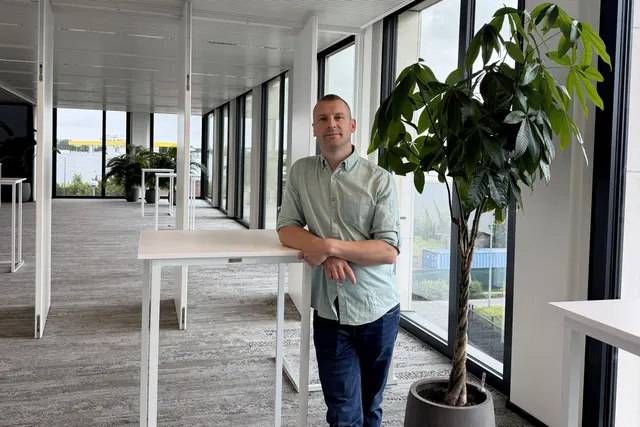
Hugues Kempeneers, Managing Director, Embuild Wallonie
Question about this story? Ask your question
Keep following this
Get an email when a new story is published. No account needed.
- ThemeRenovating existing buildings
- SubjectOpinion