The zero-emission truck of the future must also be circular
Texte Piet Andries Photos Renault Trucks
Shifting up a gear in sustainable mobility
Renault Trucks wants to reinvent transport, and is therefore rolling out a series of ambitious plans for decarbonisation and the circular economy. The French brand is building on the strategy it introduced ten years ago. Its aim is not only to significantly reduce CO2 emissions and improve quality of life in urban areas, but also to use raw materials wisely. This even translates into lower costs for the end customer.
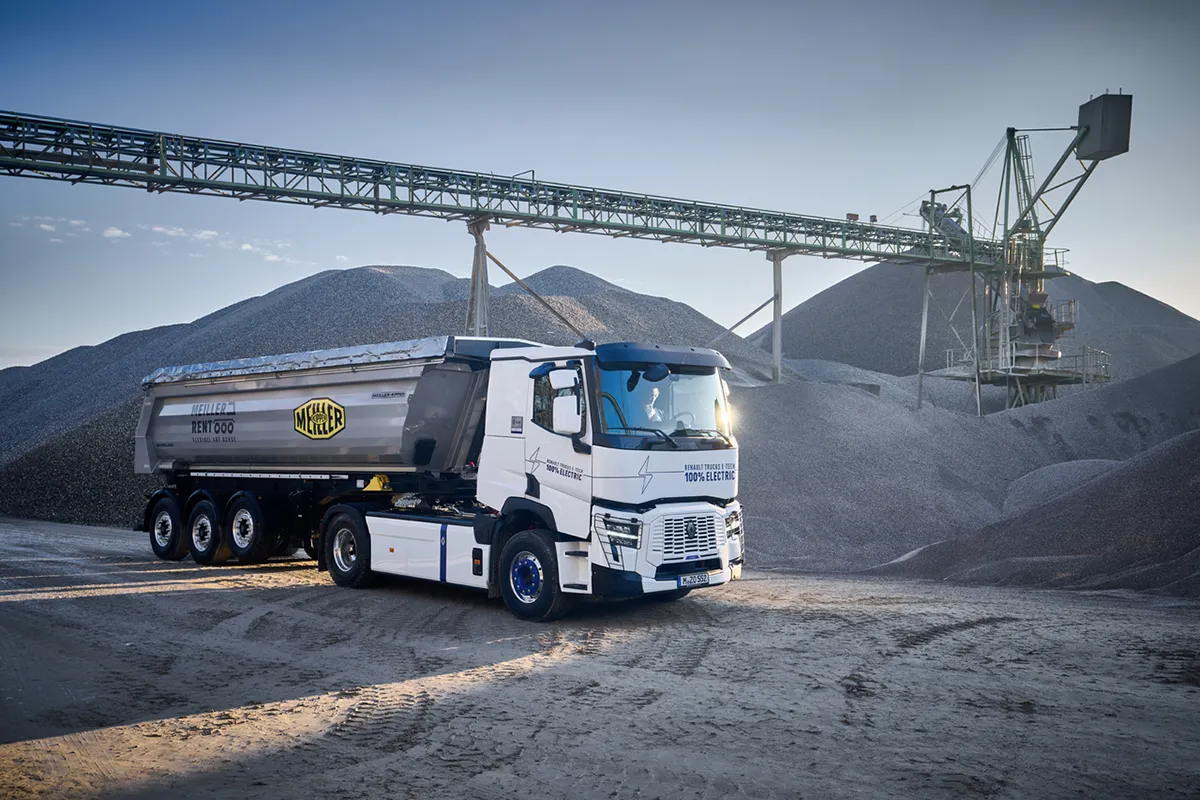
More than three-quarters of freight in Europe is still transported by road, and 97% of trucks run on diesel. This accounts for around 6% of Europe’s total carbon footprint. Renault Trucks believes, therefore, that the truck of the future must no longer run exclusively on diesel, nor must it be brand new at all costs. The brand is actively developing alternatives that support low-carbon logistics, drawing on trucks that are already available today and offer impressive range.
Renault Trucks takes a holistic approach. Working with logistics partners, the company aims to optimise transport flows, consolidate routes and develop multimodal solutions. All this is guided by a strict but clear timeline: by 2030, half of all trucks sold must be electric. Then, by 2040, the French truck manufacturer intends to move completely away from fossil fuels.
Without compromising quality
Less well known, but no less significant, is Renault Trucks’ strong commitment to circular management. The manufacturer aims to provide a meaningful response to the triple challenge of climate neutrality, dwindling raw materials and component shortages. The goal is to remanufacture, reuse and reintegrate parts into the production chain. This extends trucks’ service life and preserves their value without compromising quality. And because these components cost less, they will make the total cost of ownership more attractive.
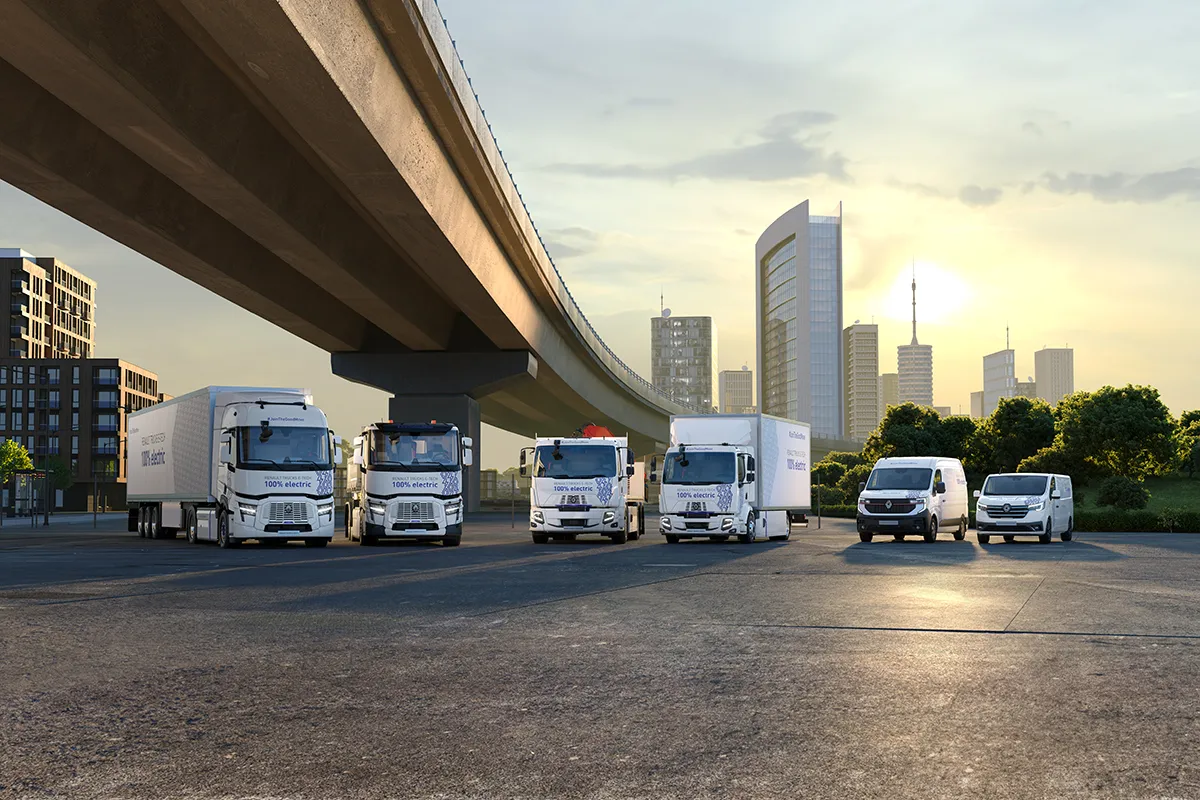
The starting point, however, is its range of electric trucks, which, at 16 to 44 tonnes (excluding light commercial vehicles), is currently one of the broadest in the sector. Designed and built at sites in France, these vehicles can be supplied with tailored configurations, battery and charging infrastructure, maintenance and financing, as required. This gives hauliers a complete solution.

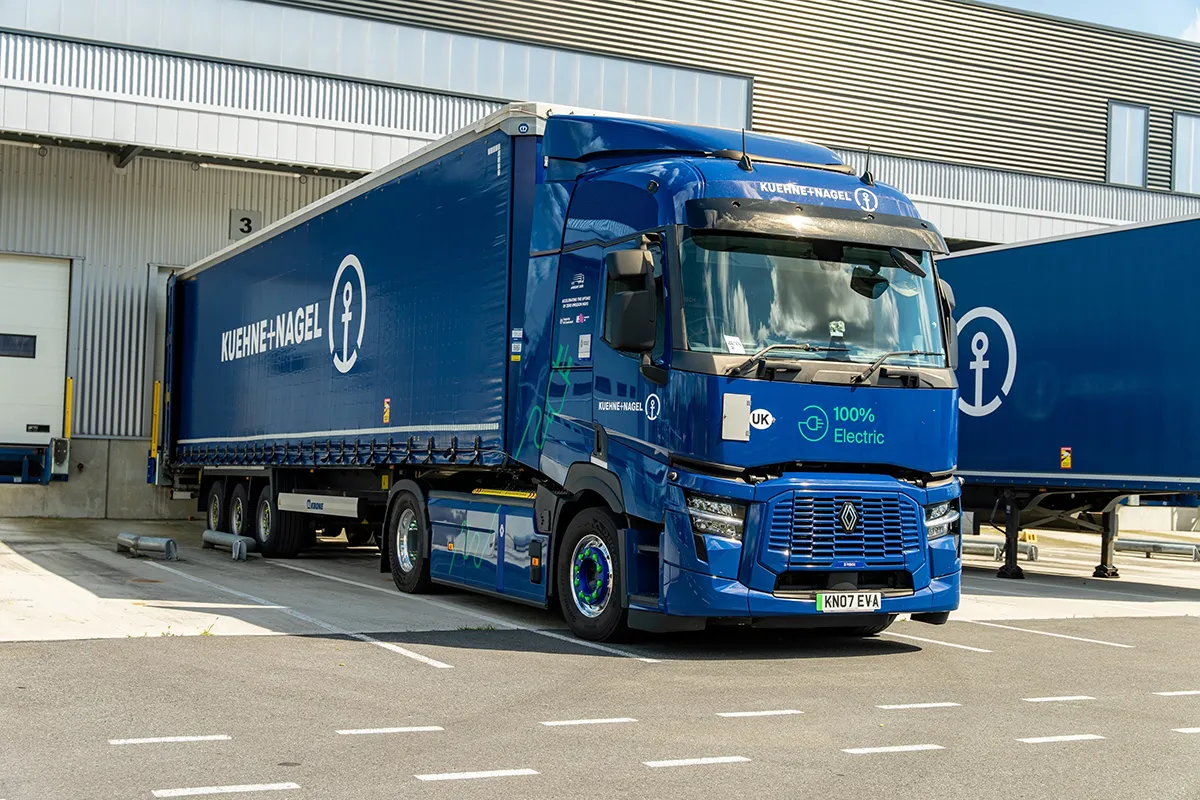
With a range of 600 kilometres
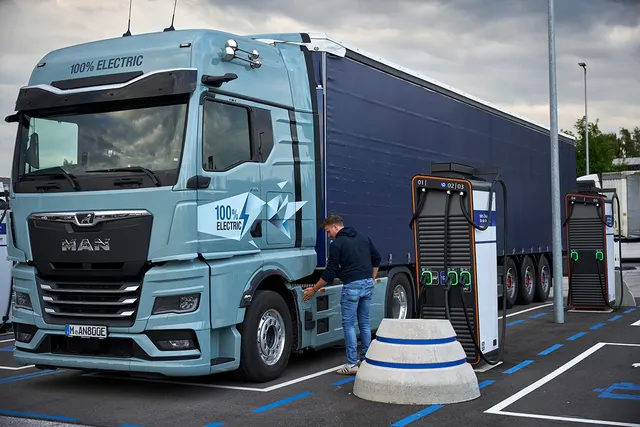
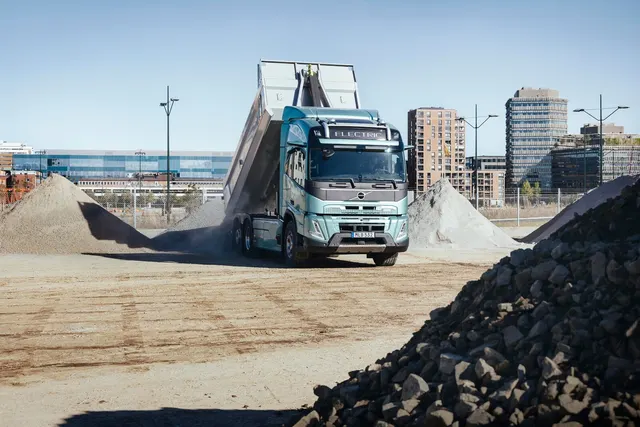
The range includes the E-Tech D and D Wide models for distribution and waste collection, and the E-Tech C and T models for construction and regional transport. These vehicles are already proving their worth in a wide range of sectors. They share quiet, zero-emission operation, which opens up new opportunities for night deliveries, access to low-emission zones and compliance with tenders requiring carbon-free transport.
The centrepiece of the showroom is the new E-Tech T. Thanks to the integration of an innovative electric axle (e-axle), which combines the motors and transmission, the truck can carry more batteries without sacrificing payload. The impressive result is that the E-Tech T can travel 600 kilometres on a single charge.
Tailored to real-world use
According to Emmanuel Duperray, senior vice-president of electromobility at Renault Trucks, this is a crucial step towards further progress in long-haul electric transport. “Combined with the rollout of a European network of high-power chargers, notably through the Milence joint venture, it should bring operational parity with diesel,” explains Emmanuel Duperray.
At the same time, the executive stresses that this is not a race to build bigger batteries. Oversized batteries increase costs and environmental impact. That is why the manufacturer helps customers match battery capacity to real-world use through simulations and advice.
Question about this story? Ask your question
Keep following this
Get an email when a new story is published. No account needed.
- ThemeLow-carbon transport and mobility
- SubjectZero emissions