Hybrid machines: a catalyst for more sustainable construction sites
Texte Niels Rouvrois Photos Van den Heuvel et Cordeel Nederland B.V.
“Choosing hybrid will considerably lower the barrier to entry”
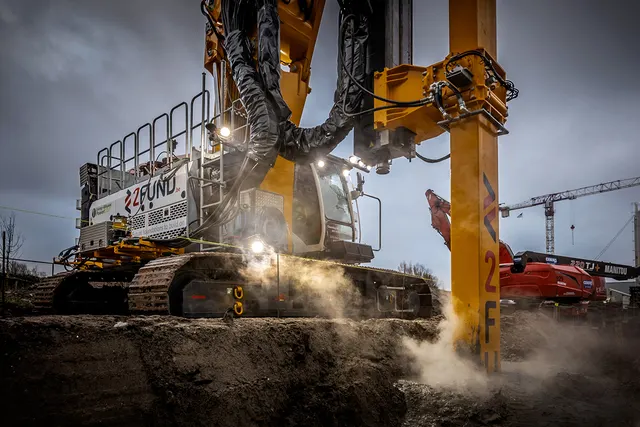
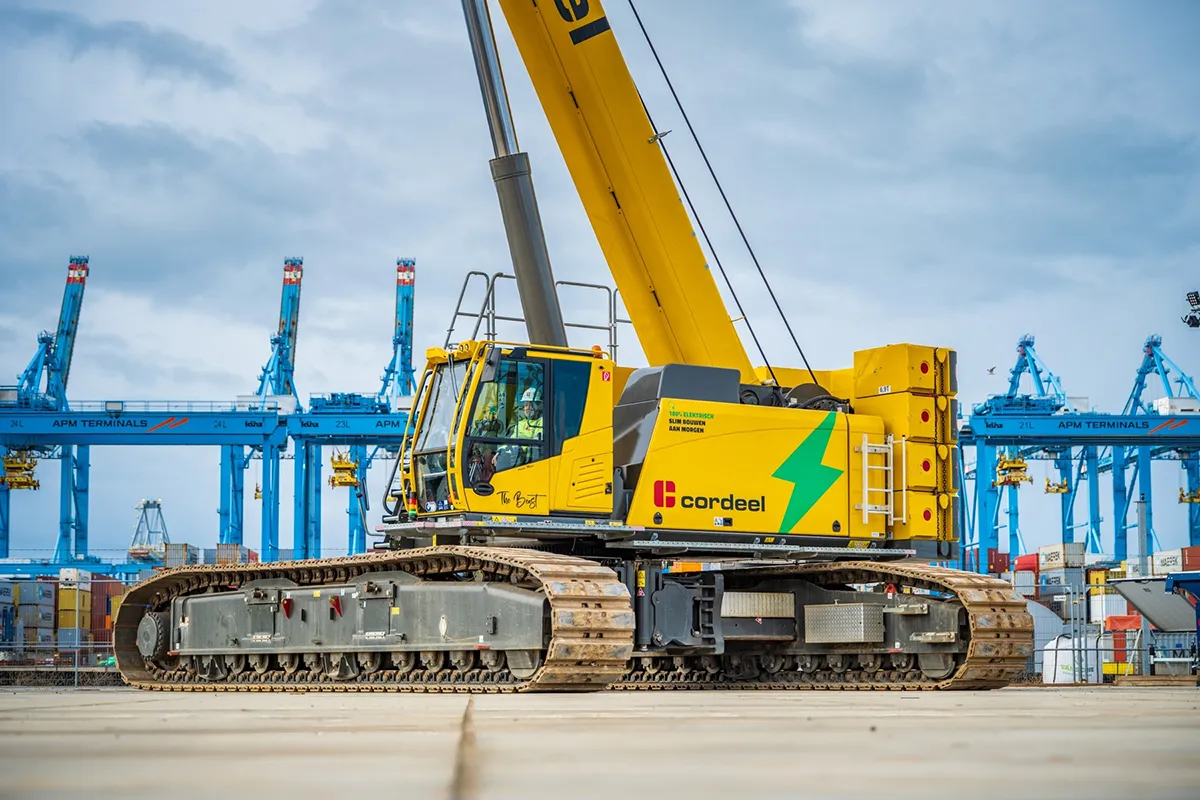
Electrifying construction equipment remains a hot topic in the construction sector, even in 2025. Yet one development has received very little attention to date: hybrid technology. That is no longer the case, as Dutch company Van den Heuvel has just converted a Sennebogen 6113 crane with a Stage V diesel engine into a fully electric machine with a range extender, on behalf of Cordeel. It is a first for the Benelux and a remarkable innovation, also recognised by Van Haut, a distributor of Sennebogen and other brands in Belgium. “A hybrid machine offers exactly the same electric capability as a fully electric version, while retaining a diesel engine as a back-up,” Van den Heuvel and Van Haut explain enthusiastically.
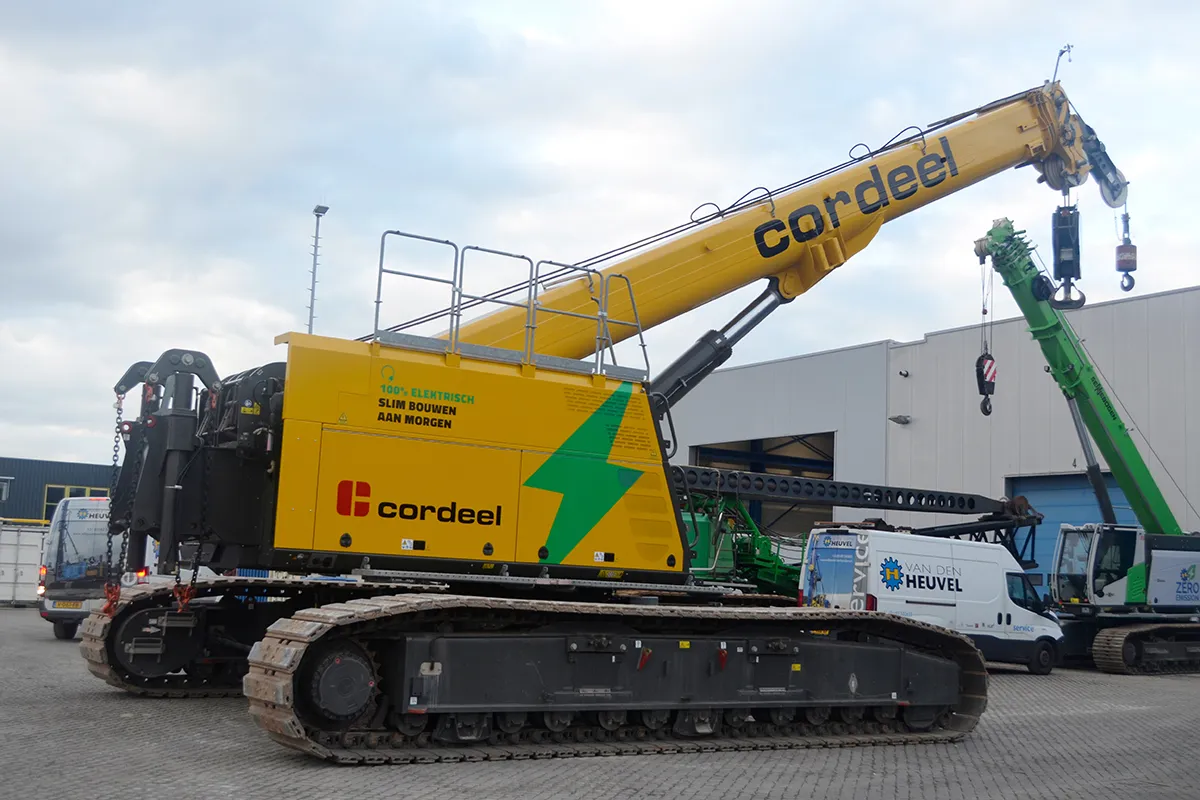
Efforts to electrify construction plant are under way in both the Netherlands and Belgium, although the pace of implementation and support mechanisms differ from one country to the other. It is no secret that the Netherlands is ahead in this field, particularly thanks to a subsidy scheme and greater pressure from public authorities to electrify construction sites. Marc Timmerman, director at Van den Heuvel: “We are currently seeing a slowdown due to the electricity grid being overloaded. But I expect the Dutch market to continue to develop, particularly with additional incentives from the authorities.” Belgium is also making progress, but at a more measured pace. “Belgium is several years behind, but the trajectory is similar. I expect the government to introduce incentives this year that could accelerate electrification,” says Dries Van Haut, managing director of Van Haut and president of SIGMA, the trade association for construction equipment importers.
The big advantage of hybrid
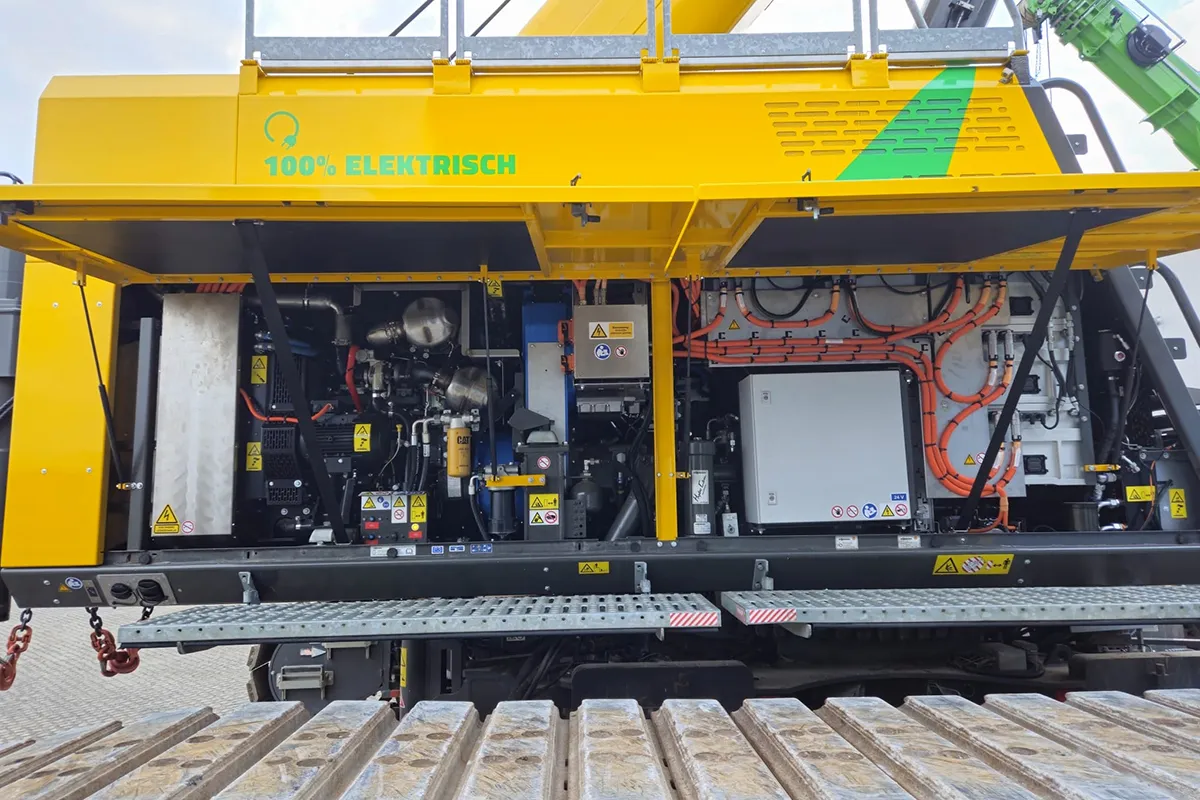
Fully electric machines are gaining ground, but they still often face practical obstacles, such as dependence on charging infrastructure. “On many construction sites, access to electricity is limited or non-existent,” explains Marc Timmerman. “A fully electric machine cannot operate on these sites, resulting in downtime and lost productivity. That is why I am convinced that hybrid technology is a particularly attractive alternative. Hybrid machines are essentially fully electric, but have a Stage V diesel engine as a back-up. This engine is only used in an emergency, for example in the event of a power cut or when work has to continue through the night. That is a fundamental difference compared with hybrid cars, where the diesel engine ‘has to’ take over after just 50 to 60 kilometres.”
Dries Van Haut stresses that hybrid technology is not a transitional step, but a fully fledged addition to the existing range. “For contractors, it considerably lowers the barrier to investing in a more sustainable fleet. Choosing a hybrid machine means that, on the one hand, you can meet the requirements of sustainable tenders and, on the other, ensure that the machine remains operational on sites without the facilities needed to run on electricity. In other words, it can also be used on sites without an electricity supply. That is when the diesel engine comes into play, delivering fuel savings of nearly 30% compared with a fully diesel machine. The result is a considerable increase in flexibility. At Van Haut, we are following Van den Heuvel’s efforts very closely. It is then our responsibility to adapt this approach for Belgium, in line with customers’ specific needs and the current market situation. This opens up new market prospects for manufacturers.”
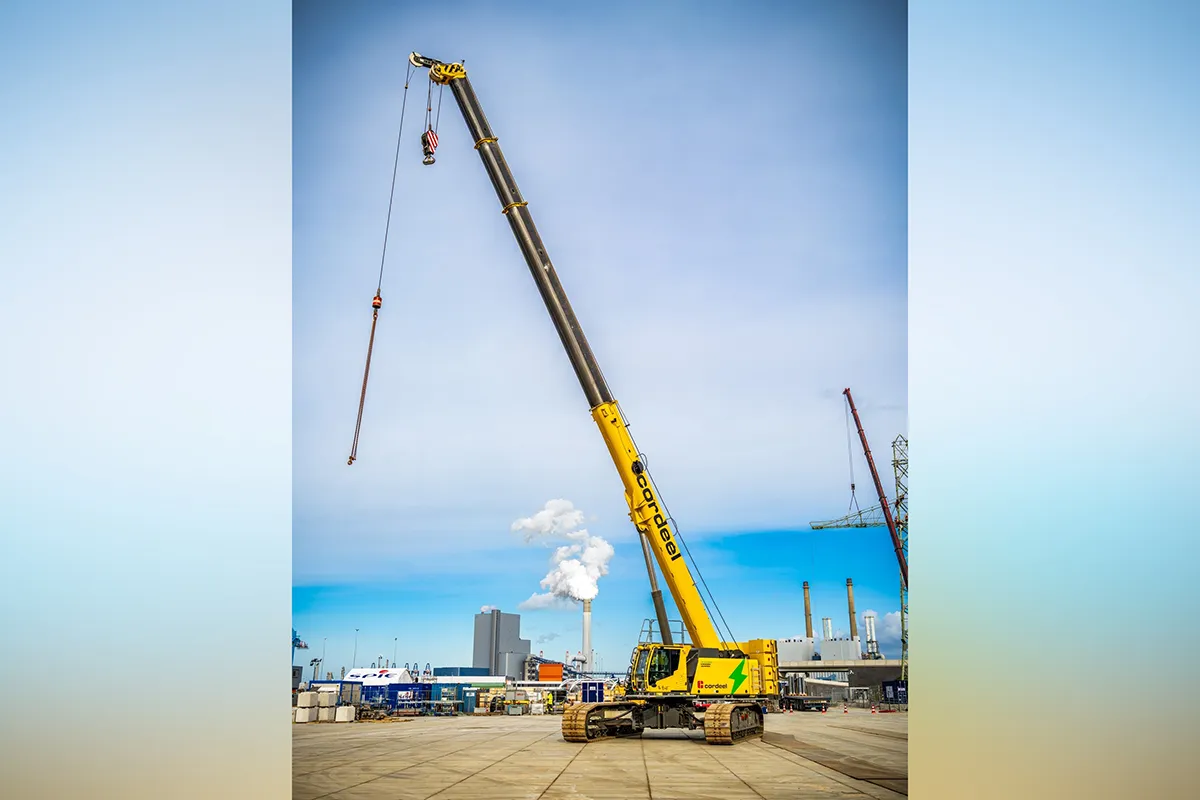
One of the first hybrid cranes to come onto the market was recently commissioned by construction company Cordeel for a project in the Netherlands. “The initial feedback has been extremely positive,” reports Marc Timmerman. “The machine can operate electrically for 10 to 12 hours without recharging, which even exceeds our expectations.”
Knowledge-sharing and training are essential
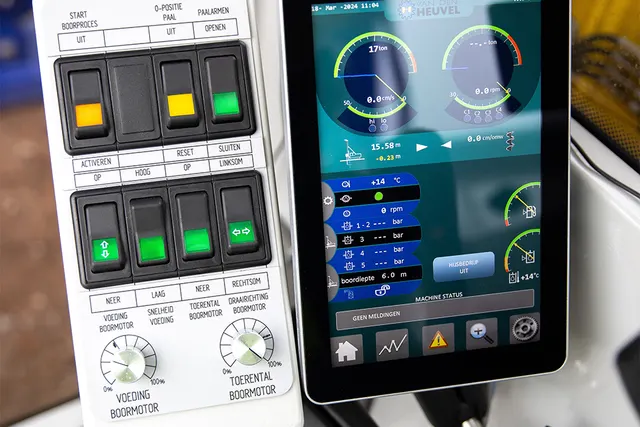
Alongside technological development, operator training is also crucial. “We do more than just deliver the machines, we also provide training,” explains Marc Timmerman. “Operators need to learn how to work in electric mode, manage the batteries and master the specific features of these machines.” Dries Van Haut adds: “Vibration and noise are kept to a minimum, which improves operator comfort. The machine also responds even faster than a diesel model. Like Van den Heuvel, Van Haut attaches great importance to after-sales and after-rental service. Training is an integral part of that. It also involves fostering the right mindset. For example, a crane uses the most electricity when it is moving. It is therefore essential to organise work so that movement is kept to an absolute minimum.”
Van den Heuvel and Van Haut are clear: investing in hybrid construction equipment gives contractors and clients the opportunity to work more sustainably without compromising flexibility or efficiency. With the right incentives and further development, this technology can play a crucial role in the continued electrification of construction equipment. “And anyone who wants to get a first-hand impression before making a significant investment can hire an electric crane from Van Haut or Van den Heuvel and experience its comfort and ease of use for themselves,” concludes Dries Van Haut.
Question about this story? Ask your question
Keep following this
Get an email when a new story is published. No account needed.
- SubjectFoundations