Underground infrastructure and sewerage
An innovative technique pushes the boundaries of underground construction
Texte Joris Hendrickx Photos Denys
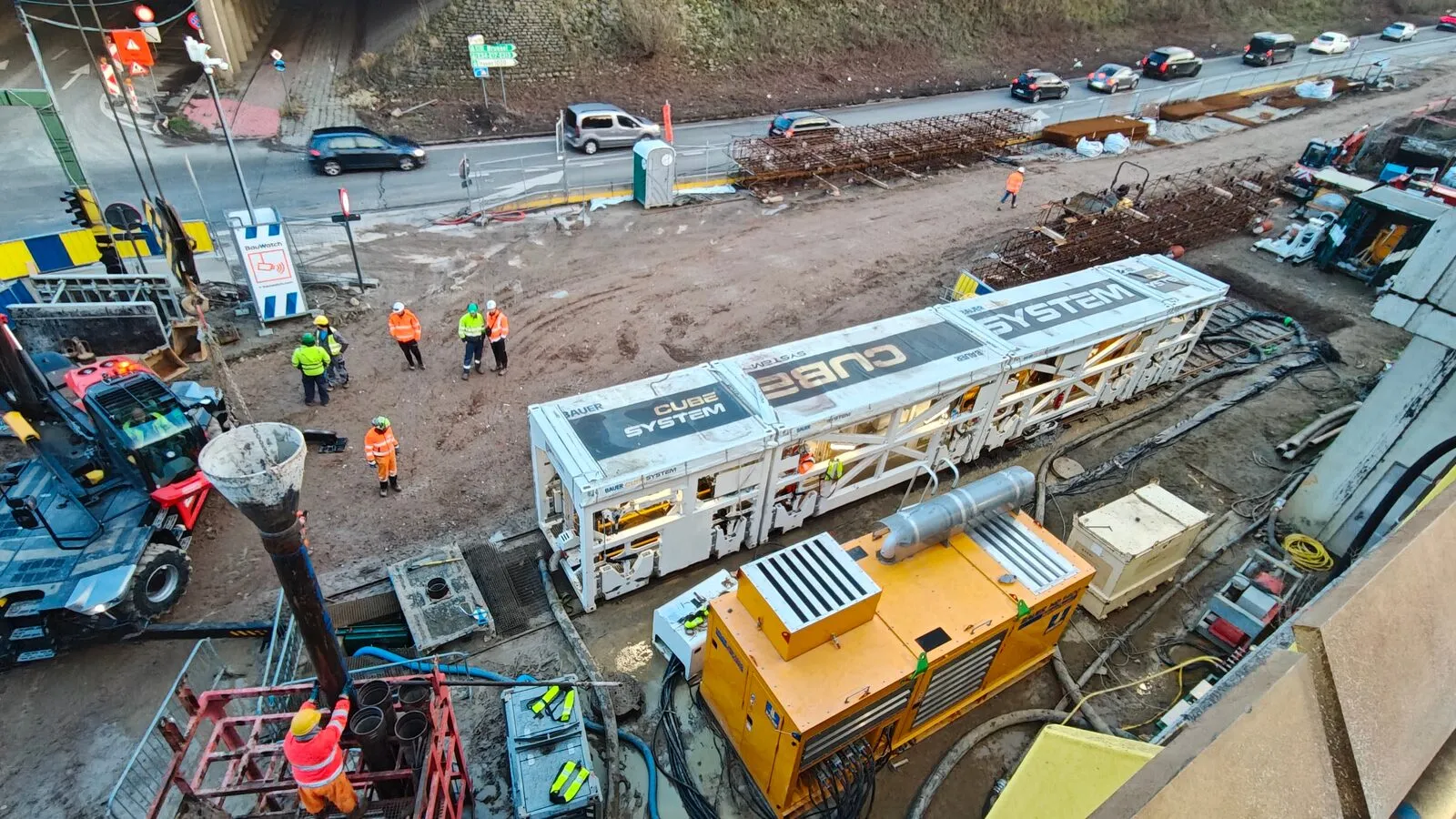
After five years of research and development, Denys’s Cube System was deployed for the first time on the major Oosterweel Link infrastructure project. This innovative new technique proved its added value beneath an existing railway bridge, where the available working height was limited. The system adapts the proven diaphragm wall technique for sites inaccessible to conventional machinery. According to Maarten Vanneste (Denys) and Christian Riedl (BAUER), the technique opens up new possibilities for underground construction.
A system born of practical experience
The Cube System originated in a Denys project carried out in Brussels between 2008 and 2012. “At the time, working from a single access point, we built an underground link between an existing premetro line and a new line, passing beneath several streets and buildings. For part of the work, we still used the conventional mined excavation technique, which is labour-intensive and ergonomically demanding. We therefore looked for a safer alternative,” explains Maarten Vanneste. In collaboration with BAUER Maschinen, Denys developed the Cube System to construct diaphragm walls from an underground tunnel.
According to Christian Riedl, the partnership also came about in response to a practical problem encountered on site. Denys contributed its experience in complex inner-city projects, while BAUER brought more than forty years of expertise in diaphragm wall cutters. The company has already built more than five hundred of them. “Denys defined the challenge based on the realities of the site. BAUER then translated it into a robust machine concept,” says Christian Riedl. “This was not a conventional customer-supplier relationship, but a joint development process involving testing, adaptations and continuous optimisation.” Future Foundations and ICOP also played a part in the project, helping to turn the concept into a practical application on the Antwerp site.
A proven technique rethought
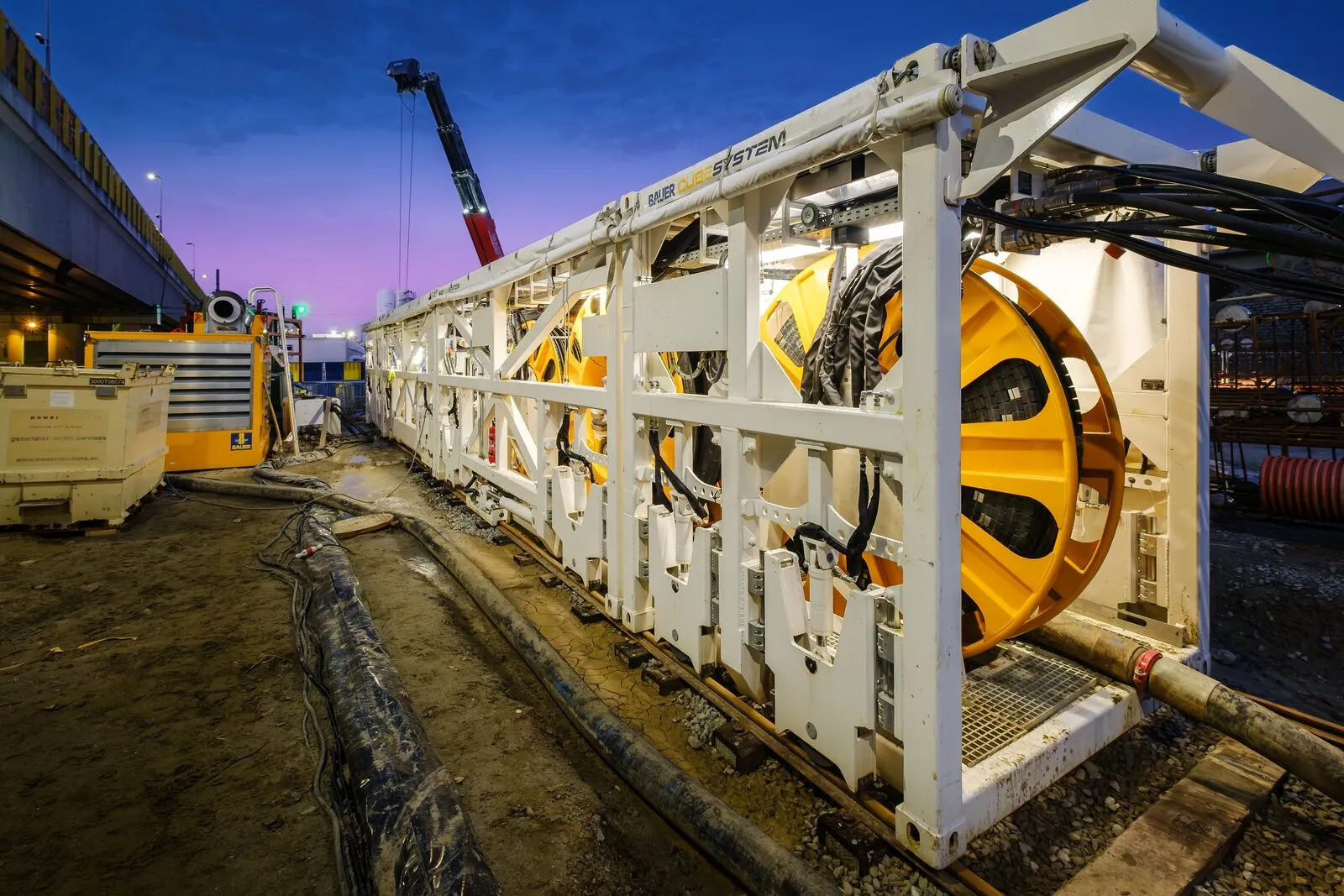
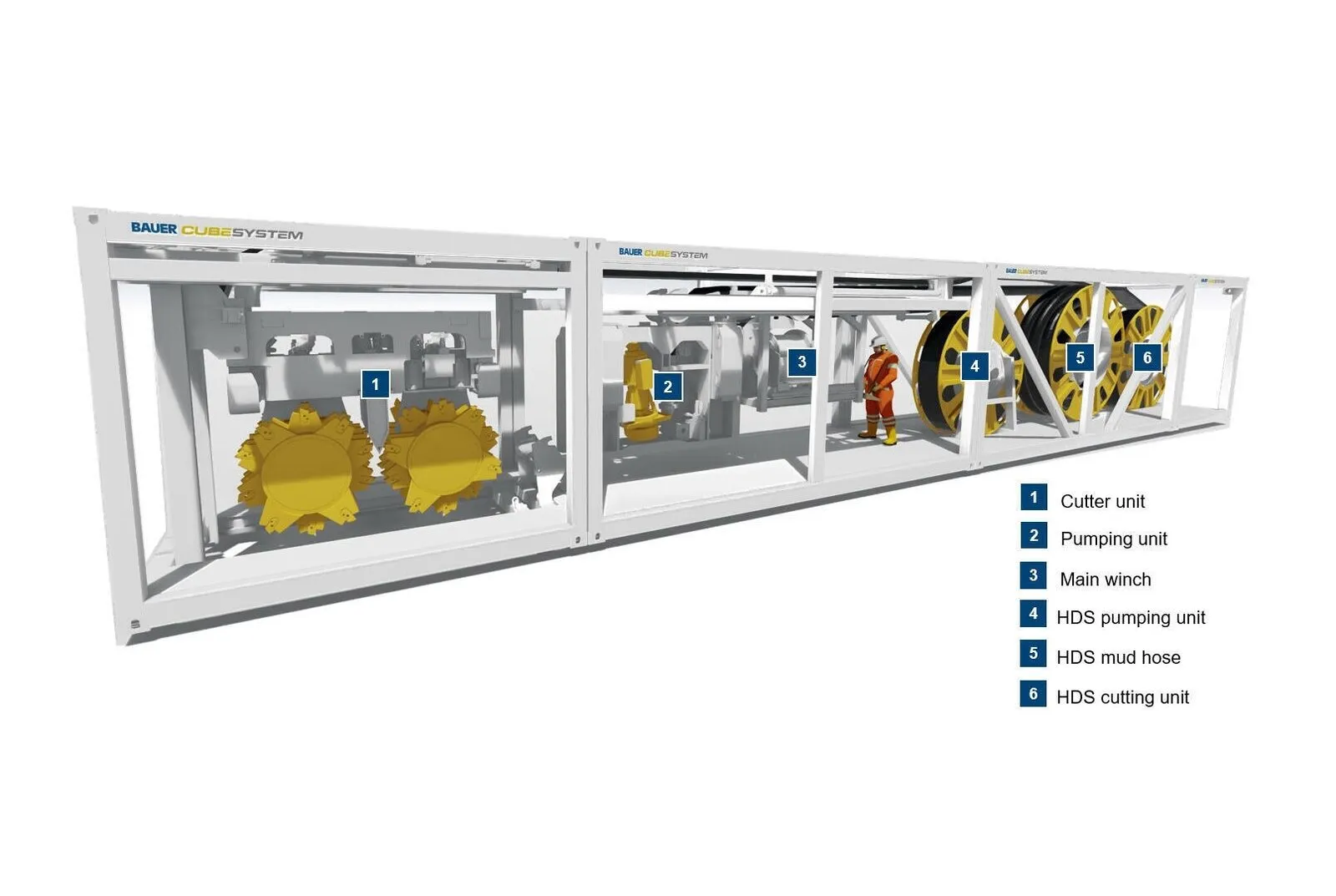
The new system can construct diaphragm walls from a microtunnel. Access shafts are needed only at the corners of the underground structure, reducing disruption at the surface. The technique also makes projects possible where conventional machines cannot operate. “The conventional diaphragm wall machine was completely rethought and designed on a modular basis,” says Maarten Vanneste. “In the end, its height was reduced to just 2.9 metres, and we separated the cutter from the pump.”
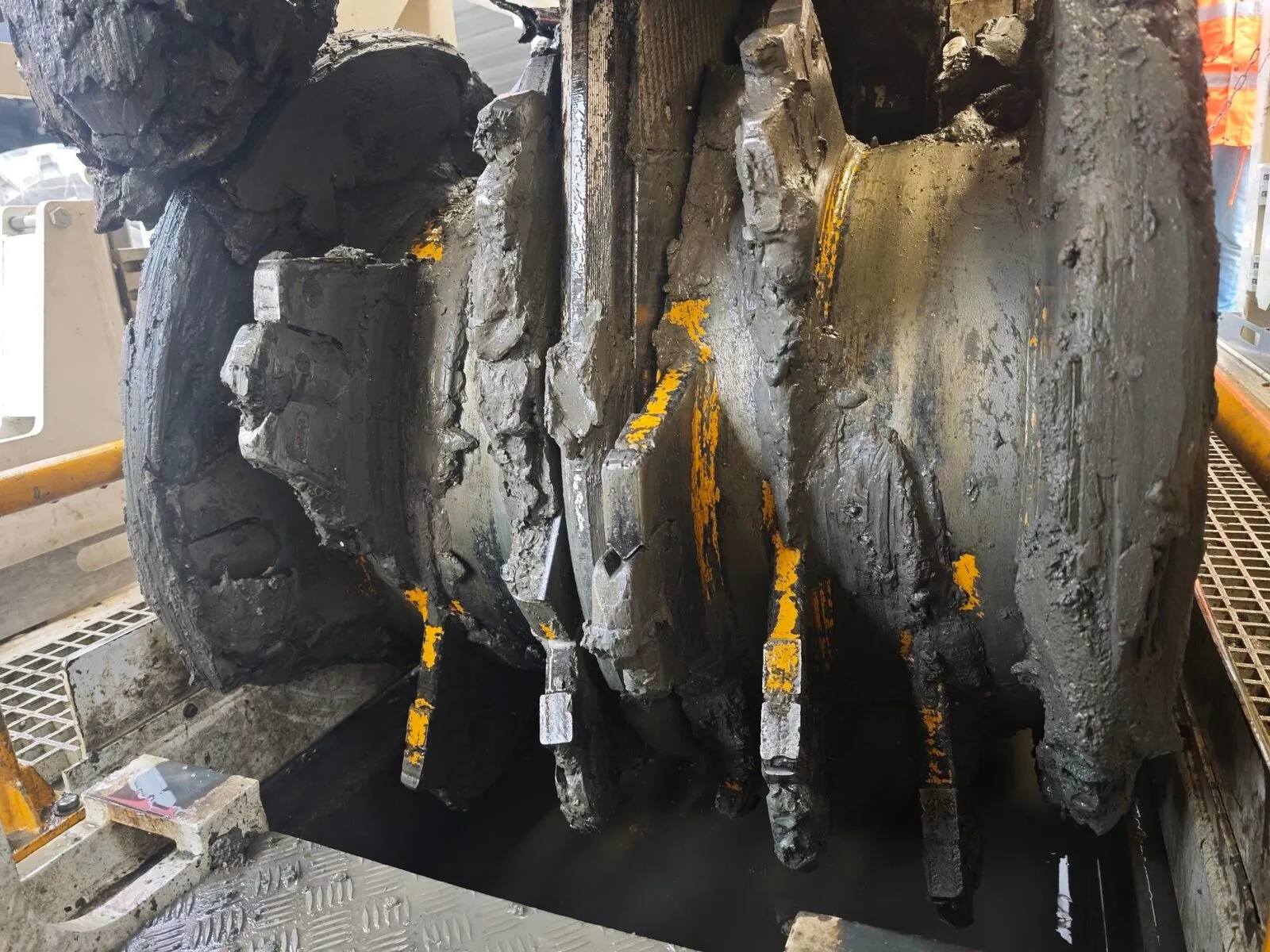
According to Christian Riedl, this was one of the major technical challenges. The basic principle remains BAUER’s conventional hydromill technique. Two counter-rotating cutter wheels break up the ground. The excavated material is broken down in the support fluid and then pumped to the treatment plant. “We did not reinvent the basic principle,” Riedl explains. “The major innovation lies in reorganising the main components. This makes it possible to use proven diaphragm wall technology in a more compact, modular machine.” “As well as being compact, the machine had to remain heavy and stable enough for precision cutting. The cutter frame was therefore split into two parts, an upper and a lower section. During assembly, the lower section is first lowered into the pre-excavated trench. The upper section is then put in place, and the two parts are joined,” Christian Riedl continues.
As with the conventional method, the trenches are first filled with bentonite to keep them stable. Maarten Vanneste adds: “We then place a reinforcement cage in the trench using a separate module, before replacing the bentonite with liquid concrete. We first construct primary panels at regular intervals. We then fill the gaps with secondary panels to create a continuous, uninterrupted concrete wall.”
A flexible, modular system
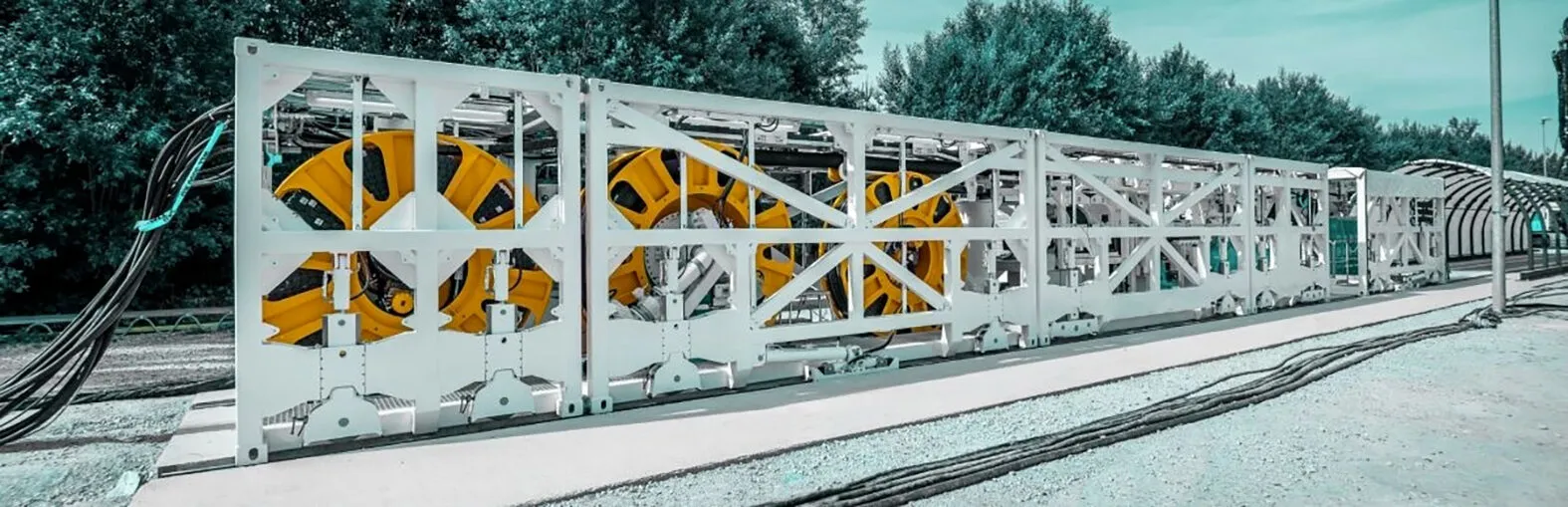
“The machine consists of four sections that are lowered underground separately and assembled there. Thanks to this compact design, the system can be used beneath bridges, in existing basements, in confined urban environments and in microtunnels with an internal diameter of 4 metres. As the machine is packed into four High Cube shipping containers, it can be transported easily and safely,” Maarten Vanneste points out.
Once fully assembled, the rig is approximately 18.3 metres long, 2.44 metres wide and 2.9 metres high, and weighs around 56 tonnes. The system can excavate trenches 640 to 1000 millimetres wide and 2.4 metres long. Its maximum cutting depth is approximately 40 metres. “Flexibility also extends to the power supply, which can be diesel-hydraulic or electro-hydraulic. This makes the system particularly suitable for urban projects with strict requirements on noise, emissions and traffic. It is also flexible enough to meet other requirements and adapt to conditions on site, as the power unit can easily be replaced,” says Christian Riedl.
First practical test on the Oosterweel site
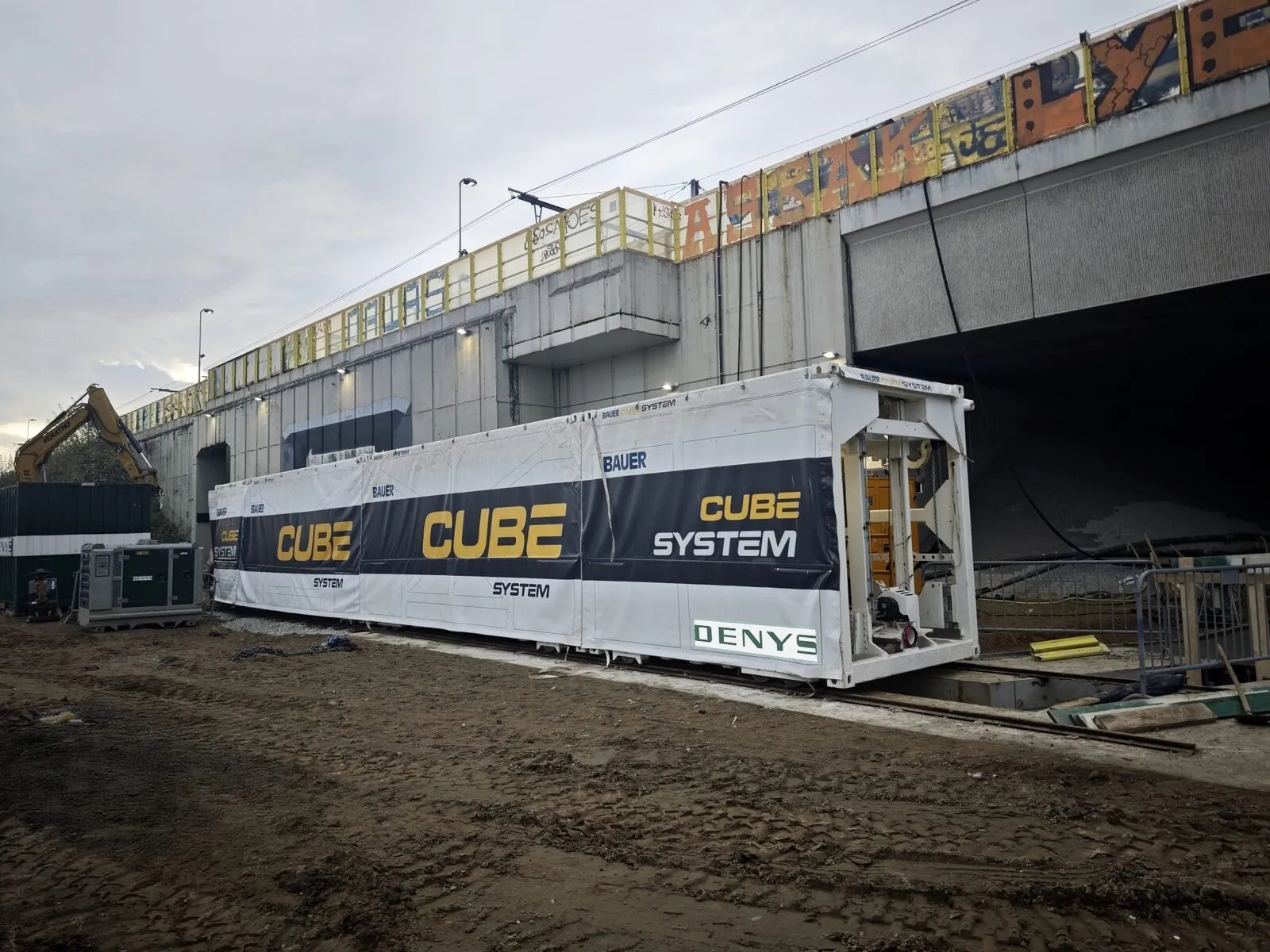
After several years of development and testing, the system was deployed for the first time in 2026, on the ROCO site for the Oosterweel Link. Denys constructed a 142-metre-long, 30-metre-deep diaphragm wall beneath the railway bridge on Groenendaallaan. With a limited clear working height of 5.1 metres, the site was an ideal place to test the new technique in practice.
According to Maarten Vanneste, the Cube System also offered a technical advantage. “The original project plan called for a jet grouting solution, but that could not provide the required precision. This increases the risk of deviations and affects watertightness. Our system makes it possible to control the work much more precisely.” In total, Denys constructed 64 wall panels anchored up to three metres into the Boom Clay layer. In one test, the machine even reached a depth of fifteen metres in this hard ground.
For BAUER, the Antwerp site chiefly marked the transition from development to a proven construction technique. “The initial tests and deployment in Antwerp confirmed that the system also works in real, confined site conditions,” says Christian Riedl. “It also became clear that, under the right conditions, productivity could exceed initial estimates.” Maarten Vanneste adds: “The project was completed more quickly than expected. This shows that the system is ready to be used on other projects.”
Lessons from the first project
The first deployment also yielded practical lessons. A compact machine is not enough on its own: the entire site organisation has to be adapted to the system. “Effective logistical planning is very important,” Christian Riedl points out. “This includes guiding the machine, material flows, installing the reinforcement and coordinating with other works.” The project also provided information about the machine’s operation, assembly and maintenance access. Particular attention was also paid to the availability and organisation of spare parts. For Christian Riedl, this is where the real difference lies between a prototype and a fully developed construction method. “The project validated the concept. At the same time, it helped turn an innovation into a technique proven in practice.”
Underground construction with minimal disruption at the surface
“This first deployment shows that underground construction is also possible at sites where conventional diaphragm wall machines cannot operate. This opens up new possibilities, particularly for metro stations, car parks, data centres, water reservoirs and other underground infrastructure, while limiting disruption at the surface,” explains Maarten Vanneste. Christian Riedl sees the system’s greatest potential in densely built-up cities, where demand for underground space is growing while traffic and activity at the surface must continue as far as possible.
Its limited width of 2.44 metres offers further opportunities in this respect. “For example, the system can be deployed on a narrow dike crest or in a single traffic lane,” says Christian Riedl. “Traffic can then continue in the other lane. The same principle applies alongside railway lines, where an adjacent track can remain in service.” The machine can also be installed in a trench and temporarily covered. The underground works then become almost invisible from the surface.
According to both partners, this is the Cube System’s greatest added value. It does not replace conventional diaphragm wall technology, but extends its range of applications. Sites that were previously too low, too narrow or too difficult to access are now within reach. As Christian Riedl sums up: “The Cube System is specifically designed for very confined spaces and, with its minimal footprint, offers new possibilities in challenging urban environments where diaphragm walls were previously impossible to build.”
Question about this story? Ask your question
Keep following this
Get an email when a new story is published. No account needed.
- ThemeTransforming infrastructure and territories
- SubjectUnderground infrastructure and sewerage