Redeveloping business parks: the case of Izegem
Texte & photos Lithobeton
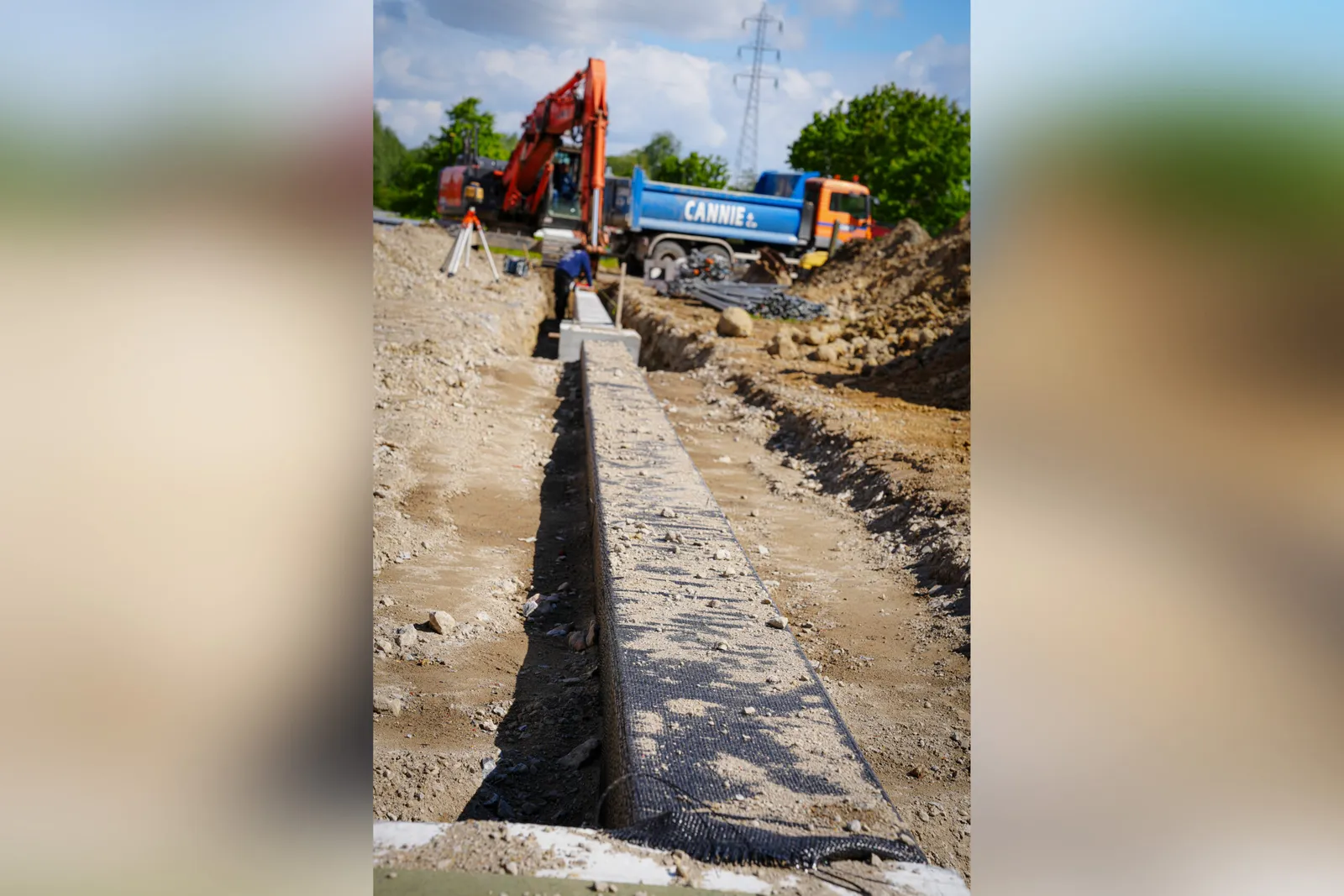
The transformation of the former Verbist abattoir site in Izegem reflects today’s approach to redeveloping industrial sites. A new business park for SMEs, named Global Biestpark, will soon take shape there. The project will provide businesses with almost two hectares of additional space. Alongside economic considerations, the redevelopment also takes account of the need to adapt infrastructure to climate change.
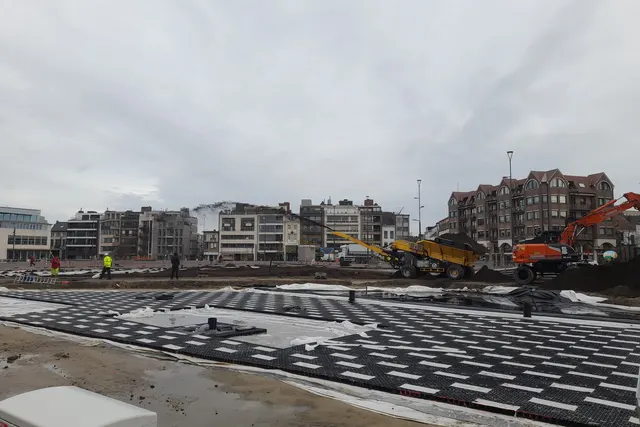
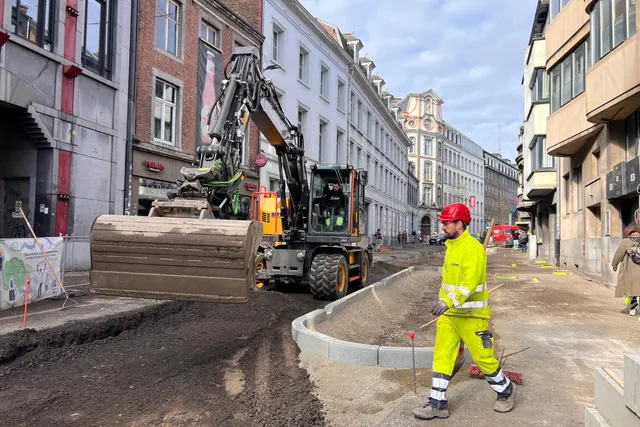
Disused industrial sites are increasingly being redeveloped. Rather than developing greenfield sites, existing sites are being restored and adapted to current economic and spatial needs. The abattoir site is a case in point, with a long industrial history. Following the cessation of operations, the land was acquired by Global Estate Group in 2021. The former buildings were demolished to make way for a modern business park for SMEs. Infrastructure works, including the sewerage and drainage network, are currently under way.
An integrated approach to maximise infiltration
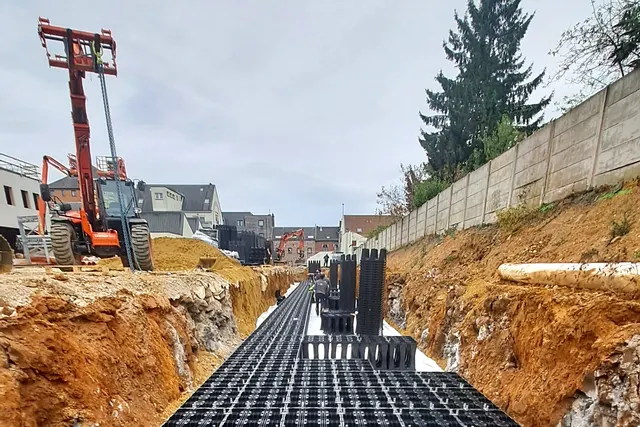
Water management is a major consideration for the project. For this reason, a sewerage system was chosen that gives rainwater time to infiltrate the ground. The aim is to maximise on-site infiltration, taking account of the space available and the characteristics of the soil. The project shows that it is possible to combine soil sealing with rainwater collection in line with the requirements of the new planning regulations.
An integrated approach is needed to achieve these objectives despite the site’s limited space. Ecological buffer strips are being installed, serving both as visual screens and as part of the water management system. The project also uses precast concrete elements with infiltration properties and water retention capacity. Combining structural reliability with controlled water infiltration, these elements add further functions to conventional infrastructure.
Precast concrete elements to meet changing needs
Alongside technical considerations, environmental factors also play an important role. The new SME units at Global Biestpark meet strong regional demand for affordable, high-quality commercial premises. The site’s proximity to major roads makes it even more attractive to local businesses.
The work in Izegem shows how quickly the sector is adapting to new constraints. Water management is no longer a purely technical discipline, but a key factor in project design. As a result, materials and construction methods are evolving to facilitate this transition. Manufacturers and contractors therefore need to rethink traditional solutions and incorporate new functions. In this context, prefabricated systems are becoming increasingly attractive.
Question about this story? Ask your question
Keep following this
Get an email when a new story is published. No account needed.
- SubjectInfrastructure