A major construction project completed in 18 months
Texte Philippe Selke Photos Duchêne
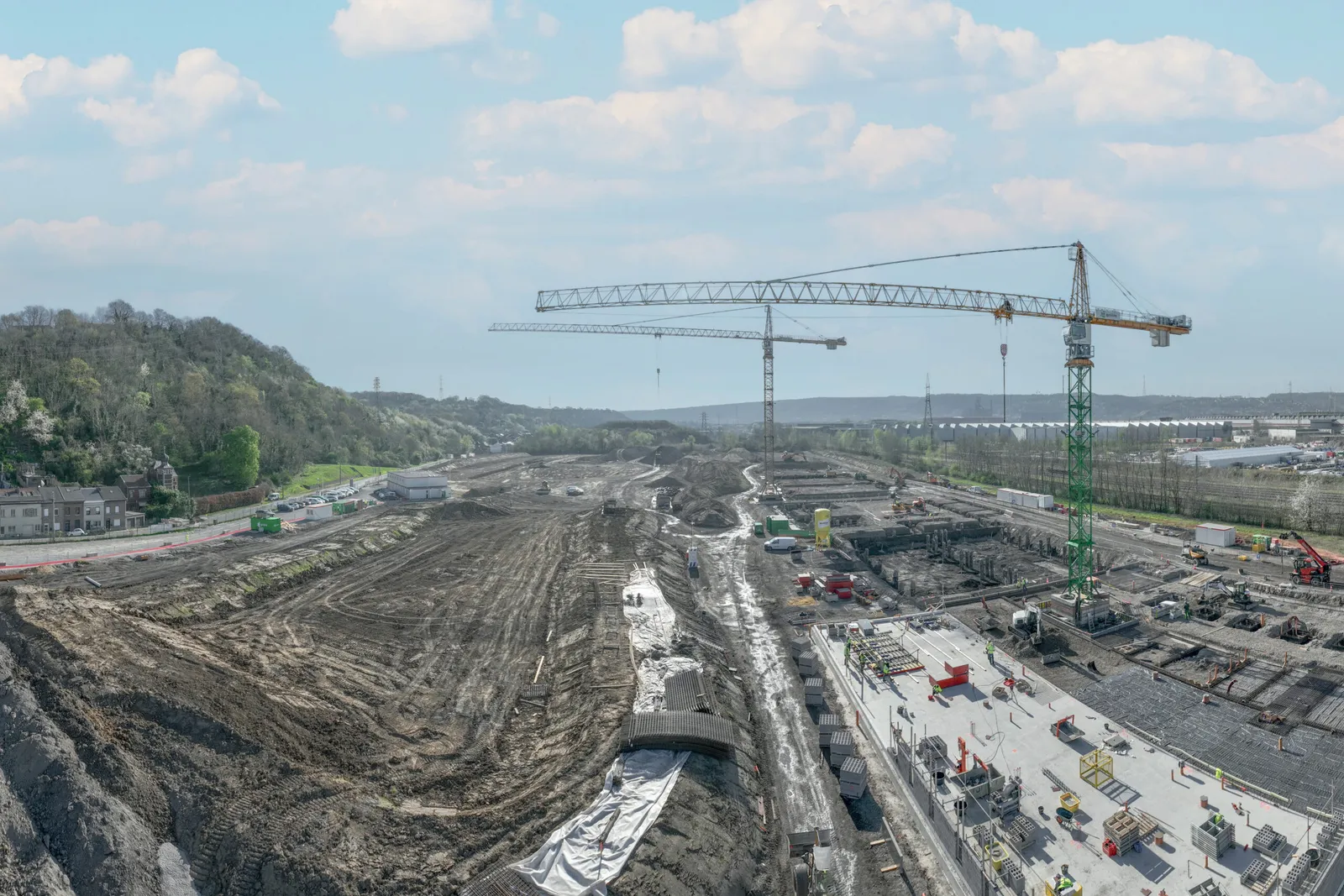
Funded by the European Union’s NextGeneration EU programme and the Wallonia Recovery Plan, Mobi’Park in Tilleur is one of the major mobility infrastructure projects undertaken in Wallonia. Developed to accommodate LETEC’s electric bus fleet in the Liège region, the complex brings together workshops, maintenance areas, administrative space and technical facilities on a former industrial site that has been fully redeveloped. Duchêne, working in partnership with Galère for the project, is completing an 18-month construction programme on schedule despite its complexity.
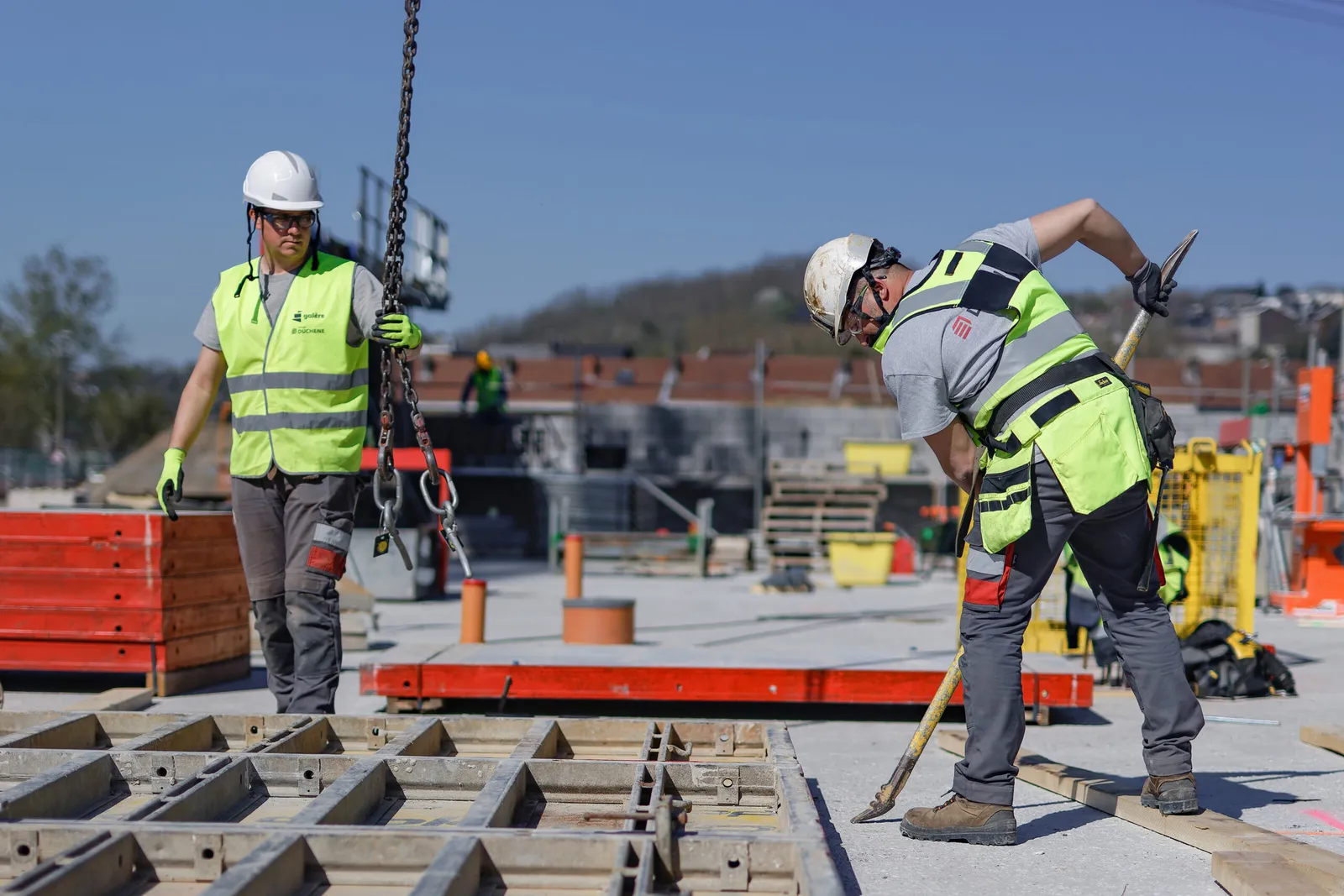
The Duchêne-Galère partnership involved a clear division of responsibilities: Duchêne was responsible for the six buildings, while Galère handled the external works and roads.
Work began on 6 January 2025, with completion scheduled for 30 June 2026, giving the teams around 18 months to deliver such a large-scale programme. “The biggest challenge is the deadline,” says Gabin Cheuzem Ngnindjeu, building project manager at Duchêne. “The project as a whole comprises 15 work packages, and we have to coordinate the various interfaces while handing over areas to the other contractors on time.”
Meticulous organisation and construction methods
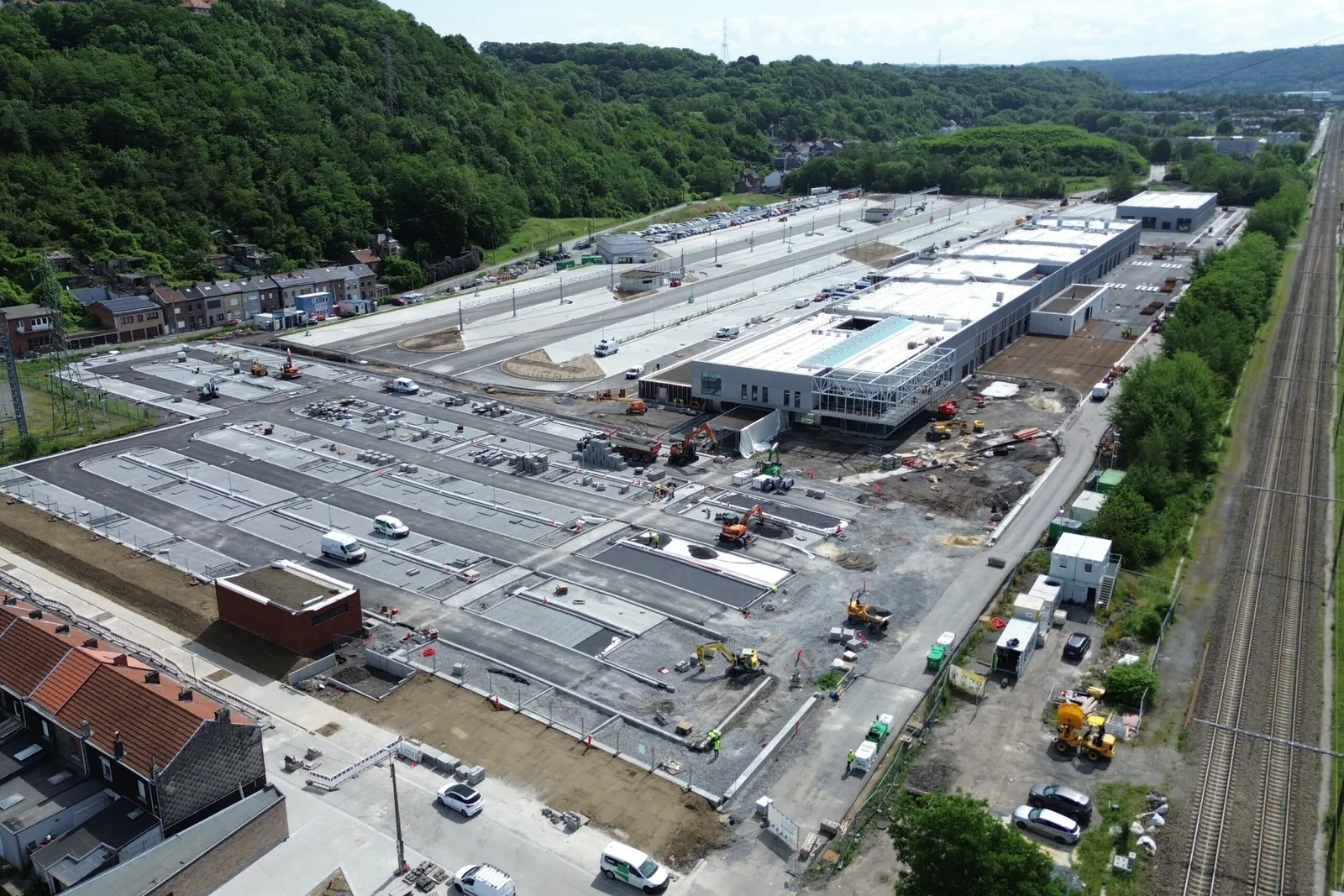
The tight schedule led the teams to adopt several construction methods to speed up delivery. Many columns were therefore replaced with prefabricated elements, and various other technical solutions were adapted in consultation with the client and the design teams, as part of a genuinely collaborative approach.
During the finishing phase, up to 250 people were on site each day. Managing concurrent activities therefore became a major challenge, particularly in the administration building, where most of the finishing work was concentrated. “We have worked practically six days a week since the start of the project,” explains the project manager.
Technical solutions tailored to the constraints
The façade design called for the use of exceptionally thin, ultra-high-performance precast concrete panels. After two months of research, a solution was found involving a Spanish manufacturer and a French installer.
Some precast staircases weighing more than 10 tonnes required two heavy cranes to handle them simultaneously. An initial non-compliant delivery even led to a complex replacement operation after the building had already been largely enclosed.
Fortunately, despite the site’s industrial history, geotechnical surprises were limited in the building areas. Of the 612 piles installed, only a few required adjustments. The main difficulties arose in the road areas, where old underground galleries were discovered.
An integrated approach to sustainability
The Mobi’Park project is part of a particularly ambitious environmental initiative.
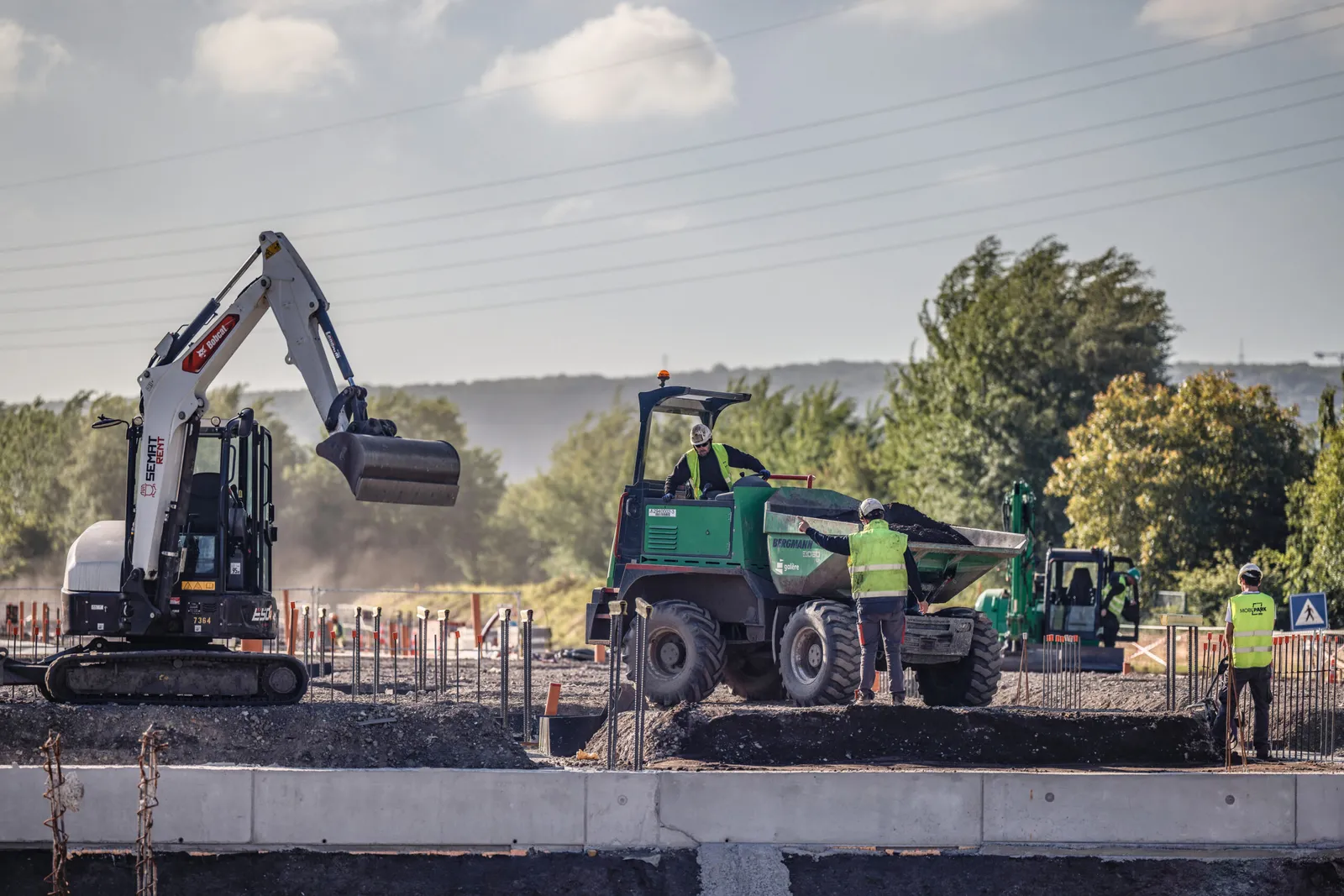
During construction, excavated materials were crushed and reused on site wherever possible. No rainwater is discharged from the site: underground basins allow water from the roads to infiltrate, while tanks store roof runoff for reuse, including in the vehicle-washing facilities. Five buildings also have green roofs. “The principle here is to reuse as much as possible of what is available on site, including water,” says Gabin Cheuzem Ngnindjeu, noting that Duchêne has the advantage of already being well advanced in sustainable site management.
Alongside these environmental objectives, nearly 4,600 hours of social clauses are intended to support vocational integration and local employment.
A team effort
With delivery just weeks away, the project has entered its final phase. Despite the tight schedule, technical adaptations and coordination challenges, the teams remain confident that the deadlines will be met.
“We worked hand in hand with Galère. Mobi’Park is only my second project at Duchêne and my first in a temporary joint venture. I was fortunate to be surrounded by very experienced people I could rely on. The design teams were also very receptive to the solutions we proposed. This success is truly the result of teamwork,” concludes Gabin Cheuzem Ngnindjeu.
PROJECT DETAILS
- Client: Opérateur de Transport de Wallonie (OTW, LETEC)
- Design teams: Bureau d’Architecture Greisch (BAG) & Lemaire ingénieurs
- Main contractors: SM Duchêne, Galère
Question about this story? Ask your question
Keep following this
Get an email when a new story is published. No account needed.
- SubjectConstruction