Underground infrastructure and sewerage
Complete reconstruction of the drainage network at a contaminated soil reception centre
Texte & photos Deschacht
At Farciennes, the Eco Terres site, part of the DEME Environnement group, plays a key role in soil remediation and recycling. A vital link in the circular economy, it receives and stores contaminated soil on vast impermeable slabs. But this site, which is essential to the region, faced a major problem: recurrent flooding.
The slabs are completely impermeable, preventing rainwater from infiltrating the ground. The water accumulates and flows into the existing network, which quickly becomes overloaded and clogged with suspended particles. The result: repeated blockages and overflows across the site. Under the direction of site manager Grégoire Dossin, Eco Terres therefore launched an ambitious project to completely redesign its drainage network.
A new hydraulic layout
Patrick Glorieux, from Deschacht’s design department, was responsible for designing and sizing the new drainage network.
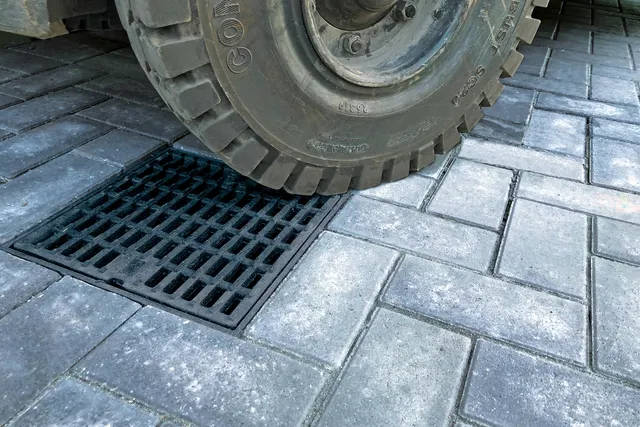
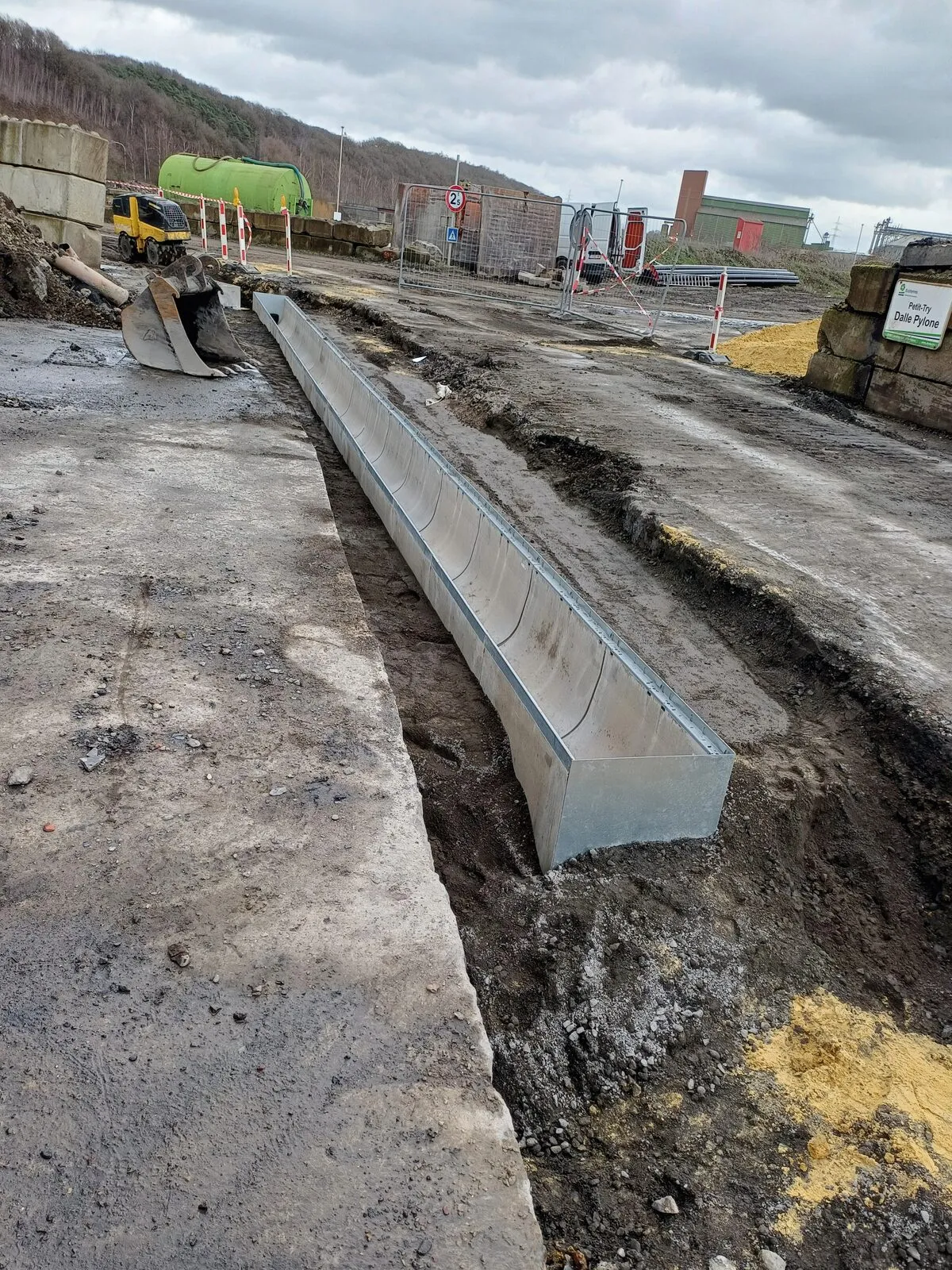
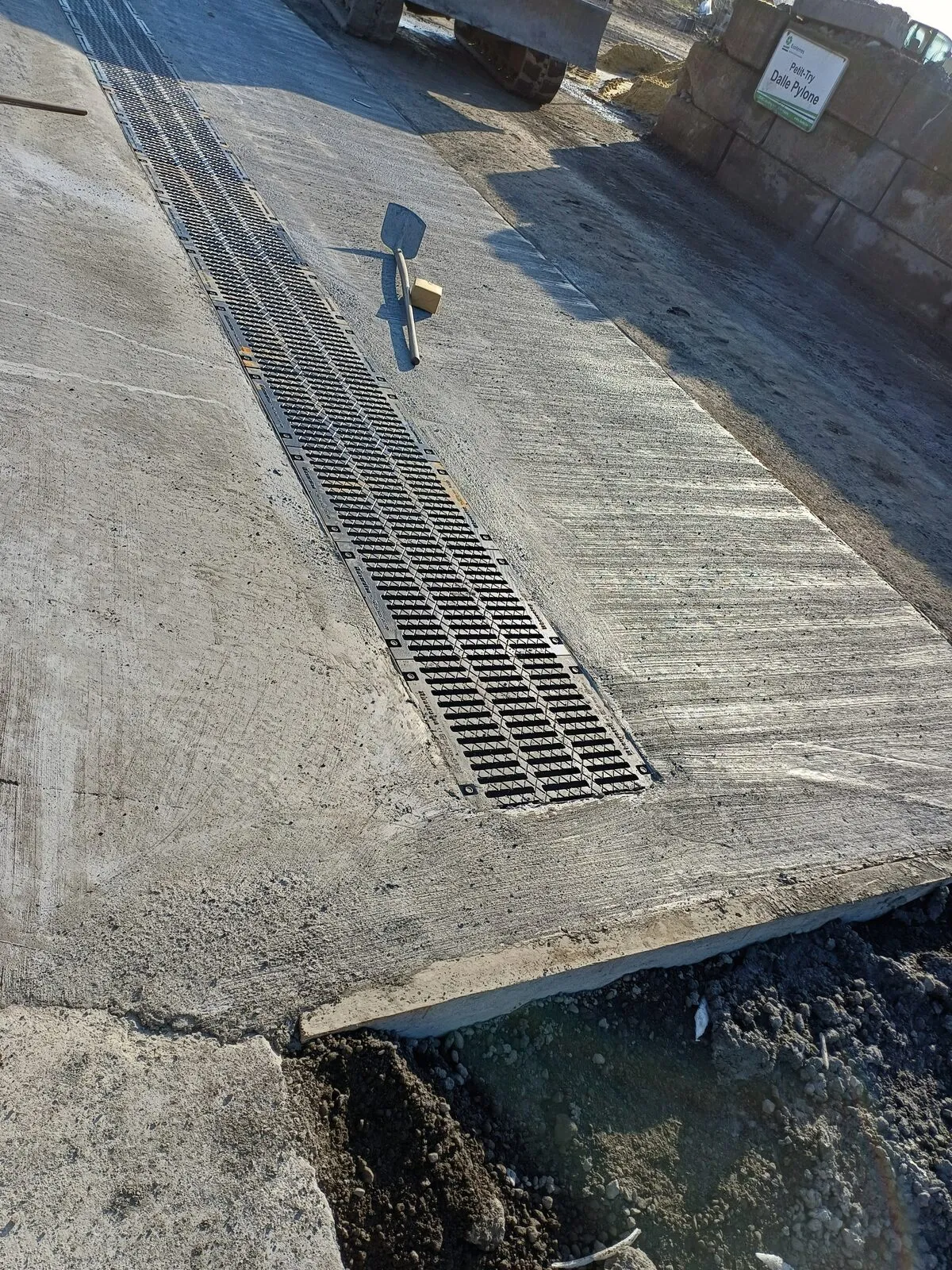
The slab, the hub of the site’s storage activities, became the starting point for the project. Three separate zones were defined, each equipped with its own collection and pumping system. Rainwater is now collected by Super 500 channels (36 m fitted with E600 cast iron grates capable of supporting heavy machinery) and reinforced concrete gullies of impressive dimensions (up to 120 x 60x 248 cm). These gullies serve a dual purpose: settling solids and draining water, with access provided for cleaning and maintenance.
In addition, standard inspection chambers (60 x 60 to 100 x 100 cm) were installed at every change of direction to ensure the network’s long-term durability and clarity. Three reinforced concrete inspection chambers further strengthen the system.
Three bespoke pumping stations
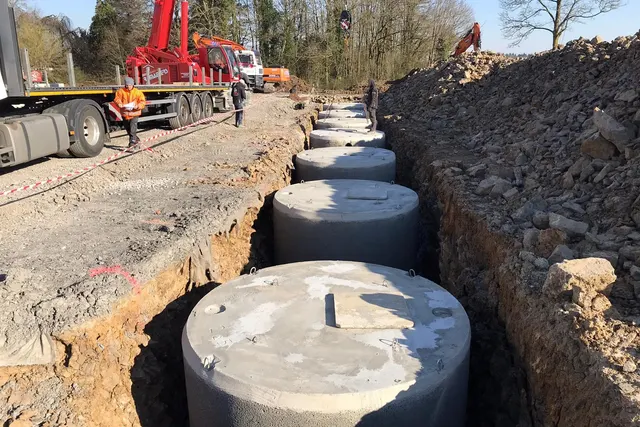
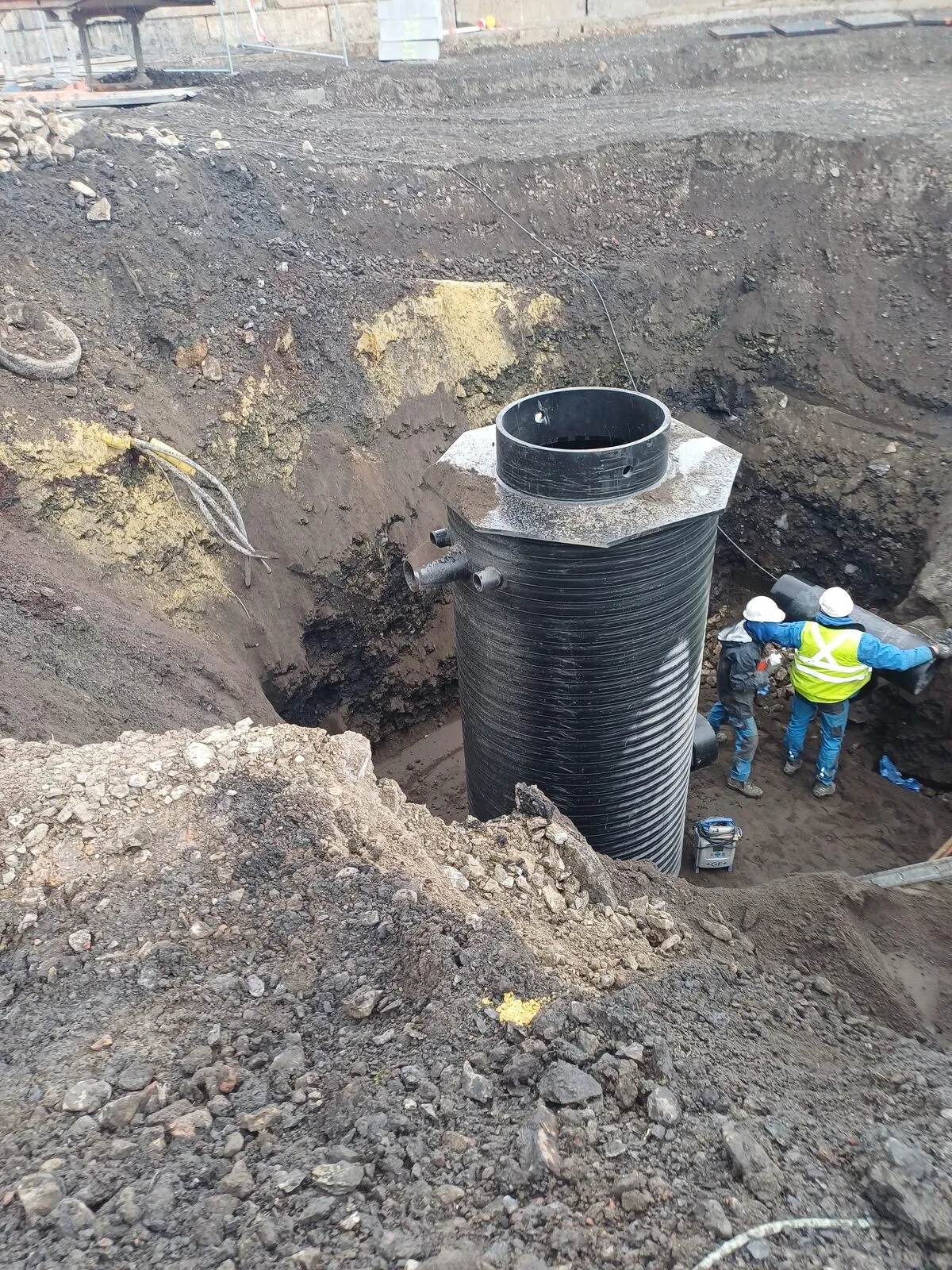
The new network feeds into three HDPE pumping stations, sized to handle substantial flow rates: 20 l/s (Ø 1000, h 2,4 m), 40 l/s (Ø 1200, h 3,5 m) and 60l/s (Ø 1500, h 4,6 m). The first two stations discharge into the third, which in turn discharges into an open-air basin. All this water is then treated by a remediation system before being discharged, once purified, into the Sambre.
Manufactured to measure by Collinet, this equipment incorporates GSM modules with independent batteries, ensuring that alarms are triggered even in the event of a power cut. This is essential for preventing any failure at a site of significant environmental importance.
A project delivered in successive phases
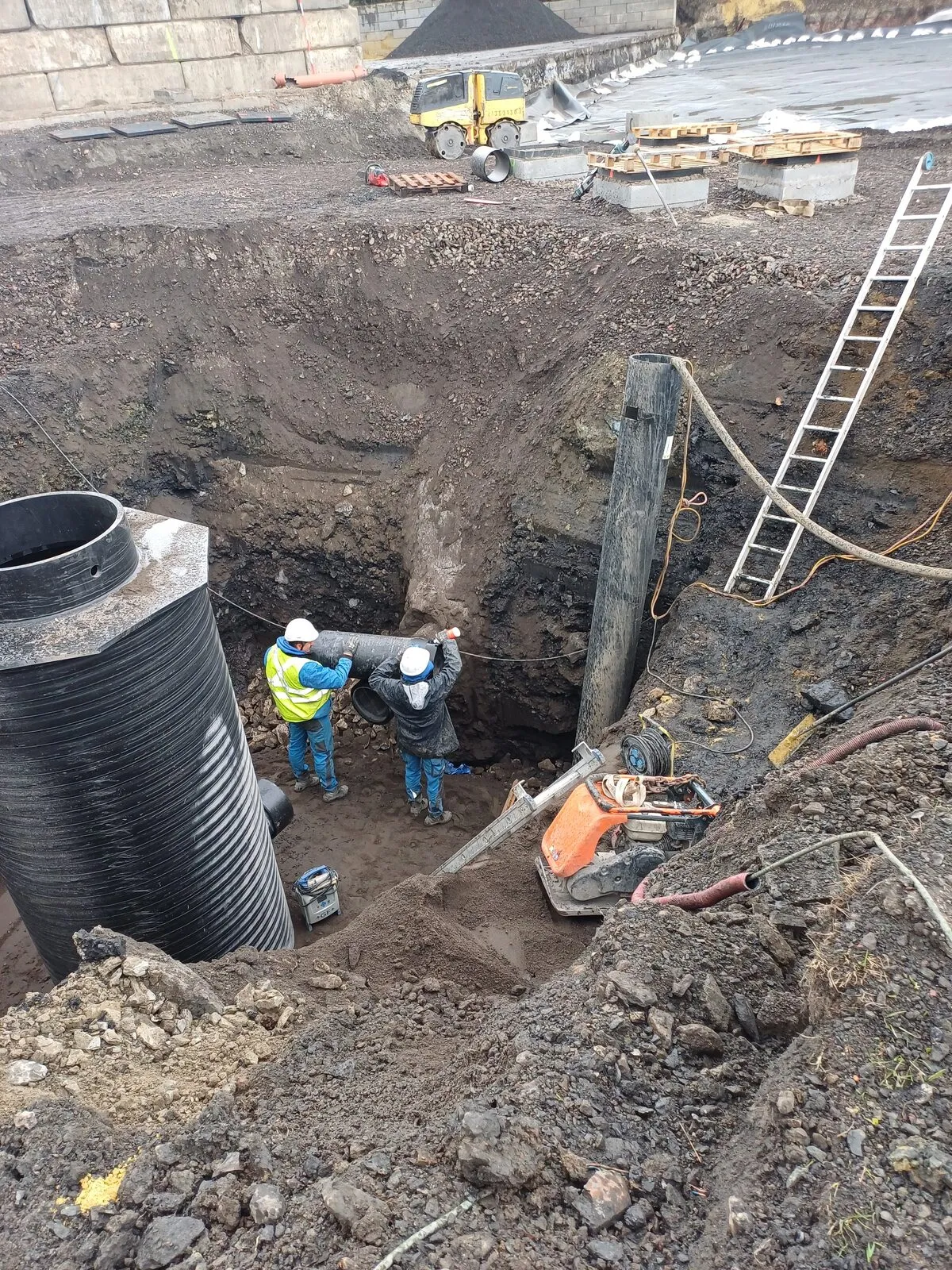
After the full design for the future network had been submitted, the plans had to be revised several times to meet technical constraints and actual site conditions. Once the design was approved, bespoke manufacturing could begin, followed by deliveries coordinated with the pace of work on site. Sogeplant was responsible for the works, including earthworks and installation. The project was closely monitored by Samuel Mazzacavallo, account manager at Deschacht, who notes: « This project required constant coordination between our design department, production and the site teams. Thanks to this synergy, we were able to propose robust technical solutions perfectly suited to the client’s needs. »
Een zakelijke vraag aan DESCHACHT Plastics? Get in touch
Companies in this story

Keep following this
Get an email when a new story is published. No account needed.
- ThemeTransforming infrastructure and territories
- SubjectUnderground infrastructure and sewerage
- CompanyDESCHACHT Plastics