Walloon concrete prefabrication in transition: a focus on innovation and sustainability
Texte Stéphane Hunot Photos Béton de la Lomme
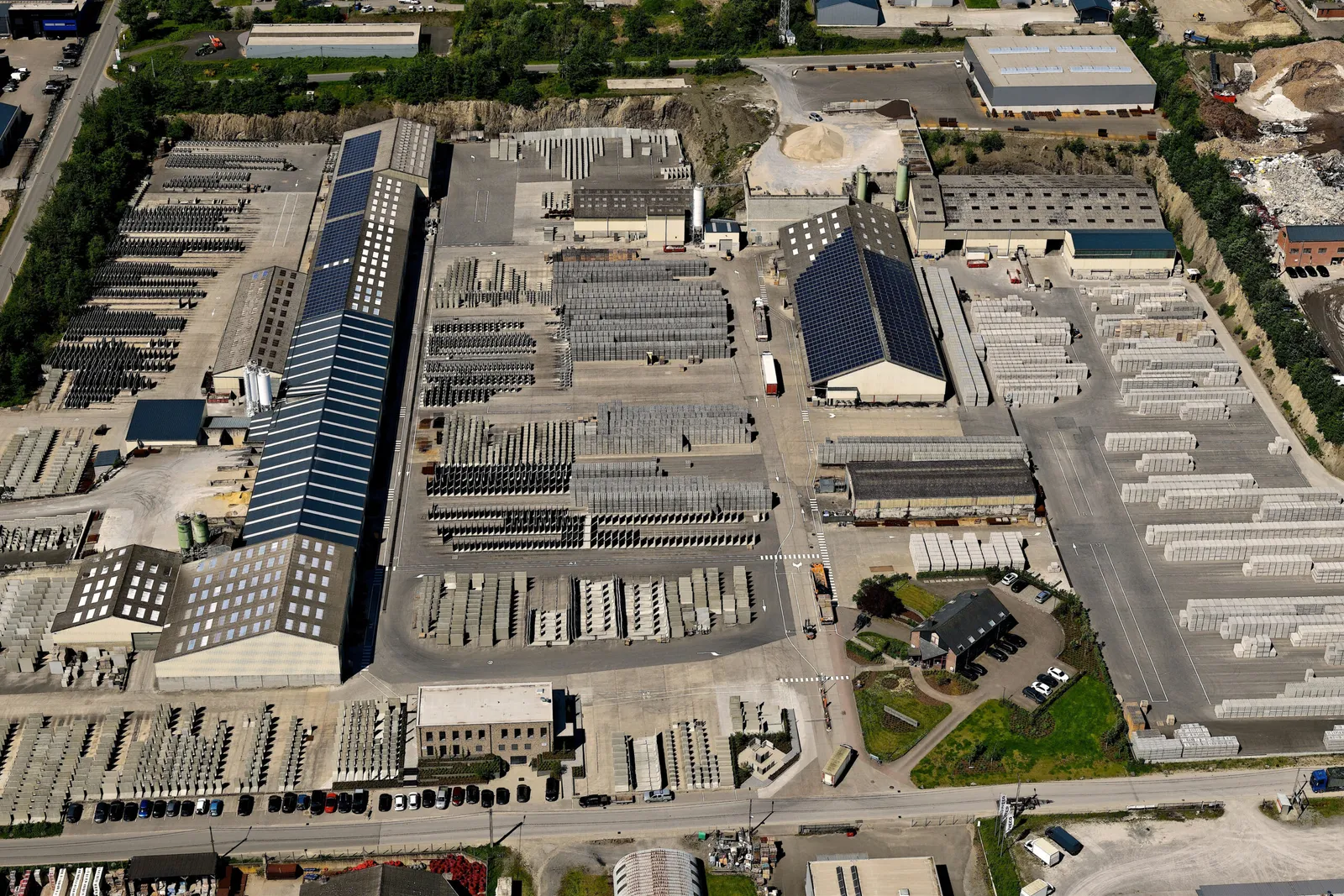
Responsible for nearly 8% of global CO2 emissions, concrete, the most widely used material on the planet, faces an imperative to reinvent itself. Far from standing still, the industry is working to transform its environmental and aesthetic footprint. In Wallonia, companies are rising to the challenge by combining technical performance, participative management and the low-carbon transition. We take a closer look at this sector-wide shift with Jacky Chalon, Head of the Technical Office at Béton de la Lomme in Rochefort.
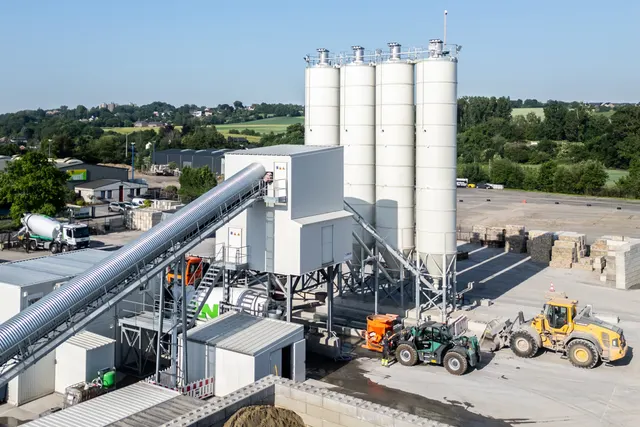
In precast production, concrete products are made using one of two demoulding techniques: immediate demoulding or delayed demoulding. “Immediate demoulding is possible with relatively dry concrete, mechanically pressed into the moulds,” explains Jacky Chalon. This highly automated technique is used for high-volume production, particularly for masonry blocks, formwork blocks and blocks laid with adhesive.
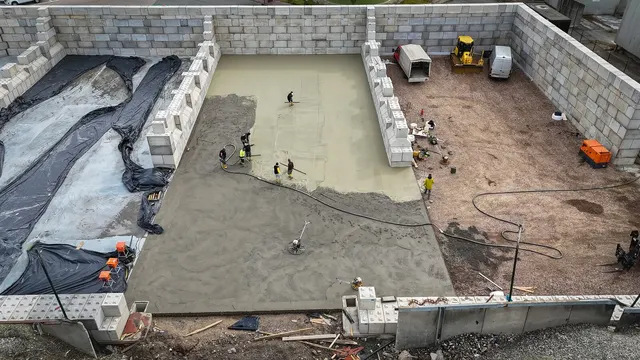
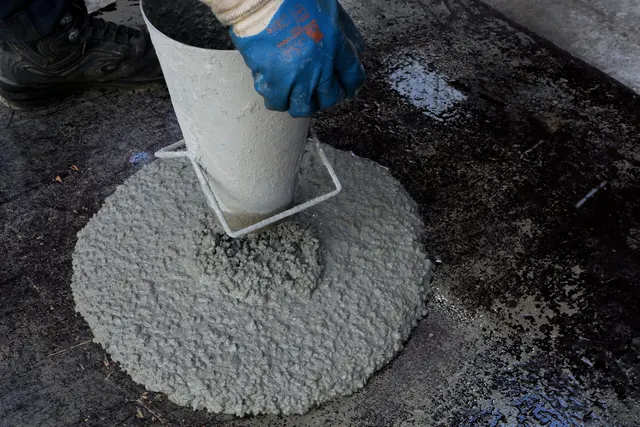
Delayed demoulding, by contrast, uses fluid concrete that is poured into the mould. “In this case, demoulding takes place later, once the concrete has fully hardened, which limits production to 1 or 2 mould cycles per day. This method is preferred for reinforced concrete products, such as L-shaped retaining wall elements, or bespoke items such as bus shelters.” By controlling the preparation and placing of the concrete, the factory ensures better quality than concrete poured on site: “Fluid concretes are now self-compacting. They are almost perfectly dense and absorb virtually no water.”
Collective intelligence drives innovation
To support this technical transformation, management models are also evolving. The Rochefort-based company has adopted a participative management approach based on ESG criteria. “It is a management approach that is not solely focused on profitability. Profitability must not come at the expense of staff wellbeing or the environment. It is also a participative model that gives employees who wish to do so the opportunity to express their views and take part in management decisions.”
At Béton de la Lomme, the drive for continuous improvement is channelled through three working groups: R&D, sales and production. “This enables us to harness collective intelligence by bringing our ideas together. This creative momentum changes the teams’ mindset: it becomes more positive and more focused on innovation.”
Rethinking aesthetics and ergonomics
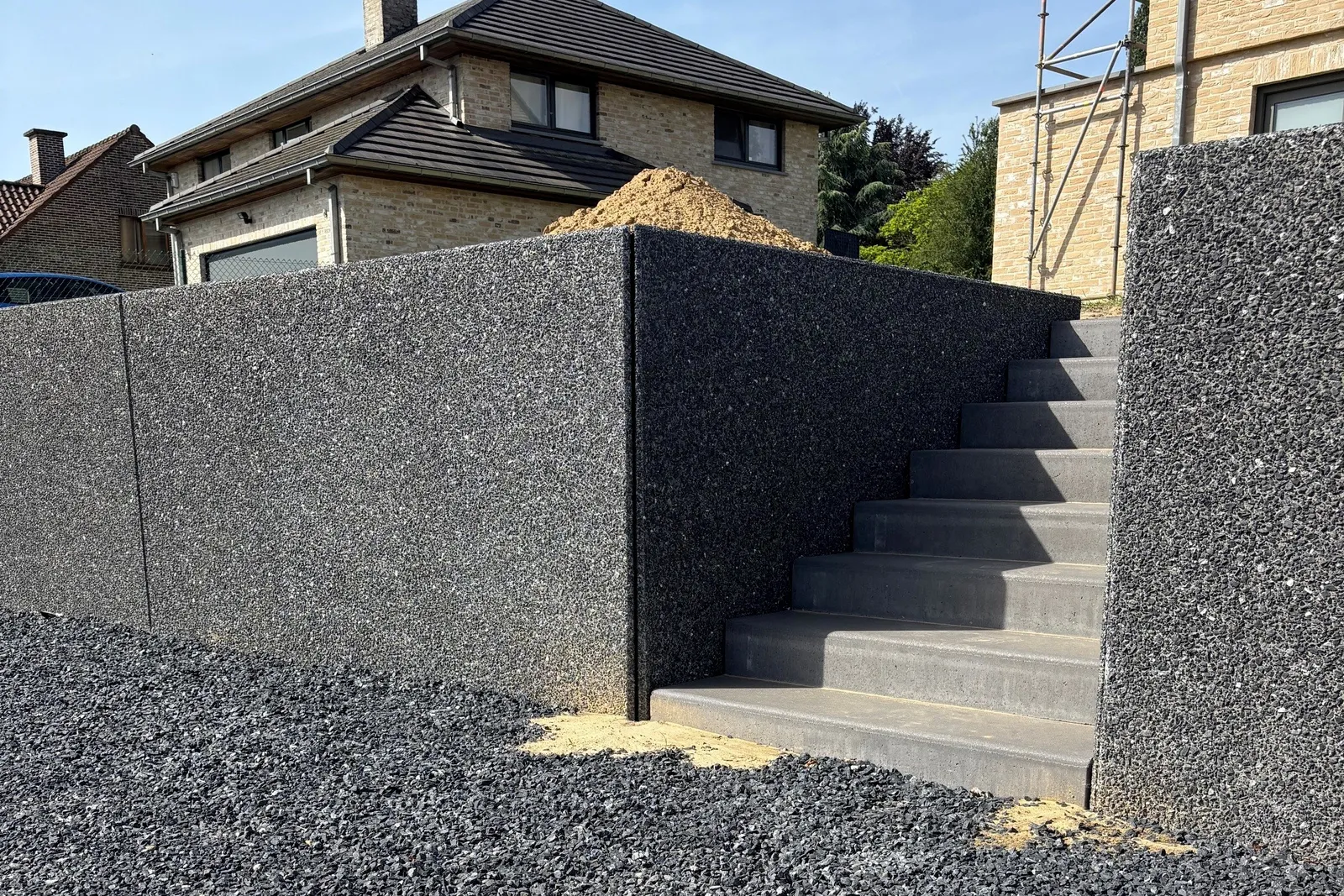
Traditional grey concrete tends to weather over time. Jacky Chalon explains: “Structurally, concrete is very durable. Aesthetically, however, that is not the case. Grey concrete tends to turn green quite quickly. To address this, our R&D team is developing innovative finishes: washed concrete with coloured aggregates, a slate facing, textured concrete, green finishes (Green Wall) and an exclusive Corten steel imitation.”
Meanwhile, construction techniques are advancing with Rectilom milled adhesive blocks. “A wall built with Rectilom adhesive blocks is stronger than traditional masonry. Above all, the blocks can be laid much faster,” adds the Head of the Technical Office, noting that ergonomics have recently been improved by adding handholds.
A new low-carbon, circular generation
To assess concrete’s true environmental impact, it should be analysed across its entire life cycle, including its natural ability to capture carbon. “Concrete carbonates as it ages. This carbonation allows it to reabsorb some of the CO2 released during production. We are talking about between 10 and 30% reabsorption,” adds Jacky Chalon, lamenting that the material sometimes gets “too much bad press when it comes to its environmental impact”.
The future, however, lies in developing a new generation of mixes. “We are currently testing alternative binders to produce concrete using less cement, or even no cement at all. In response to the resource crisis, the industry is also embracing the circular economy: raw materials such as sand and even stone are becoming scarce, so we will need to recycle waste and turn it into raw materials.”
Over the coming decades, future concrete will not only be more technically advanced, but will also aim to achieve a positive carbon balance by capturing more greenhouse gases than it emits. Jacky Chalon is confident that Wallonia can compete: “We have potential in Wallonia. Above all, we are keen to innovate, stand our ground and move forward.”
Would you like to find out more about trends and developments in concrete? Listen to the podcast with Jacky Chalon at www.construirelawallonie.be.
Een zakelijke vraag aan Beton de la Lomme? Get in touch
Companies in this story
Keep following this
Get an email when a new story is published. No account needed.
- ThemeNew ways of building
- SubjectConcrete
- CompanyBeton de la Lomme