Concrete works paced to the rhythm of a busy airport
Texte Joris Hendrickx Photos ZABO
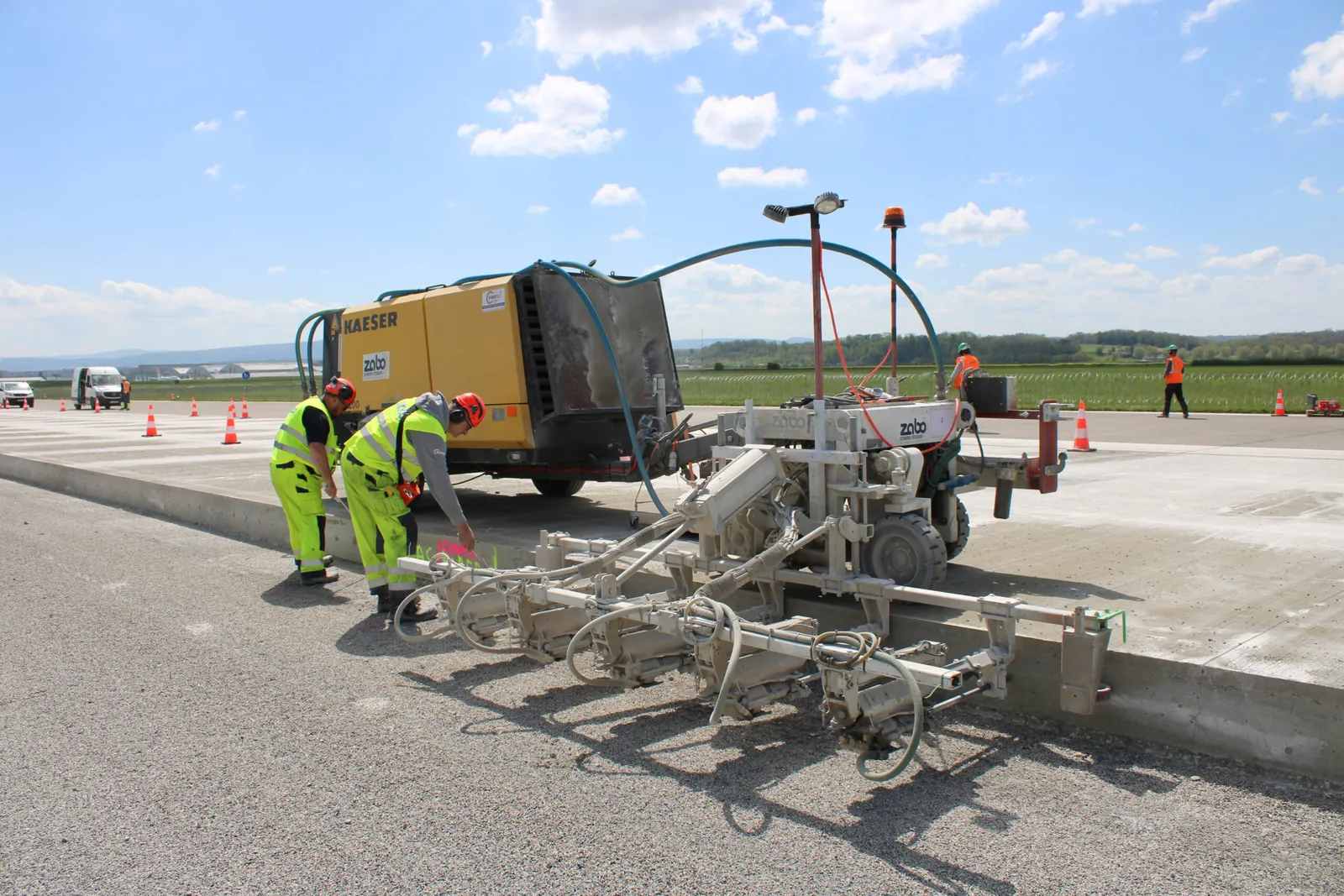
Working at a busy airport requires meticulous planning, reliable machinery and flawless execution. ZABO demonstrated this on an ambitious project at Mulhouse airport in France. At the request of contractor TRBA, the Kortrijk-based company carried out both sawing and dowel installation as part of the renovation of a section of the runway. According to project manager Alexander Roose, the key to success lay in meticulous preparation and a flexible approach on site.
Night-time sawing under tight time constraints
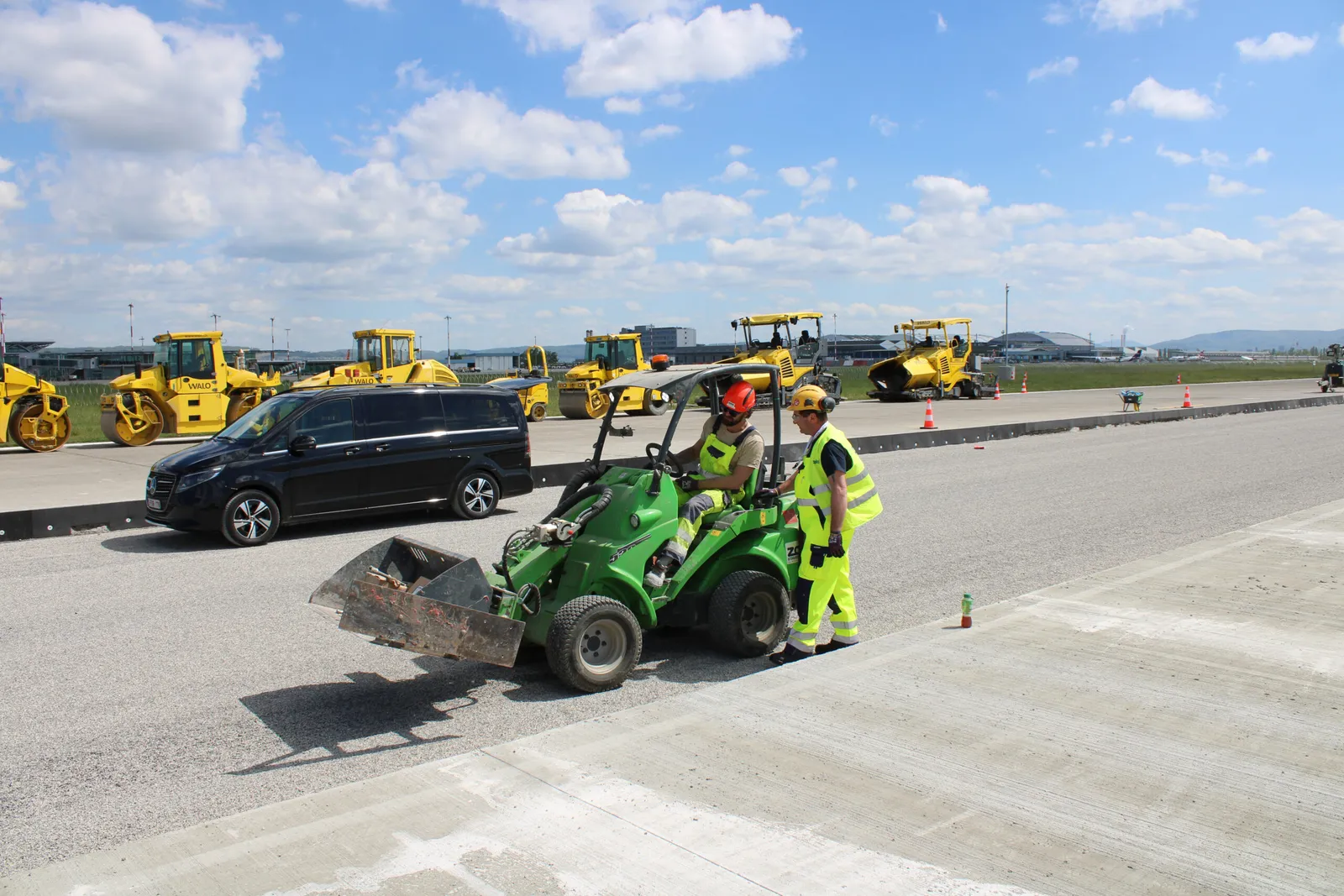
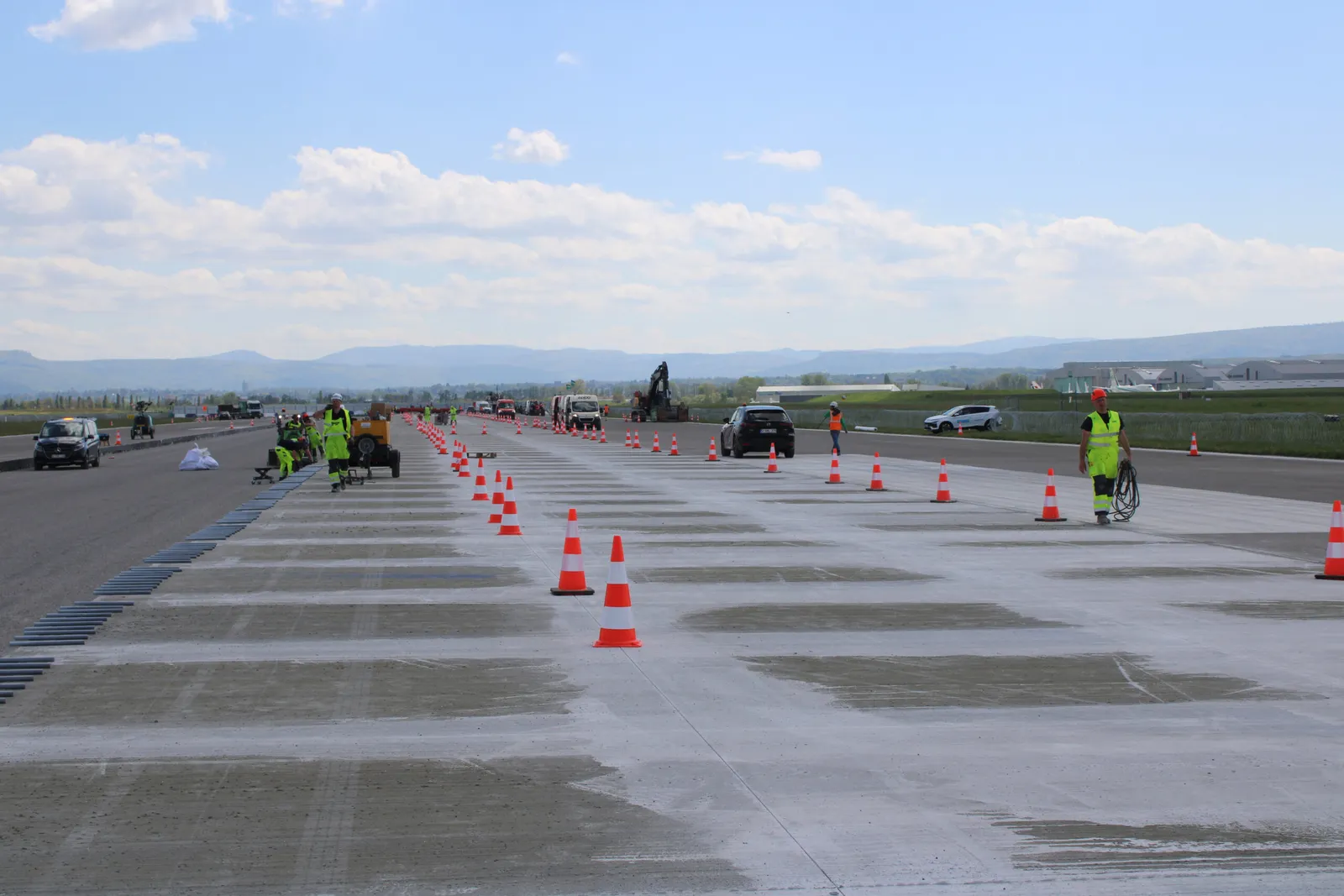
The work began with sawing the existing concrete surface. As the airport remained operational, ZABO was only permitted to work at night, between 00:30 and 04:00. Within this restricted time slot, at least 250 metres of concrete had to be sawn each time. “This was undoubtedly one of the biggest challenges,” recalls Alexander Roose. “As soon as the time window opens, everything has to be ready. There is no room for delays.” In total, nearly 3,000 metres of saw cuts were made. With a team of two, ZABO managed to meet its production target almost every night.
“We often exceeded the target,” says Alexander Roose. “This gave TRBA enough confidence in us to entrust us with deepening the cuts as well.” Initially, the concrete had to be sawn to a depth of 27 centimetres. This was later increased to 37 centimetres.
Unknown concrete calls for meticulous preparation
At the outset, no one knew exactly how hard the concrete at the airport would be. “We had never worked at this site before,” says Alexander Roose. “So it was difficult for us to assess the properties of the concrete. On projects like this, the quality of the saw blade, among other things, has a direct impact on productivity.” ZABO therefore took different types of saw blade to France and consulted several suppliers in advance.
The different options were tested on site. “This preparation really made a difference,” says Alexander Roose. “Working with the supplier, we quickly found the best combination. This meant we could work at full capacity straight away.”
Thousands of dowels installed in record time
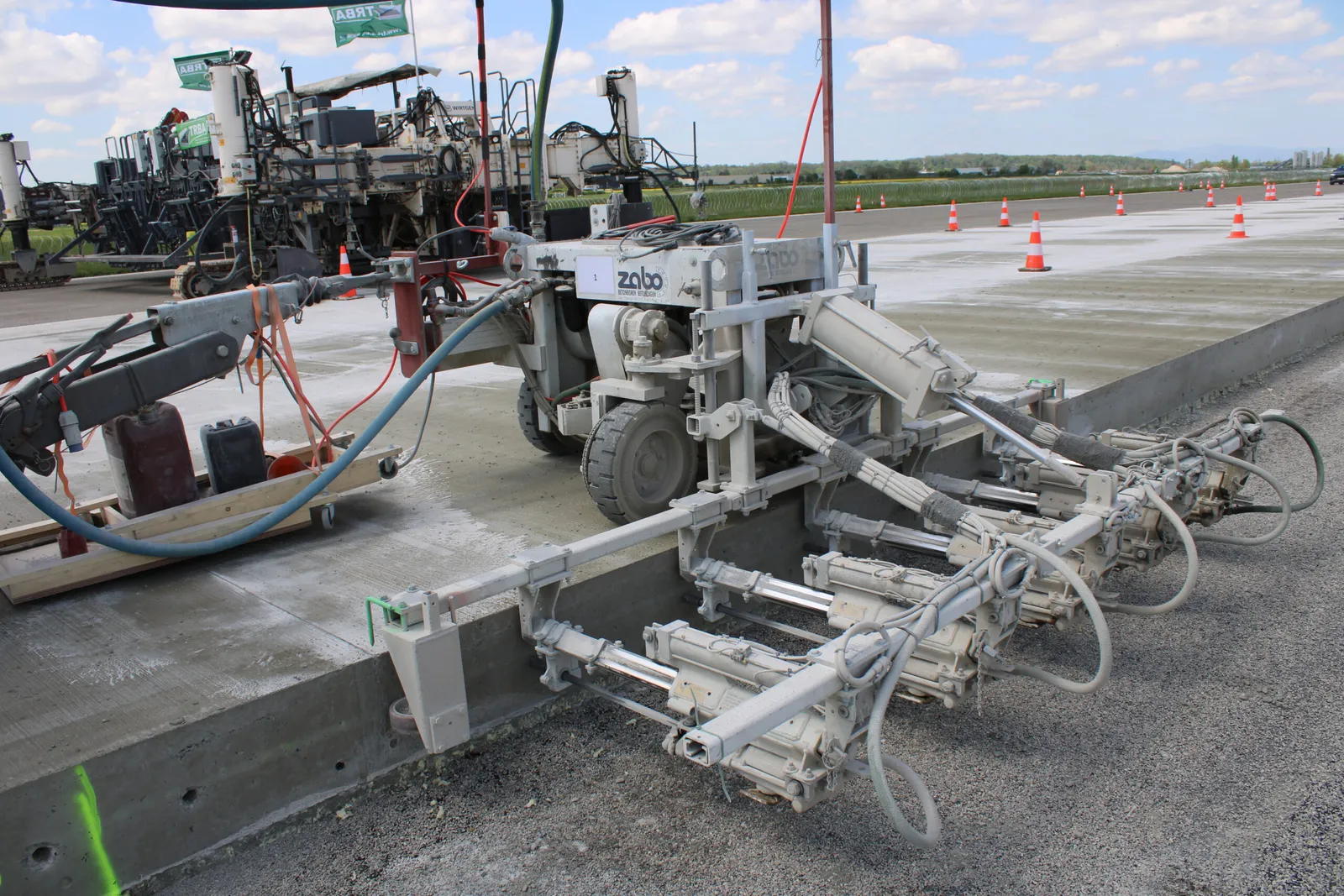
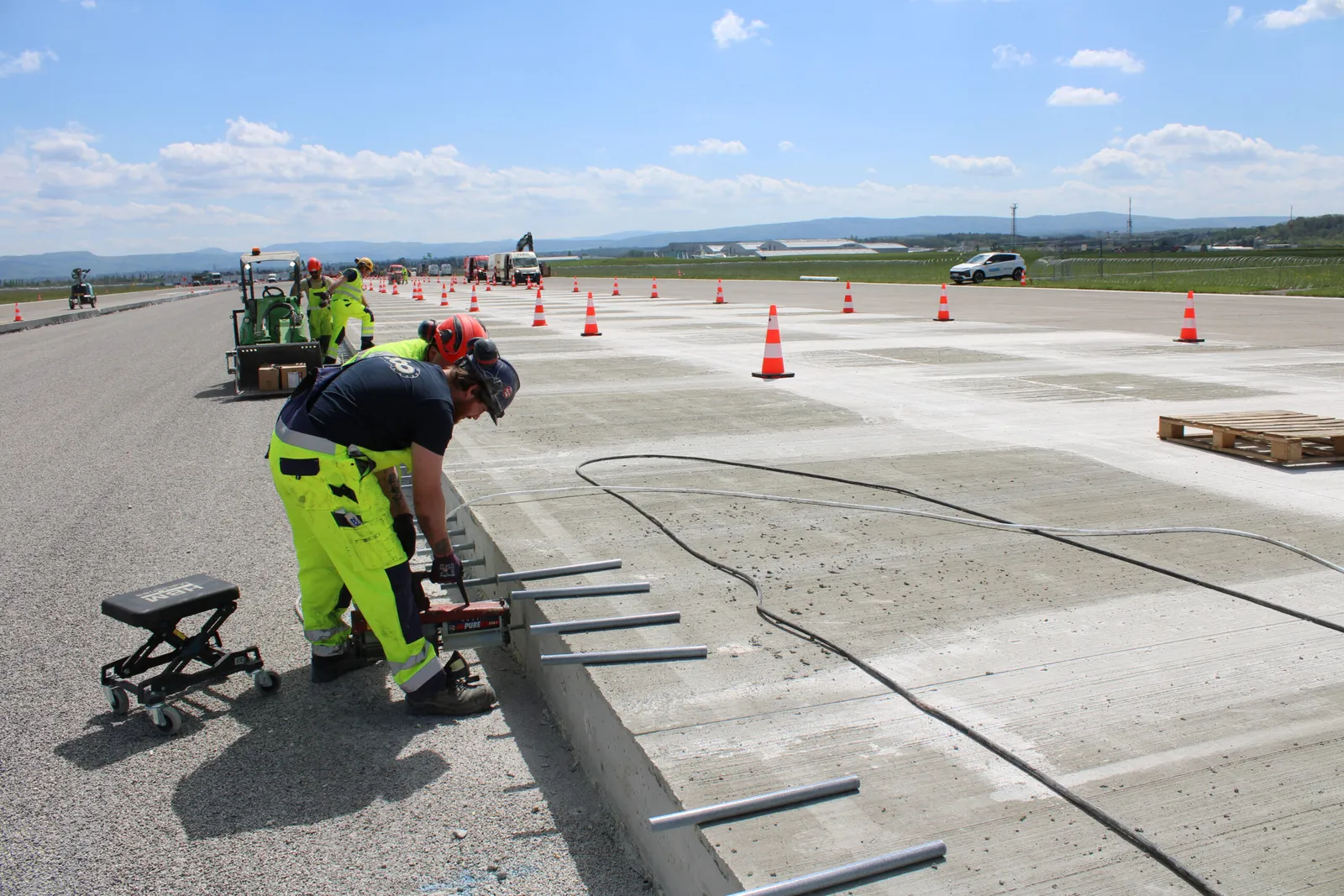
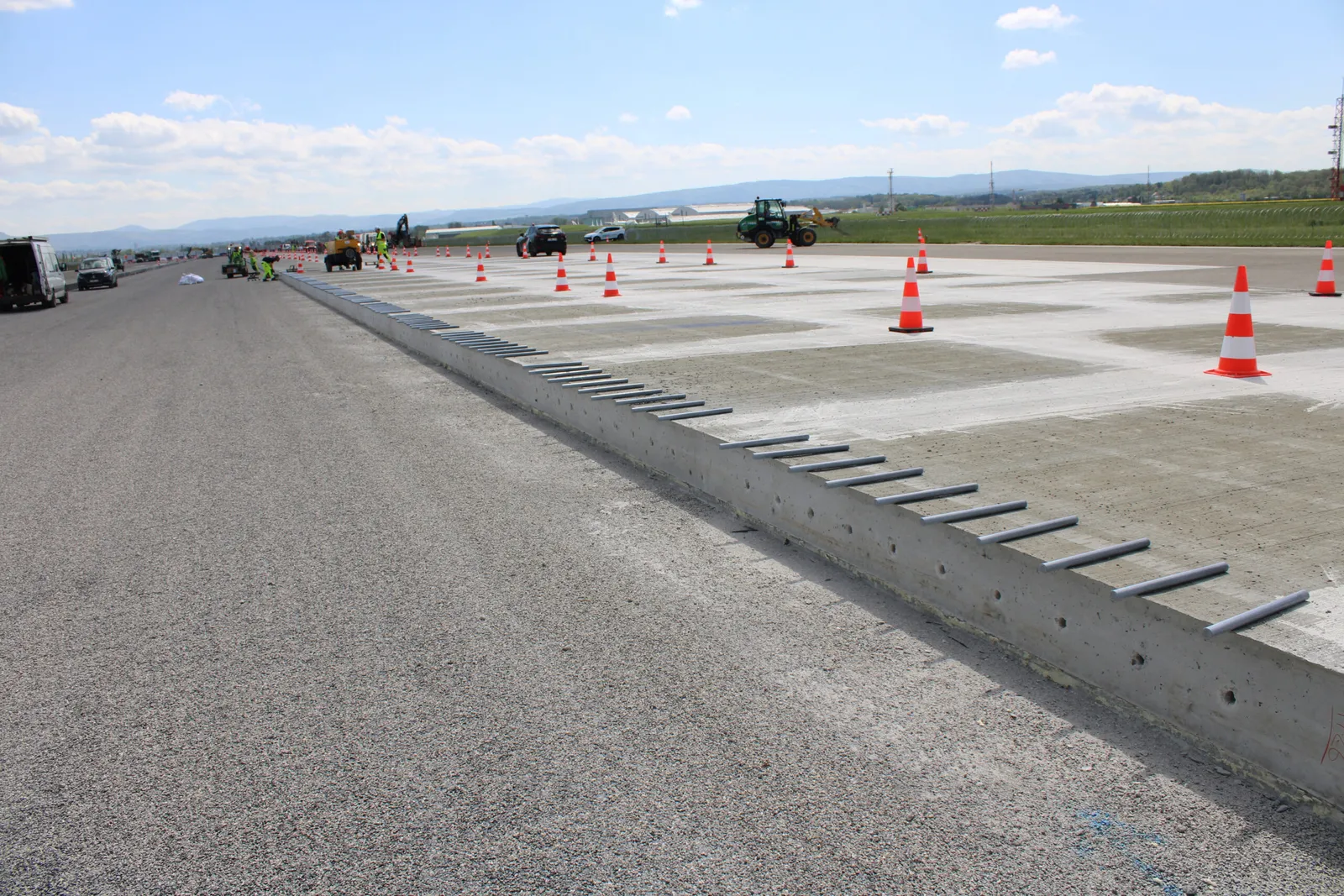
A second phase followed the sawing work. ZABO then installed around 3,300 coated dowels, 30 mm in diameter and 50 cm long. The dowels were inserted to a depth of 25 centimetres and then chemically anchored. For this work, ZABO used an automatic percussion machine fitted with five drilling heads. The machines were carefully checked and adjusted beforehand. A technician spent weeks configuring the machinery for optimum performance.
“At this stage, the main focus was on speed and organisation,” continues Alexander Roose. “There was little time between the different concrete pours. That is why we deployed no fewer than nine people, working in two teams. The combination of experienced staff and specialist equipment enabled us to complete everything on schedule.”
No risk of downtime
With such a tight schedule, ZABO wanted to eliminate any risk. The company therefore travelled to Mulhouse with two identical machine sets. “When a machine breaks down, valuable time is lost,” notes Alexander Roose. “That is why we always build in redundancy for this type of work. Fortunately, we did not need the back-up machines.”
For ZABO, this contract fits perfectly with its growing presence at airports. Previous projects have been carried out at Florennes, Chièvres and Zaventem. “Airport projects bring together planning, technology and precision. It is precisely on projects of this kind that our expertise comes into its own,” concludes Alexander Roose.
Question about this story? Ask your question
Keep following this
Get an email when a new story is published. No account needed.
- SubjectConcrete