











High-voltage (HV) cabin with a through-flow plinth: pilot project for climate-resilient electrical infrastructure
Texte & photos Lithobeton
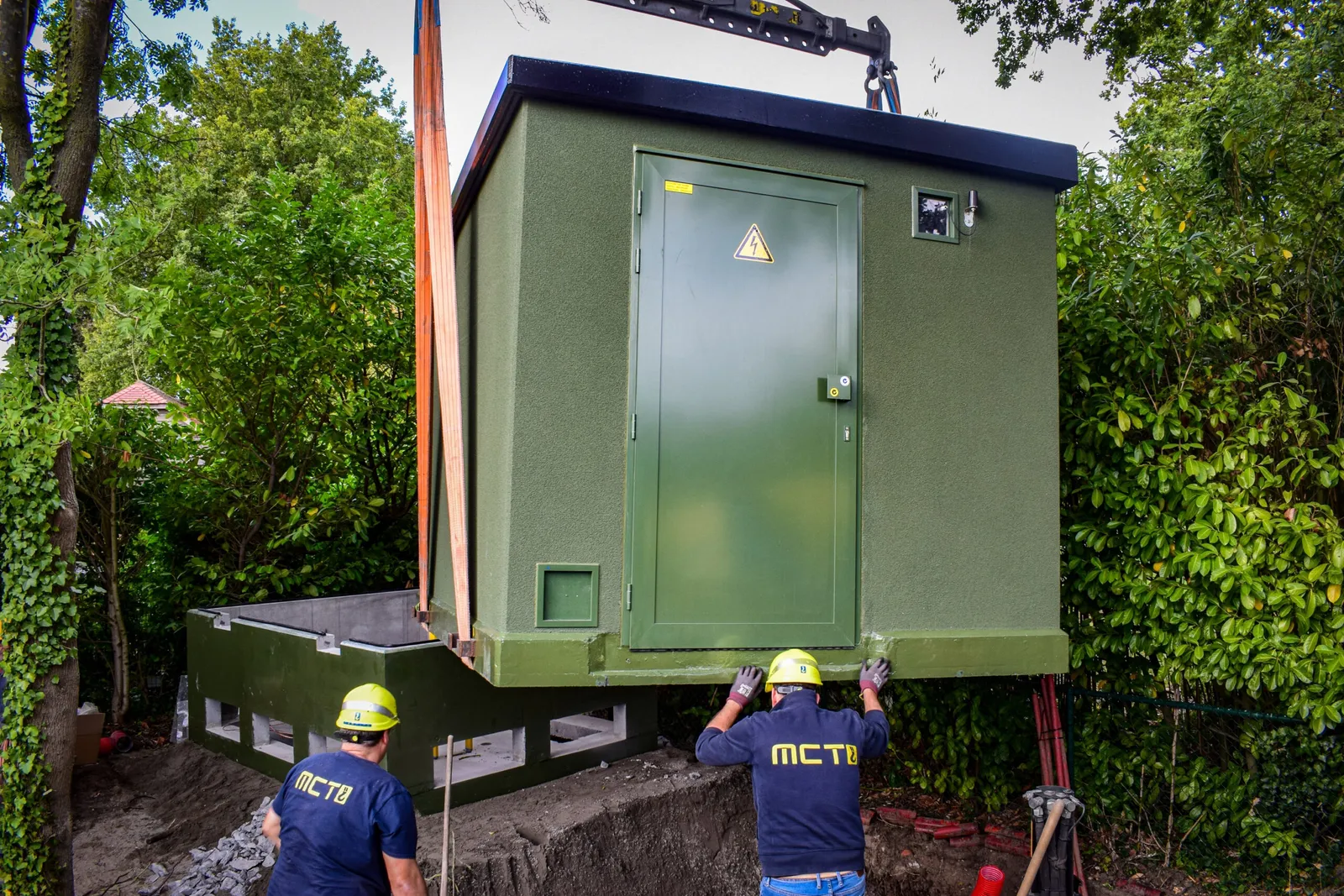
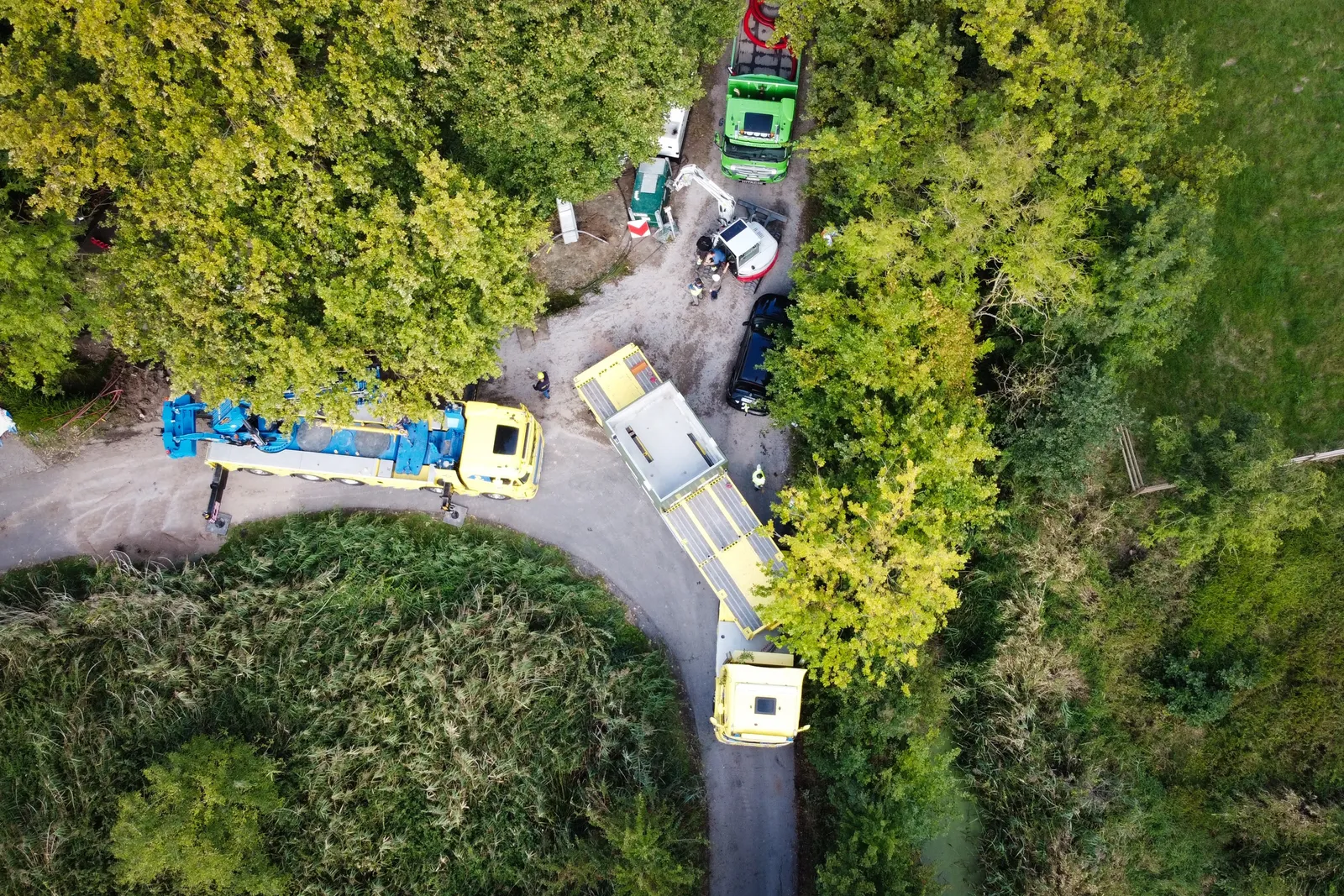
A pilot project was recently completed in Afsnee, with the installation of Belgium’s first operational HV cabin featuring a through-flow plinth. The project is the result of a collaboration between Fluvius and Lithobeton, and offers a practical response to the growing challenges of building (prefabricated) structures in flood-prone areas.
Technical challenge
In practice, HV cabins are generally built on a solid concrete plinth. In areas exposed to flooding or the risk of water overflowing, however, this conventional approach can create a dangerous combination of water and electricity. A raised, through-flow plinth was designed as a durable, repeatable solution.
The new plinth has openings in its side walls, allowing water to flow in and out. The structure lets water pass through without putting the electrical components at risk. The solution combines the structural strength of reinforced concrete with greater climate resilience, without compromising the functional requirements of the high-voltage substation.
Relevance to climate adaptation
The installation in Afsnee is the first application of this type of plinth in Belgium and can be seen as an important step towards climate-adapted electrical infrastructure. With extreme rainfall and local flooding expected to increase, it is becoming essential to adapt existing design principles where the application calls for it. The concept demonstrates that, with targeted modifications, precast concrete products can make a significant contribution to the safety and durability of utility infrastructure in a changing climate.
This project illustrates the value of practical collaboration between the client (Fluvius) and the manufacturer (Lithobeton). The exchange of expertise resulted in a technically feasible, repeatable solution that can be applied using current construction practices.
Broader applications across the sector
Although the Afsnee project was developed as a pilot, it opens up possibilities for wider application in other flood-prone regions. The through-flow plinth principle can be used not only for high-voltage substations, but also for other utility infrastructure where stability and water safety are critical. For the precast concrete sector, this represents an opportunity to drive further innovation in climate-resilient product development.
Question about this story? Ask your question
Keep following this
Get an email when a new story is published. No account needed.
- ThemeNew ways of building
- SubjectConcrete







