Sustainability considered in cement and concrete certification
Texte Tim Janssens | Photos BE-CERT
Sustainability is evolving rapidly across the construction sector. This is true even at BE-CERT, which, as a certification body for ready-mixed concrete, mortar and related raw materials, is regularly approached by manufacturers that have developed an eco-friendly alternative to cement or concrete. Leslie Hammer and Laurence De Meyst, two dynamic new recruits who joined the team in 2020 and 2021, explain the added value BE-CERT can offer in this context. “We do not simply act as watchdogs. Far from it: we proactively seek tangible evidence to support the quality of sustainable innovations.”
The environmental impact of cement and concrete has been a hot topic in the construction sector for many years. Producers and innovative developers are coming up with many new ideas to reduce it in a lasting way. As a certification body, BE-CERT helps separate the wheat from the chaff. “We are the first to recognise that change is urgently needed, which is why we are working hard on it,” explains Laurence De Meyst. “For example, I am closely following developments in the use of AAM, or alkali-activated materials, as an alternative cement-free binder. We are also certifying an increasing number of water-based admixtures, and working to ensure that performance criteria are no longer based solely on mechanical tests demonstrating compressive strength, but also on durability tests.”
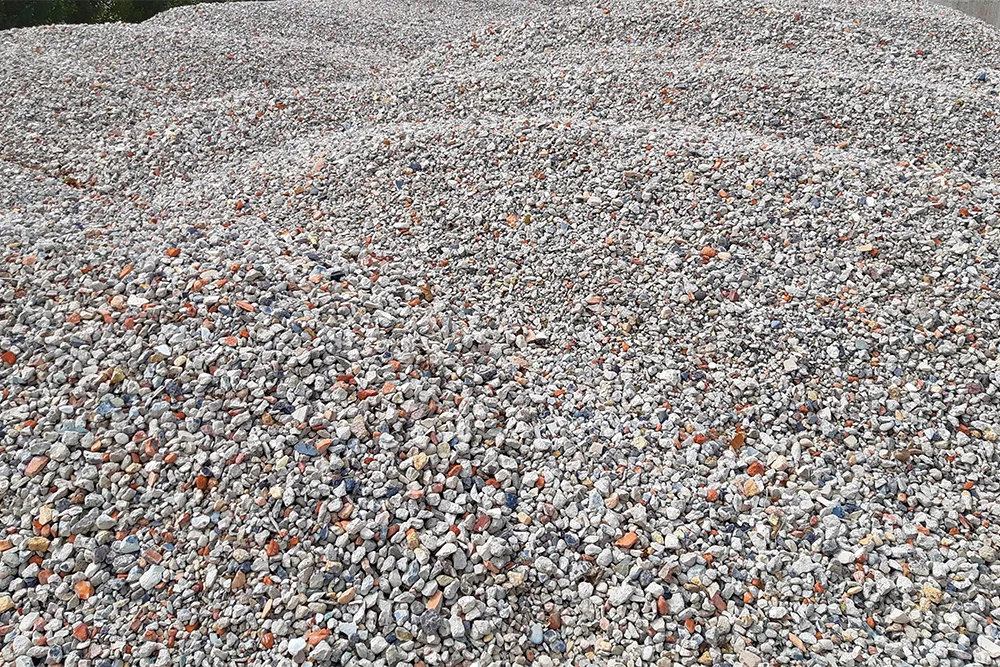
“For concrete made with recycled aggregates, we introduced the specific RS and RD certificates. Since last year, the new NBN B 15-105 standard has also been in place, with the aim of demonstrating that inert alternative raw materials are suitable for use in concrete,” says Leslie Hammer. “There are developments at European level too,” adds Laurence De Meyst. “Two years ago, a new cement standard was published, NBN 197-5. It covered alternative variants with an even lower proportion of Portland clinker, for which the necessary certificates have since been issued. The next part, NBN 197-6, is already being drafted and concerns cement containing recycled concrete fragments. As BE-CERT, we take part in the associated working groups and adapt everything to the Belgian context (BENOR).”
Quality comes first
Let’s be clear: BE-CERT is not sitting on its hands. On the contrary, the organisation is doing everything it can to contribute to the sustainability transition. Behind the scenes, however, standardisation and certification are sometimes criticised for lagging behind day-to-day practice. “That criticism is unfounded,” says Laurence De Meyst. “With supplies of slag and fly ash becoming increasingly scarce (these materials replace high-CO2-intensity Portland clinker), and sustainability attracting widespread attention, things are moving quickly and demand for eco-friendly alternatives is very high. The problem is that quality and durability have generally not yet been demonstrated over the long term, while our priority is to provide a robust quality guarantee. When we issue a certificate, it means we are sufficiently confident in the reliability of a given product. We owe it to users to leave nothing to chance. A great deal of research is therefore still needed, which naturally takes time and money. This creates tension with manufacturers, who would prefer to bring their innovations to market as quickly as possible.”
Guaranteeing quality while responding to new developments as quickly as possible is a delicate balancing act for BE-CERT. Fortunately, Technical Approvals (ATG) offer a welcome breathing space. “If a standard does not yet exist, manufacturers can apply for a technical approval for a product intended for a specific application. Bear in mind, though, that depending on the scope, you will need to allow for a certain amount of time and, of course, a certain budget. There is a good reason for this: every aspect is checked and all potential risks are covered.”
Taking a proactive and open-minded approach
It is important to know that BE-CERT is very open to new ideas and itself seeks to act proactively in response to producers’ and users’ needs, says Laurence De Meyst: “I would like to return to the example of AAM, or alkali-activated material, as an alternative cement-free binder. I researched the subject, attended symposiums and contacted experts in the Netherlands and Germany, where it is also a major topic. So we do not simply act as watchdogs. Far from it: we take part in seeking evidence that can support the quality of sustainable innovations.”
BE-CERT’s willingness and ambition are also reflected in its recruitment policy. “In recent years, many young colleagues have joined us, bringing fresh ideas and more dynamism,” says Leslie Hammer. “In this way, BE-CERT aims to stay at the forefront of progress and respond even better to current trends. Our employees have the opportunity to make an active contribution to reducing the construction sector’s environmental impact, with an open mind and without preconceptions. That is very rewarding.”
Een zakelijke vraag aan PROCERTUS? Get in touch
Companies in this story
Keep following this
Get an email when a new story is published. No account needed.
- ThemeManaging construction projects
- SubjectPublic space
- CompanyPROCERTUS