Macrofibre-reinforced concrete for a more durable footbridge
Texte Niels Rouvrois Photos Adfil
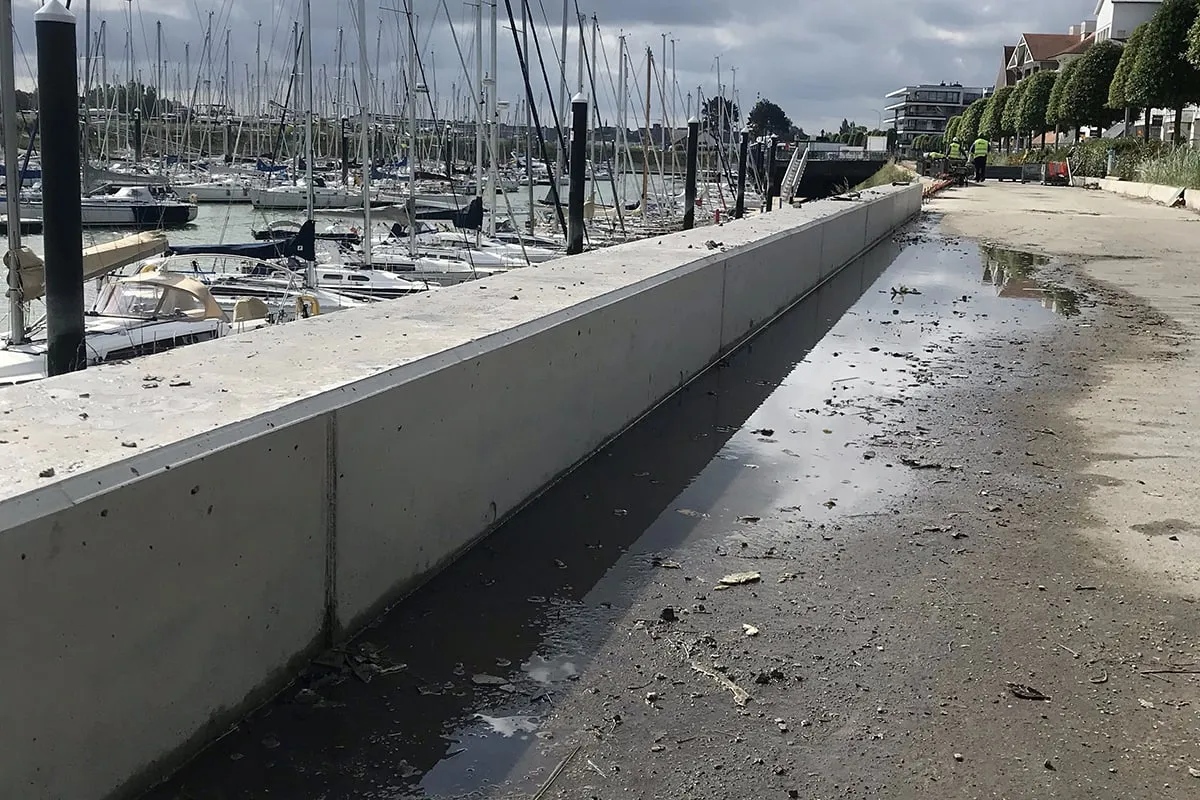
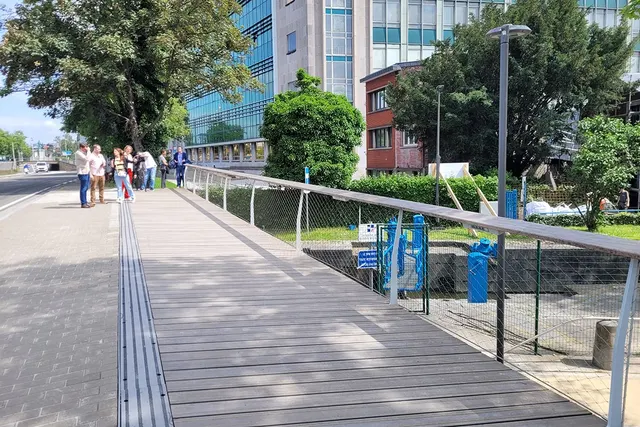
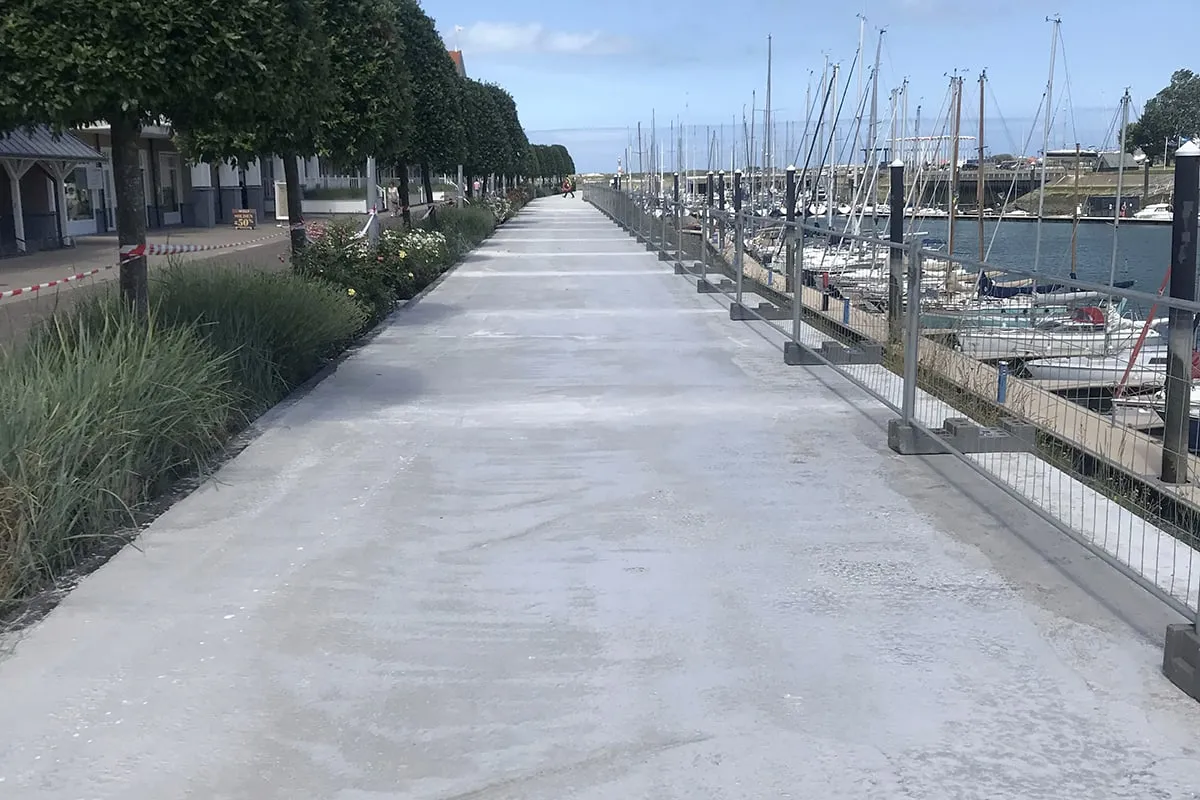
Following an emergency response by the fire service, the wooden footbridge along the channel in the port of Nieuwpoort was badly damaged in summer 2023. Commissioned by the Agentschap voor Maritieme Dienstverlening en Kust (MDK), Besix began repairing the damaged section last May. Synthetic fibre reinforcement from Adfil, a producer of microfibres and macrofibres, was selected for the concrete deck and edge beam. “The amount of steel avoided is considerable. This is a major win for the environment,” says Steven Anseeuw, technical sales director at Adfil.
The decking had sagged or collapsed over a distance of 200 metres. Steven Anseeuw: “As the concrete deck and edge beam are still covered with timber, there were no aesthetic requirements. But in terms of durability, Besix looked for an alternative to steel reinforcement. A particularly large amount of steel reinforcement was specified for the concrete edge beam, which only needs to support the parapet and the footbridge, at around 85 kg per m³. This is because the maximum crack width in the concrete was set very low to protect the beam’s own steel reinforcement from chemical attack from the surrounding environment, namely sea salt. We can replace those 85 kg of steel per m³ with just 4 to 5 kg/m³ of macrofibres across the entire section. A reinforcement mesh was also originally specified for the deck. This was replaced with 3 kg of fibres, apart from a small steel mesh at each end.”
Multiple benefits
The footbridge is in an aggressive environment, close to seawater and sea air, which can adversely affect steel reinforcement and its service life. Steven Anseeuw: “If the concrete cracks, there is a real risk that the steel reinforcement will corrode and the concrete will deteriorate. Adfil fibres, by contrast, are 100% chemically inert. Cracks or splits in the concrete therefore cannot affect the reinforcement. The benefits are multiple. Replacing steel has a much lower environmental impact, the service life is extended because the risk of concrete deterioration is dramatically reduced, and there is a financial saving, with 5 kilograms of fibres replacing 85 kilograms of steel per m³. In addition, using fibre reinforcement saves time because the fibres are already mixed in during concrete production, making placement on site much easier.”
Durus Easyfinish
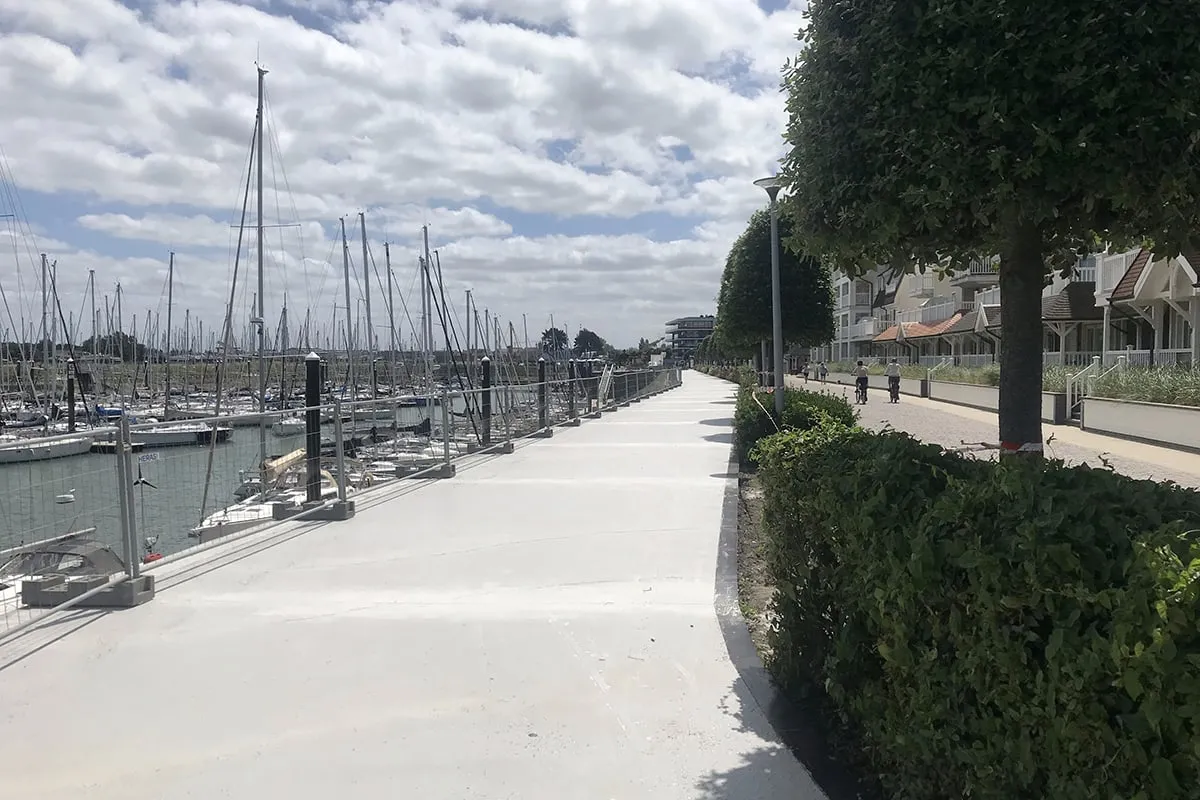
Durus Easyfinish fibres were used for the promenade in Nieuwpoort. These polypropylene synthetic macrofibres from Adfil have revolutionised concrete construction. Macrofibres deliver superior performance, cost savings and health and safety benefits for concrete suppliers, contractors and designers. Durus EasyFinish is extremely easy to handle and apply. The reinforcement is supplied ready-mixed in the concrete, or can be added on site. This is a major advantage over reinforcement mesh, which can be positioned incorrectly. The fibres are inert and unaffected by concrete alkalinity or moisture, making them 100% corrosion-proof. This ensures a long service life. Durus EasyFinish also requires far less storage space than steel reinforcement and eliminates the risk of injuries from tripping, falling and cuts associated with steel reinforcement mesh. The fibres are ATG-approved and are generally mixed at the batching plant, so the concrete arrives on site BENOR-certified and with the assurance of the correct Adfil dosage.
Adfil’s role goes beyond simply supplying the fibres. “We provide technical support to the contractor where needed. Challenges can always arise during construction. That was the case with this project. Strong winds on the waterside site caused significant moisture loss from the concrete after the formwork was removed. This substantial moisture loss places stress on the concrete, encouraging shrinkage and cracking. It is therefore our job to explain how important it is to spray on a curing compound immediately after striking the formwork, to prevent moisture from escaping. Adfil goes to great lengths to be a reliable partner, even during construction.”
More and more contractors and clients are also turning to Adfil. “The environment and sustainability are increasingly becoming priorities. We see this among our partners too. In this respect, I am convinced that we have the reinforcement of the future in our hands,” concludes Steven Anseeuw.
Question about this story? Ask your question
Keep following this
Get an email when a new story is published. No account needed.
- SubjectPublic space