Street furniture for responsible and efficient waste management
Texte Philippe Selke Photos Poncelet Signalisation
Belgians are generally good at sorting their waste, at least at home. In public spaces, this is sometimes less true. Suitable street furniture makes a big difference, for towns and municipalities as well as for residents, and this is where Poncelet Signalisation comes in. Its catalogue is packed with bins and containers of all kinds, with expert advice included. The City of Liège is one of the partners with which this street furniture specialist has built a strong collaboration in this area over many years.
“Raising public awareness of waste sorting is crucial. It can start at a very young age, for example in schools, where colourful bins help teach children about the different waste categories,” explains Cléo Dandoy, Communications Officer. “Waste management is also a major challenge for towns and municipalities. They need to keep public spaces clean by providing conveniently located collection points, which then need to be emptied efficiently. We can offer our expertise, helping towns and municipalities implement the best solutions so that these bins are used properly and emptied when needed, taking account of the human and technical resources available. And it is so rewarding to see the results of waste sorting! Our catalogue also includes street furniture made from recycled plastic.”
The right solutions in the right places
For many years, around 4000 standard bins, customised with the City of Liège’s branding, have been dotted throughout the streets, parks and other public spaces of the Cité ardente. Their limited capacity meant that collection rounds had to cover the entire area. A few years ago, the City therefore decided to optimise waste management in its public spaces. ∂
Drawing on its experience and the expertise of Poncelet Signalisation, it developed tailored, customised solutions.
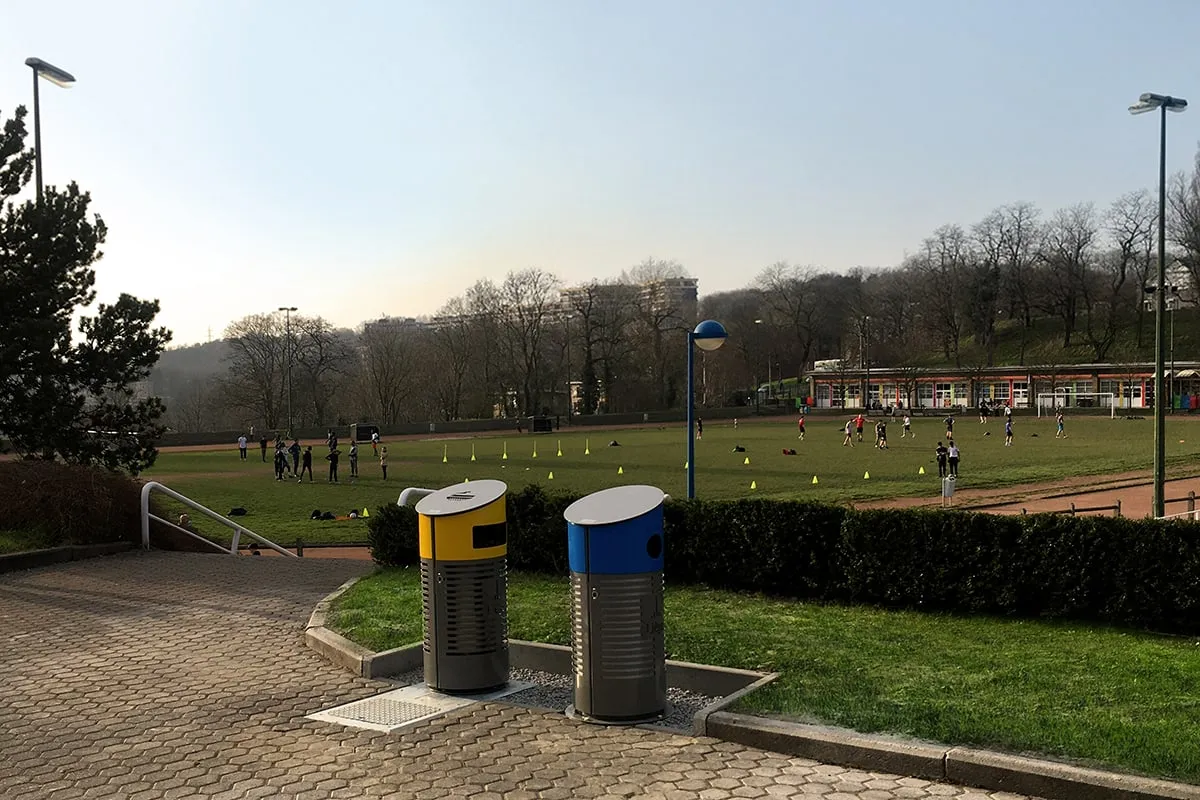
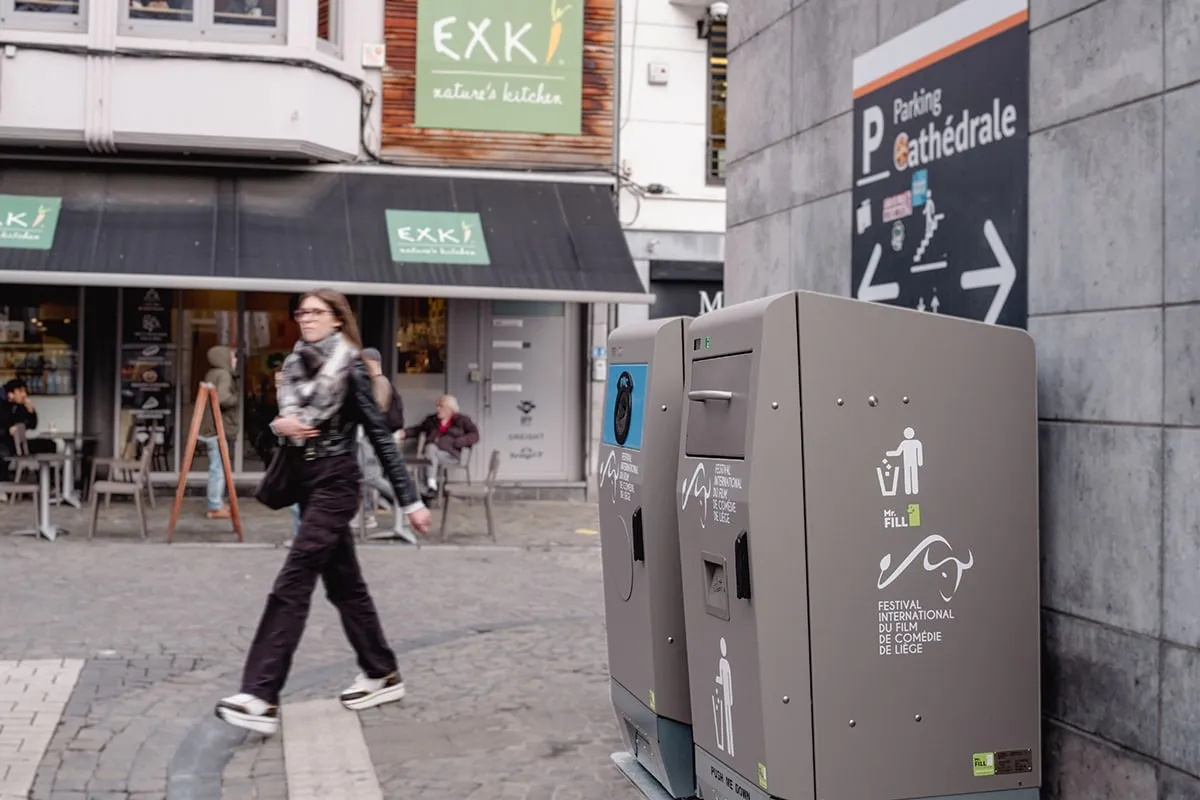
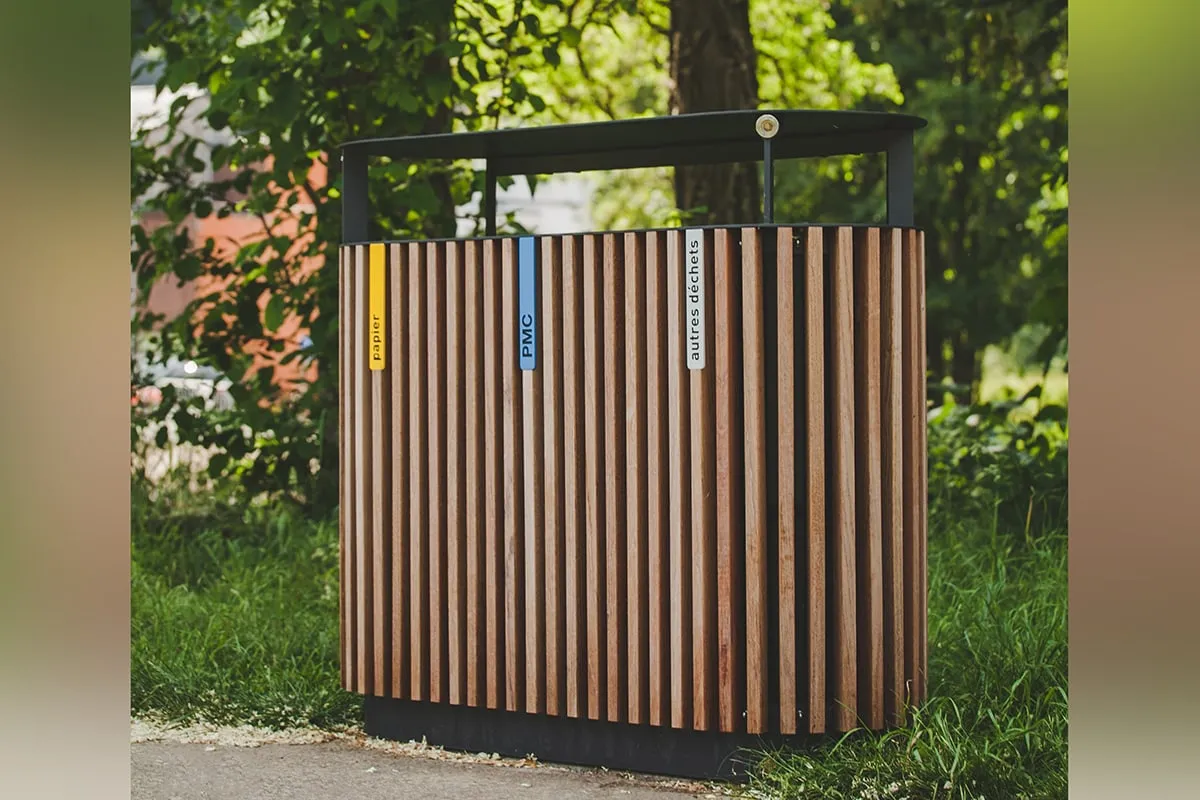
Sébastien Boclinville, Sales Director, outlines the solutions introduced: “For almost 7 years, we have been reducing the number of small bins and replacing them with a smaller number of larger-capacity bins. As well as making collection more efficient, these bins are also designed for waste sorting.” Bins with colour-coded bands to distinguish between waste types have been installed in various parts of the city, including Parc de Cointe, Parc de la Boverie and Jardin Botanique. In the busiest locations, they are fitted with underground containers.
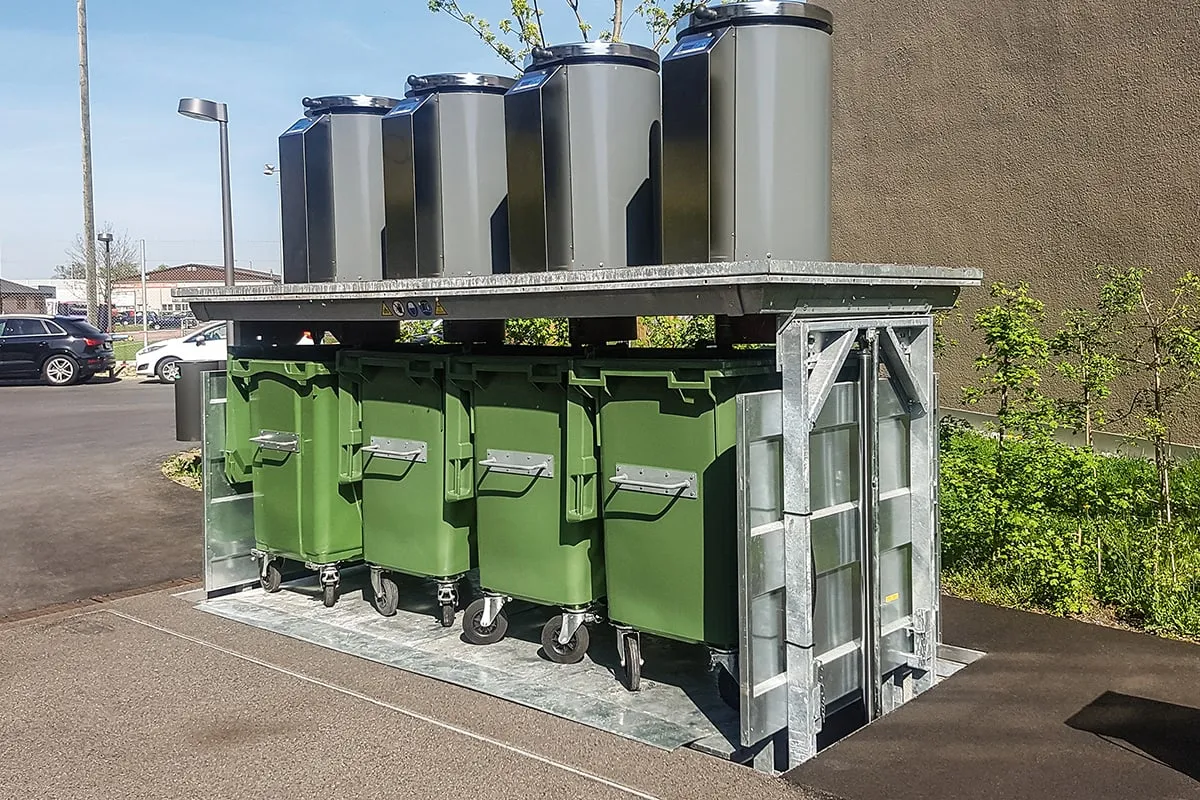
“We then added electronic management for all these collection points through the I-Apps application, which monitors the fill level of each bin and helps us manage resources more effectively by optimising collection rounds. The system can also identify potential damage to bins, for example caused by vandalism, so that repairs can be scheduled. Finally, in a third phase, we are installing containers in residential areas. These 1000-litre containers, fitted with wheels, sit on a platform that is raised by a hydraulic cylinder. Unlike the large underground containers found, for example, on the coast, this system can be serviced by existing lorries. The containers are also much easier to clean. The Néo Légia district is the first to benefit from this discreet and efficient system.”
Finally, at events such as the Foire de Liège, temporary additions to existing infrastructure and new installations used to gather useful information about user habits take the form of “mobile” islands, each comprising two solar-powered compacting bins. Statistics show that these measures are making waste sorting work well in Liège, except for glass bottles, which must be deposited in dedicated glass banks, of which there are fewer.
Liège is therefore managing its waste effectively, keeping its public spaces welcoming. Namur is doing the same. Many towns and cities are considering the issue, and Poncelet Signalisation is on hand to advise them according to their specific circumstances, such as the type of lorry used and whether bags are used, and to supply high-quality, durable equipment tailored to their needs.
Question about this story? Ask your question
Keep following this
Get an email when a new story is published. No account needed.
- SubjectPublic space