Wallonia is building its Smart Cities of tomorrow
Texte Joaquim Dupont
Wallonia may have been a little slow to get going and find its feet, but the transformation is under way. From Liège to Charleroi, not forgetting Namur, the major Walloon cities have begun to reinvent themselves as Smart Cities, ready to tackle today’s and tomorrow’s socio-economic challenges, and above all environmental ones.
What do we mean by a SMART CITY?
Connected, sustainable, enterprising and innovative: these are the defining qualities of a Smart City, enabling it to turn constraints into development opportunities, notably through technology and the innovative capabilities of its residents.
Liège, the embodiment of change in Wallonia
The City of Liège is reinventing itself to address the challenges it faces today. First and foremost, the new tram network, whose first line is due to enter service in 2025, will dramatically improve mobility, currently one of the city’s major pain points. Of course, the environmental impact of this mode of transport, which is far more sustainable than the car, is another major benefit.
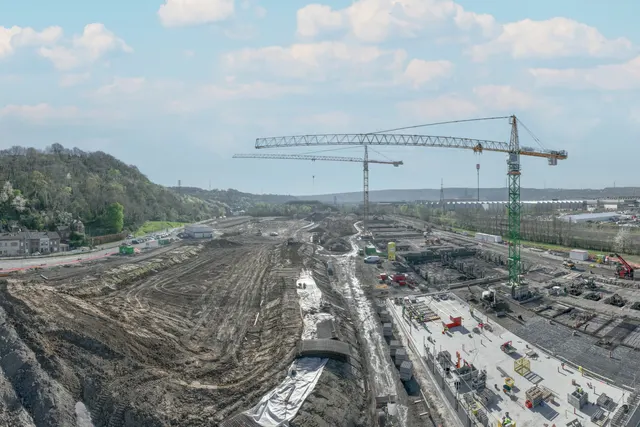
Next, the new eco-districts of Coronmeuse and Les Guillemins, named Rives Ardentes and Paradis Express respectively, embody the ambition to create pleasant, community-focused and sustainable places to live, while showcasing architectural heritage. For example, the Rives Ardentes district will include high-performance, adaptable buildings and will be equipped with, among other things, a district heating network and an intelligent water management system.
Thanks to their multi-functional nature, both projects also aim to strengthen ties between users and residents, and stimulate economic initiatives.
Namur and Charleroi are equally committed to change
While the introduction of the tram is truly transforming Liège, Namur and Charleroi have also embarked on the journey towards a “Smart” future. The Hainaut city began its transformation with the comprehensive regeneration of the Charleroi-Sud station district, improving links with the city centre and encouraging active travel. The Upper Town was also completely redeveloped following more than two and a half years of work, at a cost of nearly €40 million. For this part of the city, it is a complete facelift and a real boost for hopes of economic recovery.
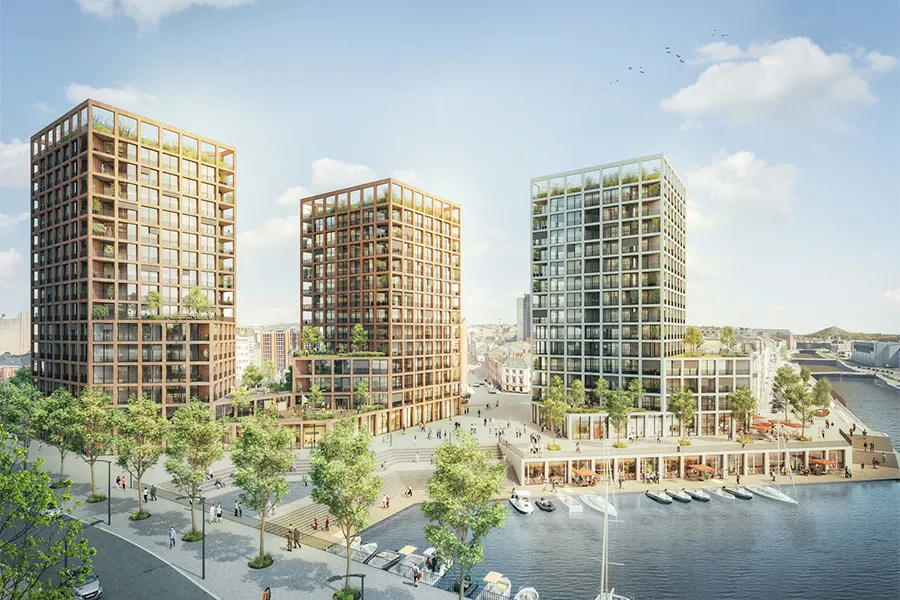
Charleroi’s transformation continues today with positive mobility initiatives, such as the bus rapid transit line, as well as new resilient property developments, including the “Rives de Charleroi, Autour de la Marina” eco-district. Conceived around the future riverboat stop in the Lower Town, a few metres from the station, the Rives de Charleroi project includes the construction of several multi-functional buildings around landscaped, green public spaces designed to encourage interaction between residents and users.
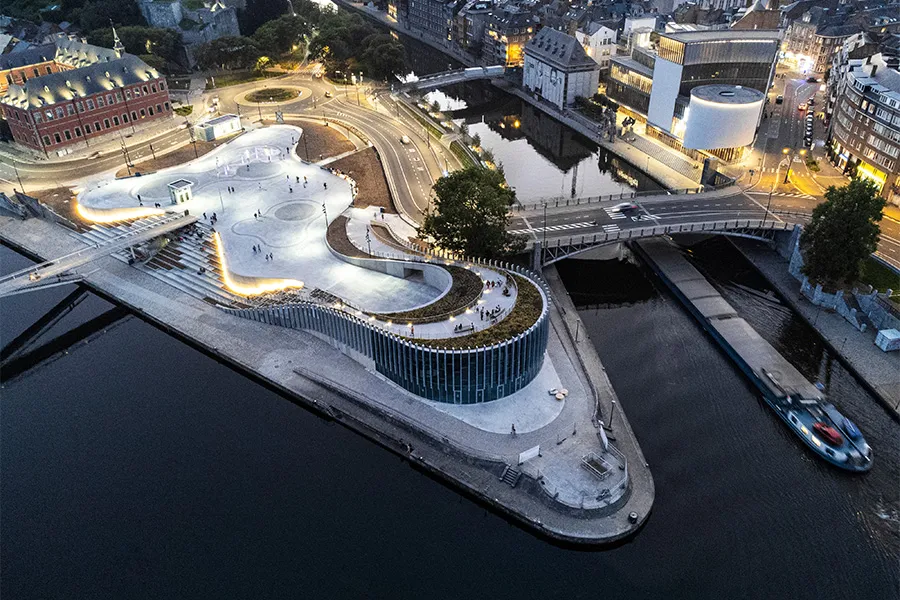
Namur, the capital of Wallonia, has been working towards its smart transition for many years, an effort that has secured it substantial ERDF funding. This has enabled the launch of the “Namur Innovative City Lab” programme, comprising 9 projects combining sustainable development and digital technology. The redevelopment of the Grognon site, including the construction of the building named NID (Namur Intelligente et Durable) and the adjoining pedestrian esplanade, is a perfect example of the City’s urban planning approach: architecturally striking and resilient projects that create pleasant places to live and meet, while showcasing key sites in the city.
In 2021, Namur was also named one of the 246 UNESCO Creative Cities, recognising the importance given to “creativity and cultural industries at the heart of urban development plans for safe, resilient, inclusive and sustainable cities, in line with the United Nations 2030 Agenda for Sustainable Development”.
Question about this story? Ask your question
Keep following this
Get an email when a new story is published. No account needed.
- SubjectConstruction