











New concrete standard: what impact will it have on site?
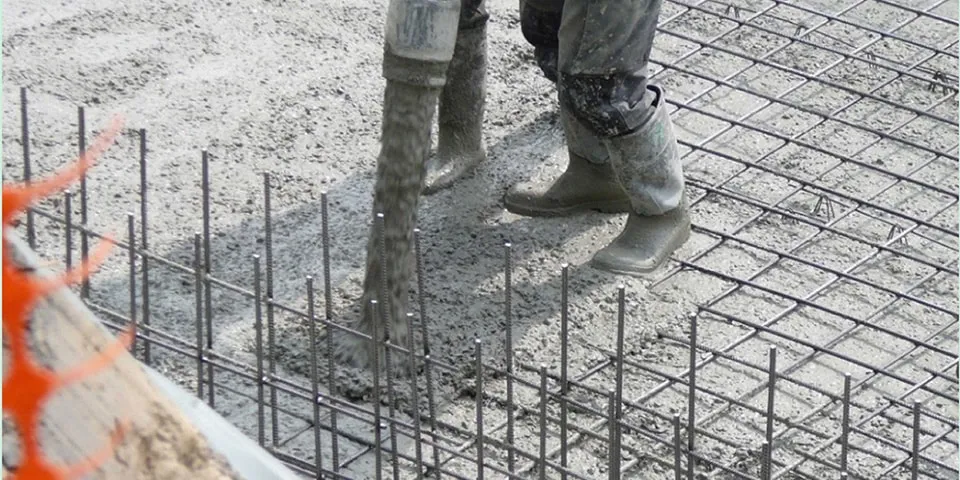
The new NBN B15-001 concrete standard has been in force in Belgium since 4 July. We asked Bram Dooms of CSTC what impact the changes would have on contractors and ready-mixed concrete plants.
Standards are reviewed periodically to address developments in the sector. Concrete is no exception. A new version of the European concrete standard (NBN EN 206) was published in 2014 and amended slightly in 2016. The committees responsible for standardisation in Belgium therefore set to work adapting the Belgian standard NBN B 15-001. “A number of elements in the European standard have been amended or added, and the aim is, of course, to adapt them to the Belgian context. This includes both changes and additions. The European standard leaves a number of criteria or requirements open for member states to define themselves,” explains Bram Dooms, Deputy Head of the Concrete Technology Laboratory at CTSC.
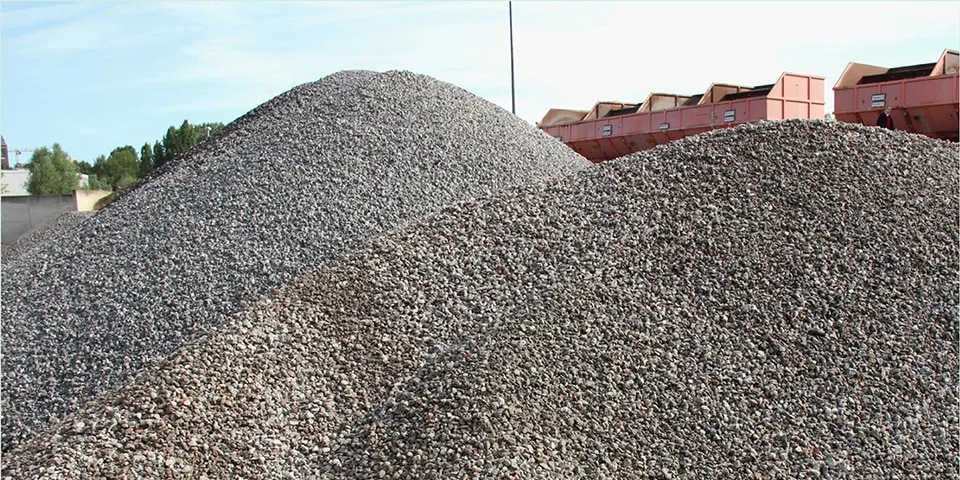
The new concrete standard significantly expands the use of recycled aggregates.
The new concrete standard, which replaces the 2012 version, is available from NBN. Contractors who are CSTC members can download it free of charge from the CTSC website, as they can with many other standards. Febelcem also offers a practical publication combining the European standard and its Belgian national annex. The foreword to the standard lists all the changes and additions compared with the previous version. Bram Dooms explains here which changes will have the greatest impact on site.
Durability
A substantial annex on preventing alkali-silica reaction has been added. “Prevention levels and exposure classes have been defined. At the client’s request, the contractor must specify these when ordering the concrete. The concrete plant must take specific measures to prevent an alkali-silica reaction. These measures are also set out in the standard,” adds Bram Dooms.
Recycled aggregates
Under the previous version of the standard, the use of recycled aggregates was very limited. “These options have been significantly expanded in the new standard,” explains Bram Dooms. “Recycled aggregates must, of course, meet specific criteria. These include type A+ recycled concrete aggregates and type B+ mixed recycled aggregates. For reinforced concrete in exposure class EE3 (external elements exposed to frost), up to 20% of the coarse aggregate can now be replaced with type A+ recycled concrete aggregates, which was not previously permitted. The BENOR regulations have also been amended, and it is now possible to obtain BENOR concrete containing recycled aggregates under these new provisions. On site, we are increasingly being asked for environmentally friendly solutions or ones that support the circular economy. The new version of the standard reflects this trend.”
Fibre-reinforced and self-compacting concrete
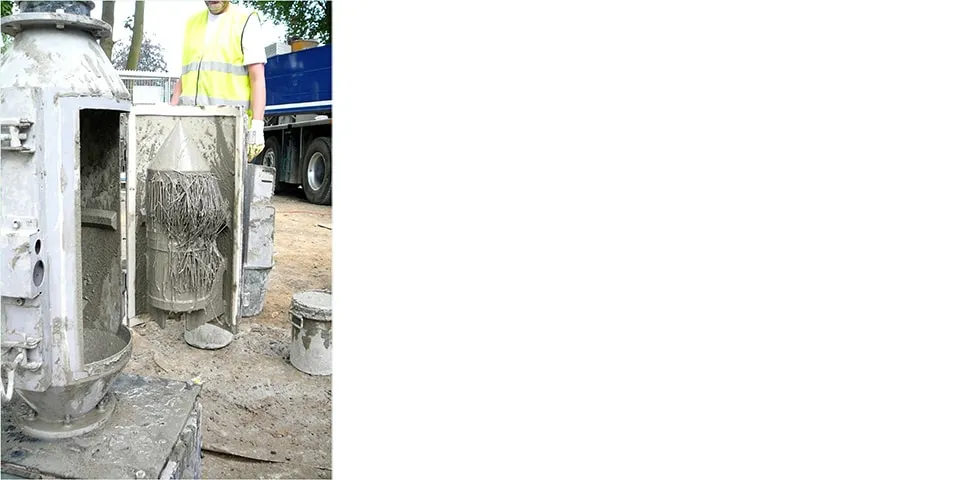
BENOR-certified fibre-reinforced concrete is now available.
Previously, the requirements for self-compacting concrete were covered by a separate standard. They are now included in the concrete standard, along with the requirements for fibre-reinforced concrete. The BENOR regulations have also been amended, making it easier to obtain BENOR-certified self-compacting or fibre-reinforced concrete. “However, the concrete plant can guarantee that the fibres are evenly distributed throughout the concrete only if it uses fibres certified under a type 1 technical approval (ATG). Type 2 ATG-certified fibres can be used to guarantee the flexural ductility properties of BENOR-marked fibre-reinforced concrete,” stresses Bram Dooms.
Concrete for special geotechnical works
Specific requirements already existed for concrete used in special geotechnical works, such as bored piles or diaphragm walls. However, as these requirements were set out in other standards, they were often not followed, leading to a range of problems. “For example, concrete for diaphragm walls was ordered as if it were for a conventional application, even though the minimum cement content and fines content need to be much higher for this use,” explains Bram Dooms. “By incorporating these requirements into the concrete standard, we hope they will be followed more closely.”
Suitability of cement for use
Finally, it is important that concrete plants do not continue using any type of cement for any application. The new standard clarifies which uses are suitable for each type.
Question about this story? Ask your question
Keep following this
Get an email when a new story is published. No account needed.
- SubjectConstruction







