Developing new types of cement with a lower carbon footprint
Texte & photos FEBELCEM
The cement industry in motion
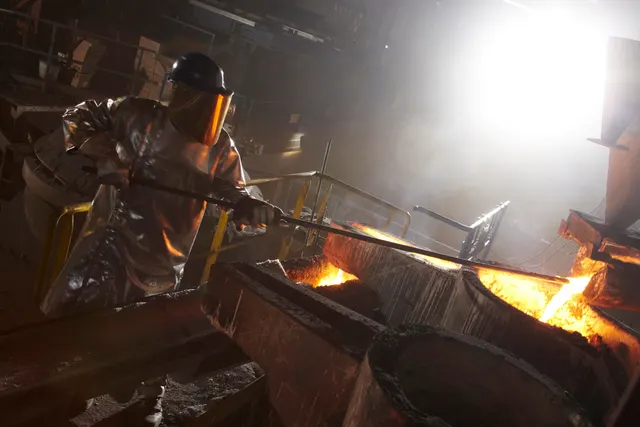
The Belgian cement industry’s commitment to reducing cement’s environmental impact is not new, but it is gaining momentum. The challenge is to do so while maintaining the technical performance of cement and concrete. One way of meeting the climate neutrality targets by 2050 is to reduce the clinker content of cement. Clinker is the main constituent of cement and is produced by heating mainly limestone to 1450°C in a cement kiln. In addition to CO2 emissions from fuels, CO2 is also released when limestone is chemically decomposed into calcium oxide at around 850°C. This chemical reaction is responsible for most of the total CO2 emissions. The remaining CO2 emissions come from heating the materials as they pass through the kiln.
After passing through the kiln, supplementary materials are often added to the clinker before the mixture is ground into a fine powder called cement. Producers reduce the proportion of clinker in cement, thereby immediately reducing CO2 emissions. New cements, in other words new recipes or compositions, are essential to this approach. Clinker substitutes such as fly ash, blast furnace slag or limestone fillers are mixed and ground with the clinker without being heated in the kiln, and therefore without emitting CO2. However, the closure of coal-fired power stations and the gradual phase-out of steelmaking blast furnaces are causing a shortage of fly ash and reducing the availability of blast furnace slag, obliging the cement industry to use other secondary raw materials.
The most widely used cement in Belgium today is the “low-carbon” blast furnace cement CEM III/A, with a clinker content of between 35 and 64%, the remainder being blast furnace slag. Only Belgian CEM III and CEM V cements have a clinker content below 65%. For information, the average proportion of clinker in Belgian cement in 2020 was 63.8%, compared with around 77% for the European average.
Cement standard
A new part of the cement standard was published in 2021, namely Part 5, NBN EN 197-5. It describes the new cement types CEM II/C-M and CEM VI. CEM II/C-M cement types have a clinker content of 50 to 64%. The “low-carbon” CEM VI types contain even less clinker, between 35 and 49%. Since mid-2023, there has even been a sixth part to the cement standard, NBN EN 197-6, covering cement containing fine particles from recycling. However, these two latest standards are not harmonised. As a result, CE marking will not be possible for these cement types, but voluntary BENOR certification will be.
All the cements included in the standards are suitable for general use, which means, among other things, that they do not have a negative effect on concrete durability. In addition, suitability for specific applications must be demonstrated for certain uses, generally according to the environmental exposure classes defined in the concrete standards, which include exposure to carbonation, frost, rain, seawater or de-icing salts, and chemical attack.
NEOCEM
A large-scale pre-normative research project, NEOCEM, led by the cement industry in collaboration with three research centres, CRIC, BUILDWISE and CRR, has been under way since 2020. It aims to demonstrate the suitability for specific applications of 4 main cement types using new materials: CEM II/B-M, CEM II/C-M, CEM V and CEM VI, with secondary materials consisting of blast furnace slag and/or limestone fillers and/or a new material such as calcined clay. For these cement types, a certain proportion of slag, varying from one type to another, is replaced each time with limestone fillers or calcined clay. Progress on the project has already made it possible to include some of the new cements in the forthcoming new version of the Belgian concrete standard, NBN B 15-001. In the follow-up project NEOCEM II, cements containing recycled fine particles in accordance with standard NBN EN 197-6 are being studied. These studies will enable the new cements to be brought to market more quickly and help meet the challenges of tomorrow.
Question about this story? Ask your question
Keep following this
Get an email when a new story is published. No account needed.
- ThemeBuilding with less carbon
- SubjectPublic space