A unique, bespoke oil separator for sewer rehabilitation
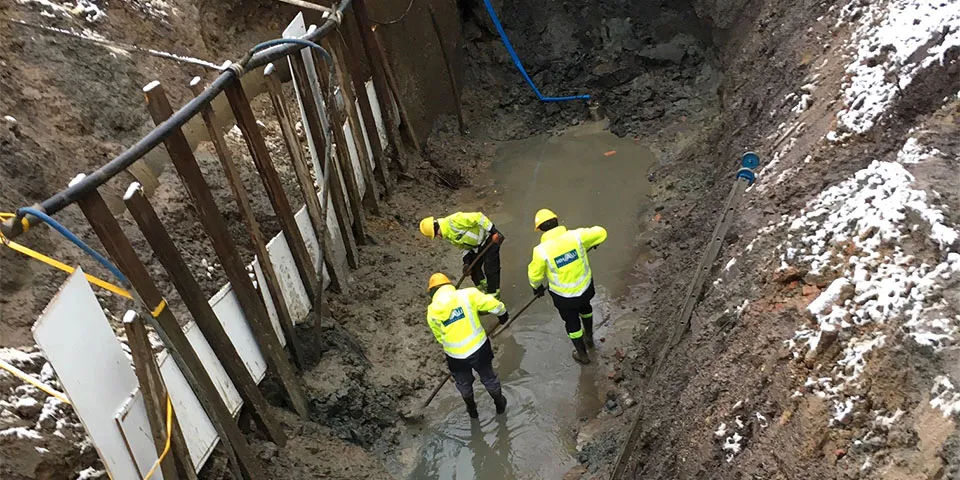
At Fluvius’s request, Mihali Wegenbouw is carrying out a sewer rehabilitation project on the ring road around Mechelen, near Mechelen-North. The standout feature of the project is a 13 m-long oil separator made from glass-reinforced plastic. ACO, a drainage technology specialist, was commissioned to manufacture and supply this one-of-a-kind separator. “A very fine example of bespoke work,” says engineer Rony Verbuyst, project manager at ACO.
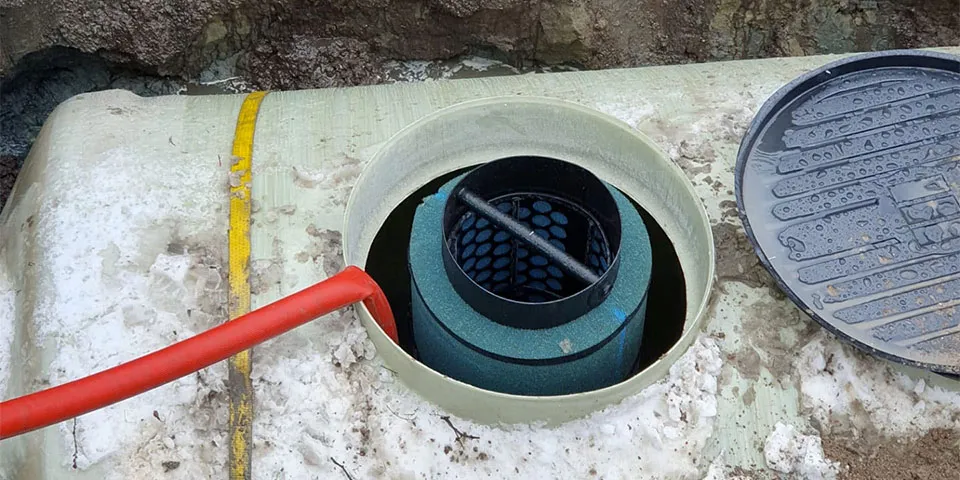
An additional advantage of this type of separator is its removable filter.
Installing the oil separator forms part of the site’s rehabilitation works, which required stormwater and wastewater to be separated. Only the works needed to rehabilitate the sewer were considered. “No attenuation or infiltration capacity needed to be provided in the stormwater drainage system,” explains Ine Schockaert, project engineer at consulting engineering firm Evolta. “The only requirement for the oil separator was that it should handle the flow rate, based on the maximum pumping capacity of the adjacent sump. The challenge was that the stormwater pipes to be connected, which have a diameter of 1,200 mm, were at a considerable depth, and the separator also had to be installed quite deep. Further adjustments were therefore needed to make this possible.”
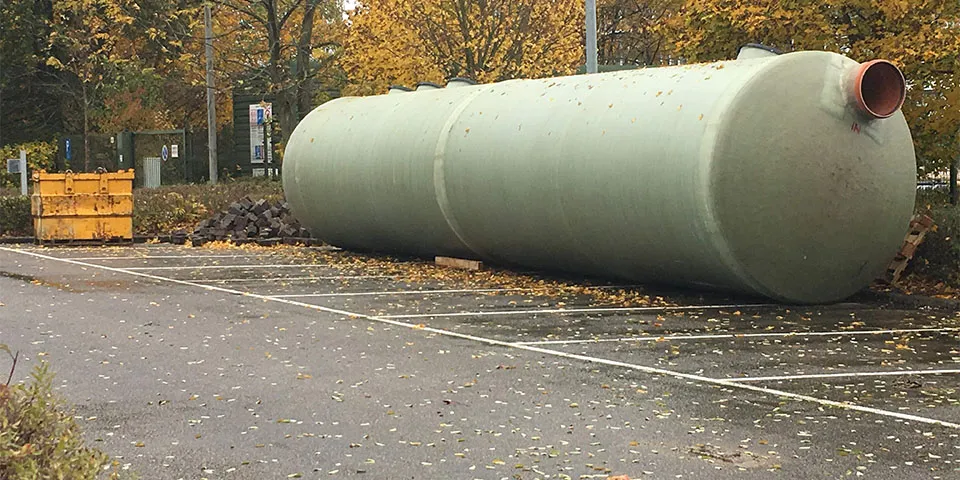
The oil separator is a unique, bespoke item made from glass-reinforced plastic.
Oleopator G NS200
ACO was initially asked to supply an oil separator with a capacity of 125 l/s. “We submitted a proposal for a concrete structure, but the requested capacity was later increased to 165 l/s,” explains Rony Verbuyst. “If we had manufactured this type of separator in concrete, it would have required a very large excavation, with four separate chambers that would have had to be connected to one another. Given the limited working space, this was not a feasible option.”
ACO therefore decided to opt for a glass-reinforced plastic (GRP) separator, the Oleopator G NS200. Rony Verbuyst explains: “With just one chamber and a small footprint, this version offers a major advantage. What’s more, the inlet and outlet are at a depth of around 3 m, which is not possible with standard plastic. An additional advantage of this type of separator is its removable filter. It can be cleaned at any time while the separator remains in operation. Like our other separators, this unique product was supplied with a suitable cast-iron cover, with a D400 load rating. We can supply covers for all load classes.”
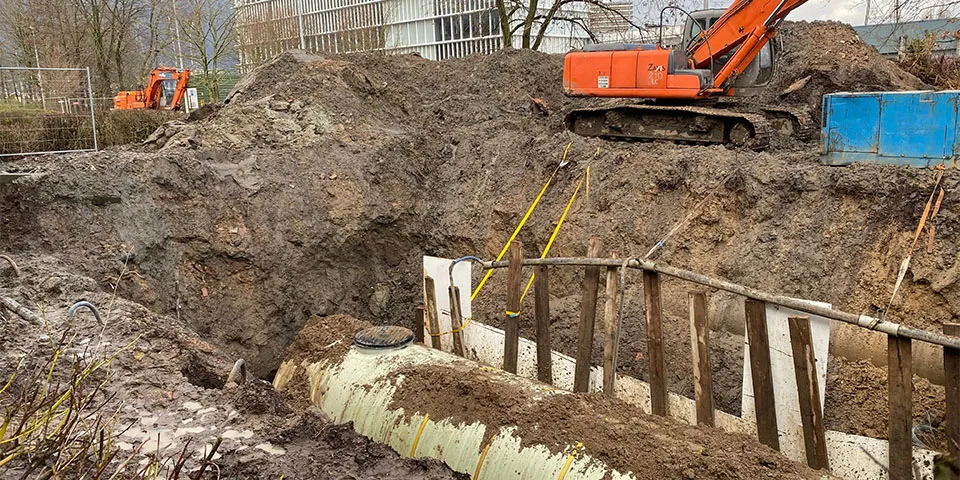
“Installing the separator was a complex undertaking.”
Restricted space
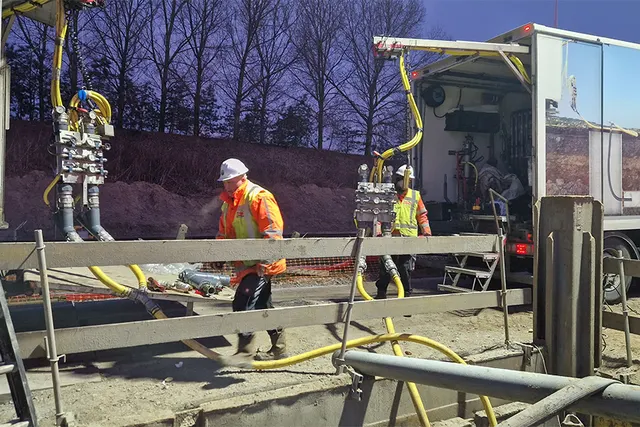
The oil separator was installed at the beginning of this year. “And getting it into place was quite complex,” explains Vincent Van Damme, site manager at Mihali Wegenbouw. “The weight was not really an issue, the main challenge being its length, at no less than 13 m. Groundwater lowering was also necessary because the groundwater level was too high. In the end, the separator was installed at a depth of 6 m. It was no easy task, particularly because space was restricted and we were wedged between a building on one side and an asphalt road on the other. Credit to our crane operator and foreman for completing the operation successfully, and to ACO for creating such a bespoke separator. From an organisational point of view, it was a real headache, but in the end everything went smoothly. The entire project is now complete and we are currently working on the handover reports.”
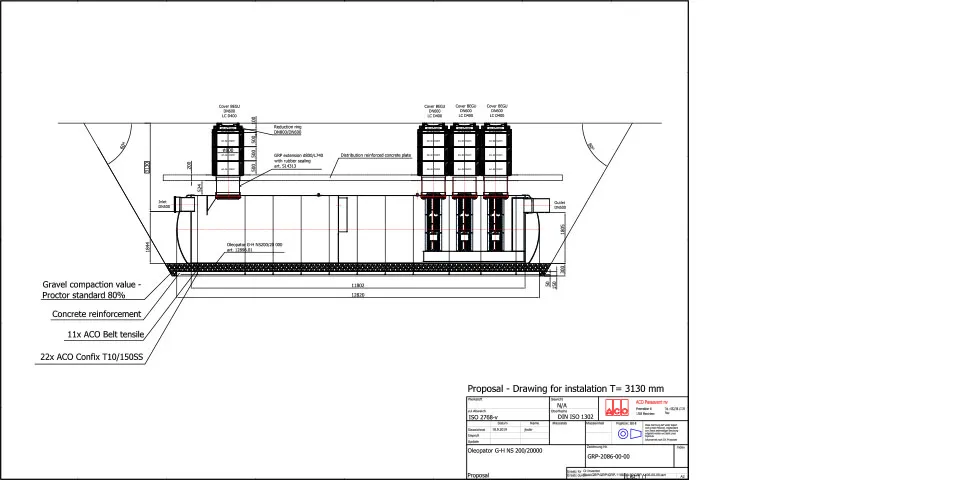
Technical drawing of the oil separator.
A bespoke project
ACO is also pleased with the project. “Delivering quality and excellent service are our core values, and I think we were able to demonstrate them in this project. Using a detailed drawing showing all the components, required accessories, covers and so on, we give the client a clear picture, which helps ensure that installation goes smoothly. As the groundwater level was high, we proposed anchoring the separator to a cast-in-place concrete slab. This prevents the separator from floating when it is emptied. We also showed this anchoring detail on the drawing. For installation, depth and connections, we always work closely with the consulting engineer, contractor and other parties involved. This is an excellent example of a bespoke project. Alongside the standard models we offer, this capability is a major asset for ACO,” concludes Rony Verbuyst.
Question about this story? Ask your question
Companies in this story
Keep following this
Get an email when a new story is published. No account needed.
- SubjectProjects
- CompanyACO