











Volvo Trucks demonstrates the long-haul capabilities of its electric trucks in Germany
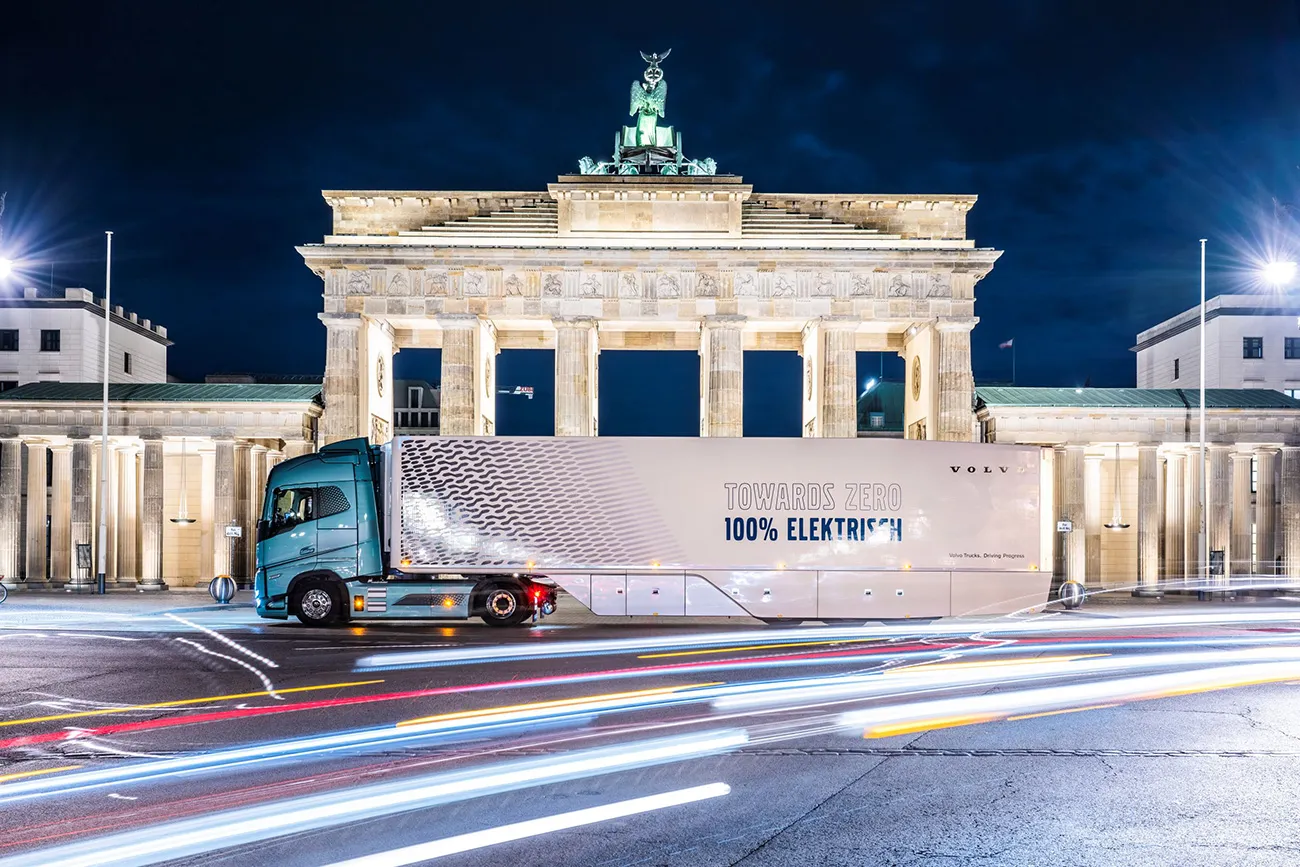
All-electric from Munich to Berlin: Volvo Trucks is taking on CO2 emissions, even over long distances, in a recent “Miles Challenge” in Germany. Verified by independent testing company Dekra, the challenge proves that the Volvo FH Electric can easily cover 600 km in everyday use with just one intermediate charge.
“The fact that we can cover more than 600 km, or 375 miles, with the Volvo FH Electric brings us much closer to the future and our goal of zero emissions in operation,” explains Christoph Fitz, Director of New Vehicle Sales at Volvo Trucks Germany. “With the Miles Challenge, we are demonstrating that we can cover all areas of transport and
encourage technological change.”
Held for the first time in real-world conditions between Munich and Berlin, the Miles Challenge for electric trucks provides convincing proof that Volvo Trucks’ new electric trucks can cover more than 600 km with a single intermediate charge under normal freight transport conditions. The test, conducted by Volvo Trucks Germany using a Volvo FH Electric in standard specification, available since September, was accompanied at every stage by two Dekra experts and officially verified upon successful completion.
The challenge involved a day’s driving over 606 km. The Volvo FH Electric, with a gross vehicle weight of 39 tonnes, made its only intermediate charging stop at Autohof Selbitz. With an average speed of 85 km/h and Volvo driver assistance systems such as I-See, the test was carried out in everyday conditions. I-See intelligently controls power delivery to make optimum use of it according to the topography. The results, verified by Dekra, demonstrate the performance of the Volvo FH Electric’s 666 hp electric powertrain. Average energy consumption over the route was 106 kWh/100 km. A total of 119 kWh was recovered, equivalent to 18% of the energy consumed over the route. On arrival in Berlin, the battery still had 35% capacity, and the remaining range was just over 130 kilometres.
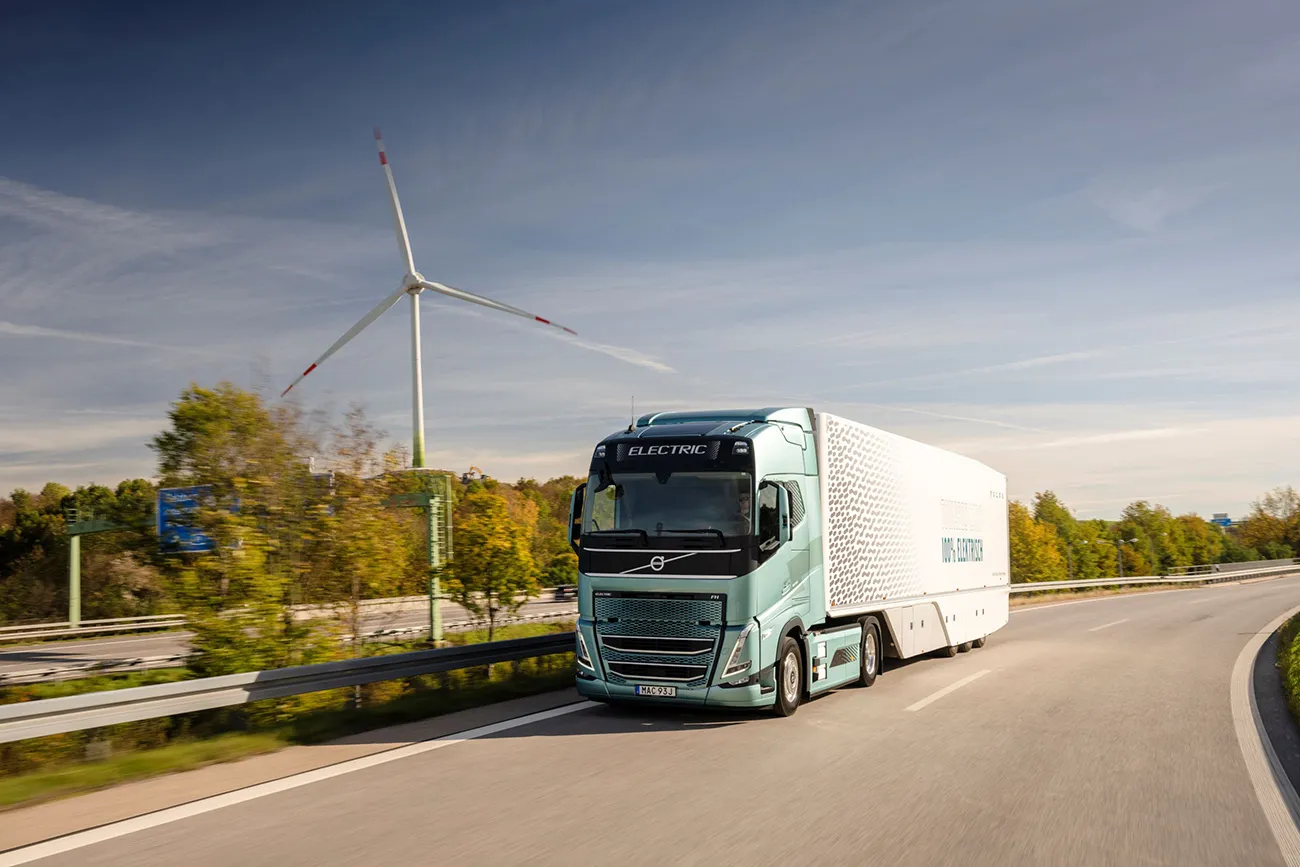
“Volvo Trucks Germany has set itself the goal of having at least 15 to 20% electric trucks on the road in 2025. Between 2028 and 2030, most trucks sold should have an electric powertrain. This is how we intend to move away from fossil fuels,” concludes Christoph Fitz.
The Miles Challenge’s convincing real-world results were further confirmed by three tests over the same route, with leading German commercial vehicle journalists at the wheel. Here too, the electric Volvo achieved top-level efficiency, with only minor differences between drivers. At the end of the journey, they all praised the high levels of driving comfort and performance of the new electric Volvo FH. Volvo’s zero-emission truck therefore shows that an electric truck can already compete with a conventional diesel over long distances.
In September 2022, the Volvo FH Electric, Volvo FM Electric and Volvo FMX Electric trucks entered series production in the up-to-44-tonne category. Medium-duty trucks such as the Volvo FL Electric and Volvo FE Electric have been available since 2019.
Question about this story? Ask your question
Keep following this
Get an email when a new story is published. No account needed.
- ThemeLow-carbon transport and mobility
- SubjectNews







