











Volvo Group and Daimler Truck AG to lead development
of sustainable transport by forming a joint venture to produce fuel cells on a large scale
Sharing the Green Deal’s vision of sustainable transport and a carbon-neutral Europe by 2050, Daimler Truck AG and Volvo Group, two leading commercial vehicle manufacturers, have signed a non-binding preliminary agreement to establish a new joint venture. The intention is to develop, produce and commercialise fuel cell systems for heavy-duty commercial vehicles and other applications. Daimler will consolidate all its current fuel cell activities in the joint venture. Volvo Group will acquire a 50% stake in the joint venture for around €0.6 billion, on a cash and debt-free basis.
“Transport and logistics keep the world moving, and the need for transport will continue to grow. Truly CO2-neutral transport can be achieved with electric powertrains powered either by batteries or by converting hydrogen into electricity on board. For trucks to carry heavy loads over long distances, fuel cells are an important solution. They are also a technology in which Daimler has built up significant expertise through its Mercedes-Benz fuel cell unit over the past two decades. This joint initiative with Volvo Group is an important step towards putting fuel cell-powered trucks and buses on our roads,” says Martin Daum, Chairman of the Board of Management of Daimler Truck AG and a member of the Board of Management of Daimler AG.
“Electrifying road transport is key to delivering the Green Deal, a carbon-neutral Europe and, ultimately, a carbon-neutral world. Using hydrogen as a carrier of green electricity to power electric trucks on long-haul operations is an important piece of the puzzle, complementing battery electric vehicles and renewable fuels. Combining the experience of Volvo Group and Daimler in this field to accelerate the pace of development will benefit both our customers and society as a whole. By forming this joint venture, we are making it clear that we believe in hydrogen fuel cells for commercial vehicles. But for this vision to become reality, other companies and institutions must also support and contribute to this development, particularly by establishing the necessary refuelling infrastructure,” says Martin Lundstedt, President and CEO of Volvo Group.
Volvo Group and Daimler Truck AG will be 50-50 partners in the joint venture, which will operate as an independent and autonomous entity, while Daimler Truck AG and Volvo Group will remain competitors in all other areas of business. Pooling their strengths will reduce development costs for both companies and speed up the market launch of fuel cell systems in products for heavy-duty transport and demanding long-haul applications. Against the backdrop of the current economic slowdown, cooperation has become all the more necessary to achieve the Green Deal’s objectives within a reasonable timeframe.
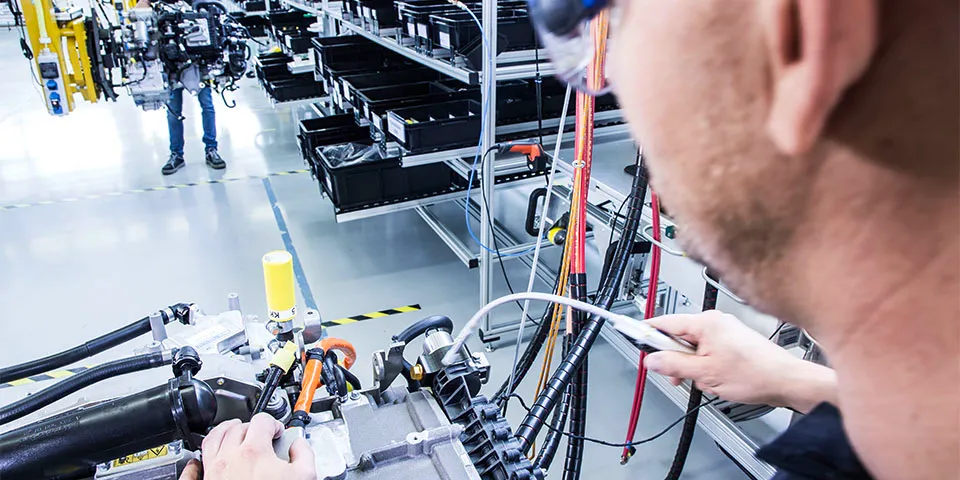
The two companies’ shared aim is to bring heavy-duty fuel cell commercial vehicles for demanding long-haul applications into series production during the second half of the decade. Other automotive and non-automotive applications also fall within the scope of the new joint venture.
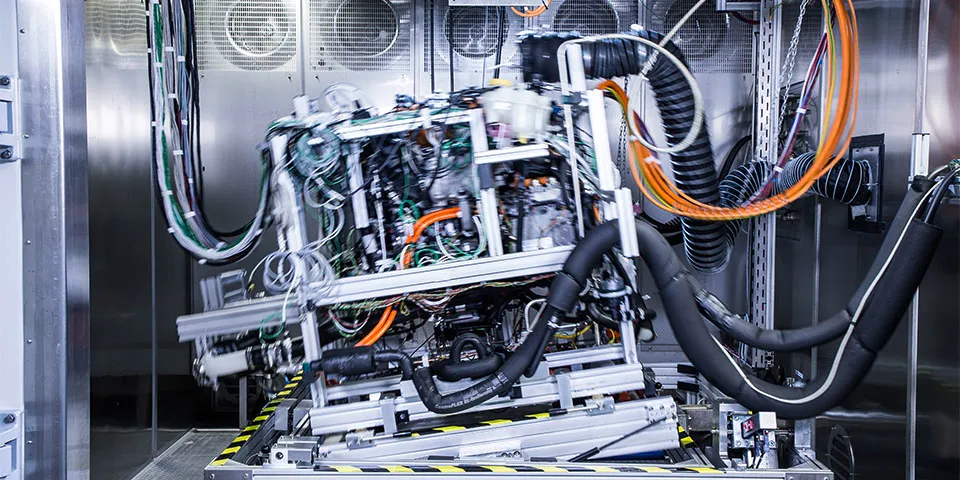
To enable the joint venture, Daimler Trucks will bring together all fuel cell activities across the group in a new Daimler Truck fuel cell unit. This consolidation includes the transfer to Daimler Truck AG of the operations of “Mercedes-Benz Fuel Cell GmbH”, which has extensive experience in developing fuel cell and hydrogen storage systems for various vehicle applications.
The joint venture will include the operations in Nabern, Germany (the current headquarters of Mercedes-Benz Fuel Cell GmbH), with production facilities in Germany and Canada.
The preliminary agreement signed is non-binding. A final agreement is expected in the 3rd quarter, with completion before the end of 2020. All potential transactions are subject to review and approval by the relevant competition authorities.
Facts: fuel cells and hydrogen as a fuel
- A hydrogen fuel cell converts the chemical energy of the fuel, in this case hydrogen, and oxygen (from the air) into electricity. The electricity powers the electric motors that propel an electric vehicle.
- There are two main ways to produce the hydrogen required. “Green hydrogen” can be produced locally at the filling station, using electricity to convert water into hydrogen. Blue hydrogen would be produced from natural gas, using carbon capture technology to create a carbon-neutral fuel.
Question about this story? Ask your question
Keep following this
Get an email when a new story is published. No account needed.
- ThemeLow-carbon transport and mobility
- SubjectNews







