











Mercedes-Benz Trucks steps up drive to electrification: eActros LongHaul expected in 2022
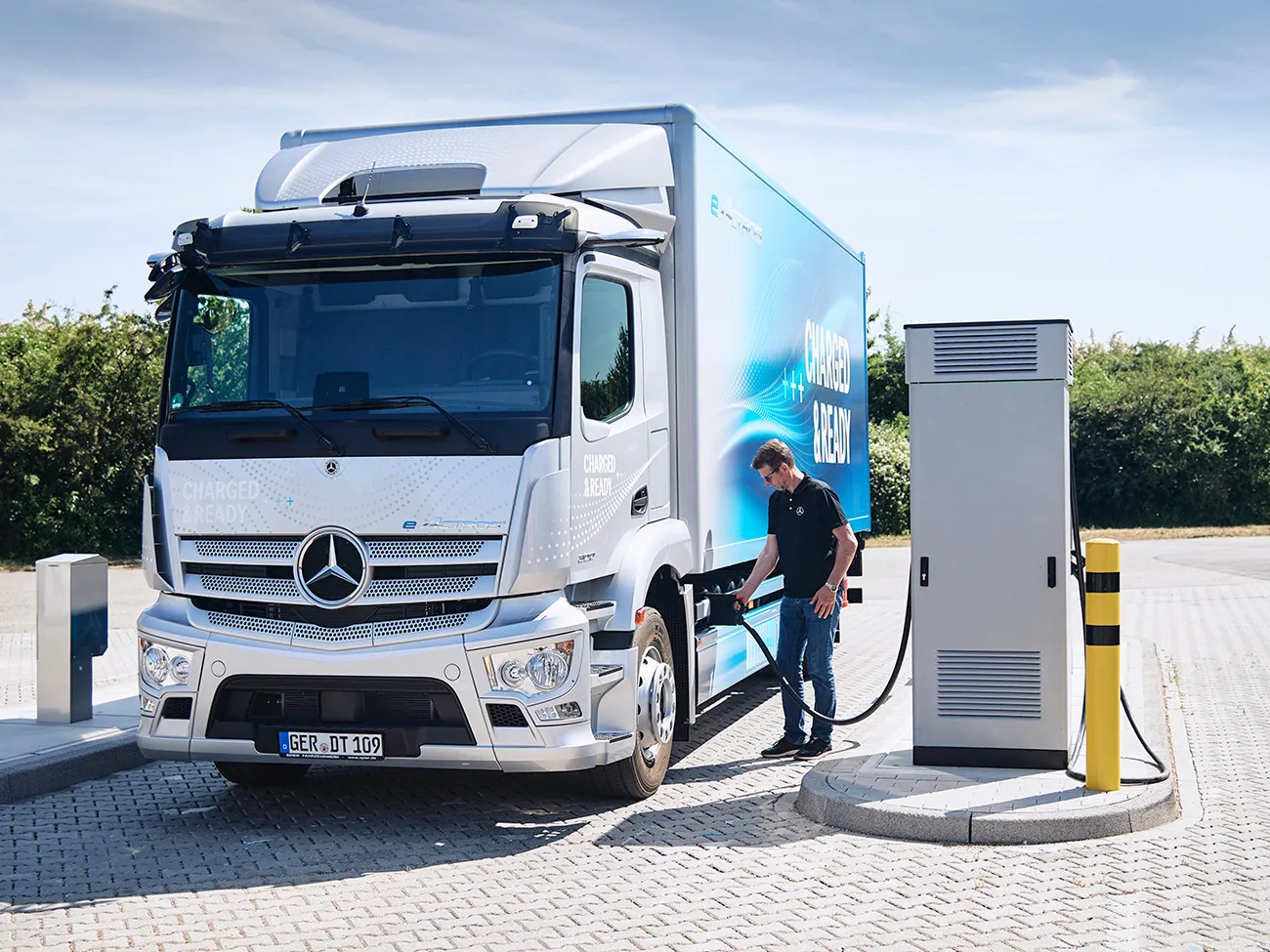
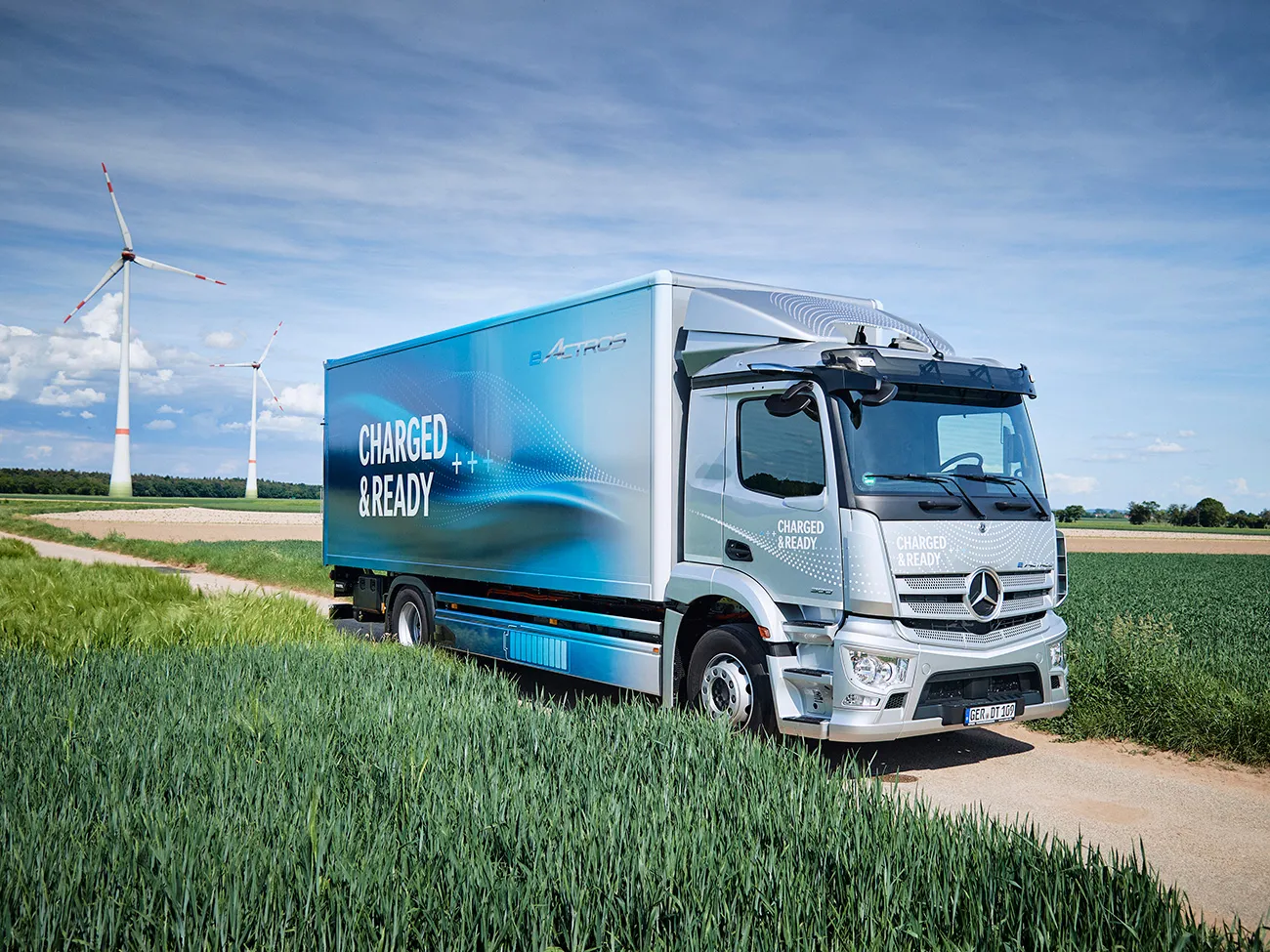
Following the 2021 market launch of the eActros for heavy-duty distribution transport, Mercedes-Benz Trucks is systematically continuing the rollout of new battery-electric models this year and over the next few years. Series production of the eActros LongHaul, designed for the major long-haul transport segment and offering a range of around 500 kilometres on a single battery charge, is scheduled to begin in 2024. Prototypes of the 40-tonne truck are already undergoing internal testing, and Mercedes-Benz Trucks engineers plan to begin road trials this year. The eActros LongHaul will be compatible with high-performance “megawatt” charging. Mercedes-Benz Trucks is also developing further eActros variants, specifically the eActros 300 and eActros 400. In July, production of the eEconic for municipal applications, the second 100% electric series-production truck, is scheduled to begin at the Wörth plant. Mercedes-Benz Trucks aims to increase the share of new locally CO2-neutral vehicles in Europe to more than 50% by 2030.
- Launch of several new battery-electric trucks in 2022 and the years that follow
- First eActros LongHaul prototypes built for testing
- Further eActros 300 and eActros 400 variants in development
- Launch of many new battery-electric trucks in 2022 and over the next few years
- eActros LongHaul truck prototypes built for testing
- Additional eActros 300 and eActros 400 variants in development
- Series production of the eEconic for municipal applications to begin in July 2022
- Customer event on electric mobility in Wörth in June, with around 1,000 participants from across Europe
- Karin Rådström, CEO of Mercedes-Benz Trucks: “The huge interest in our eActros event in Wörth is further proof of the popularity of electric mobility among our customers. Customers are sending a strong signal to all stakeholders to join forces to get more electric trucks on the road quickly, develop charging infrastructure and ensure cost parity.”
To continue introducing electric mobility to customers from across Europe, the truck manufacturer is organising an event at its Wörth site, starting in early June and running for several weeks. Mercedes-Benz Trucks experts will provide around 1,000 participants in total with information on the key aspects of electric mobility, from infrastructure and services to electric models. Customers will also have the opportunity to drive the eActros 300 on demanding routes with realistic loads.
Karin Rådström, CEO of Mercedes-Benz Trucks: “The huge interest in our eActros event in Wörth is further proof of the popularity of electric mobility among our customers. Customers are sending a strong signal to all stakeholders to join forces to get more electric trucks on the road quickly, develop charging infrastructure and ensure cost parity.”
Working with partners on charging infrastructure
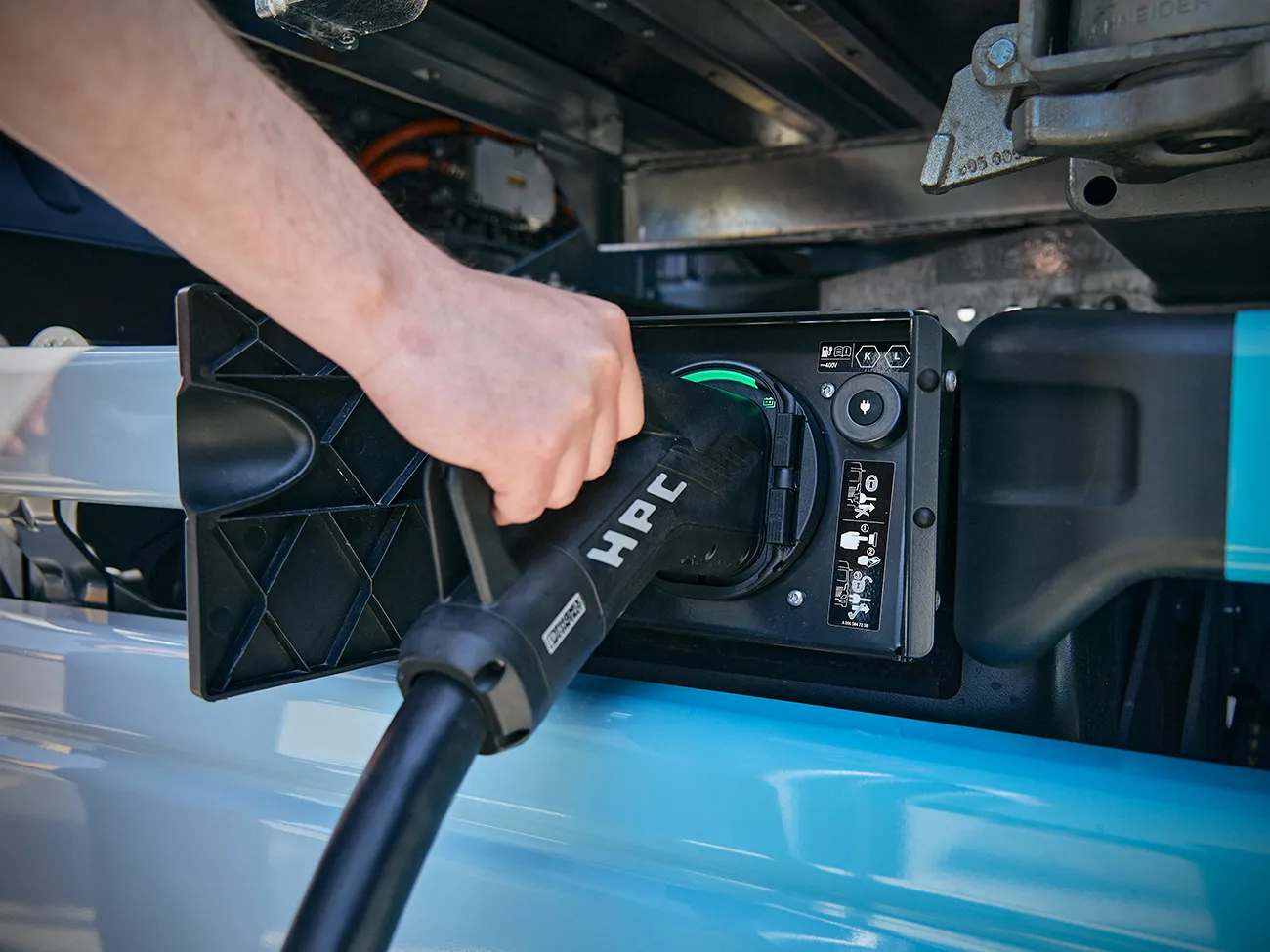
For depot charging, Mercedes-Benz Trucks is working with Siemens Smart Infrastructure, ENGIE and EVBox Group. For public charging for long-haul transport, Daimler Truck, TRATON GROUP and Volvo Group have signed a binding agreement to establish a joint venture. The agreement covers the development and operation of a public high-performance charging network for heavy-duty battery-electric trucks and buses engaged in long-haul transport in Europe. The charging network established by the three parties will be available to fleet operators across Europe, regardless of vehicle brand.
The aim of the “High-Performance Charging in Long-Haul Truck Transport” (HoLa) project, in which Daimler Truck is involved and which is led by the German Association of the Automotive Industry (VDA), is to plan, establish and operate high-performance charging infrastructure for long-haul battery-electric truck transport. Two high-performance charging points featuring the Megawatt Charging System (MCS) are to be installed at each of the four planned sites in Germany and tested under real-world conditions. Various other industry and research consortium partners are involved in the project.
Mercedes-Benz eEconic at IFAT
The battery-electric eEconic will make its exclusive trade fair debut in Munich on 30 May, as part of IFAT, the world’s largest trade fair for water, wastewater, waste and raw materials management. The eEconic is particularly well suited to urban applications in the early morning, thanks to its low noise levels. Its architecture benefits from Daimler Truck’s global platform strategy: the low-floor truck’s powertrain is based on the Mercedes-Benz eActros, which went into series production at the Wörth plant in October 2021. Since May 2022, FES Frankfurter Entsorgung, (Waste Management) and Service GmbH has already been using a near-series eEconic for waste collection in Frankfurt am Main.
Second-generation MirrorCam for the eActros
Since April this year, Mercedes-Benz Trucks has been equipping its eActros models with the updated second-generation MirrorCam system, which features specific improvements to the display and safety. On the exterior, the camera arms on each side of the vehicle have each been shortened by 10 centimetres. One benefit of the new dimensions is that drivers say reversing is easier than with the first-generation MirrorCam, as the view provided by MirrorCam is now closer to that of a conventional glass rear-view mirror.
Ultimate goal: CO2-neutral road transport by 2050
Daimler Truck aims to offer exclusively new vehicles with operational CO2 neutrality (“tank-to-wheel”) in Europe, Japan and North America from 2039. The two battery-electric models, the Mercedes-Benz eCitaro and the Mercedes-Benz eActros, have been in series production since 2018 and 2021 respectively. The Mercedes-Benz eEconic, FUSO eCanter and Freightliner eCascadia will follow later this year, and further locally CO2-neutral vehicles are already planned. In the second half of this decade, the company plans to complete its range with series-production vehicles powered by hydrogen fuel cells, with the ultimate goal of achieving CO2-neutral road transport by 2050.
Question about this story? Ask your question
Keep following this
Get an email when a new story is published. No account needed.
- ThemeLow-carbon transport and mobility
- SubjectNews







