











Energy transition: unique opportunities for hydrogen
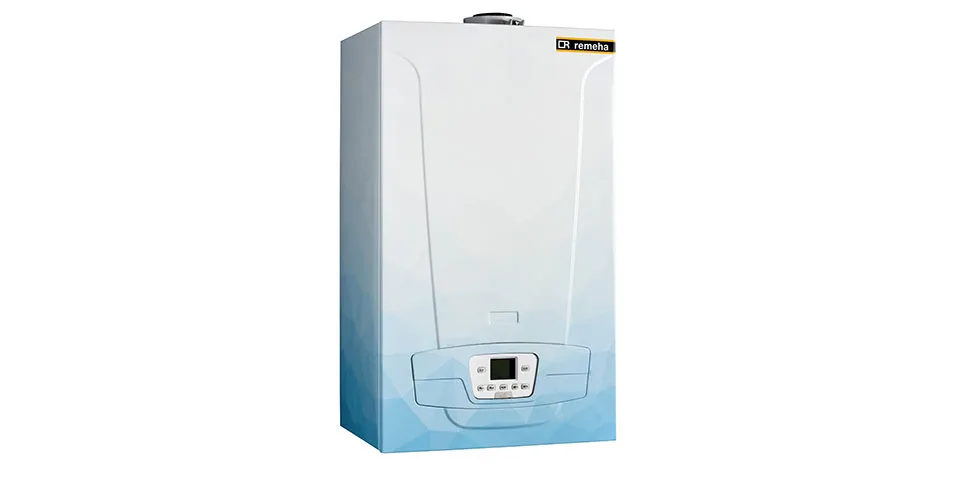
Remeha, a Belgian company that has been active in the heating sector for more than 80 years, is part of the BDR Thermea Group, one of the world’s largest players in the sector. For both non-residential and domestic markets, Remeha offers a wide range of heating and domestic hot water solutions: gas or oil boilers, gas or electric heat pumps, solar water heaters, combined heat and power systems… The company is also currently exploring hydrogen, a promising energy carrier.
“We are on the cusp of an energy transition,” says Remeha. “In the years ahead, we will move away from fossil fuels in favour of sustainable energy sources and carriers. We are all familiar with the sustainable generation of electricity from wind and solar power, but there are other possibilities, including the highly promising hydrogen.”
Sustainable hydrogen production
Industry produces thousands of tonnes of hydrogen gas every year from natural gas. For domestic use, hydrogen is produced by splitting water into oxygen and hydrogen through electrolysis. This produces no harmful emissions, but it does require a huge amount of electricity. If renewable energy, such as solar or wind power, is used for this purpose, hydrogen is an attractive alternative to fossil fuels. Alongside solar panels, wind turbines and heat pumps, hydrogen can therefore play a part in providing energy without CO2 emissions.
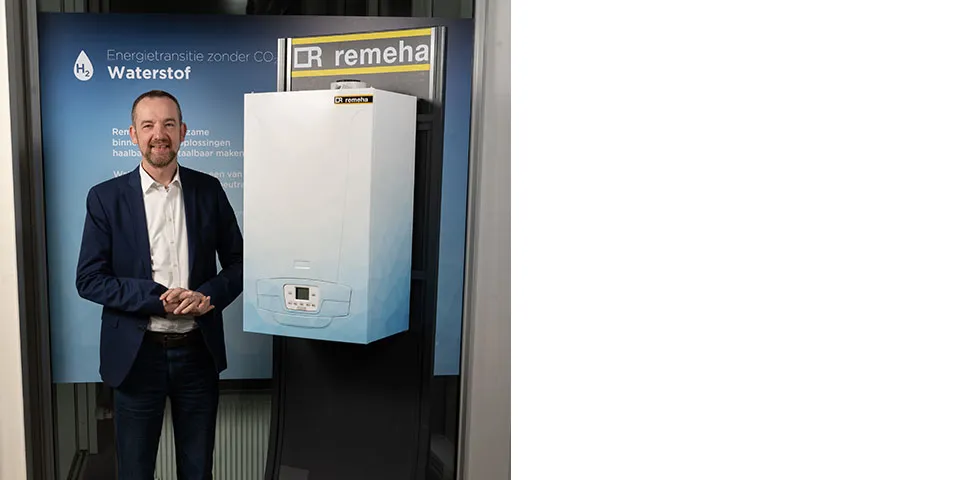
In addition to the ‘fuel’ it uses, a hydrogen boiler is also characterised by its compact size.
Hydrogen is nothing new, but it brings new opportunities
Hydrogen is already widely used in industry, but it now offers new opportunities in the residential market. “Hydrogen can play a role in supplying heating and domestic hot water, particularly in existing buildings,” says Remeha. “It can be distributed using the existing natural gas infrastructure, subject to a few practical modifications. This is a major advantage, as it makes hydrogen available in many parts of Belgium.” The most obvious applications are in historic city centres, where many buildings are less suited to an all-electric solution or cannot be connected to a district heating network because of their location. Hydrogen can therefore provide a safe, clean alternative to natural gas.
Advantages and disadvantages of hydrogen
For Remeha, which can draw on experience with hydrogen, its advantages are clear: it is easy to store, can be produced from renewable energy, is easy to transport and the only by-product of a hydrogen boiler is… water. “But we have to be honest and transparent. Hydrogen is promising, but a rapid, large-scale switch to hydrogen is not yet possible, as there are still issues that need our attention. In particular, hydrogen production will need to increase significantly, our gas network will require modifications before hydrogen can be transported, and conventional boilers are not designed to burn hydrogen.”
The future
Hydrogen offers many opportunities and is the subject of a growing body of research. Remeha has developed the world’s first hydrogen boiler, and current projects are encouraging: “In the years ahead, we will increasingly see hydrogen gas being used in pilot projects and dedicated ‘hydrogen districts’. But, as mentioned above, there is a long way to go… although things could suddenly gather significant momentum.”
Question about this story? Ask your question
Keep following this
Get an email when a new story is published. No account needed.
- ThemeLow-carbon transport and mobility
- SubjectNews







