











Daimler Truck AG and Volvo Group commit fully to hydrogen fuel cells
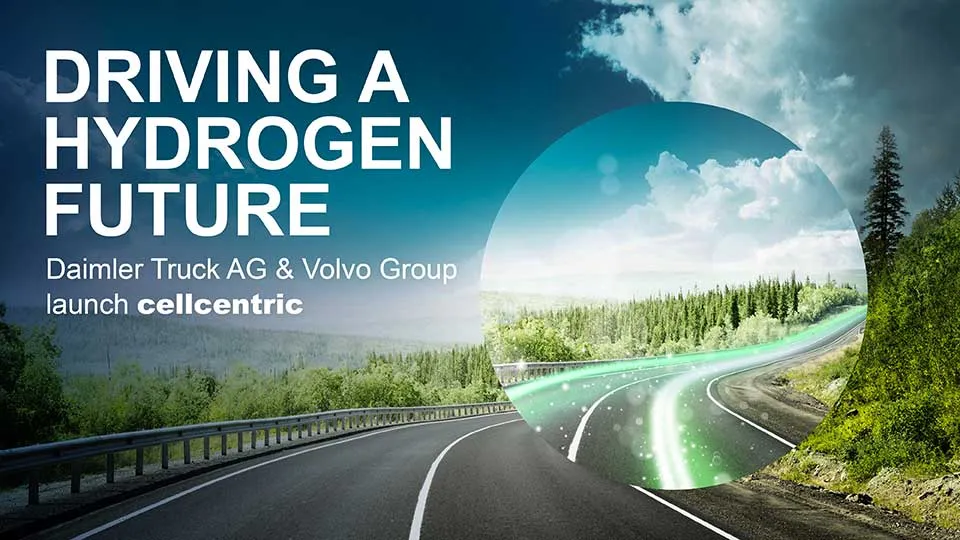
Launch of new joint venture cellcentric.
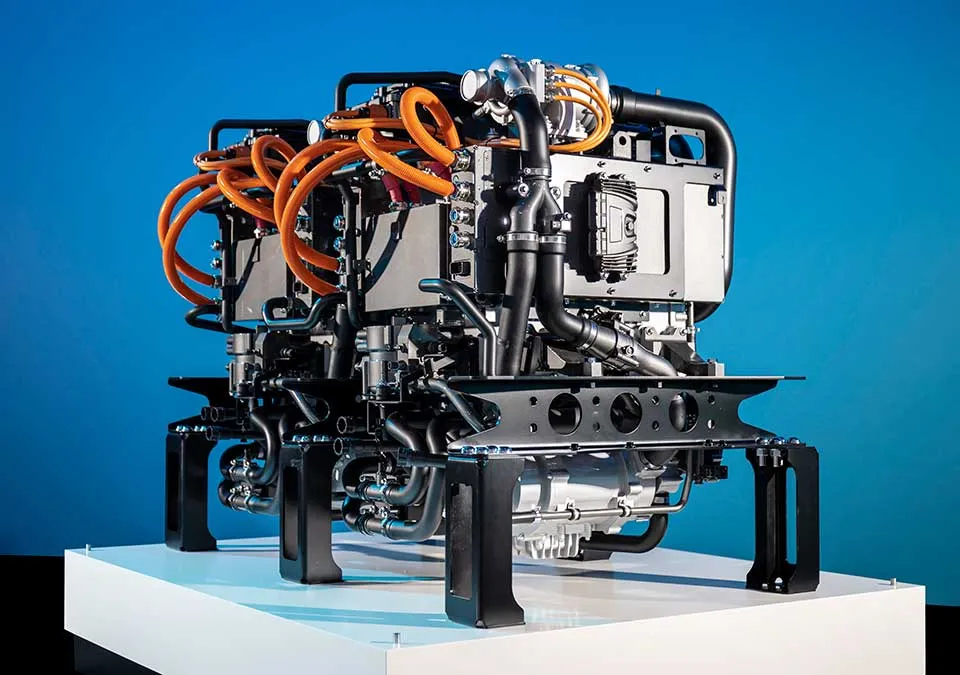
Today, two leading figures in the commercial vehicle industry, Daimler Truck AG and Volvo Group, officially unveiled the pioneering roadmap for cellcentric, their new joint venture specialising in fuel cell manufacturing. The initiative is part of an unprecedented industry commitment to accelerate the use of hydrogen fuel cells in long-haul trucks and other vehicles. cellcentric will build one of Europe’s largest projects for the series production of fuel cell systems, with operations expected to begin in 2025, and aims to become one of the world’s leading fuel cell system manufacturers. To accelerate the roll-out of hydrogen fuel cells, cellcentric’s two shareholders are calling for a harmonised European policy framework for hydrogen, which would help make this technology a commercially viable solution.
These ambitions were unveiled today at an exclusive digital launch presented by Martin Daum, CEO of Daimler Truck AG, and Martin Lundstedt, CEO of Volvo Group. Designed to help achieve Europe’s 2050 targets for sustainable transport and carbon neutrality, as set out in the European Green Deal, cellcentric will develop, produce and market fuel cell systems for long-haul transport, among other applications. The joint venture can draw on decades of expertise and development work from both shareholders.
These ambitions were unveiled today at an exclusive digital launch presented by Martin Daum, CEO of Daimler Truck AG, and Martin Lundstedt, CEO of Volvo Group. Designed to help achieve Europe’s 2050 targets for sustainable transport and carbon neutrality, as set out in the European Green Deal, cellcentric will develop, produce and market fuel cell systems for long-haul transport, among other applications. The joint venture can draw on decades of expertise and development work from both shareholders.
According to Daimler Truck AG and Volvo Group, battery-electric trucks and hydrogen fuel cell trucks will complement one another, depending on each customer’s individual requirements. Battery-electric vehicles will be used primarily for lighter loads over shorter distances, while fuel cells will be the preferred option for heavy-duty vehicles covering longer distances.
Martin Daum, Chairman of the Board of Management of Daimler Truck AG and a member of the Board of Management of Daimler AG, said: “Hydrogen fuel cell electric trucks will be key to achieving carbon-neutral transport. Combined with battery-electric powertrains, they enable us to offer our customers the best locally CO2-neutral vehicle options for their needs. Battery-electric trucks alone would not allow us to do this. Together with our partner Volvo Group, we are therefore fully committed to our cellcentric joint venture and are working to develop this technology and establish series production. As for the hydrogen infrastructure required, green hydrogen is the only sensible long-term solution.”

Martin Lundstedt, CEO of Volvo Group, added: “We share the ambition of achieving the goals of the Paris Agreement, namely carbon neutrality, by 2050 at the latest. We are convinced that hydrogen fuel cell technology has an essential role to play. But we also know that simply electrifying machinery and vehicles will not be enough. Greater cooperation between public and private stakeholders is needed to develop the necessary technology and infrastructure. That is why we are calling on policymakers and governments around the world to work together to help make hydrogen fuel cell technology a success. We are committed to decarbonising road transport, and we urgently need partnerships such as cellcentric.”
Europe’s leading truck manufacturers, with the support of Daimler Truck AG and Volvo Group, are therefore calling for around 300 high-performance hydrogen refuelling stations suitable for heavy-duty vehicles to be installed by 2025, and around 1,000 by 2030 in Europe. This joint initiative, which involves using hydrogen as green electricity to power electric trucks over long distances, plays an important role in decarbonising road transport.
As CO2-neutral trucks currently cost considerably more than conventional vehicles, a policy framework must be established to secure demand and keep costs affordable. According to Daimler Truck AG and Volvo Group, this framework should include incentives for CO2-neutral technologies and a tax system based on carbon and energy content. An emissions trading scheme could also be considered.
A clear roadmap for series production of fuel cell systems and fuel cell trucks.
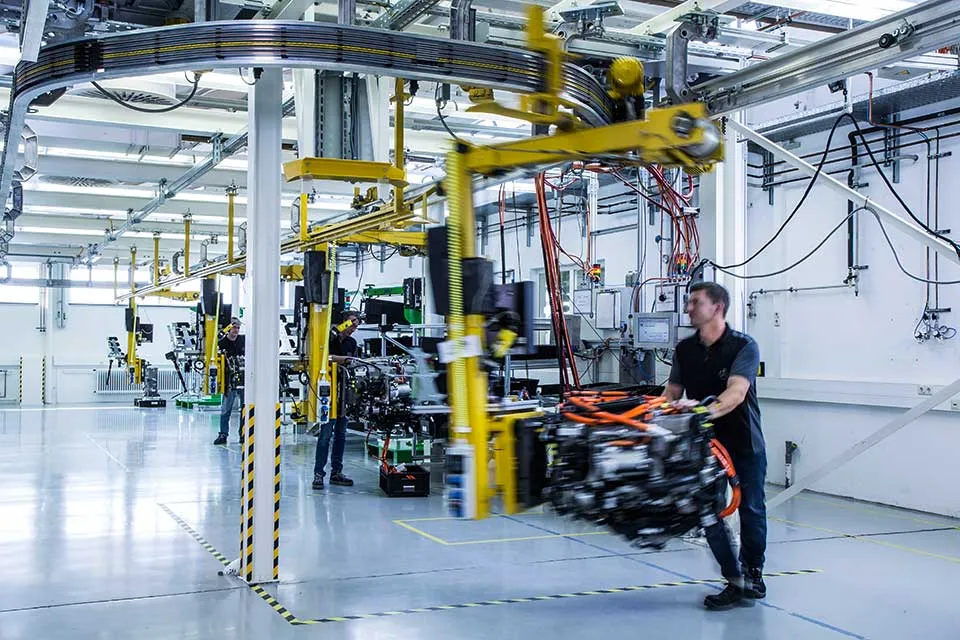
cellcentric is currently working on plans for its large-scale series production. Further details and a decision on the chosen site will be announced during 2022. As an important step towards series production, preparations for pre-series production are under way at a new site in Esslingen, near Stuttgart. At the same time, cellcentric is stepping up its current prototype production.
Daimler Truck AG and Volvo Group have set themselves the primary goal of beginning customer trials in around three years and starting series production in the second half of the decade. The two companies will carry out all other vehicle-related activities independently, as they remain competitors in every other area, particularly in fuel cell integration.
Joint venture for fuel cell systems
On 1st March 2021, Daimler Truck AG and Volvo Group established cellcentric. To do so, Volvo Group acquired a 50% partnership interest in the existing Daimler Truck Fuel Cell GmbH & Co. KG for around €600 million on a cash and debt-free basis. In November 2020, Volvo Group and Daimler Truck AG signed a binding agreement to establish the joint venture. A non-binding agreement to this effect had already been signed in April of the same year.
More than 300 highly specialised experts work for cellcentric in interdisciplinary teams at its sites in Nabern, Stuttgart (Germany) and Burnaby (Canada). To date, nearly 700 individual patents have been granted, underscoring the company’s technological development leadership.
Question about this story? Ask your question
Keep following this
Get an email when a new story is published. No account needed.
- ThemeLow-carbon transport and mobility
- SubjectNews







