











“Artificial intelligence will change the construction and design process for ever”
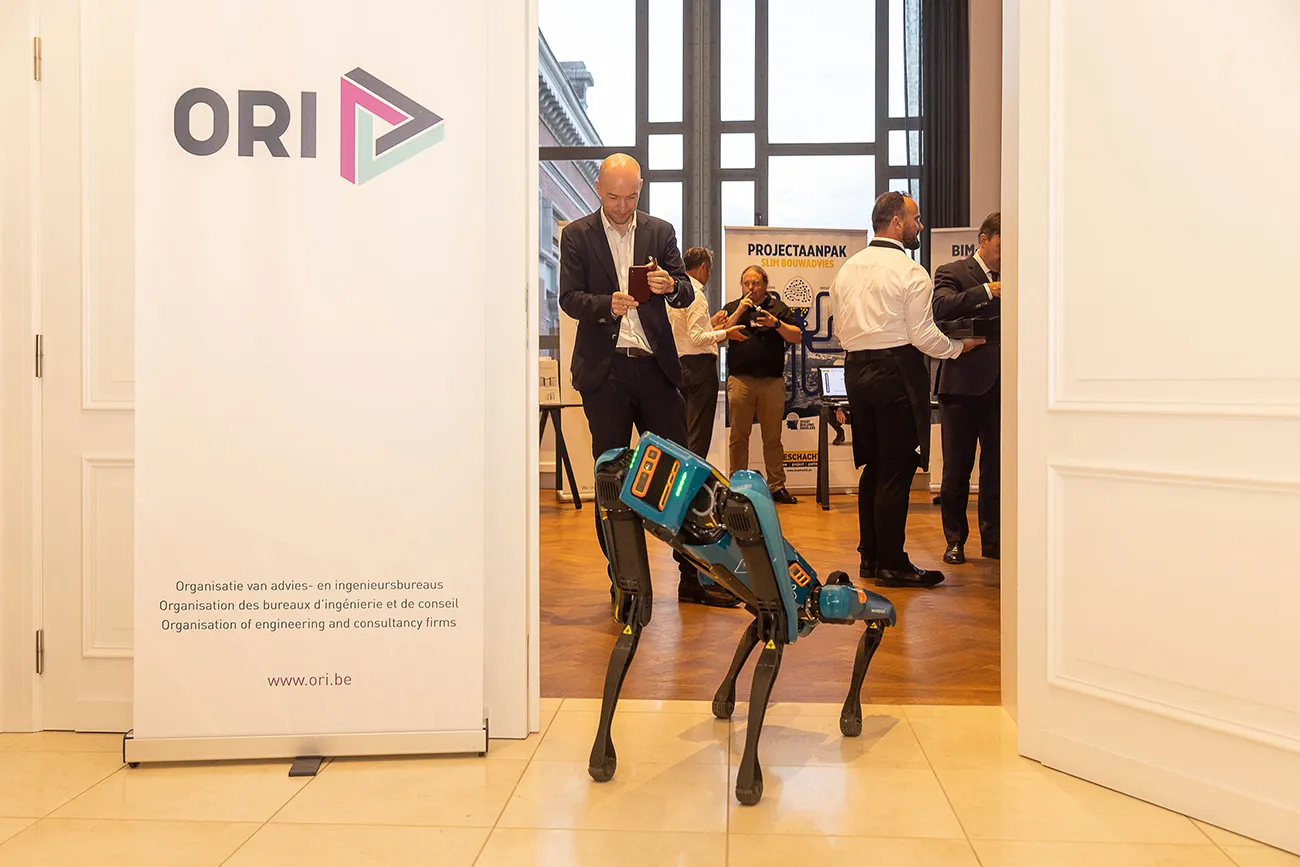
The construction sector faces a future full of challenges. The advance of digitalisation, the rapid rise of innovative technologies and the breakthrough of artificial intelligence will radically reshape the traditional design and construction process in the years ahead. The potential of digital twins and virtual worlds such as the Metaverse is also being seriously explored. For ORI, the time was right to invite a number of specialists to bring its engineers up to speed on the latest developments. The event drew a large crowd to Maison de la Poste in Brussels, where ORI’s annual conference was held on 24 May.
As the sector organisation representing consulting and engineering firms in Belgium, ORI keeps a close eye on the latest trends and developments in construction. It was therefore no surprise that the theme of ORI Conference 2022 was “Data+AI & Metaverse”. The coronavirus put a spoke in the wheel in November 2021, but fortunately the much-anticipated conference on the digital future of construction was able to go ahead this year. First, ORI president Jan Parys took the opportunity to thank his predecessor Bernard Gilliot and outgoing director Christophe Hautier for their service. A fitting tribute that set the tone for an engaging evening.
An (r)evolution called AI
The first expert to take the floor was Benoit Parmentier of CSTC. He introduced the audience to the fascinating world of artificial intelligence (AI). “Since the 1950s, the field has evolved considerably, with a focus on machine learning from the 1980s onwards. Since then, AI has influenced our everyday lives, as well as construction practice. AI can be useful at different stages of a project: from informed design choices and plan optimisation to more detailed risk analysis, as well as streamlining administration and improving cost efficiency. It will completely change the workflow on site and help reduce CO2 emissions. In this respect, AI is a valuable tool for energy-efficient renovation of our building stock and the transition to a circular economy, for example through the recycling and reuse of materials based on an automated inventory of construction products.”
“Building managers can also benefit in many ways: a better understanding of how their buildings operate thanks to as-built files and digital twins, early detection and prediction of potential problems, improved energy management, greater comfort and predictive maintenance. However, the main challenge lies in data processing. There are still several major pitfalls to avoid when selecting and analysing the right data.”
Measuring does not necessarily mean understanding
Next up were Ivo Van de Moortel and Erik Duisterwinkel of Antea Group, a multidisciplinary consultancy and engineering firm that is strongly committed to data-driven solutions. “Several factors convinced us to make AI a permanent part of our operations: the volume of data available, technological advances (computing power, photonics, etc.), the rapid and easy sharing of knowledge via the internet, and a change in policymakers’ attitudes (research funding and grants).”
“One initial hurdle is changing the mindset so that other sources of information are used from now on, such as sensors instead of traditional rain gauges. Next comes trusting the solution, which means understanding the process behind it. Measuring does not necessarily mean understanding. Data collection and processing are often seen as separate disciplines, when you need to understand the whole picture to give sound advice and genuinely practise data science. The final step is change management: adapting operational processes to this new way of working. One of our best examples is a smart bridge in the Netherlands, equipped with sensors that provide a detailed picture of its remaining service life. This allows the client to allocate investments much more effectively and avoid unwelcome surprises.”
From ‘digitization’ to ‘digitalisation’
Dieter Vermeulen of Autodesk then offered a closer look at the digital transformation of the AEC industry. “From CAD to BIM and the cloud, everything has moved very quickly in recent years, with COVID-19 acting as a major catalyst. Now, with AI and machine learning, we are on the brink of another revolution. BIM is the backbone of this transformation: from static, connected BIM, sharing a common data environment, to dynamic BIM with digital twins that provide real-time information. We are moving from ‘digitization’ (making analogue processes digital) to ‘digitalisation’ (using specific digital technologies to transform the entire business process). AI and machine learning help us design better. 95% fewer drawings, a 70% reduction in the time needed to implement design updates, a 20% cut in CO2 emissions through construction workflow optimisation… The early results speak for themselves. When we see how the automotive industry has made its digital transition, we should be confident that the same can be done in construction.”
Property asset management and the ‘Metaverse’
The second part of ORI Conference opened with Dirk Vanderlinden of Arcadis, who introduced attendees to BRAIN, a tool designed to improve property asset management and make it more efficient. “Property asset management has a significant impact on a building’s service life and cost. Property asset managers need accurate data to make decisions themselves or support decision-making processes. BRAIN is a tiered data ecosystem that gives them access to information about smart buildings. We developed this tool to collect data in a structured way and turn it into insights and scenarios relating to cost, risk and performance, based on an optimal balance between these three factors in line with company policy. BRAIN supports decision-making, provides an overview of the remaining service life of building components and makes it possible to create an asset history. A 20% reduction in costs and a 35% increase in the service life of building components are realistic ambitions.”
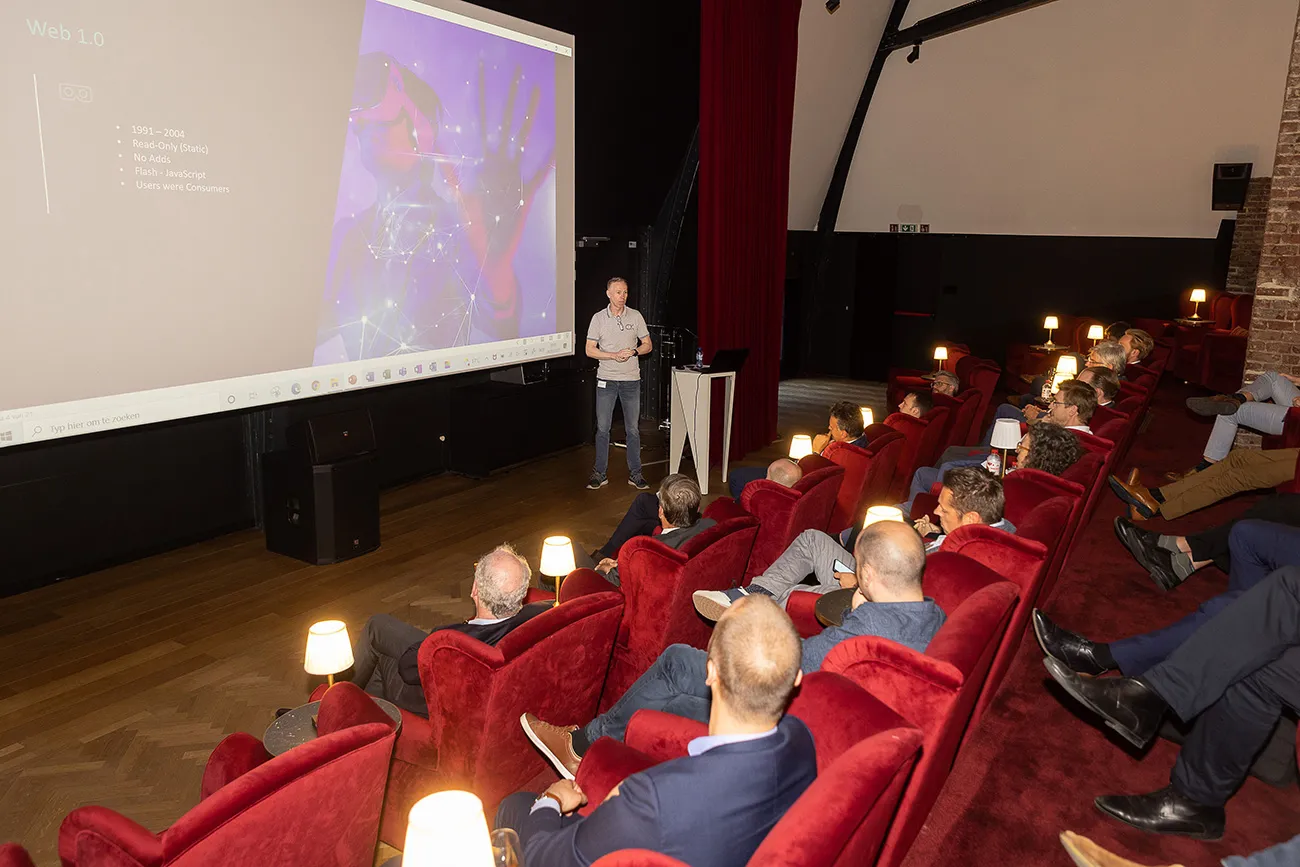
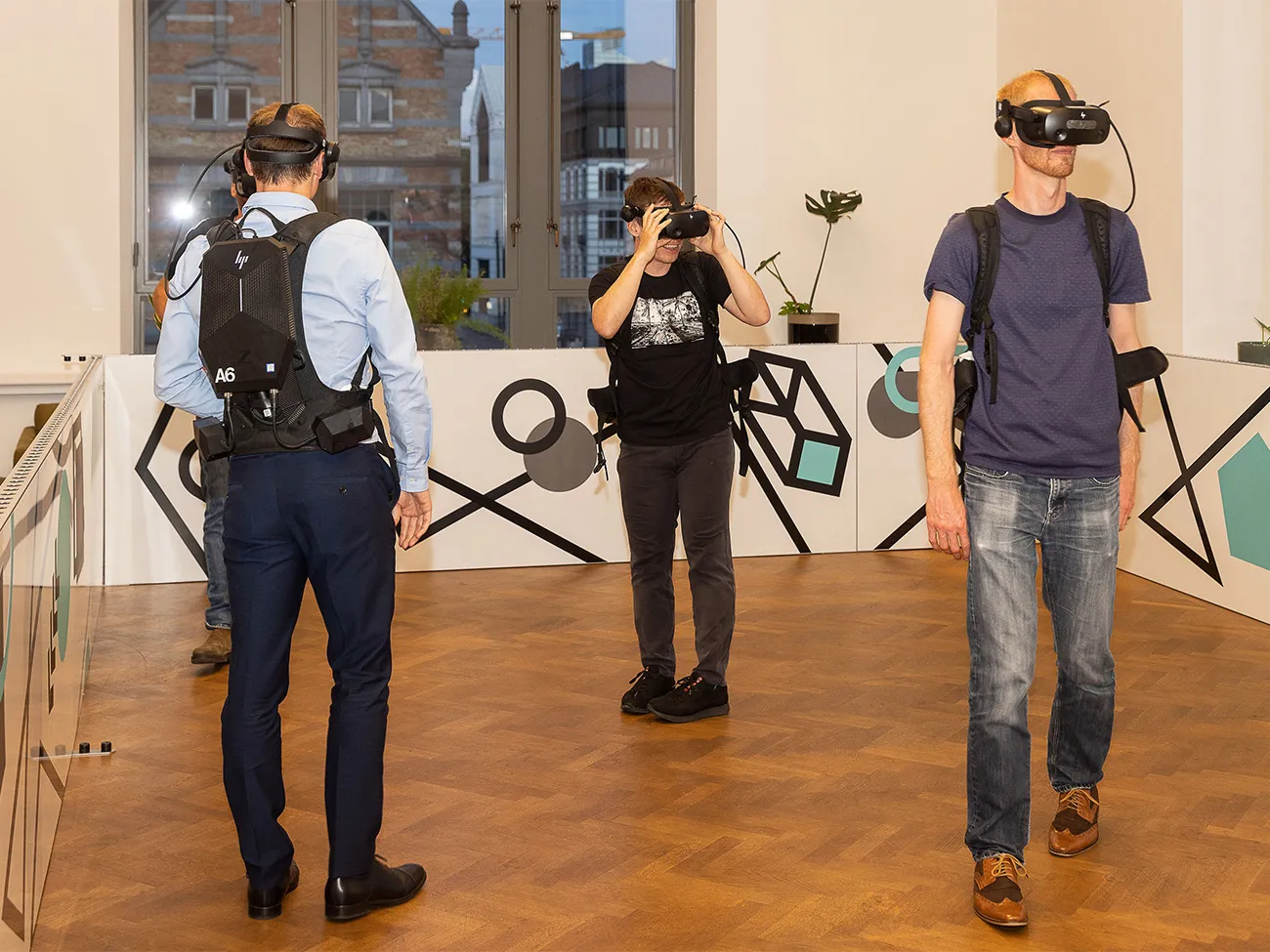
The penultimate speaker of the evening was Arthur Devos of AWV (the Flemish Agency for Roads and Traffic), who explained how data is used to keep traffic flowing safely. The final word went to Jean-Pierre van Gastel of Tech Data, whose presentation on the ‘Metaverse’ offered a highly visionary perspective. “We are moving towards Web 3.0, with blockchain technology that enables much better control over data. The prediction is that by 2030 there will be a digital twin of everything and everyone, including buildings. It is very important to have open standards and for everyone to adopt them.”
Question about this story? Ask your question
Keep following this
Get an email when a new story is published. No account needed.
- ThemeManaging construction projects
- SubjectNews







