The methodical, meticulous work of the deconstruction contractor
Texte Philippe Selke | Photos Groupe Eloy
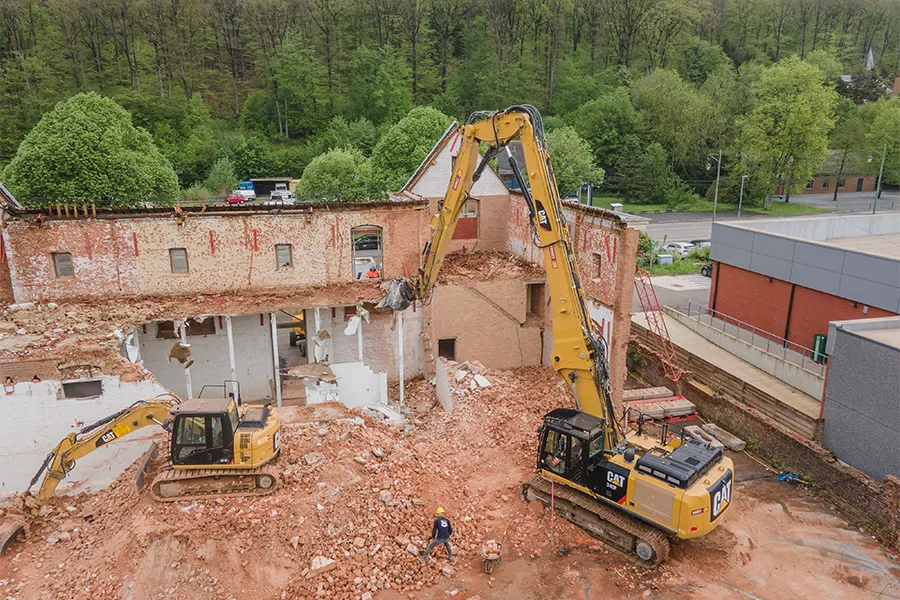
Construire la Wallonie has already highlighted Eloy’s deconstruction expertise, both in the renovation of the Huccorgne motorway viaduct and in the construction of the new car park at the Centre Hospitalier Régional de la Citadelle in Liège. As deconstruction is set to become increasingly important in the future, particularly in the context of the “Stop béton” initiative, we felt it would be interesting to take a closer look at this specialised activity. It is a fascinating profession that calls for a broad range of knowledge to deal safely with the many different situations, protecting both people and the environment.
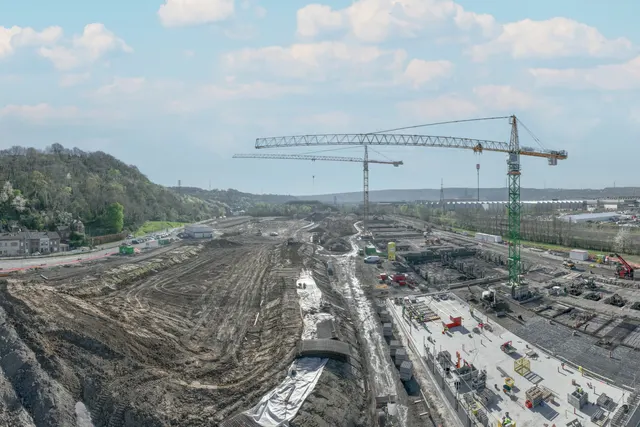
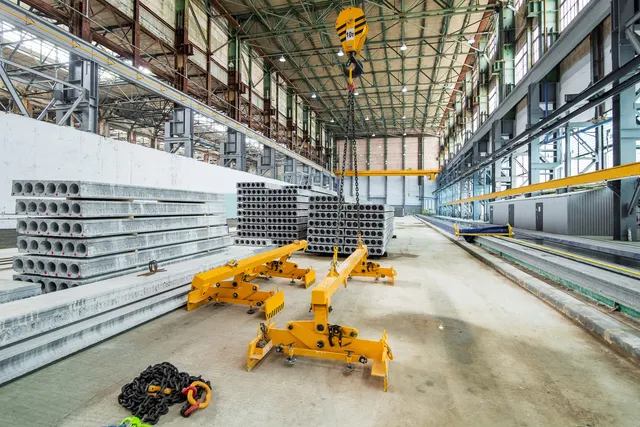
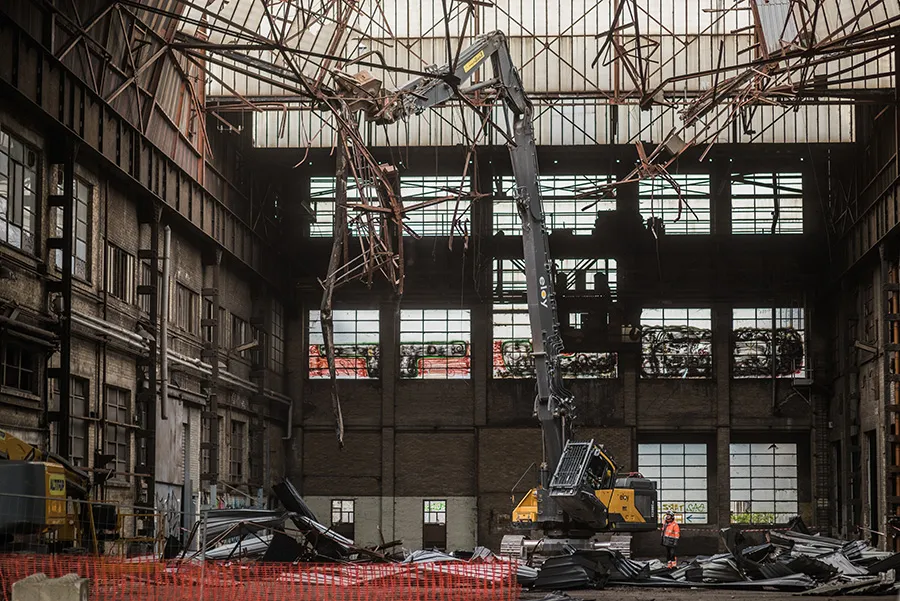
Wallonia is home to many former industrial sites awaiting redevelopment. Dismantling factories and brownfield sites of all kinds is a major area of activity for Eloy, which already has several impressive projects to its name in this field. There are also property developers looking to deconstruct and rebuild, as well as public authorities seeking to create new buildings and infrastructure. In recent months, there have also been numerous requests to deconstruct old school buildings riddled with asbestos.
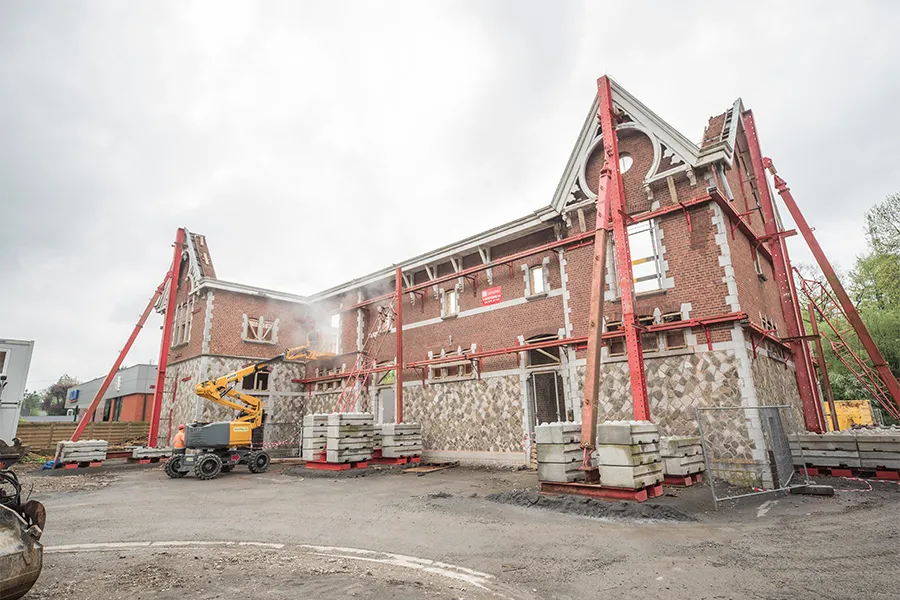
Deconstruction may be only partial, as in the case of a building where the plant floor has to make way for additional storeys. It may also involve retaining a listed façade and rebuilding behind it from scratch. This calls for thorough preparation and meticulous care, as was recently the case with the deconstruction work at the former gendarmerie stables in Spa.
To get a clearer picture of what deconstruction involves, we spoke to Laurent Corin, environmental activities director at Eloy, and his colleague Théophile Meecko, a deconstruction site manager. Driven by its commitment to sustainability, Eloy has made deconstruction a fully fledged business activity, recognising both the environmental challenges and the specific demands of this profession. Construction logically results in a visible building or structure, whereas deconstruction leaves behind a great void. So how does a good deconstruction contractor
make a difference?
Recovering materials for reuse and recycling
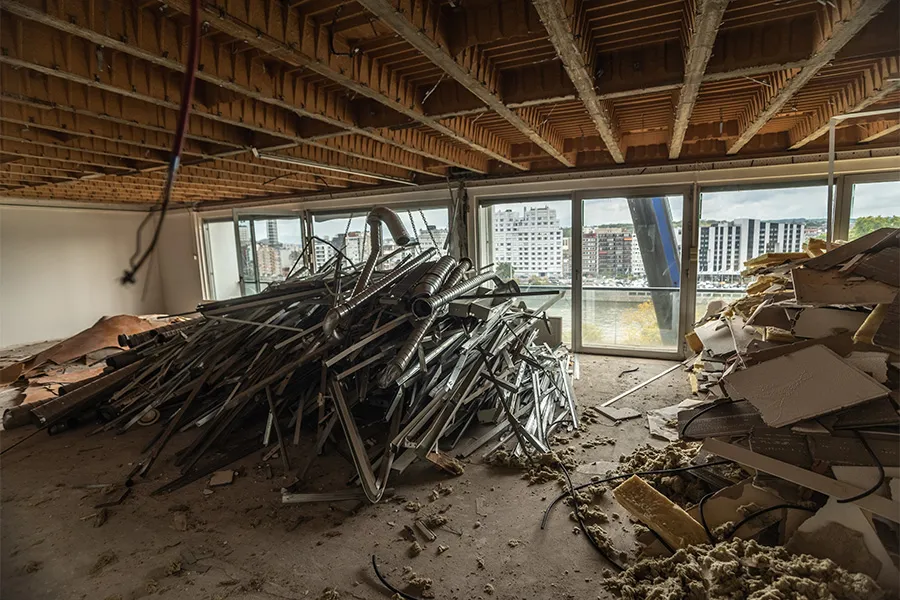
The days of demolishing buildings with a crane and wrecking ball or by blasting are over, at least in many cases. Respect for local residents and the environment, along with the responsible use of resources, calls for a very different approach. It all starts with stripping out the building, removing all its internal and external fittings and finishes, leaving only the structure, usually made of concrete. Laurent Corin: “In the Grand Duchy, for example, we stripped out a bank, a project that employed an average of 25 people for 6 months. Even the screeds were demolished because they were not suitable for the building’s future layout. Stripping out is carried out with a view to recovering value from the materials removed. This is increasingly a requirement in public procurement specifications or, at the very least, the outcome of the tender depends on the recycling and/or reuse solutions you propose.”
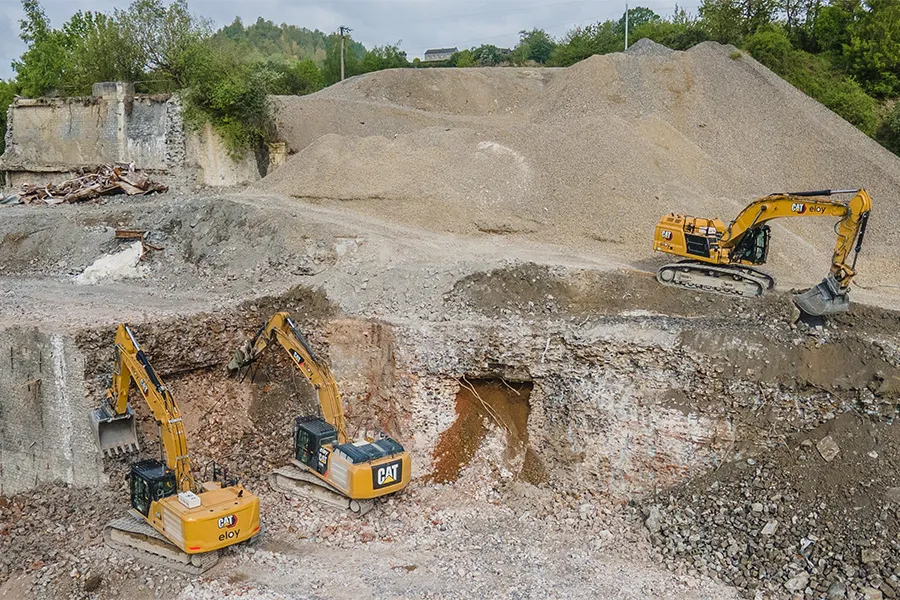
While recovering steel and concrete for recycling is already common practice, the same cannot yet be said of materials intended for reuse. Laurent Cori: “Demolition contractors were already recovering doors, windows, frames and so on 20 years ago, but the problem was how to store them.
Online platforms are now bringing sellers and potential buyers together, specifically to avoid this costly storage. It works, but is still fairly limited. We are involved in such an online database initiative, but it is not all straightforward. Who wants 20-year-old frames that are therefore less efficient, or light fittings from the last century that consequently consume more energy? And who will pay for the careful dismantling?”
Into the unknown
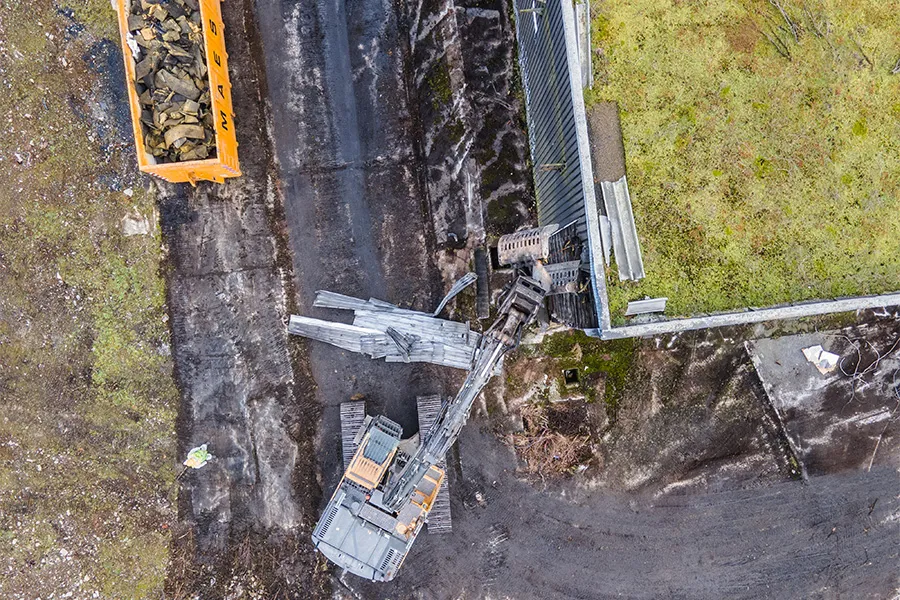
A deconstruction contractor’s work often resembles that of a detective. Théophile Meecko: “Very often, we have no up-to-date plans. “
We then set out into the unknown, surveying the site, isolating energy supplies and carrying out exploratory investigations. We know nothing about the building’s (long) history and therefore have no idea what condition it is actually in. Every case is different and requires a full assessment. Alongside a broad range of knowledge, experience is crucial to properly assess the risks and apply the right method. Suspecting a potential hazard, such as hidden asbestos, means investigating further so that we can then work safely and protect our colleagues’ health.”
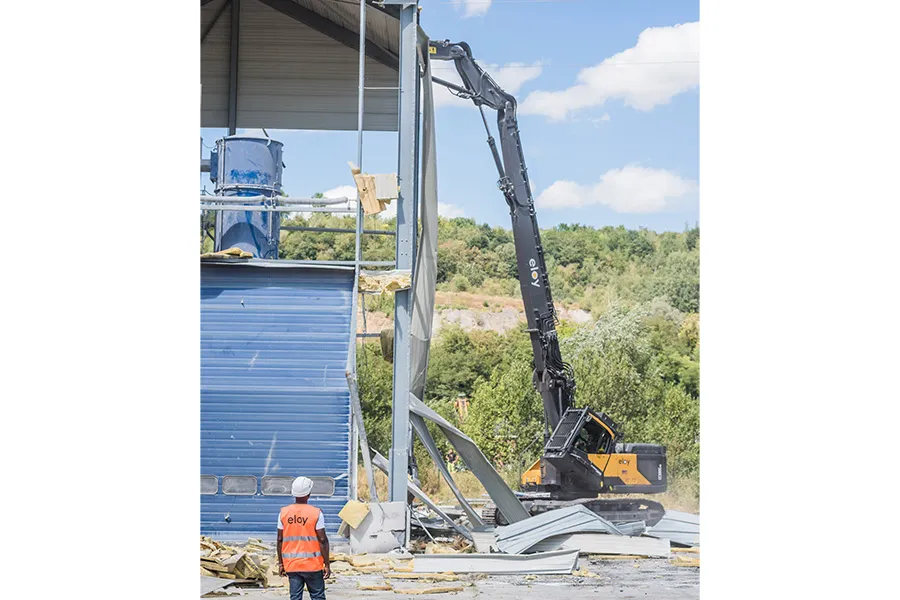
For example, when faced with an old steel frame that needs to be deconstructed, you need to know where to start, taking account of the effects of time and the bracing. “We need to understand structural stability better than anyone else so we can guide the workforce. And if we have any doubts, we call in a consultancy to avoid taking unnecessary risks. You cannot simply improvise as a deconstruction contractor. To deconstruct properly, you need to know how the structure was built: that requires a broad range of construction skills. But above all, it is a fascinating profession, because every project is different and brings a new challenge! Unfortunately, not all clients are yet aware of the complexity and the risks.”
Delivering the same quality of service to the client from start to finish
True to its commitment to offering clients a complete service, the Eloy group invests in the quality of its deconstruction work, whether or not it goes on to build on the site. Laurent Corin: “As the first contractor on site, the deconstruction contractor has a direct impact on the client’s impression of the company. Deconstruction often gives us the chance to demonstrate our expertise and earn the client’s trust, so that we can also take on the rebuild.” While there are no formal training courses in deconstruction, the Eloy group does provide in-house training, keen to raise the profile of a profession with a bright future. The group’s structure also makes internal mobility easier, because deconstructing is building in reverse.
Question about this story? Ask your question
Keep following this
Get an email when a new story is published. No account needed.
- SubjectConstruction