











Sustainability and mixed-species habitats at the world’s largest covered zoological ecosystem
Texte Philippe Selke Photos Pairi Daiza
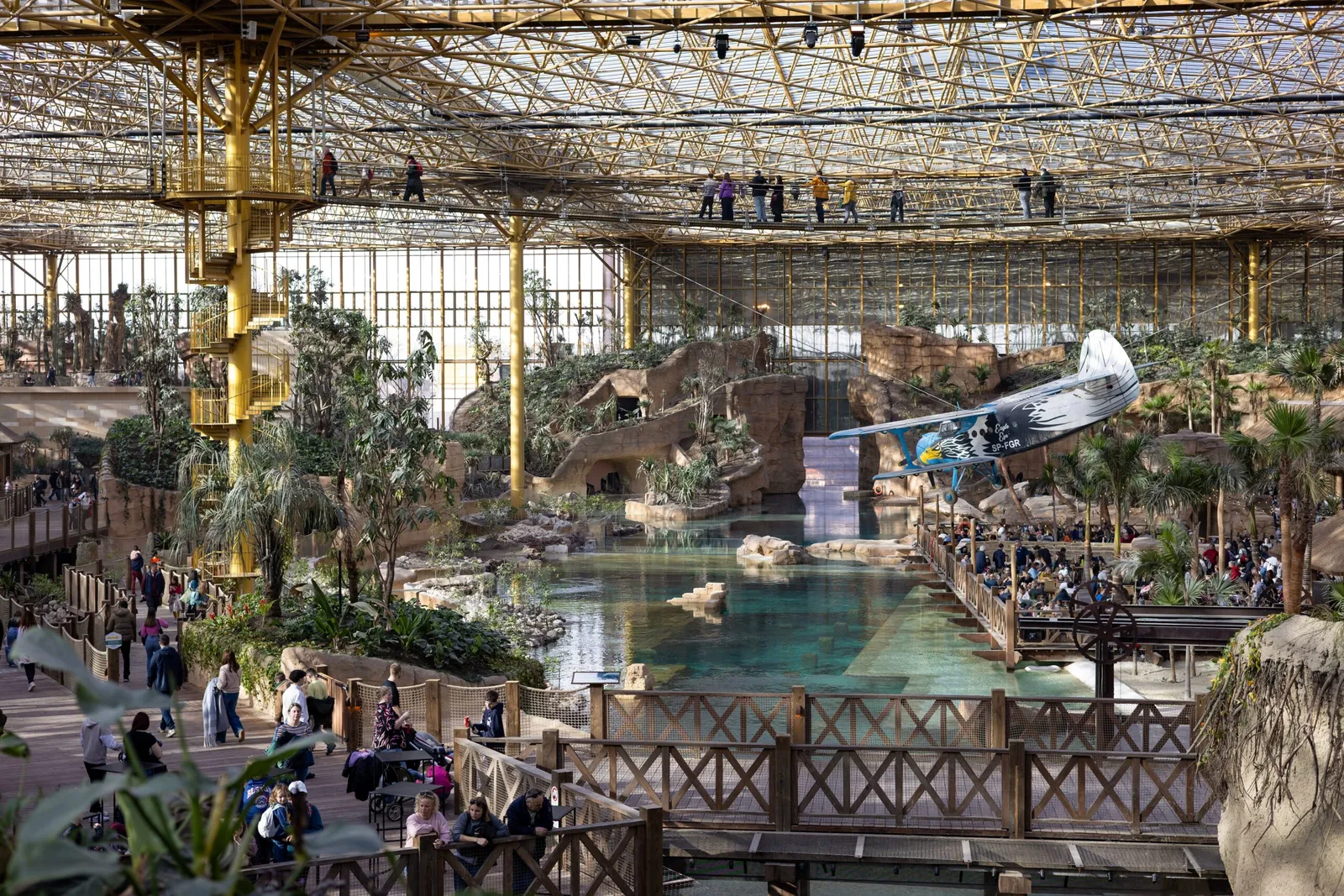
From the aviaries at Paradisio bird park to Edenya, the latest addition to Pairi Daiza (Brugelette), the progress made by Eric Domb and his team over some thirty years is impressive. Their ambition has always been to give as many people as possible the chance to marvel at the beauty of nature, so that they will respect it. Jérémy Lannoy, head of major projects and sustainability at Pairi Daiza, and Pascal De Beck (Silent Architecture), the Park’s chief external architect, discuss the ambitions and challenges of this unique project, also awarded the title of ‘world’s largest tropical greenhouse’ by the Guiness Book of Records.
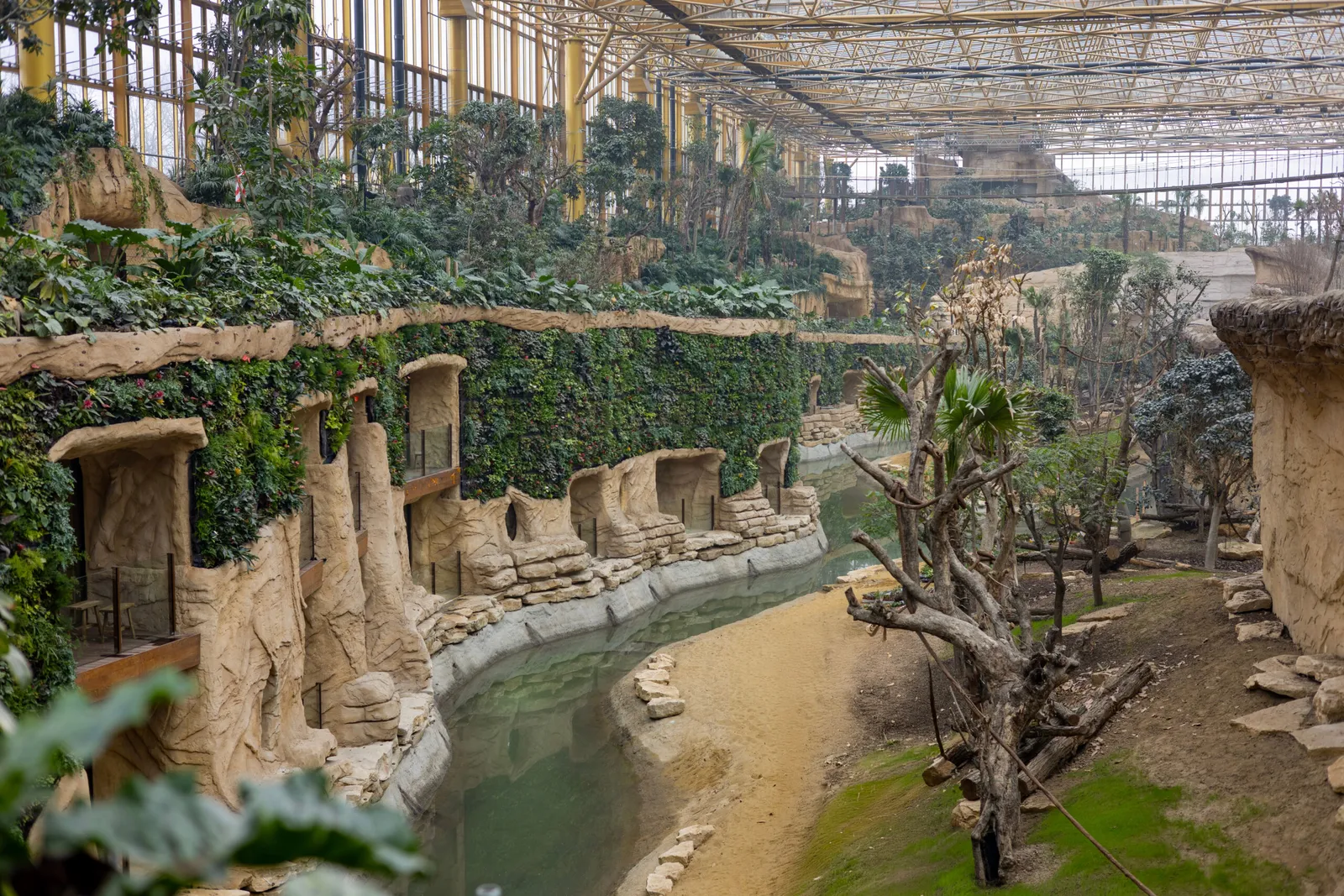
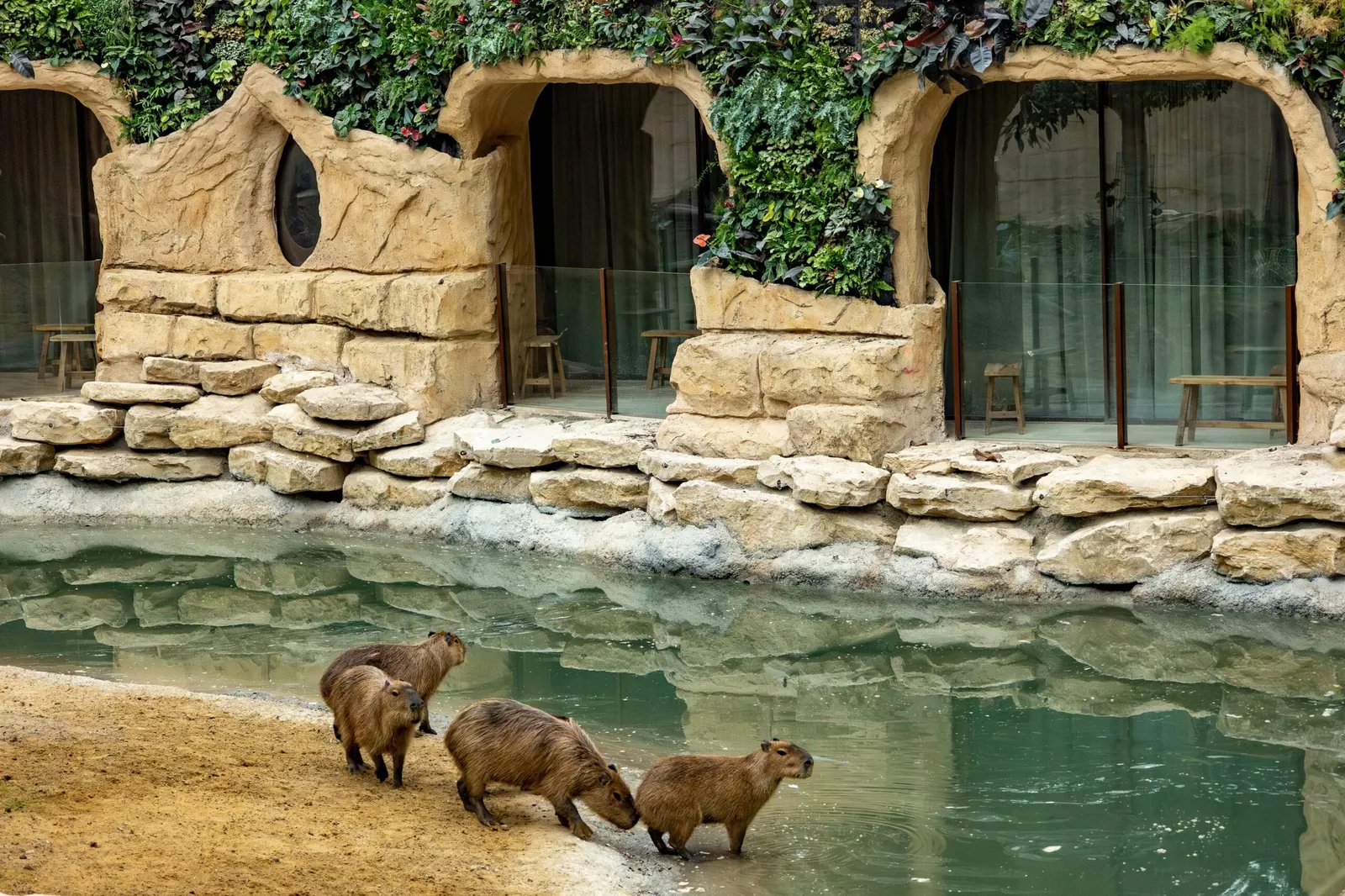
Home to thousands of animals and plants from around the world, brought together in a 4 ha greenhouse with water as its guiding thread, Edenya is even equipped with accommodation for a fully immersive experience. There is nothing else like it anywhere on the planet. This lack of precedents was one of the first challenges facing the designers. Pascal De Beck explains: “Unlike the Park’s other Worlds, Edenya introduces visitors to the equatorial belt across several continents, rather than focusing on a single geographical region. A continuous, coherent landscape on 3 levels (ground, canopy and underwater) allows visitors to explore 6 biotopes freely (rainforest, dry forest, riverine, beach, cliff jungle, waterfall), with water as the narrative thread.”
Mixed-species habitats in a vast glass enclosure
To accommodate such diversity, the designers opted for a large glazed structure measuring around 200 m on each side, with a (near-)flat roof providing more than 20 m of clear height.
A three-dimensional structural system with exceptional 50 m spans frees up the ground for a flowing landscape design. High-performance double glazing provides transparency and thermal insulation. The substantial technical installations needed to ensure the comfort of the animals, plants and visitors, including pool filtration, were designed to be invisible, inaudible and odourless, concealed within the landscape’s contours.
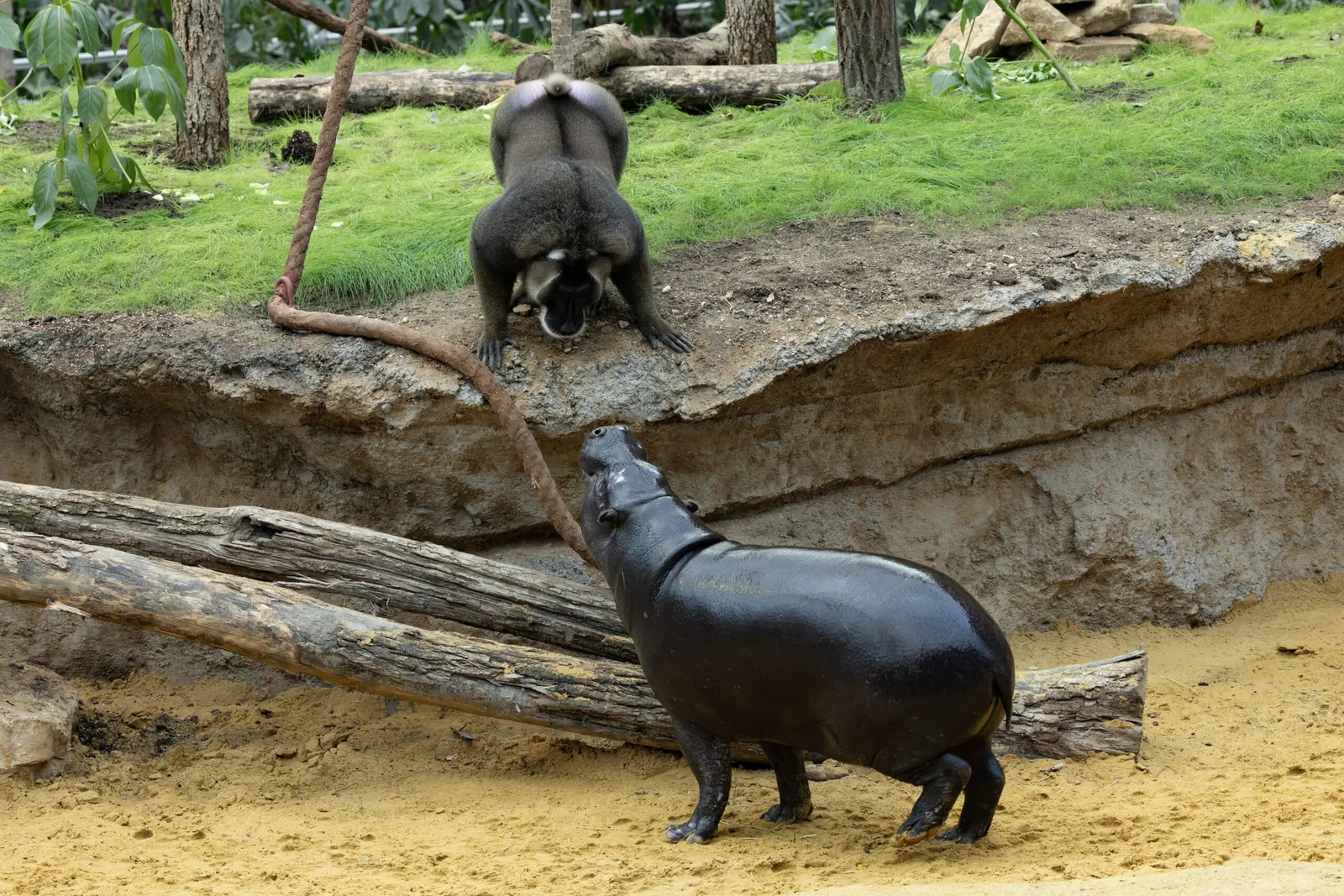
Moving away from the traditional zoo model of separate, enclosed pens, Edenya, like Pairi Daiza, takes an innovative approach to mixed-species habitats, recreating the complexity of natural interactions while ensuring safety. Several species share interconnected territories: for example, birds roam freely throughout the greenhouse, while lemurs occupy a restricted area, itself divided into smaller zones inhabited by small carnivores such as fossas and fennecs. Pascal De Beck notes: “Creating a natural landscape on the bare, flat site of the former car park, and establishing a tension between the mountain (a technical tower) and the sea (a lagoon), was a major challenge.”
An eco-responsible greenhouse
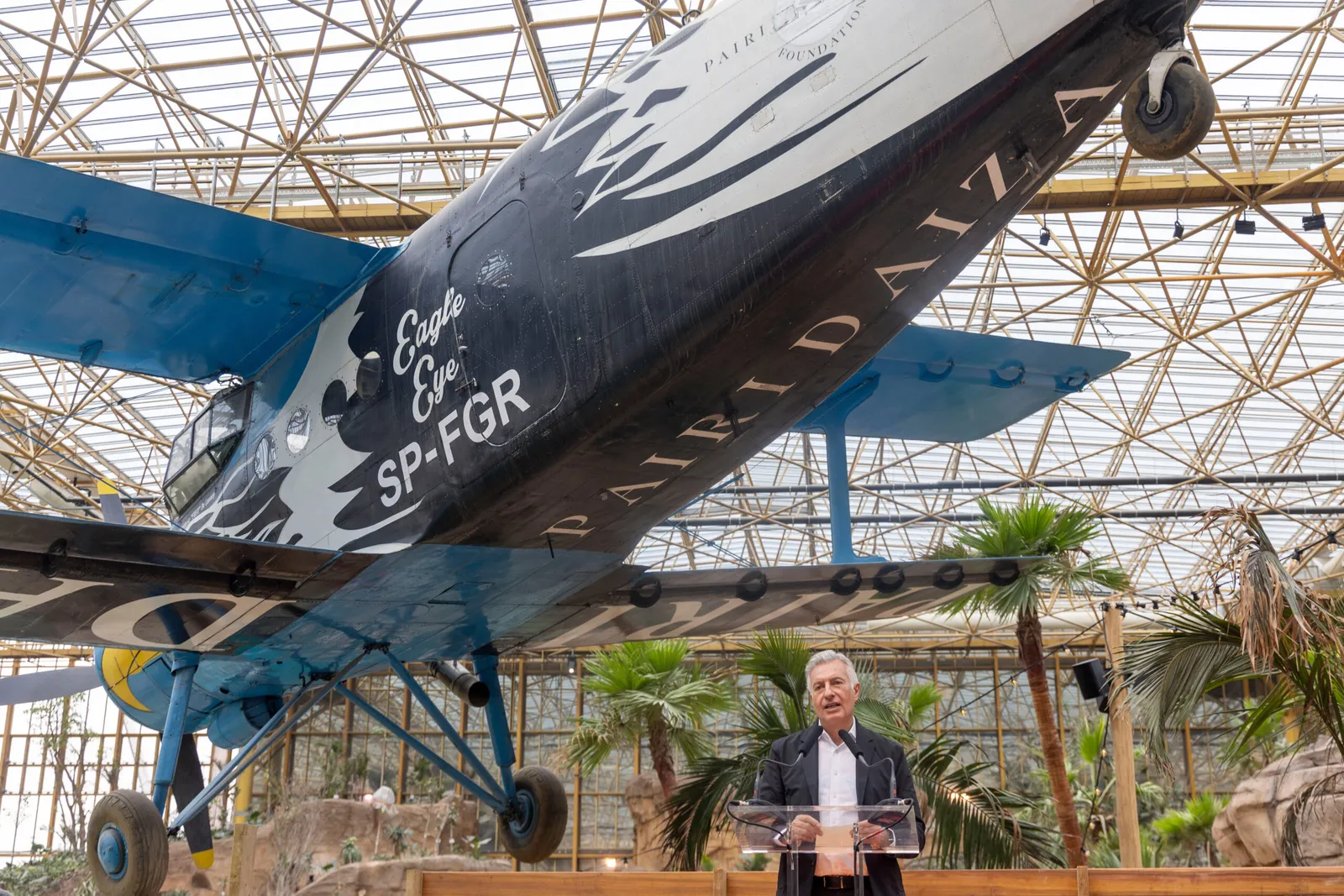
For Jérémy Lannoy, the main challenge was to design an eco-responsible greenhouse that would provide a stable climate for animals and plants throughout the year. Water also plays a major role here, with collected rainwater supplying the automated irrigation system.
The greenhouse contains distinct climatic zones, both dry and humid, served by suitably adapted ventilation and dehumidification systems. It is designed as a perfectly insulated “box”, meeting the same energy performance requirements (PEB) as a hotel of the same size. The energy used for ventilation and heating, provided by a series of heat pumps, comes from renewable sources, thanks to the capacity of the existing solar carport and geothermal energy, which is currently being developed. Fossil fuels are only intended as a backup if the main systems fail. In winter, energy consumption is optimised through mechanical ventilation with heat recovery, controlled by a weather station. In summer, free cooling limits the temperature difference between indoors and outdoors to 3°C.
A collective achievement
Having spent 4 years coordinating the complex work of a hundred companies, 90% of them Belgian, from small crafts businesses specialising in artificial rocks and thatched roofs to major specialist contractors working on concrete, aquariums and greenhouse structures, Jérémy Lannoy is delighted with the result, although the plants and animals will still need time to acclimatise: “Edenya’s opening to the public is the culmination of a long human journey, to which everyone contributed, staying the course despite periods of doubt and more difficult times. Thank you to everyone who made this truly unique project possible!”
Project details
Client: Pairi Daiza
Architect: Silent Architecture
Main contractor : SM Sanctuary (Dherte, CIT Bathon, BPC Group)
Question about this story? Ask your question
Keep following this
Get an email when a new story is published. No account needed.
- SubjectConstruction







