











Putting sustainability into practice with ambition, method and creativity
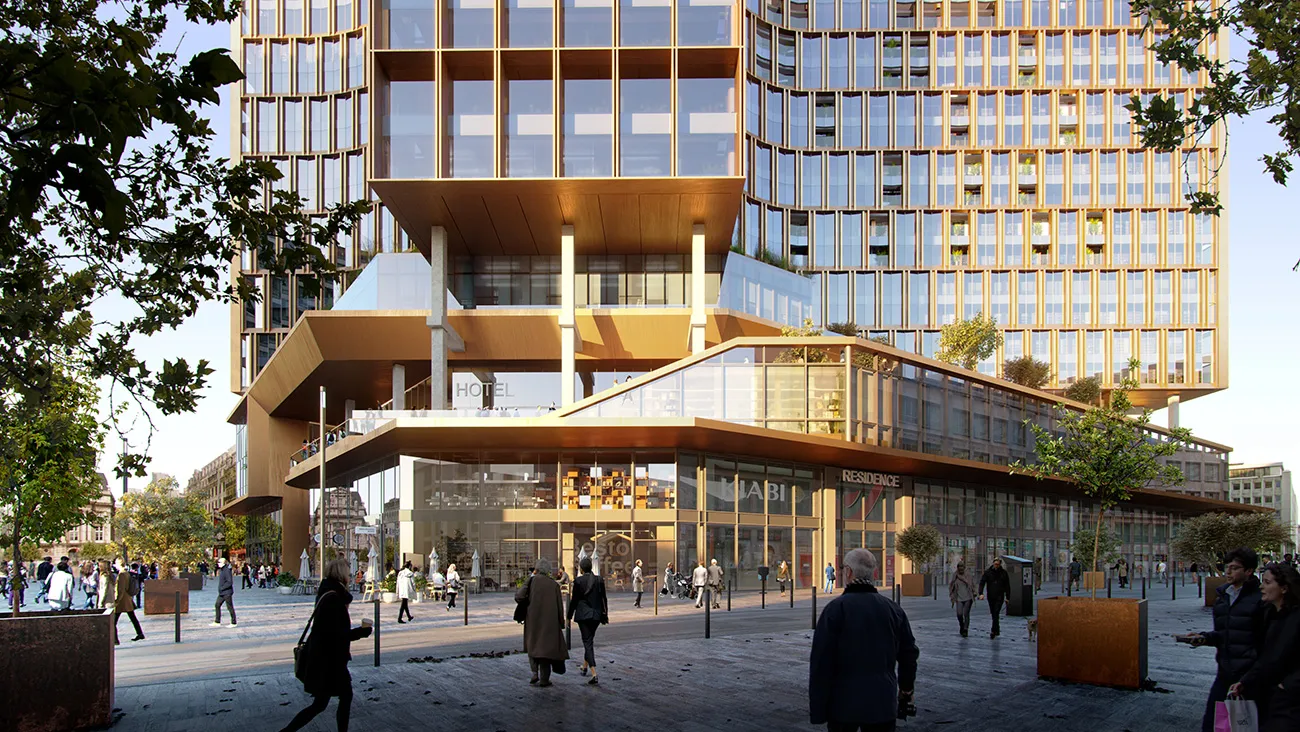
Aware of their responsibility towards the city and urban space, the architects at DDS+ have developed a method for delivering tailored responses to sustainable construction ambitions, while staying true to the practice’s DNA. We meet Maruxa Touceda, Lilia Poptcheva and François Couvreur, Partner, who lead the Research & Development team in collaboration with all their colleagues and clients.
People and the environment are at the heart of everything the architecture practice DDS+ designs and delivers. On the front line of contemporary challenges, from urban to energy-related constraints, the practice understands that so-called sustainable construction is a holistic approach that goes beyond the choice of materials or building services. The challenge was to find a way to give sustainability ambitions, shared with the client, the place they deserve throughout the life of a project.
Sharing and co-creation
Within the practice, the R&D team is responsible for putting these ambitions into practice. It works along 3 strands: monitoring and supporting each project, gathering and sharing information, and developing practical tools. Led by Maruxa Touceda, the team’s composition evolves organically in response to the different needs of the teams and projects: «The team’s role is to open up the discussion and systematise processes. To understand why we take certain measures and how we implement them. At the start of a project, in our advisory role, we agree the ambitions with the client. We then provide ongoing monitoring and coordination with all those involved, including the many specialist consultants. We provide support throughout the project and assist the practices responsible for certification applications and other reports.»
Lilia Poptcheva and François Couvreur add: «As architects, we are responsible for what we create with the client, and for its impact on the environment in the broadest sense. Clients are aware that we are at a turning point between old habits and new possibilities. We are moving towards greater flexibility, adaptability, resource efficiency and circularity in the way we design and practise architecture. Our role is to raise our clients’ awareness and work with them to co-create with this in mind.»
With the team’s support, the whole practice is encouraged to become more aware, without anything being imposed. No useful information is lost, whether it comes from inside or outside the practice. Various internal communication channels keep the whole team’s thinking moving forward. Lilia Poptcheva: «All this work also allows us to question our own approach and sharpen our critical thinking, so that we do not fall into the trap of greenwashing. We are committed to staying true to our values and offering tailored responses that respect the specific characteristics of each project.»
A sustainable construction wheel
One of the tools developed by the team is the sustainability wheel: a highly visual document, resembling a compass rose, that maps out a project’s ambitions across the different areas of sustainable development. Since every project is different, the approach varies accordingly. Maruxa Touceda: «When we look at the wheels for different projects, we can also see how our approach has evolved over time: we moved from a focus on architecture and urban planning to energy performance, and more recently to other environmental aspects, including mobility, biodiversity and the impact of material choices, as well as social and circular aspects, such as retaining existing buildings and reuse.» By accompanying a project throughout its development, this tool shows how ambitions change in response to constraints, but also, and above all, helps keep the project on course so that ambitions are not lost along the way. A valuable communication aid, it helps everyone take part in the discussion while visualising the issues, embrace sustainability as a whole and go beyond regulatory requirements.
One thing is certain: at DDS+, sustainable construction starts with the initial feasibility studies and informs every stage of every project. In a rapidly changing context with an ever-growing range of factors to consider, the practice gives its staff and clients the methods and tools they need to meet today’s and tomorrow’s challenges creatively.
Question about this story? Ask your question
Keep following this
Get an email when a new story is published. No account needed.
- SubjectConstruction







