











“Ottignies–Louvain-la-Neuve junction”: first four-track section for the RER in Wallonia
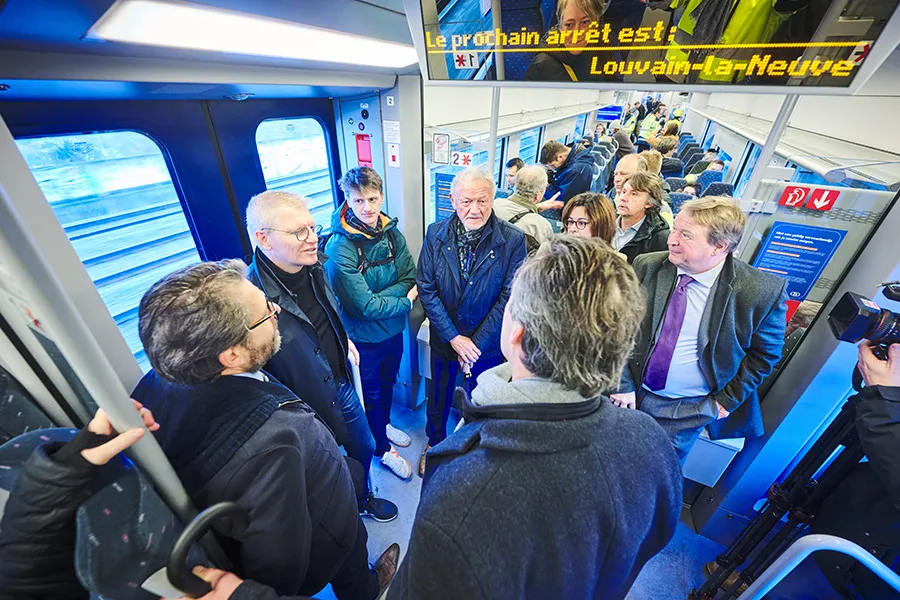
With these 2.5 km and various improvements at the station, the Regional Express Network is taking shape
“It’s a small point on the map, but a significant step towards making the RER a reality!” Since this morning, 4 tracks have connected Ottignies station to the junction towards Louvain-la-Neuve: 2 central tracks for fast trains and 2 outer tracks for local services. This is a limited section compared with the project as a whole, but bringing it into service on schedule, as set when work resumed in 2018, shows that the long-awaited, and rightly so, RER is taking shape on the Brussels-Namur line! In 18 months, it will be the turn of the section between Brussels and La Hulpe.
First section brought into service, with more to follow in 2025 and 2026
Anyone who uses the station, even occasionally, will have noticed the same thing: Ottignies station and its surroundings have changed considerably in just a few years. Launched in mid-2019 with the removal of a set of sidings at the foot of the embankment on the “parking des villas” side, the RER project and its renewal of railway infrastructure have now reached a significant milestone. This is thanks both to the opening of new tracks at the station and towards Louvain-la-Neuve, and to the opening of an additional platform.
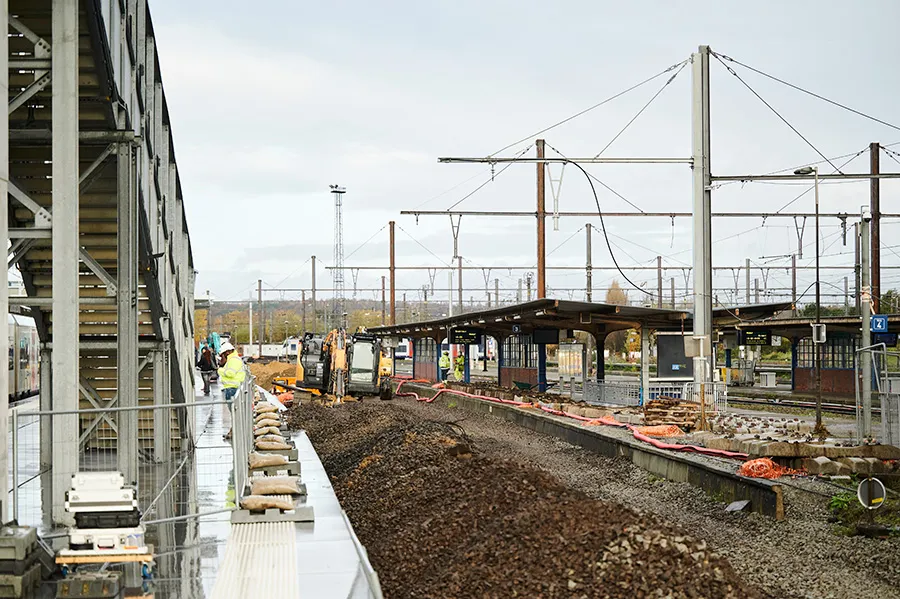
Starting with the platforms, Ottignies station now has 3 new ones: a “temporary” platform, to remain in place until the other platforms have been fully modernised, and 2 other “permanent” island platforms, each serving 2 tracks, including the one brought into service this morning, serving the first 4 new tracks. Designed around the alignment of the RER line to and from Brussels or Namur, these platforms are wider (8 m), longer (350 m) and higher (76 cm) than their predecessors. This will make passenger flows and access to trains easier.
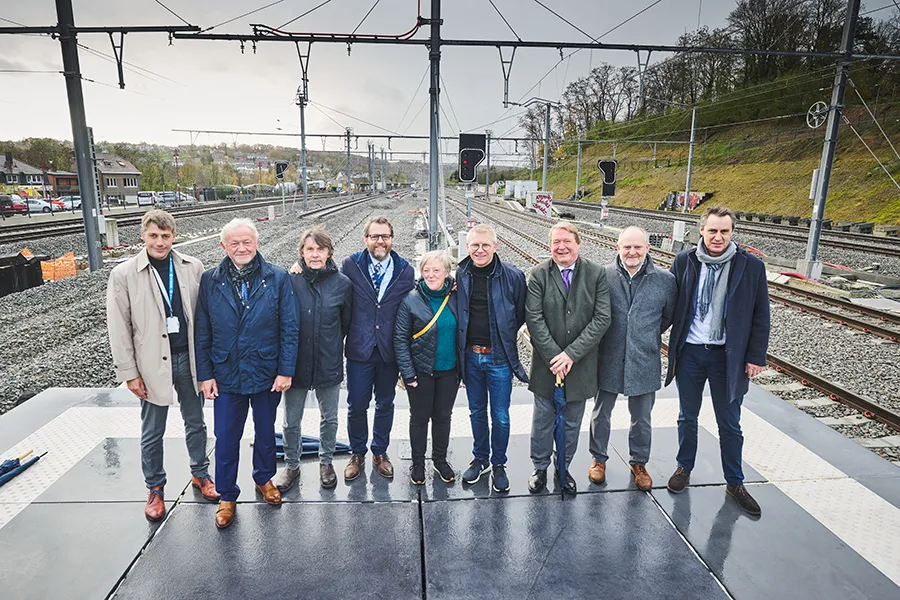
As for the tracks, since this morning traffic has been distributed across 4 tracks between the station exit and the junction towards Louvain-la-Neuve: 2 central tracks for fast trains and 2 outer tracks for local services. This eliminates conflicts, so there is no longer any need to wait for one train to pass before the next can proceed. Achieving this has taken 4 years of work, including moving some tracks, laying new ones and installing 20 points (8 on the Louvain-la-Neuve side and 12 on the Ottignies side), some up to 75 m long.
Completed on schedule, as set when work on the RER project resumed in 2018, these works have given Wallonia its first “four-track RER section”. Above all, they show that the long-awaited, and rightly so, RER is taking shape on line 161 Brussels-Namur.
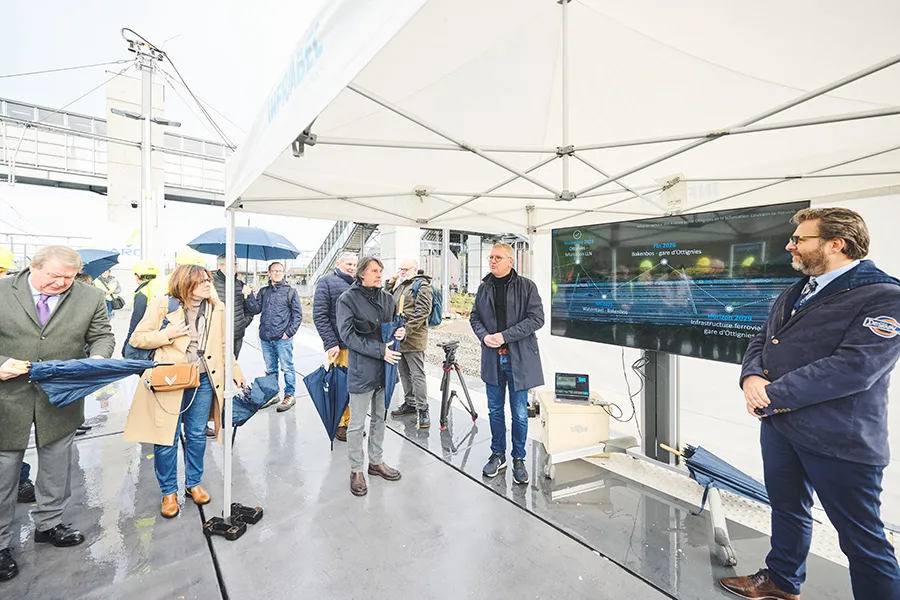
Further work at Ottignies station
At Ottignies station, work by Infrabel and its subsidiary TUC RAIL, which specialises in railway engineering, will continue over the coming years. In total, 6 new island platforms will be built, with 12 tracks providing access to them. Work will continue one platform at a time, from west to east.
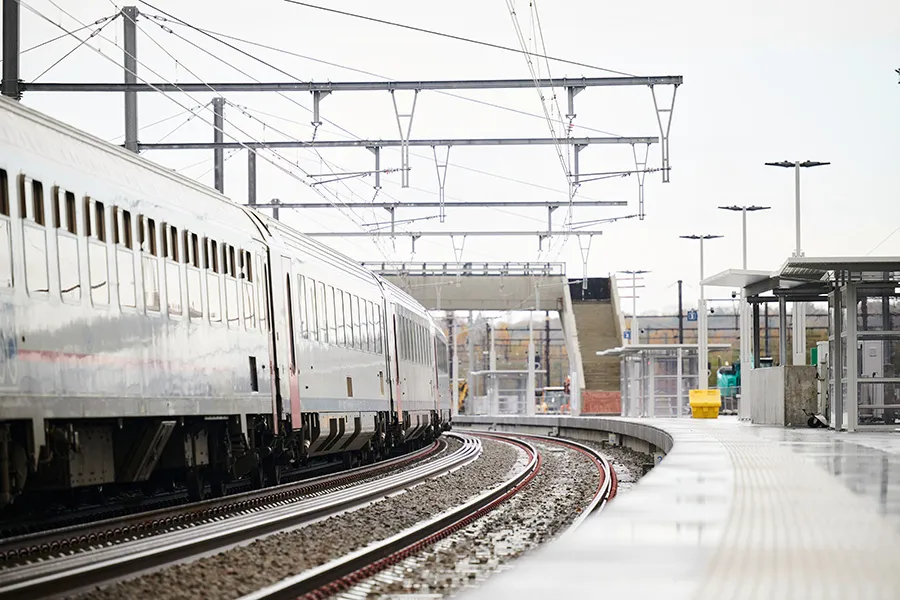
By 2029, all railway engineering equipment, from the smallest rail fastening to signalling and electrical installations, will have been renewed across an area of nearly 20 hectares! For the technical teams, this is a daily challenge because of 3 major constraints:
- Keeping Ottignies station operating as normally as possible, with 5 platform tracks available at all times for the “Brussels-Namur” line alone;
- Maintaining freight traffic between Leuven and the south of the country, and vice versa, including at night;
- Since 2018, line 161 has been equipped with ETCS. This signalling technology enhances safety but makes interventions and infrastructure modifications more complex.
The RER: rethinking mobility around Brussels
The RER, or Regional Express Network, involves increasing the number of tracks from 2 to 4 on 5 major railway routes within a 30 km radius of Brussels. Work is still under way on 2 of them: line 161 Brussels-Ottignies and line 124 Brussels-Nivelles. This doubling of capacity allows fast trains to run on the two central tracks, without interacting with stopping trains (S services), which run on the two outer tracks.
As explained when work resumed, the principle adopted jointly by Infrabel and SNCB is to bring each section into service as soon as it is complete. The next sections will follow on this basis: the 9 km between Brussels/Watermael and the entrance to La Hulpe (Bakenbos) in mid-2025, then the 10 km between La Hulpe and Ottignies in late 2026. Meeting this timetable means that, alongside work carried out mainly at night or at weekends to minimise disruption to passengers, traffic must be suspended completely for one week each year. The next interruption is scheduled from 29 March to 8 April 2024.
Question about this story? Ask your question
Keep following this
Get an email when a new story is published. No account needed.
- ThemeTransforming infrastructure and territories
- SubjectConstruction







