











Landscaping that benefits patients and biodiversity
Texte Philippe Selke Photos Krinkels
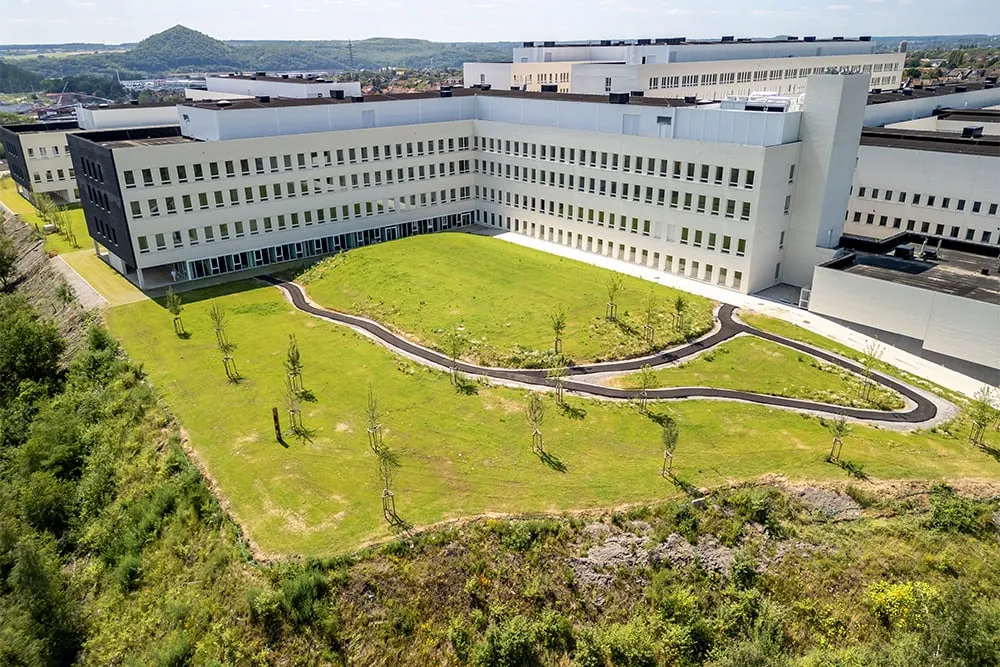
One of the most striking features of the Grand Hôpital de Charleroi is its landscaping, designed by Bas Smets, whose work is already well known in the Charleroi area. The project aims to transform the site’s 17 hectares into a lush green space that respects biodiversity. To carry out this ecological transformation on the former Viviers spoil tip, GHdC called on the teams at Krinkels.
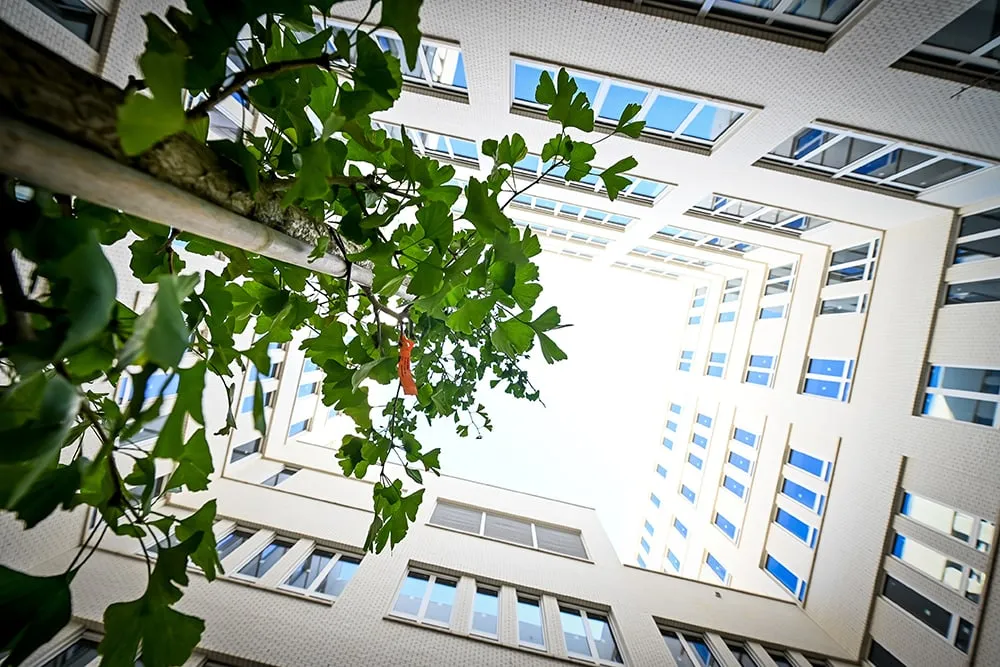
With around 850 employees in Belgium alone, Krinkels is a landscaping and grounds maintenance company operating in public procurement in Wallonia, Brussels and Flanders, as well as in several European countries. Valentin Dessy is a site manager at Krinkels. He is responsible for managing the GHdC project from start to finish. “We carried out the external landscaping at the Grand Hôpital de Charleroi on behalf of the main contractors Franki and Jan De Nul. Our teams created several therapeutic gardens and planted the areas around the heliport. Grass pavers were used in parking areas and on vehicle routes to avoid excessive hard surfacing across the site. We also landscaped 12 interior courtyards, planting Gingko biloba to provide light, airy foliage while limiting the obstruction of natural light.”
For patients and biodiversity
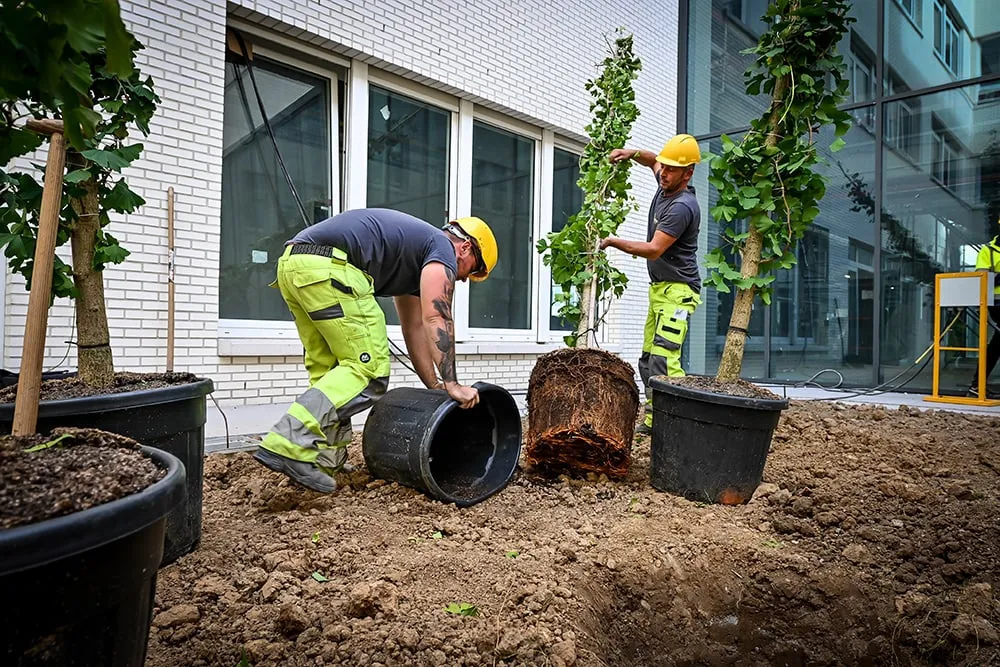
Of the site’s 17 hectares, more than 11 hectares are devoted to a park that will serve as a true green lung for the hospital. The park has been designed in several sections to provide different settings conducive to relaxation and patients’ recovery, as well as for their visitors. It features hollows and a variety of tree species on the higher ground, helping to support rich and diverse biodiversity. Valentin Dessy said: “As the site is a former spoil tip, a deposit of waste material made up of shale, sandstone and assorted refuse from underground and surface mining, GHdC needed to bring in a sufficient layer of topsoil to support planting around the hospital. When planting the trees, we also added soil improver to the planting pits and installed a perimeter drain around each root ball to aid watering.”
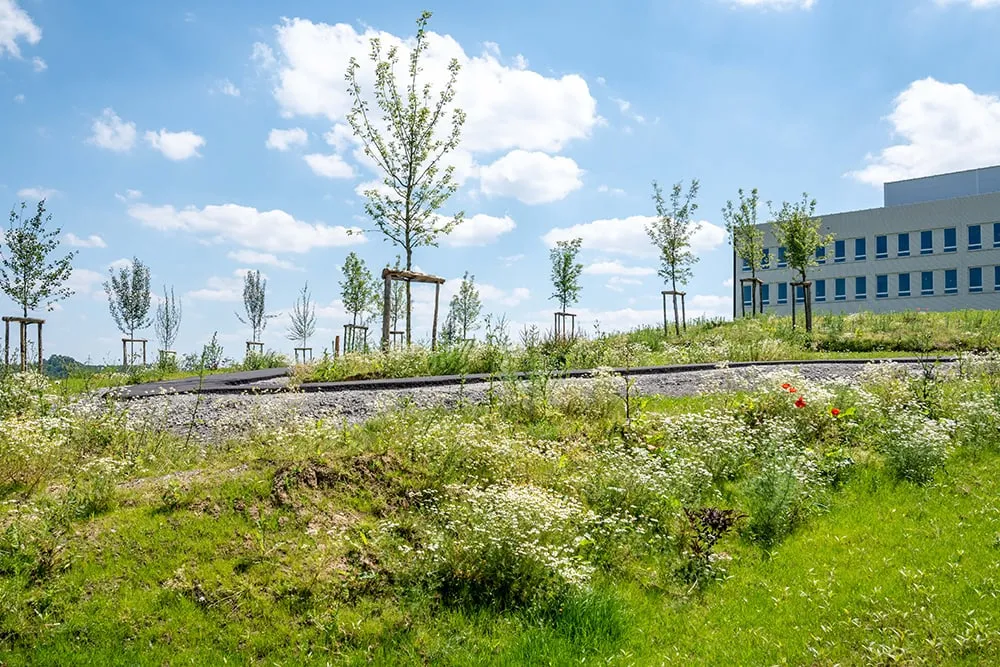
The site’s lawns were converted into wildflower meadows to encourage biodiversity. Thanks to this initiative, flora, insects and small wildlife will now have a suitable habitat in which to thrive and develop. A total of no fewer than 1580 trees and shrubs were planted, and 37 298 m² of lawn and wildflower meadow were sown. Having a visual connection with extensive areas of restored nature also benefits bed-bound patients, as studies into the “healing environment” have shown. A key element of the project was the choice of tree species, carefully selected for their medicinal properties in line with the wishes of the Grand Hôpital de Charleroi.
A major project with challenges to match
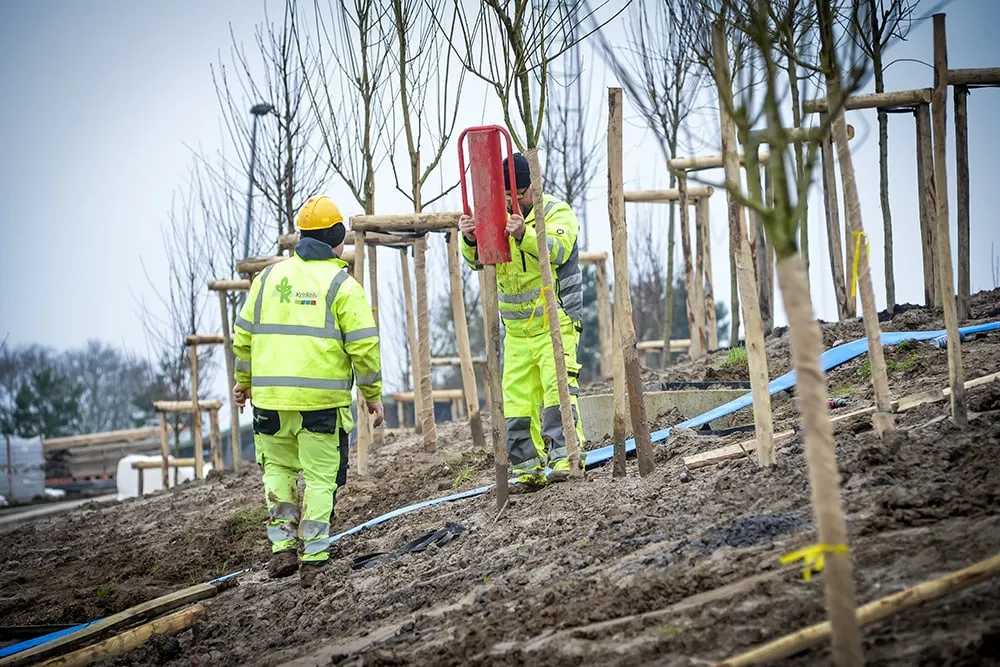
Planting on the spoil tip posed a particular challenge because of the nature of the soil and limited access for machinery, particularly due to the wet ground caused by persistent bad weather. Valentin Dessy said: “Planting took place over 8 months, during which we worked with bare-root plants, container-grown plants and root-balled plants, depending on the season and which areas needed to be completed first. Every landscaping or planting activity had to be coordinated with the other companies working on site to meet deadlines and priorities without hindering one another’s work. At the time of writing, the vast majority of the planting has been completed. Only a few trees remain to be planted around the heliport. Maintenance of the planting has already begun, and Krinkels also won this contract.”
Given the end result, Krinkels can only be proud to have taken part in this major project, which will undoubtedly feature prominently among its references.
Question about this story? Ask your question
Keep following this
Get an email when a new story is published. No account needed.
- SubjectConstruction







