Eco-construction, a sector with a bright future
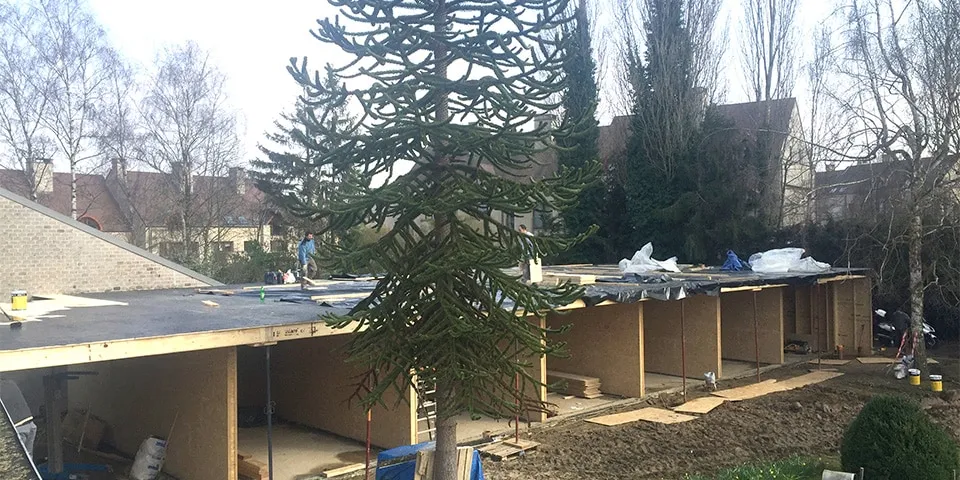
Eco-construction is a fast-growing market. At Confédération Construction, a growing number of members are convinced that the sector is emerging and has a bright future. This article provides a brief introduction to eco-construction through the experience of one of Confédération Construction’s members, a pioneer in the field.
“The growth of eco-construction has transformed it from an emerging sector into one with a bright future,” said Luc Mohymont, president of Confédération Construction Wallonne (CCW), at the 15th anniversary of cluster Eco-Construction (see box below). “The growing number of synergies between traditional businesses and micro, small and medium-sized enterprises (MSMEs) in the eco-construction sector is also an indicator of the sector’s good health. As president of CCW, I am extremely proud of this.”
Definition
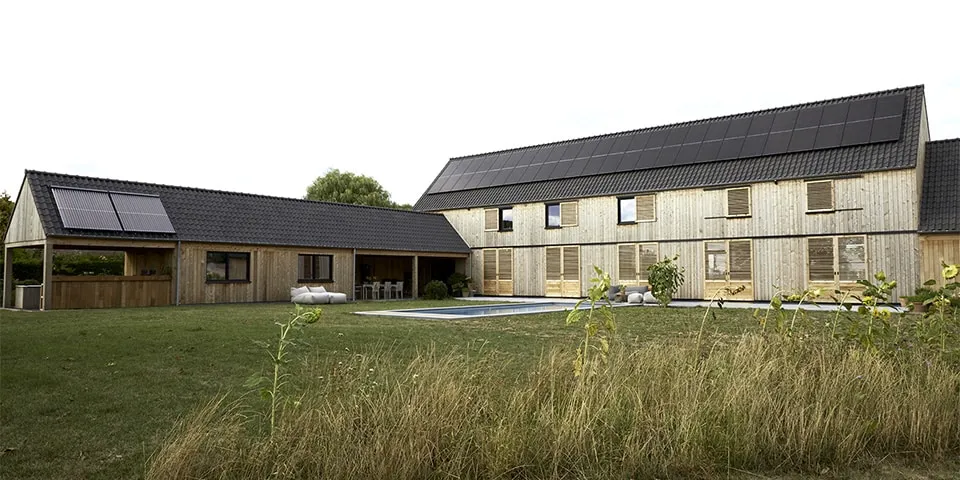
This house is an example of eco-construction. (Photo: Paille-Tech/Lefrancq, Mons)
But what exactly is eco-construction? To find out, we put the question to an expert: Hervé-Jacques Poskin. As director of cluster Eco-Construction, he shared his definition with us. “There are as many definitions as there are people involved in it,” he explained, before offering his own. “Eco-construction means building as well as possible while safeguarding future generations and the health of workers and occupants, and respecting the environment as much as possible, from a blank sheet of paper through to deconstruction. This approach should use bio-based materials, which form the basis of eco-construction.”
Bio-based materials
The role of these bio-based materials, sourced from the agricultural and forestry sectors and the local, circular economy, is very important. And it would be fair to say Wallonia is not short of them. Wood, straw, sheep’s wool, cellulose, hemp, cork, clay, raw earth, cotton, cellular glass granules and even… grass and seashells. These are just some of the eco-materials available on the Walloon market for insulation and construction. Since 2010, new materials and production facilities have been coming onto the market, proof that the sector is growing rapidly.
First general contractor
If anyone needs no convincing of the benefits of eco-construction, it is DRTB, a member of Confédération Construction. Its director, Marc Ruebens, has been “steeped in eco-construction” for years. “My family background has always been conducive to this approach to construction,” he says. “Our priorities have always included saving water, reusing rainwater and insulating buildings. We were the first general contractor to enter this sector. Today, it accounts for 70 % of our turnover. We now have a somewhat privileged clientele. They come to us because we work in eco-construction.”
Benefits
For Marc Ruebens, this approach to construction offers multiple benefits.
“Buildings with low energy consumption have a very limited impact on nature. By using natural materials, we live in a healthy environment with breathable buildings. Take the Don Bosco project in Woluwe-Saint-Lambert, for example. It was built using a timber frame and ‘finished’ with spray-applied lime over wood fibre insulation. It is a healthy, highly breathable building that can easily be dismantled and recycled,” he says. “Eco-construction also favours local materials, local labour and short supply chains. Moreover, as we move away from concrete, this approach to construction creates opportunities to add extra storeys to existing buildings. Finally, these healthy buildings are good for our health. In our new offices in Berchem-Sainte-Agathe, where two additional storeys were built using a timber frame, the indoor environment is always naturally pleasant and breathable. Why? An ambient humidity level of 50 % is ideal for the human body.”
Common sense
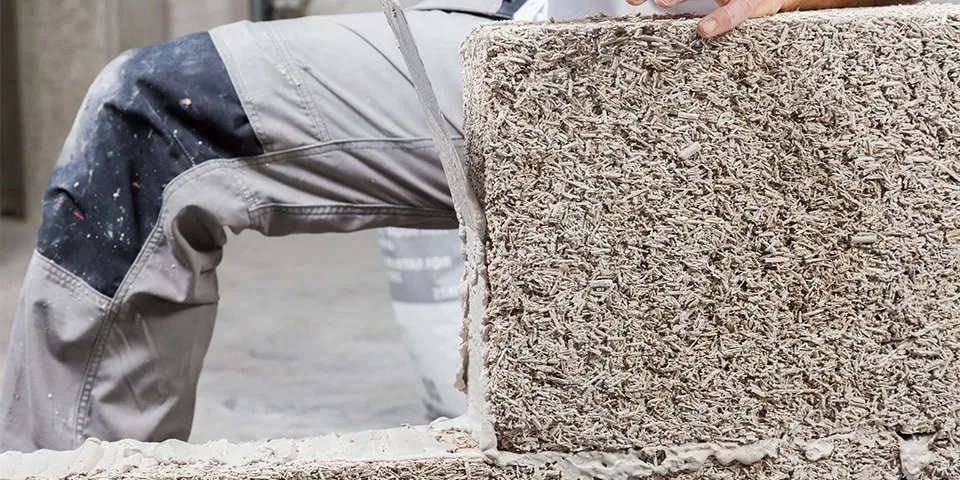
Wallonia is not short of natural materials. (Photo: ISOHEMP)
But for DRTB’s director, eco-construction goes well beyond the building envelope. “It is simply a matter of common sense. The environmental aspect is very important for future generations. What do we want to leave our children? We need to reduce waste and pollution… There is also the human aspect, which is a cause I champion. It is a commitment to society. In a business, workers need to be made aware of the issues and people need to be motivated,” explains Marc Ruebens. “Eco-construction also enables us to stand out from unfair competition, which is very reluctant to adopt these construction techniques and, above all, lacks training in them.”
Synergies
As CCW’s president noted earlier in this article, Marc Ruebens confirms that synergies between traditional businesses and MSMEs are becoming increasingly common. “They are indeed happening more and more often. Besix, for example, asked us to insulate the roof of its headquarters in Woluwe-Saint-Lambert with wood fibre. The company persuaded its landlord to insulate the building in this way.”
Our member’s message is very clear: get involved! “We have to do it! We can’t carry on like this. Either we wait for the authorities to legislate, with the risk of being caught off guard, or we get ahead of the curve and grow together in this direction,”
he concludes.
Cluster Eco-Construction is 15 years old and has 270 members
Cluster Eco-Construction, which brings together all those involved in and working in eco-construction, has just celebrated its 15th anniversary. “In 2010, we had only between 80 and 100 members. We now have 270,” says Hervé-Jacques Poskin. “Our main role is to connect businesses so they can work and innovate together. We act as business developers. We create opportunities for people to meet and build trust.” Like other clusters and other approaches to construction, cluster Eco-Construction receives the full support of CCW.
Question about this story? Ask your question
Keep following this
Get an email when a new story is published. No account needed.
- SubjectConstruction