











Driving the economic revitalisation of its region
Texte Philippe Selke Photos eloy
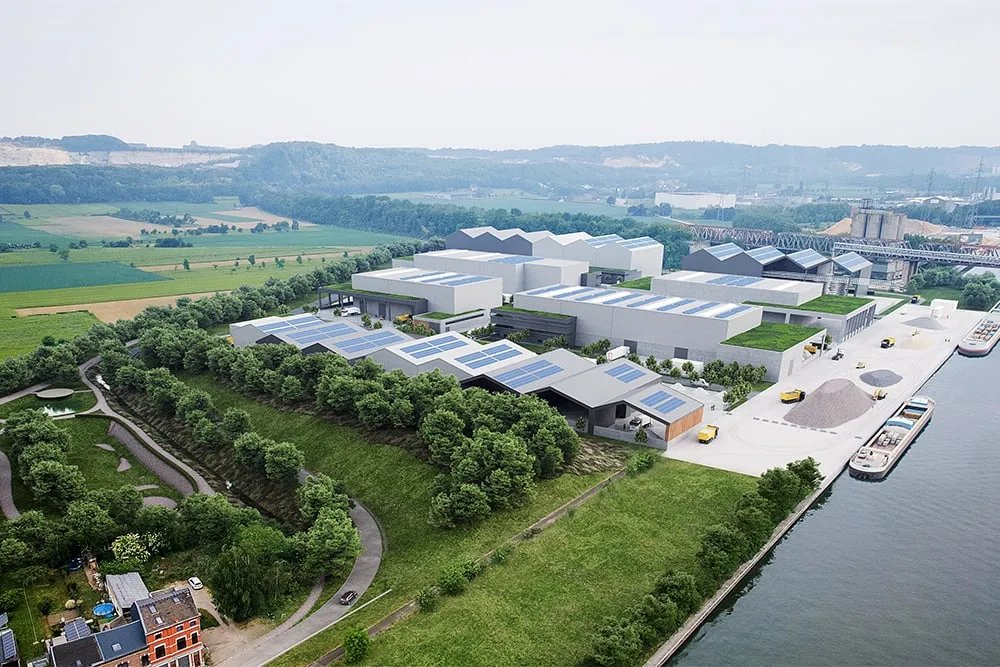
As a general contractor covering the entire construction value chain, eloy has in recent years turned its attention to the redevelopment of brownfield sites. This provides its teams with a long-term pipeline of work while helping to revitalise economic activity in the former Meuse steelmaking basin. The projects at Haccourt and Engis are excellent examples of what eloy can offer businesses looking for the ideal site on which to develop their own operations. François Demez, Project Developer, and Lounis Azibi, Sustainability Manager at eloy, tell us more.
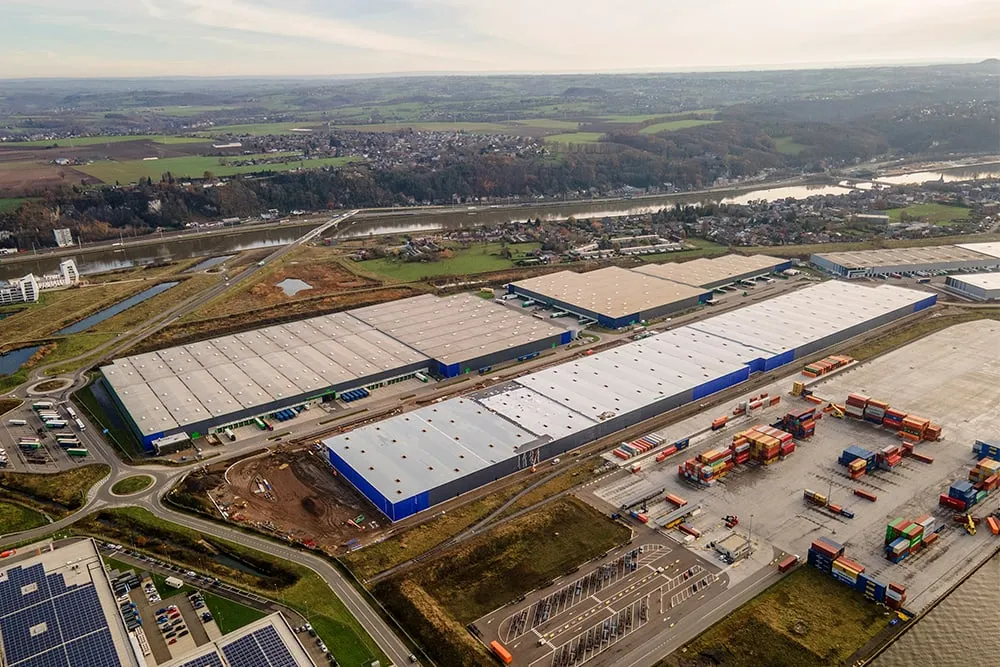
“The right activities in the right place” is the guiding principle eloy is seeking to follow in this new venture. Both the site of around 20 hectares straddling the municipalities of Haccourt and Visé, formerly home to the Holcim cement works, and the former CEGRAM site in Engis are located alongside a waterway. This is a strategic advantage, and it prompted eloy’s management to acquire the plots and redevelop them to make way for new economic activities better suited to our times.
Both developments are being pursued in close collaboration with local and regional stakeholders, but their timelines differ for several reasons. eloy will draw on its various areas of expertise as required, from site decontamination to the construction of new industrial buildings, as well as the demolition and deconstruction of existing structures and infrastructure works. Beyond the construction work, eloy can also help businesses obtain their permits, a highly valuable service these days… François Demez: “The two major challenges facing any business looking to set up in Wallonia, and in our case, in the province of Liège, are finding a site, on the one hand, and obtaining a permit, on the other. We can help with both, thanks in particular to our knowledge of the local economic and political landscape, as well as the experience we have gained through developing sites for our own account.”
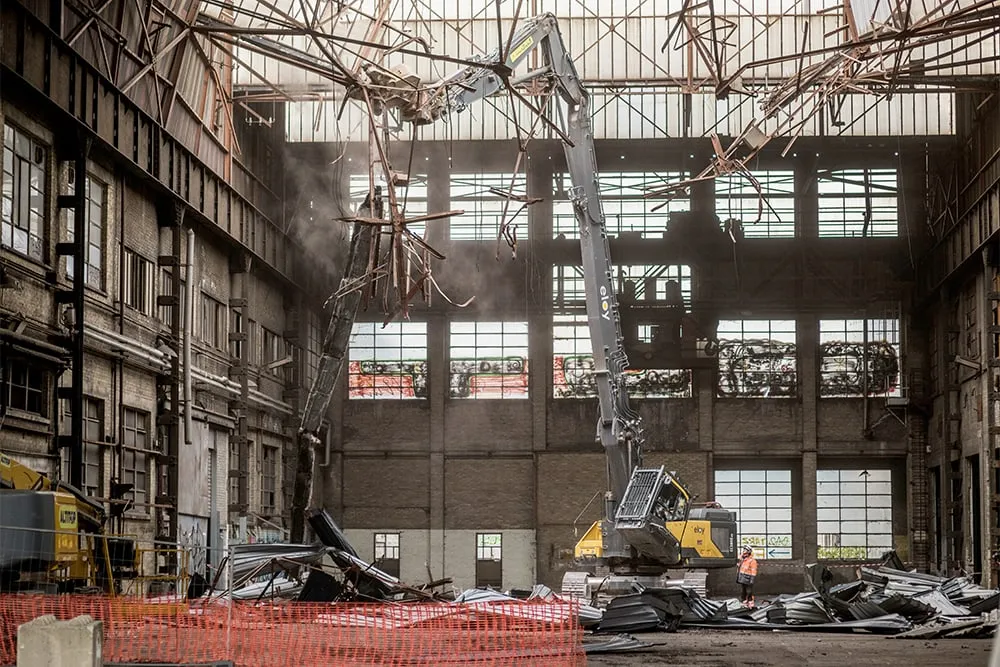
At Engis, transforming a problematic site into a home for high-quality industrial activities
Over a relatively short period, the Sprimont-based group acquired a polluted site of more than 10 ha, with a view to helping establish new, high-quality industrial activities. It will rid the municipality and the region of a problematic site, one that is dangerous and regularly causes nuisance, by deploying its expertise in remediation, deconstruction, infrastructure and industrial building construction in turn. The single permit application for the first development is about to be submitted, with the purchaser having already signed. After all, a site on the Meuse that can be brought into use quickly is a rare find.
Lounis Azibi: “The paradox is the administrative complexity we can face in a case like this. We have to liaise with around ten municipal and regional administrations responsible for biodiversity, infrastructure around the waterway, … and they often have different expectations. Reconciling all these viewpoints means maintaining an ongoing dialogue with the various authorities, which is what we are endeavouring to do. ∂
The reality is that building on a brownfield site is generally far more complex and costly today than building on a greenfield site in the countryside, even though political rhetoric advocates ‘building the city on itself’ as part of the ‘no net land take’ goal! »
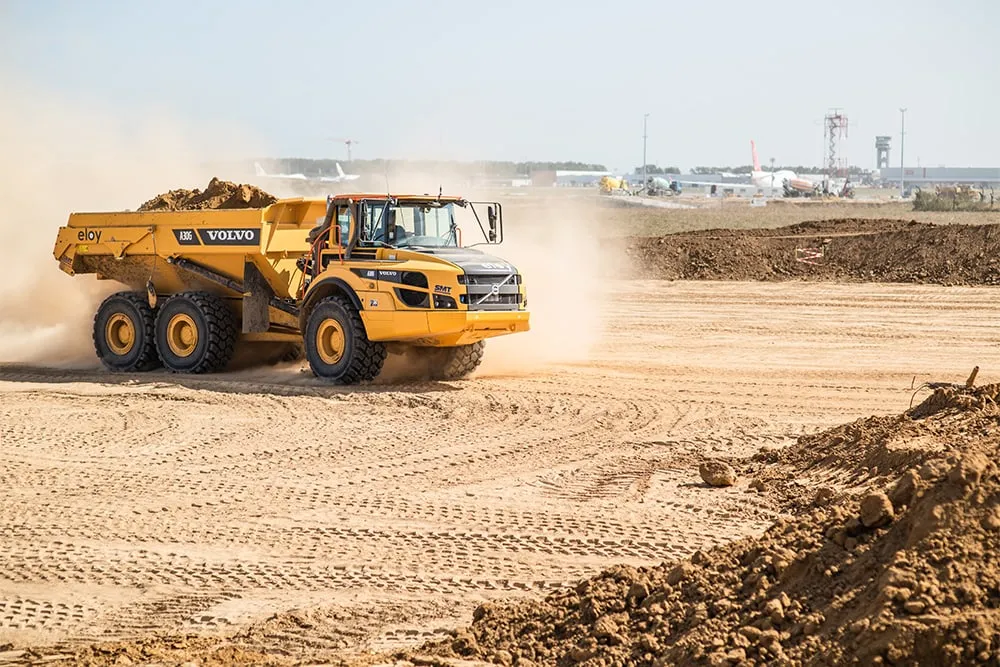
At Haccourt, creating a circular, low-carbon industrial zone
Acquired after it had been deconstructed and decontaminated, the vast site on the banks of the Albert Canal at Haccourt, with 13 ha of developable land out of 20 ha in total, is eloy’s testing ground for exploring how best to transform a former polluting industrial site into a home for businesses working in circular and low-carbon construction. Although Holcim had a presence there, the cement manufacturer had no direct access to the quay… The site therefore needs to undergo a 3-year programme of servicing before it can accommodate future businesses. Part of the land must be raised and a quay slab built, in addition to the usual utility and road works. The permit application for this work is being reviewed, and work is expected to start in early 2025.
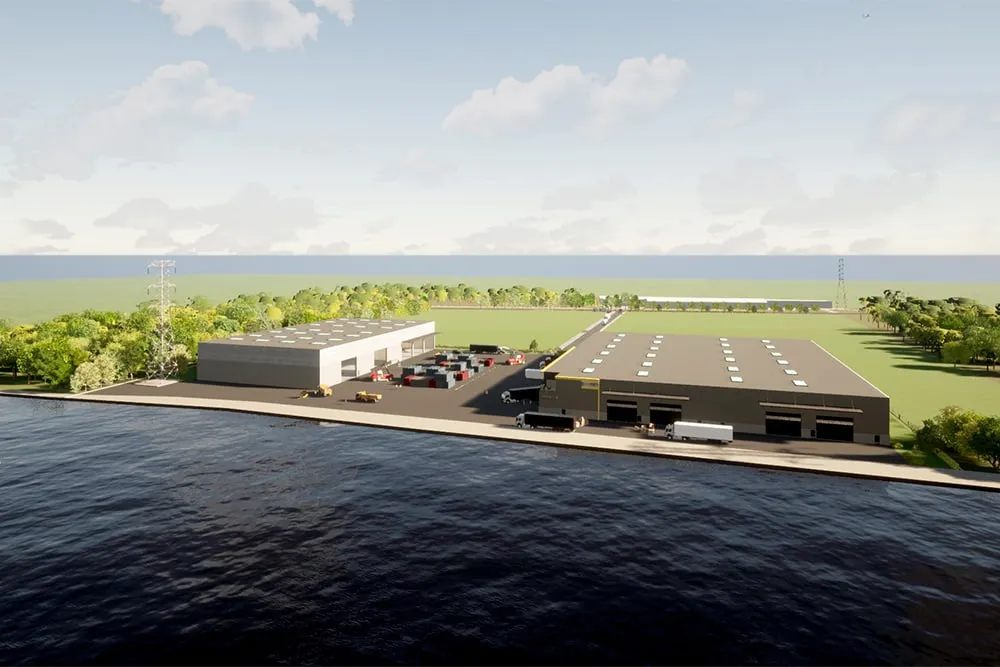
Although the underlying strategy is similar to the one being implemented at Engis, the approach differs: at Haccourt, eloy is committed to co-creating the project with all stakeholders in order to establish the hub’s position at regional level, including by setting up a steering committee to oversee the site’s commercialisation. François Demez: “Among other things, this will allow us to assess prospective buyers’ applications promptly against the project’s sustainable and circular principles. The Phénix project is aimed at pioneering businesses in circular and low-carbon construction, aligned both with Europe’s 2050 goals and with eloy’s DNA. We strive to follow best practice in developing industrial sites, with a focus on quality jobs and on buildings and industries that we believe make sense for the development of our region and for the legacy we want to leave our children.”
Question about this story? Ask your question
Keep following this
Get an email when a new story is published. No account needed.
- SubjectConstruction







