Concrete Canvas: the innovative solution for waterproofing and erosion control
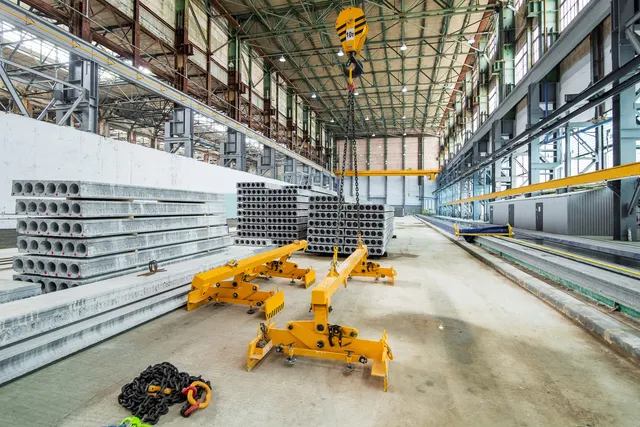
Concrete is almost synonymous with construction, and it has countless applications in civil engineering. Precast concrete enables structures to be manufactured efficiently in a factory under controlled conditions. But what happens when concrete needs to follow a complex shape, such as the ground or embankments on the project site, with all their irregularities? Formwork must then be installed and filled with wet concrete. This is the standard method for massive structures, but even when only a thin layer of concrete is needed, a considerable excess is poured, particularly on sloping surfaces. This wastes expensive material, while installing and then removing the formwork is also inefficient.
Concrete Canvas®, at the cutting edge of innovation
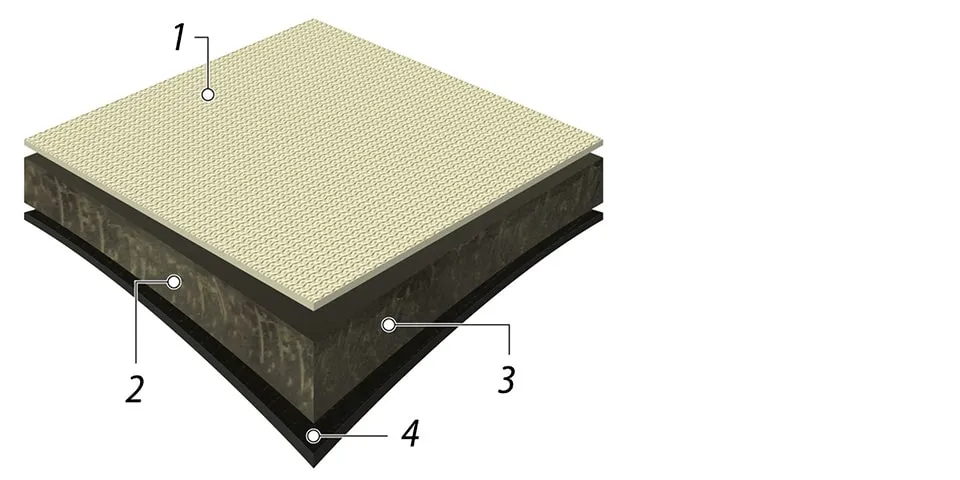
Cross-section diagram of Concrete Canvas showing (1) fibre top surface to be hydrated, (2) 3D fibre matrix, (3) dry concrete mix, (4) impermeable PVC geomembrane backing.
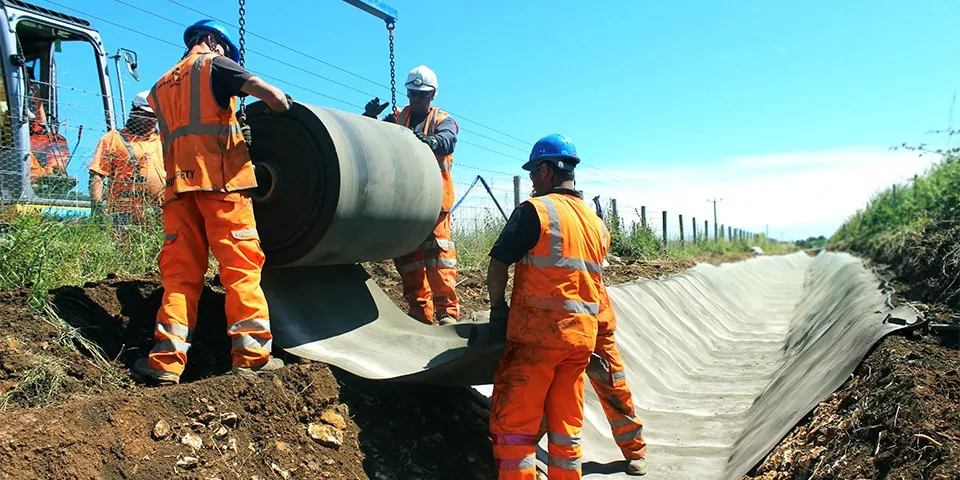
The product consists of an impermeable backing coated with a layer of dry concrete mix and protected by a durable fibre structure. The flexible concrete-impregnated fabric is supplied in rolls 1 m wide. It is available in various lengths depending on the type of mat, and in different weights per m2: 7, 12 and 19 kg/m2. Mark Griffiths of Wales-based company Concrete Canvas Technology is on hand to advise clients on the design of their specific applications. In his experience, a 3-person team can lay around 200 m2/hour. Once the fabric has been laid, it is hydrated by spraying it with plenty of water. The curing process then begins, and after 24 hours it has already reached 80% of its optimum strength.
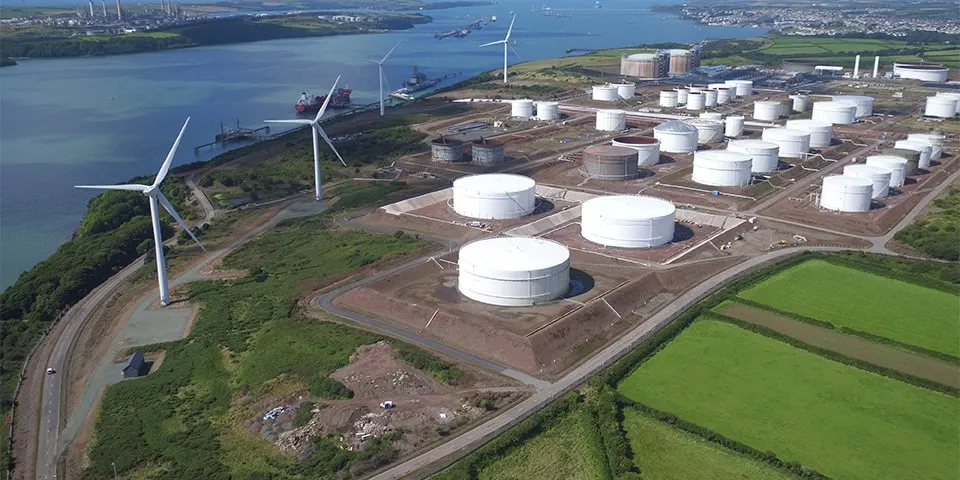
The project is under way, with the embankments at the reservoir sites being covered with Concrete Canvas concrete matting. Two reservoirs are already complete, while work is under way on the double-reservoir system.
Applications:
• Waterproofing drainage channels around the capping
• Safety lining for reservoir sites
• Waterproofing canals, waterways, reservoirs and stormwater basins
• Protecting embankments against erosion
• Preventing erosion in the event of overtopping
• Weed control near busy railway lines and refineries
• Repairing existing concrete infrastructure
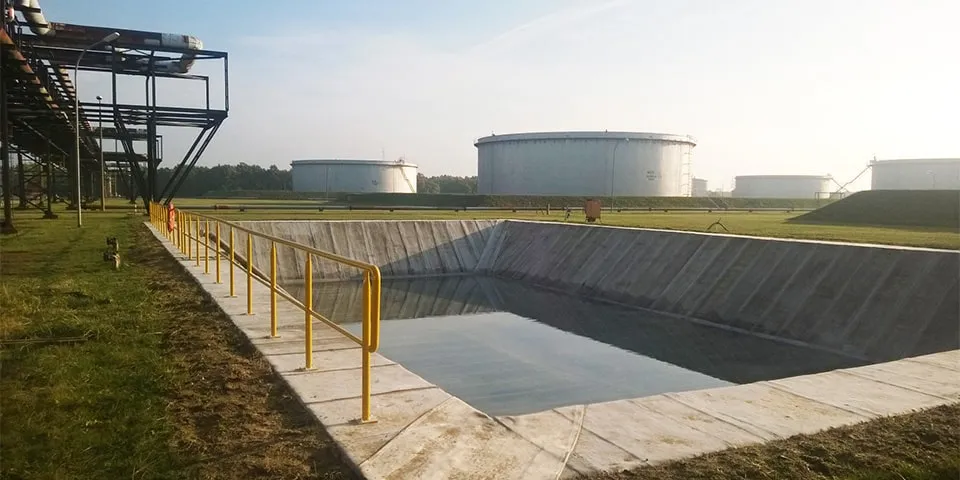
Concrete Canvas used as a waterproofing system for a firewater pond.
Advantages:
• Easy to install
• Follows the existing terrain, ensuring perfect contact
• Dimensions can be adapted to the geometry of the project
• Continuous construction, with no open joints
• The fabric can be laid in almost any weather
• The impermeable PVC strips are easy to weld together
• Prevents grass and bushes from growing, so maintenance is minimal
• Environmentally friendly, thanks to its low carbon footprint
• Long service life, resistant to UV radiation and chemicals
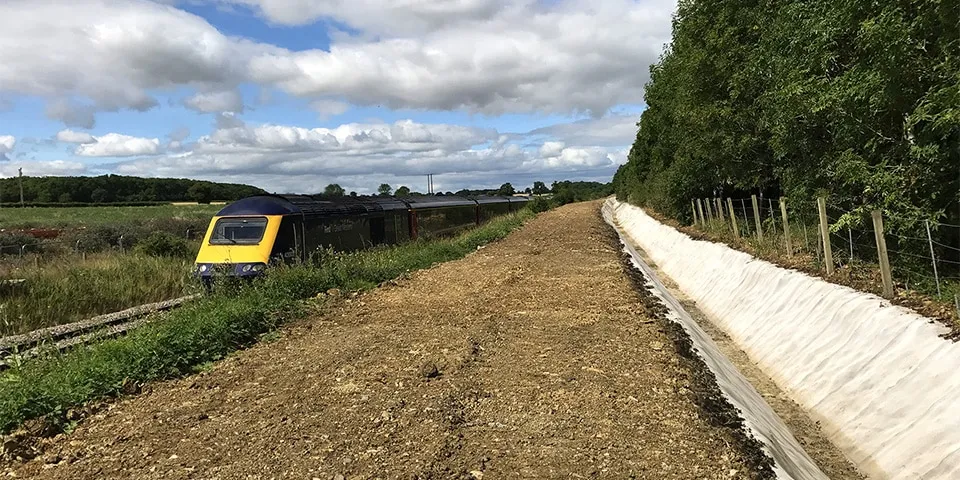
Thanks to Concrete Canvas’s smooth surface and low roughness coefficient, water flows away at a high rate. As a result, very little silt accumulates.
Steven De Maesschalck of Texion is enthusiastic. He has worked on projects where pouring concrete on an embankment was a headache for the contractor. With Concrete Canvas roll-out concrete, it is easy to install a concrete waterproofing system on a steep embankment. The mat is laid horizontally from the top of the slope to prevent scouring. Vertical applications, such as waterproofing a wall, are also possible. The mat is then fixed at the top.
For further information or advice, contact Steven De Maesschalck of Texion ([email protected])
Question about this story? Ask your question
Keep following this
Get an email when a new story is published. No account needed.
- SubjectConstruction