











Automated production of ecological prefabricated timber frames
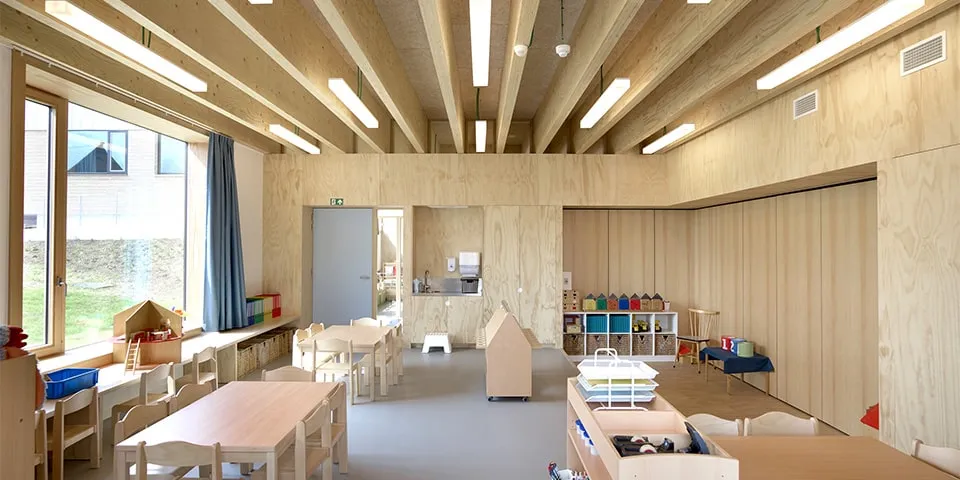
With construction schedules becoming increasingly tight and environmental awareness growing, production of prefabricated timber frames continues to expand. The family-run company DUPAC has embraced this trend, developing and expanding its output in the sector every day. “Our automated production line and our ability to innovate set us apart, as do our convictions and our bioecological approach,” says managing director Marc Cuyvers.
DUPAC’s story dates back to the early 1990s. Marc Cuyvers was then working as an independent designer and sales representative for industrialised roof structures and timber frames. “At first, I focused mainly on design work and outsourced production,” he explains. “My son Wouter joined the company in 2008. Gradually, we began to consider taking on the pre-production phase, as well as manufacturing the timber frames ourselves. In mid-2012, my brother Patrick and I founded DUPAC, and in 2013 we began operating from our production site in Bocholt. It was the start of a great success story!”
Tailor-made solutions
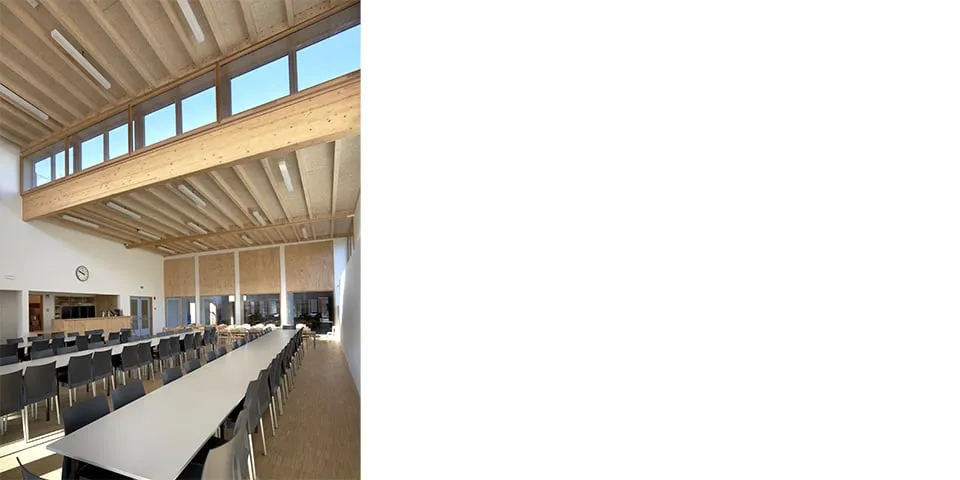
The family-run company quickly built an excellent reputation and now has clients throughout Europe. This is largely thanks to its modern, fully automated production method and high-quality design and production software. “This enables DUPAC to manufacture almost any type of bespoke timber construction. From the outset, we opted for a largely automated production line, which we control using HSBcad software. More specifically, the software generates a 3D production drawing based on the architect’s design,” explains Marc Cuyvers. “This means we can respond flexibly to clients’ requests and tailor our work to their needs. Every project is unique. We also place great importance on planning and meeting deadlines, because we know how important this is for builders and contractors. We produce our elements mainly for contractors and construction companies. However, we also advise structural engineers and architects during the design phase.”
Innovating sustainably
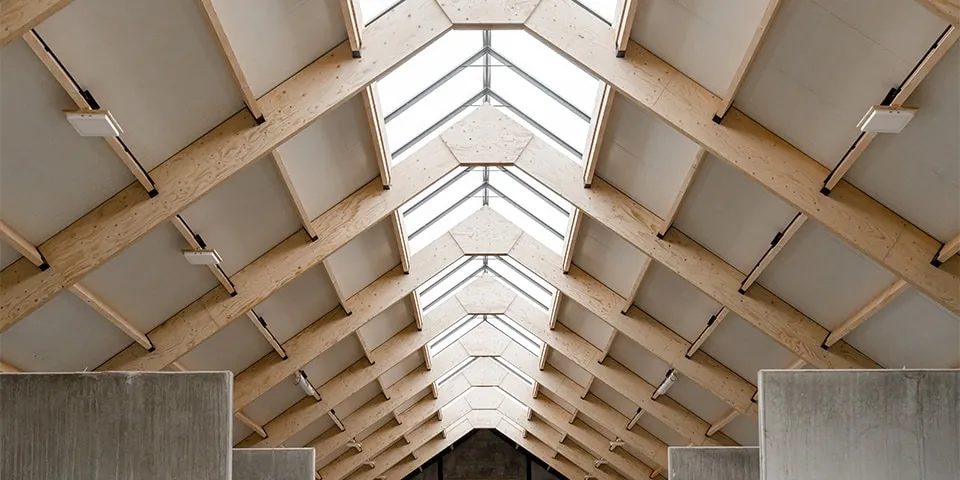
DUPAC is characterised by its constant pursuit of innovation and continues to work on developing new systems. “And always in the most ecological way possible, because ecology and economics go hand in hand,” stresses Marc Cuyvers. “It starts with the timber used as the base material: it is renewable and therefore sustainable. When manufacturing closed wall, roof and floor elements, we avoid less sustainable insulation materials such as PUR and choose sustainable alternatives such as cellulose, wood fibre or mineral wool. We are therefore fully equipped to build in a bioecological and responsible way. These are very topical issues, even though they have been around for 30 years. Fortunately, almost everyone is now convinced that a sustainable approach is increasingly necessary. Promoting passive and low-energy buildings, which our systems are ideally suited to deliver, is very much part of this.”
Modular construction
DUPAC’s clients can rely on the design and delivery of a range of ready-to-use timber frames, comprising high-quality products and systems manufactured in the workshop to meet airtightness and vapour permeability requirements. The company offers bespoke solutions for every type of project, from single-family homes to industrial buildings. “Modular construction is a trend that has emerged only recently. We supply materials and/or components to various market players, allowing them to focus entirely on assembly,” says Marc Cuyvers.
Prefabrication saves time
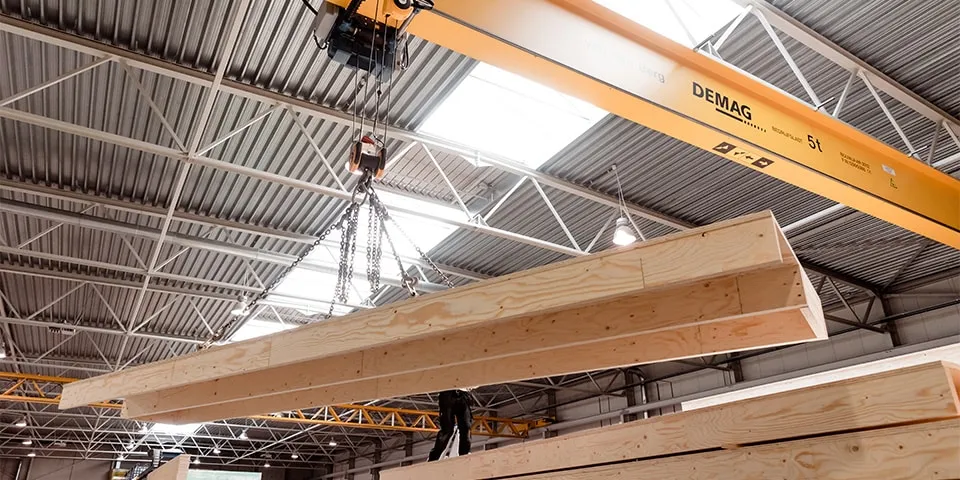
“We work closely with the Finnish producer Metsä Wood. It has developed Kerto S and Kerto Q beams and wall plates, which are assembled into the Kerto-Ripa® box system. This can be used to build roofs and ground floors in any type of building, whether new or renovated. The boxes are assembled using CE-certified bonding and form a rigid unit capable of spanning up to 20 metres,” explains Marc Cuyvers. “We also manufacture prefabricated roofs and roof panels, for both flat and pitched roofs, designed to take rainwater runoff into account. They are also suitable for conventional construction methods and save a considerable amount of time on site. In short, we can offer everything related to timber construction. We will continue to develop this area, convinced that prefabricated timber frames have a bright future.”
Een zakelijke vraag aan Dupac? Get in touch
Companies in this story
Keep following this
Get an email when a new story is published. No account needed.
- ThemeNew ways of building
- SubjectConstruction
- CompanyDupac
- CompanyMetsä Wood







