At the heart of elite sports facilities: precision, durability and innovation
Texte Florian Holsbeek Photos Scheerlinck Sport
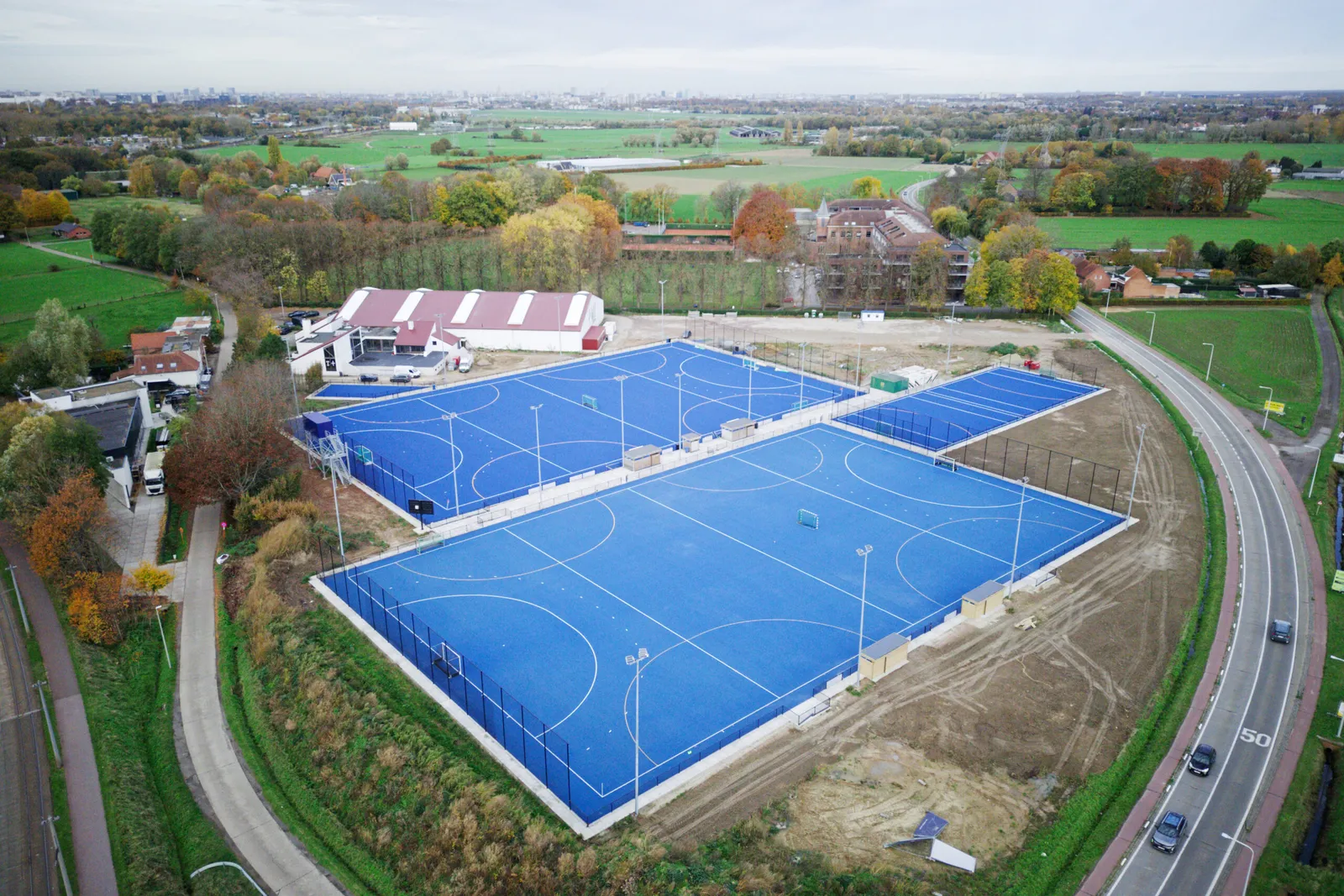
For more than half a century, Scheerlinck Sport has established itself as a leading name in the design, construction and maintenance of sports facilities in Belgium. Football, hockey and rugby pitches, as well as tennis courts and padel courts: the Overijse-based company works with amateur clubs and top professional teams alike, from initial design through to maintenance. Fabian Hubeau, project manager at Scheerlinck Sport, talks about the expertise of a company where a passion for sport goes hand in hand with technical precision.
A company that has grown with sport
“Scheerlinck Sport has been around for more than 50 years,” Fabian Hubeau says by way of introduction. “Originally, the company specialised in crushed-brick tennis courts.” Over time, its activities diversified to keep pace with the changing world of modern sport. “For around 20 years, we have also been building large natural, hybrid and synthetic turf pitches for football, hockey and rugby, as well as padel courts.”
This diversification has enabled Scheerlinck Sport to become a major player in the Walloon and Brussels markets. The company now manages large-scale projects across all segments, consistently balancing the needs of professional clubs with those of local associations.
Prestigious projects in Wallonia and Brussels
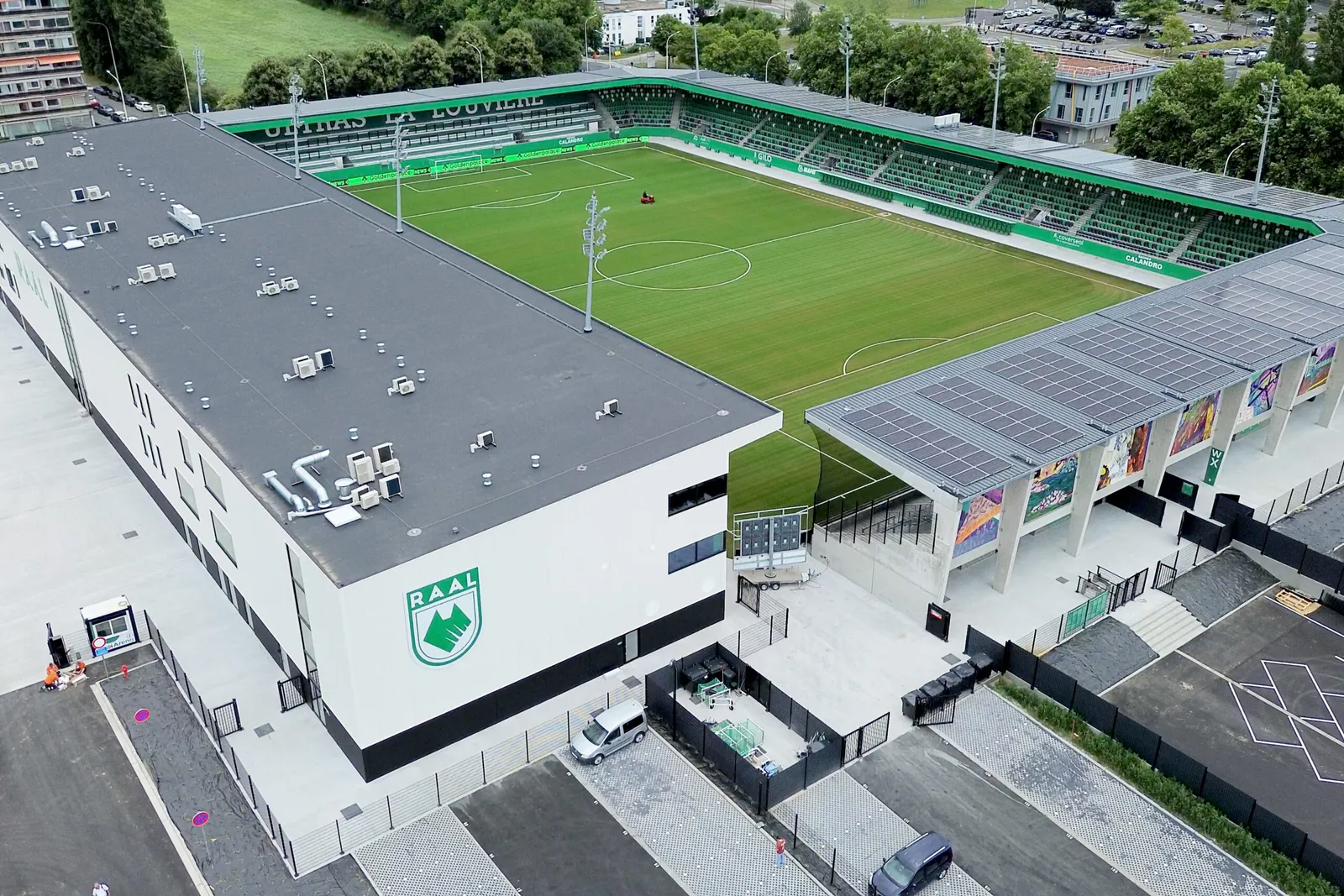
Scheerlinck Sport’s track record includes a number of prestigious collaborations. The company has worked on pitches for Standard de Liège (Académie Robert Louis-Dreyfus), Anderlecht, RAAL and RWDM, among others. These major projects are testament to the growing confidence that leading clubs have in the company.
“We met Salvatore Curaba (President of RAAL) in 2017, when he launched the development of the Wolves Academy,” explains Fabian Hubeau. “We designed the training centre, then built the first two synthetic pitches. The project subsequently received support from the Walloon Region through Infrasports, and we won the contract for the third pitch and its surrounding areas.”
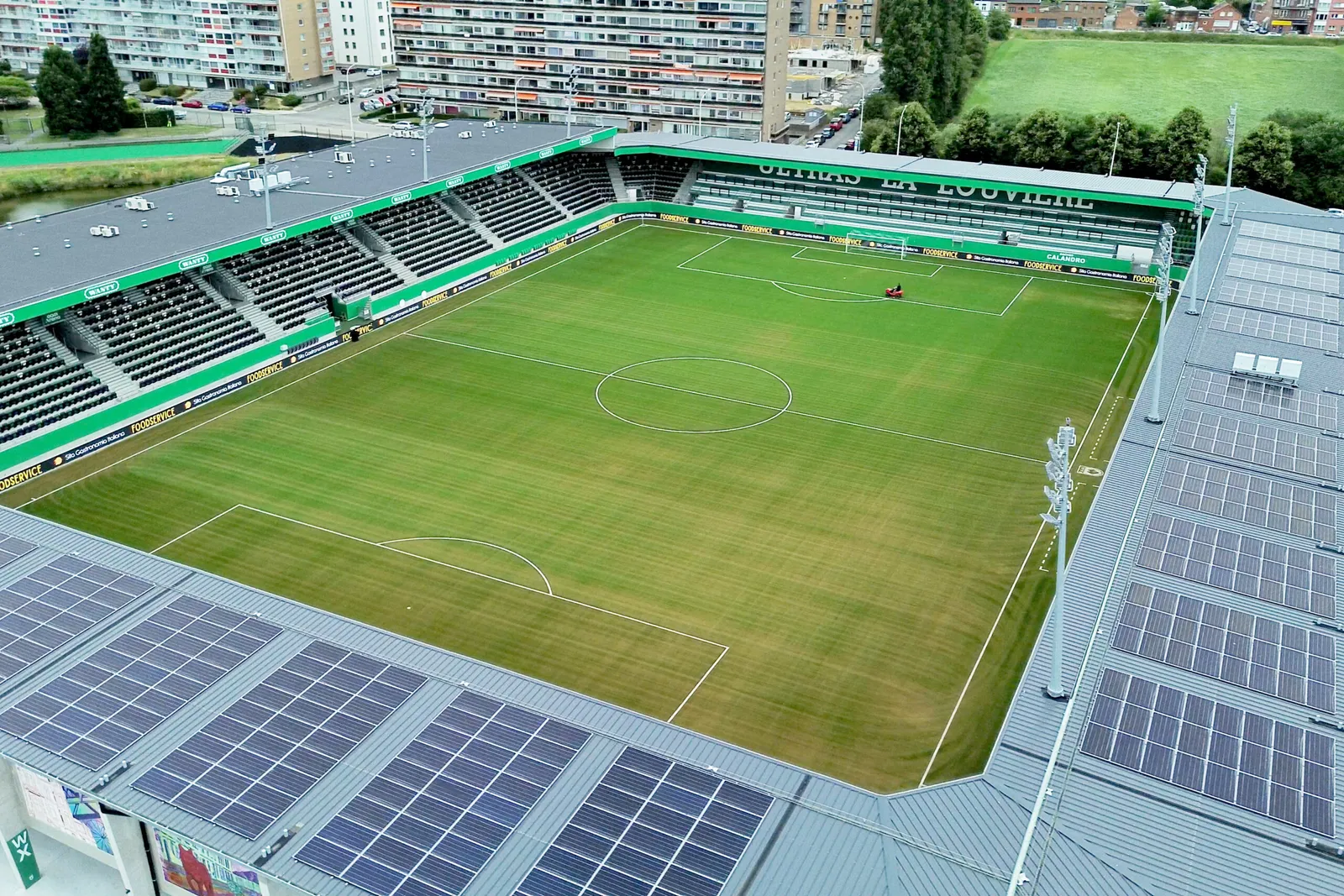
Scheerlinck Sport was responsible for the entire RAAL training centre, comprising three full-size pitches and seven smaller ones, before going on to work on the main pitch at RAAL’s new stadium, the EASI Arena. “We are very proud of that. Working on a stadium carries great symbolic weight. After the training centres, it is a form of recognition for the quality and reliability of our work.”
Quality as a calling card
Scheerlinck Sport owes this recognition first and foremost to the quality of its work and the rigour of its project oversight. “We are a company with a personal touch. Every client matters, whether it is a Division 1 club or a small local club. We take ownership of every project with the same energy and high standards.”
The team includes several experienced employees, some with more than twenty years in the industry. Fabian Hubeau’s technical expertise, gained in an architectural practice before he joined the company, also adds precision to project oversight.
“We take a hands-on, constructive approach on site. This allows us to bring an extra level of professionalism that not all our competitors can necessarily offer.”
A full-service provider, from design to maintenance
Scheerlinck Sport does more than build: the company also looks after the upkeep and maintenance of sports surfaces. “We visit each pitch at least three to four times a year to check the infill level, the stabilising sand and the overall condition of the surface.”
These visits help extend the pitch’s lifespan, alongside a major annual maintenance service that includes decompaction and a thorough clean. Clubs are also offered training so they can carry out light weekly maintenance themselves. “All it takes is a few suitable pieces of equipment and a trained person to maintain the pitch effectively,” Hubeau explains. “That is what can extend a surface’s lifespan to 15 years, compared with 6 to 10 years if it is neglected.”
An environmentally responsible approach: cork as standard
For several years, Scheerlinck Sport has been getting ahead of regulatory changes concerning infill materials. “We chose to move away from synthetic materials such as SBR in favour of natural alternatives like cork, well before this became a legal requirement.”
The decision was driven by caution and respect for users. “We are not scientists, but we trust independent studies. Although no direct link has been proven between SBR and health risks, opting for ecological, renewable alternatives seemed more consistent with our values.” Today, almost all the pitches installed by the company use this type of infill.
The EASI Arena: a landmark project
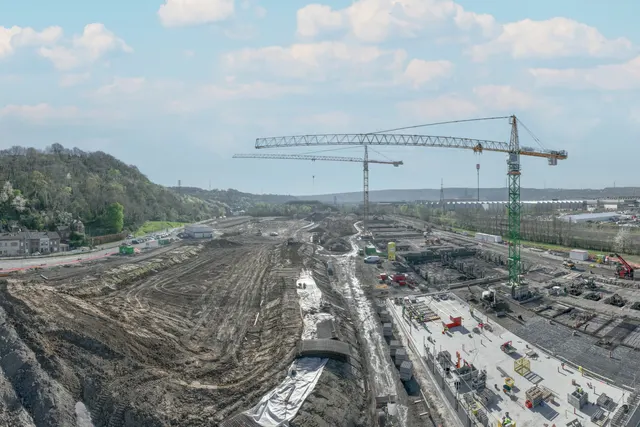
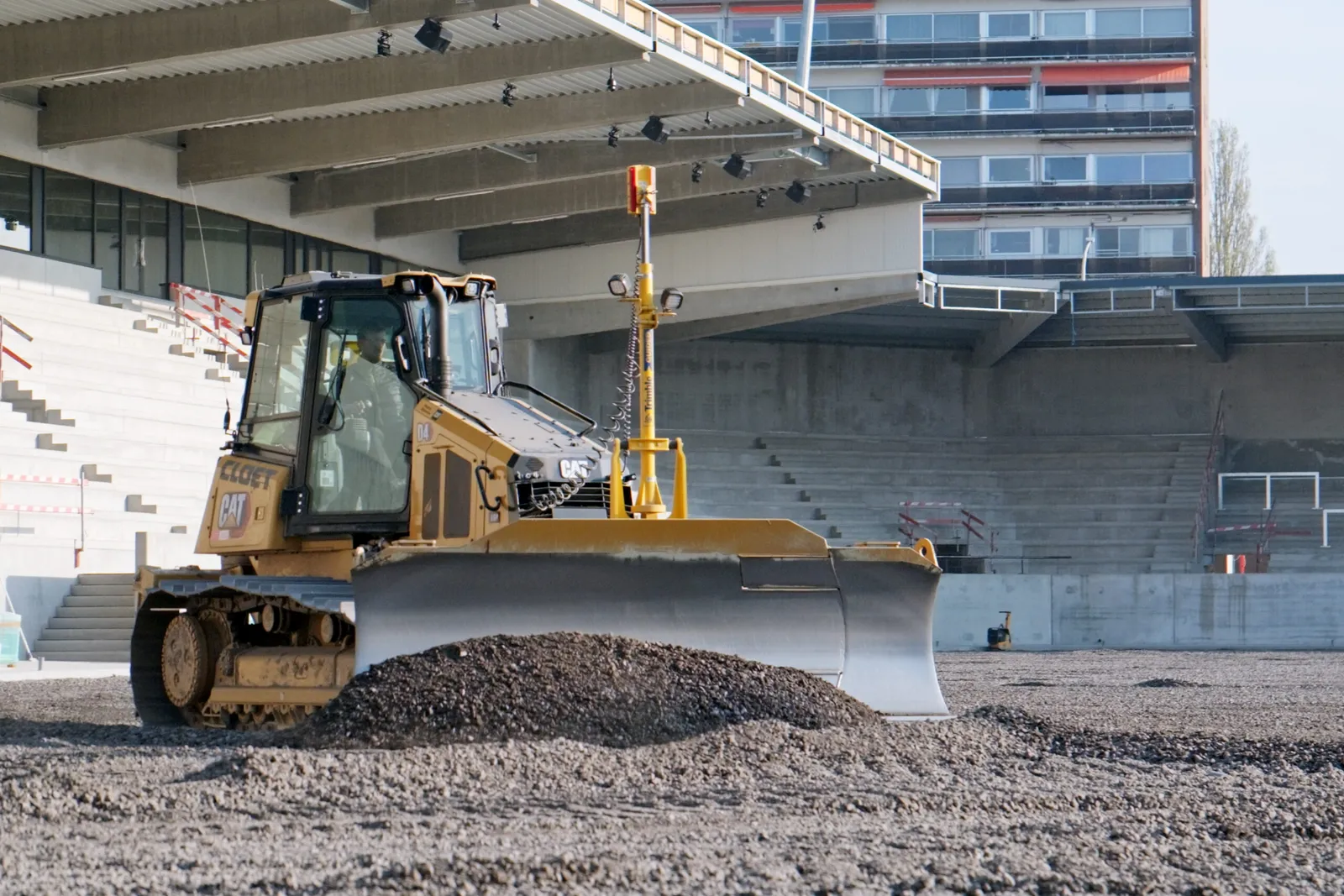
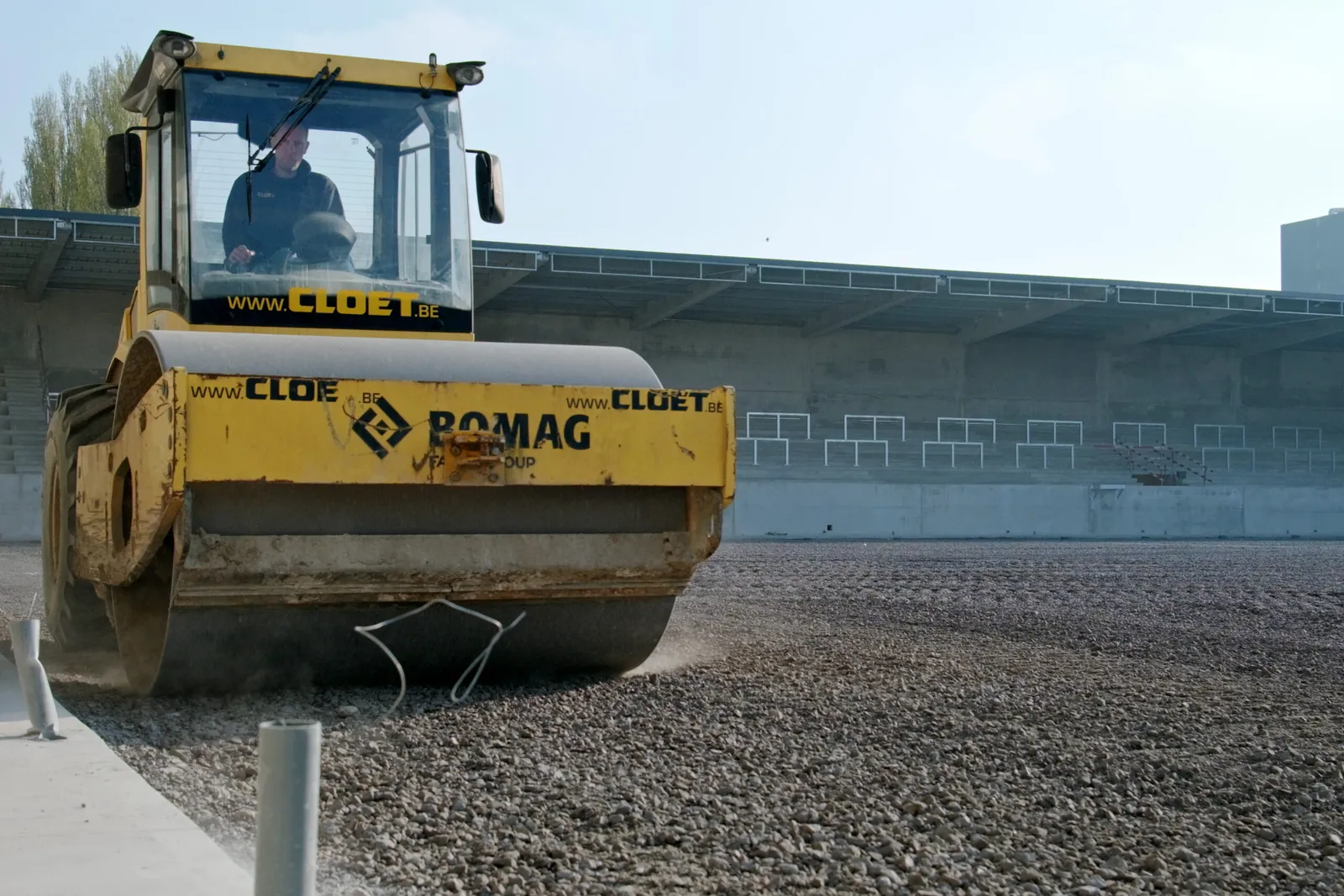
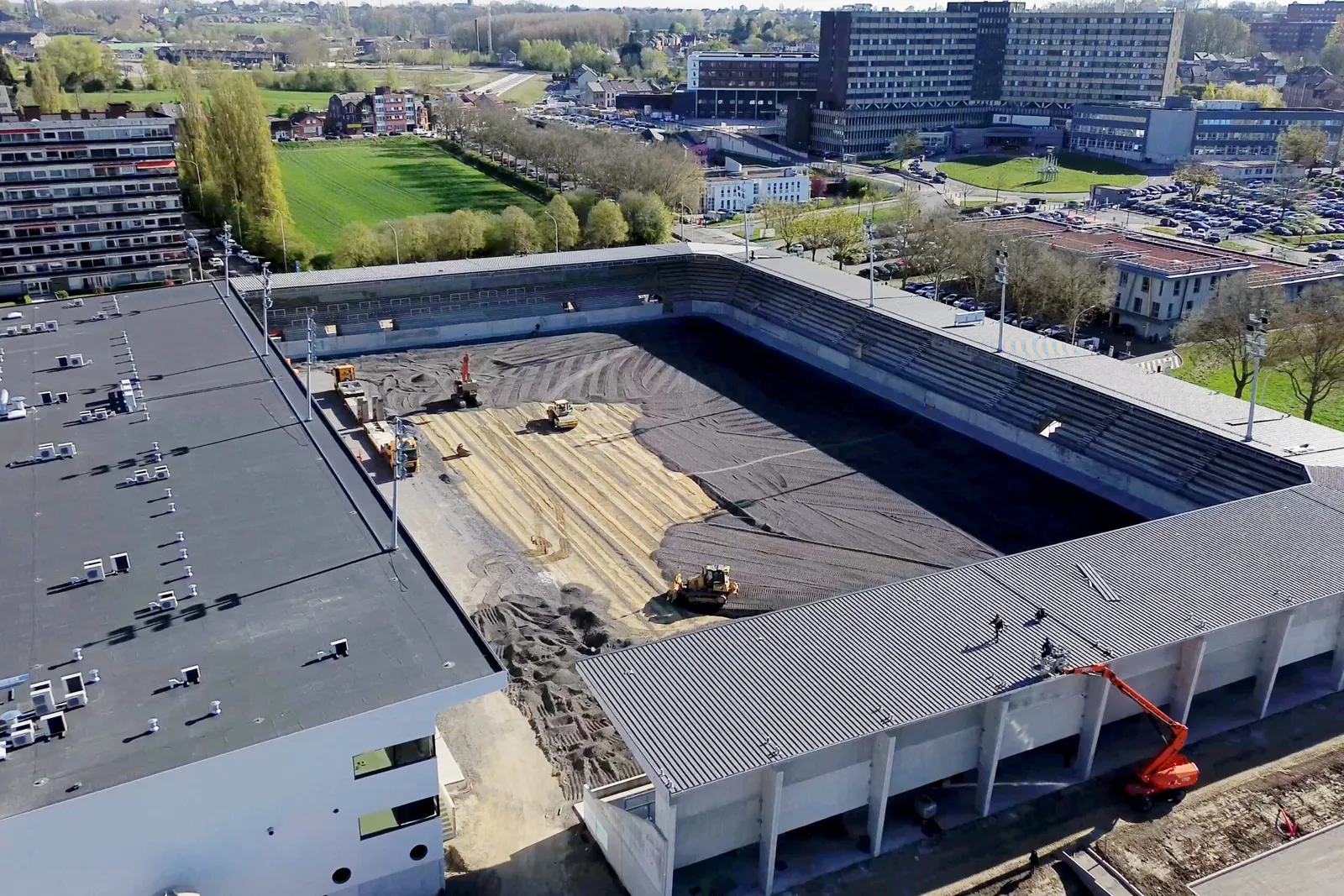
The EASI Arena project perfectly illustrates the breadth of Scheerlinck Sport’s expertise. “We did more than install the surface,” Fabian Hubeau points out. “We also carried out the earthworks across the whole site, the drainage, the sewer connections and part of the stadium foundations.”
One of the main challenges on this project was the schedule. “RAAL’s requirements were demanding, particularly in terms of deadlines. But our experience allowed us to plan ahead, adapt our organisation and deliver a project that lived up to expectations.”
The company also prefers to work on new pitches, where it has control over the entire foundation and drainage system. “That is more reassuring than laying a carpet on an existing base that we know nothing about.”
Synthetic turf in the spotlight
The debate over synthetic pitches continues in the world of football. Some see them as a disadvantage or a distortion of the game. Fabian Hubeau puts this into perspective: “When you see the state of some natural grass pitches after heavy rain, you quickly understand the advantages of synthetic turf. Playing conditions remain consistent, the surface is always playable, and the pitch’s evenness gives players optimal protection.”
In his view, RAAL’s president was right to opt for a synthetic pitch at the stadium. “It means every team at the club, including the women’s team, can play at the same stadium, in the same conditions, all year round. And the pitch stays in immaculate condition in December just as it does in July.”
A sustainable future for Belgian sport
With a steadily expanding project portfolio, Scheerlinck Sport continues to grow in an increasingly technical market. The company combines experience, innovation and sustainability, incorporating the latest environmental standards and responding to users’ growing expectations.
“Our ambition is simple,” Fabian Hubeau concludes. “To continue providing clubs, cities and schools with high-quality, durable facilities that meet the needs of sport today. Every project is a new opportunity to improve the playing experience and performance while respecting the environment.”
From the EASI Arena and the Wolves Academy to amateur clubs across Wallonia, Scheerlinck Sport is establishing itself as a trusted partner for everyone looking to bring performance, sustainability and Belgian expertise to their sports facilities.
Question about this story? Ask your question
Keep following this
Get an email when a new story is published. No account needed.
- SubjectConstruction