











An ingenious system for controlled flooding of an underground car park
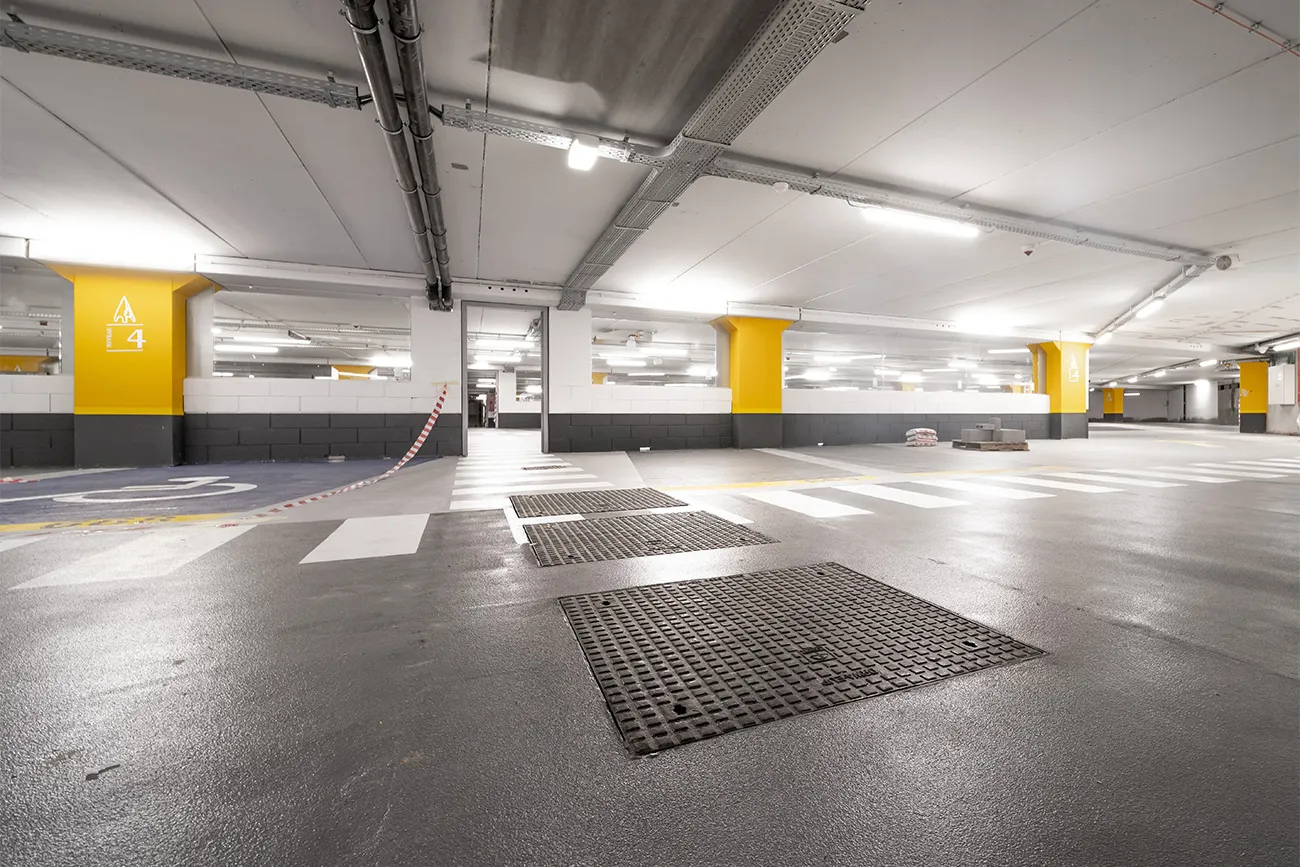
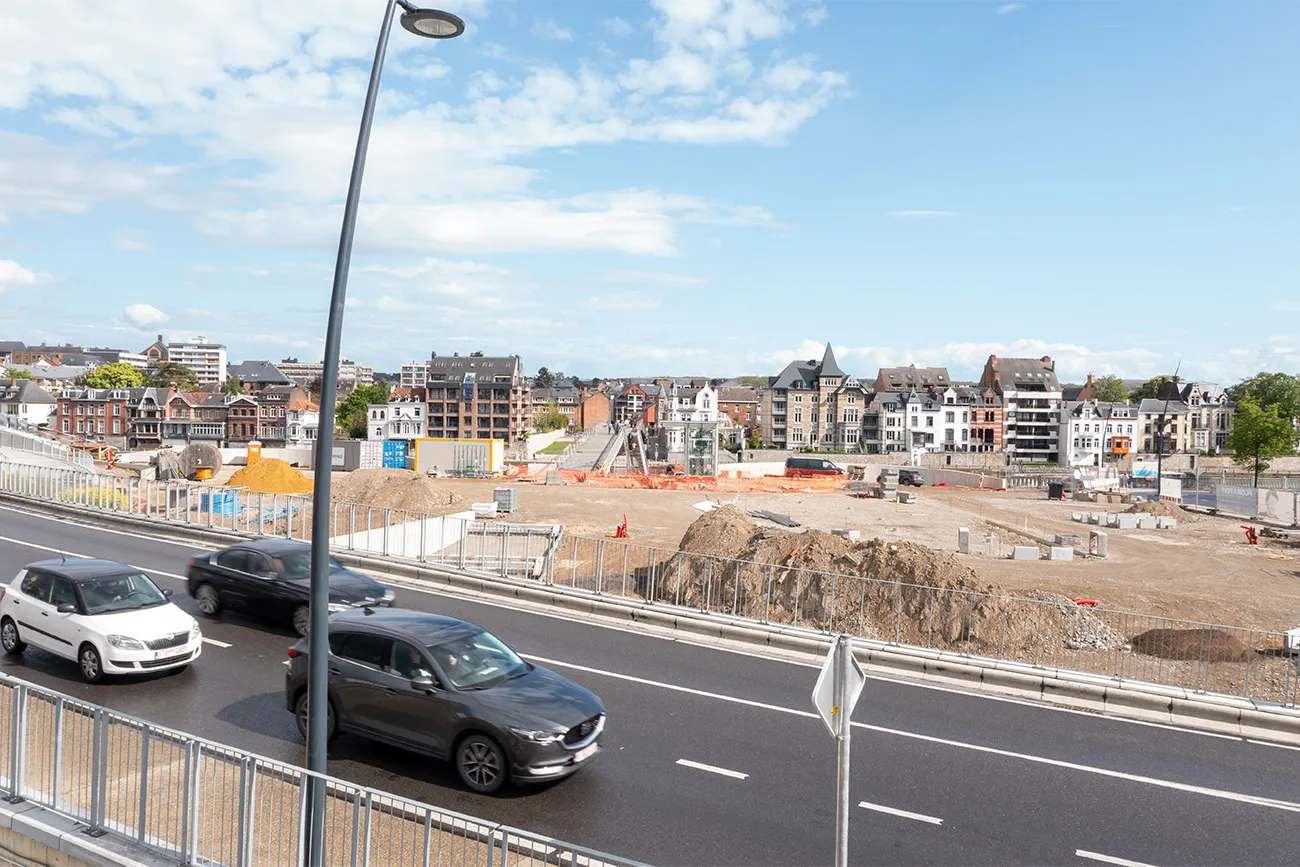
In Namur, beneath what was once called Place du Grognon, at the confluence of the Meuse and Sambre rivers, De Graeve is building a five-level underground car park. The project has presented several major technical challenges, including the controlled flooding of the lowest level in the event of a flood. This challenge was met thanks to an ingenious controlled flooding system developed in collaboration with Deschacht.
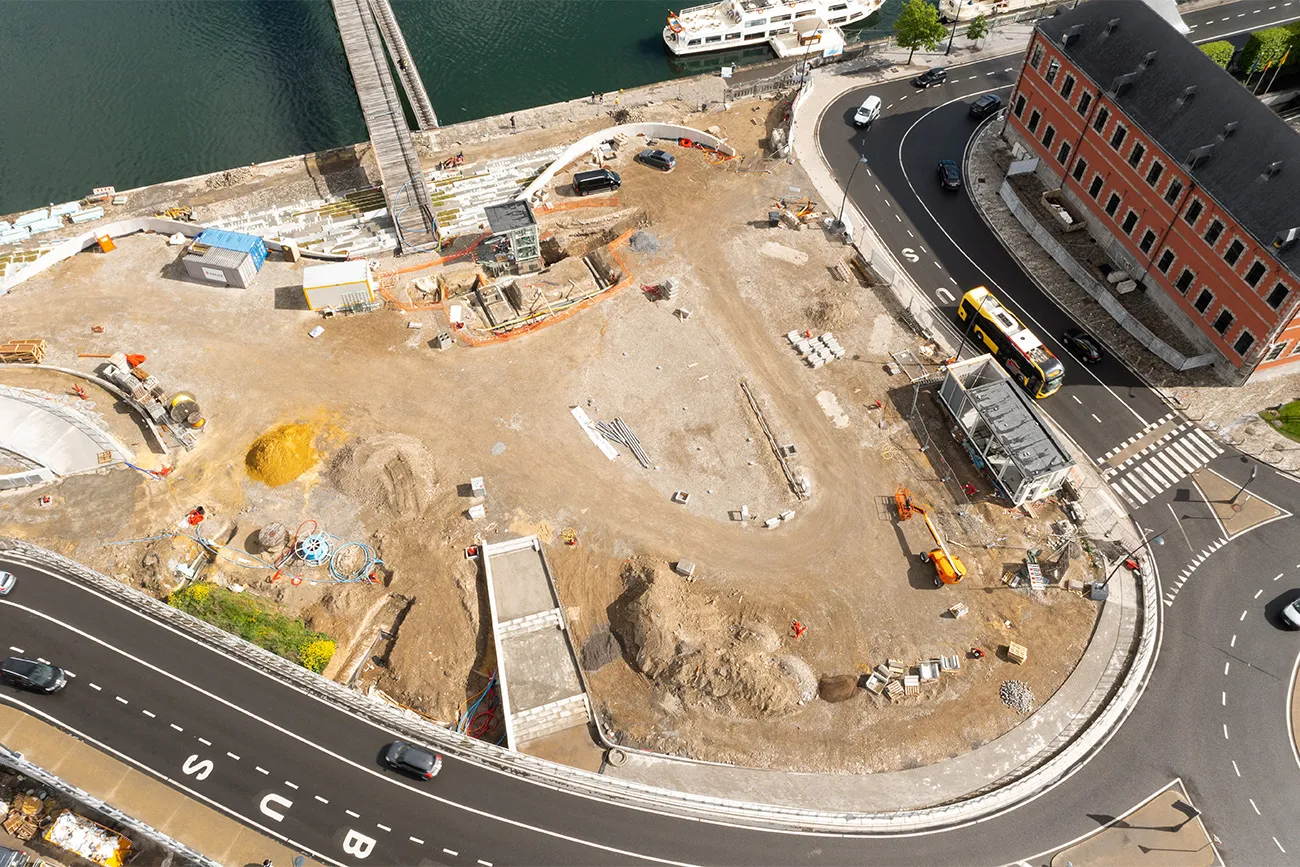
The car park’s location is unusual: “It is in an area hemmed in by waterways and existing buildings. We therefore had to use the top-down construction method, excavating the entire site through a 15×15 m opening left in the slab covering the car park,” explains Colin Godefroid, engineer and Project Manager at De Graeve. “All the excavated material was removed through this opening, and the car park structure was built from the bottom up, from inside.”
Drainage works
De Graeve called on Deschacht to install drainage beneath the base slab. Made from electrofused HDPE pipes, the system ensures 100% watertightness. But the collaboration did not end there. The retaining walls were built using secant piles, which are not completely watertight.
There was also a slight leakage flow caused by microcracks in the base slab. A dedicated drainage system therefore had to be installed at the lowest level to collect seepage water and ensure the car park remained stable. Flood protection measures such as stop logs had been planned, but the risk of an exceptional flood also had to be taken into account. “We then worked together to consider the best way to address this,” explains Vincent Therer, Project Manager at Deschacht.
Flooding the lowest level
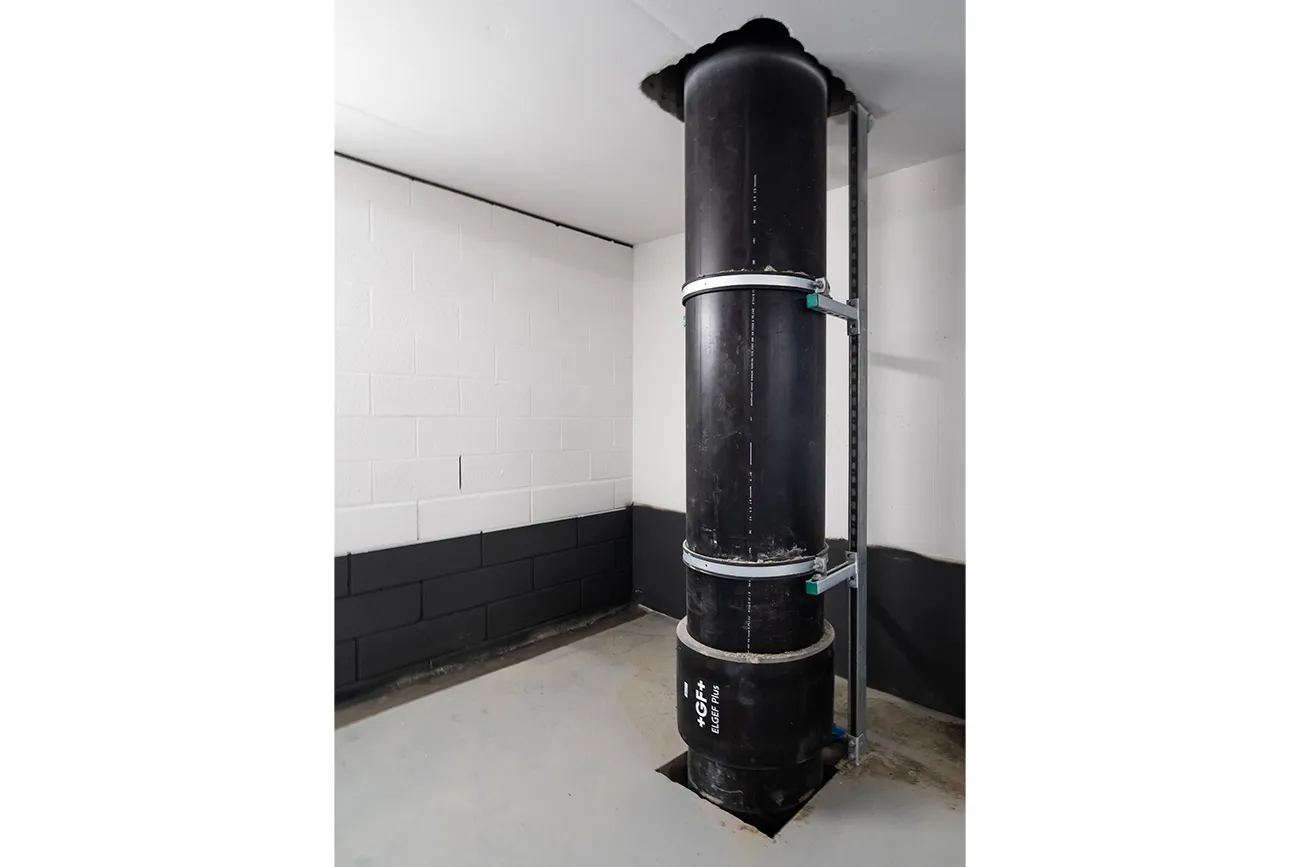
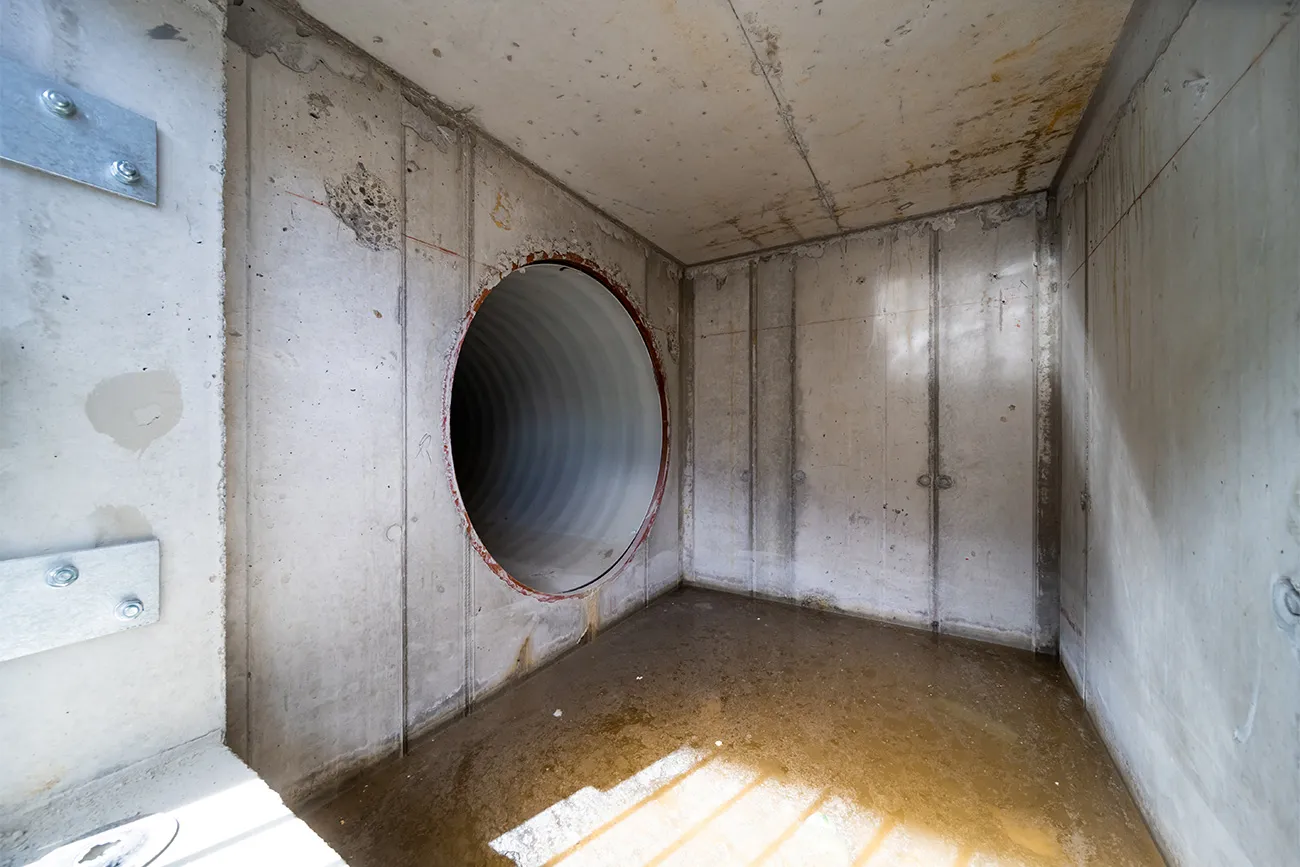
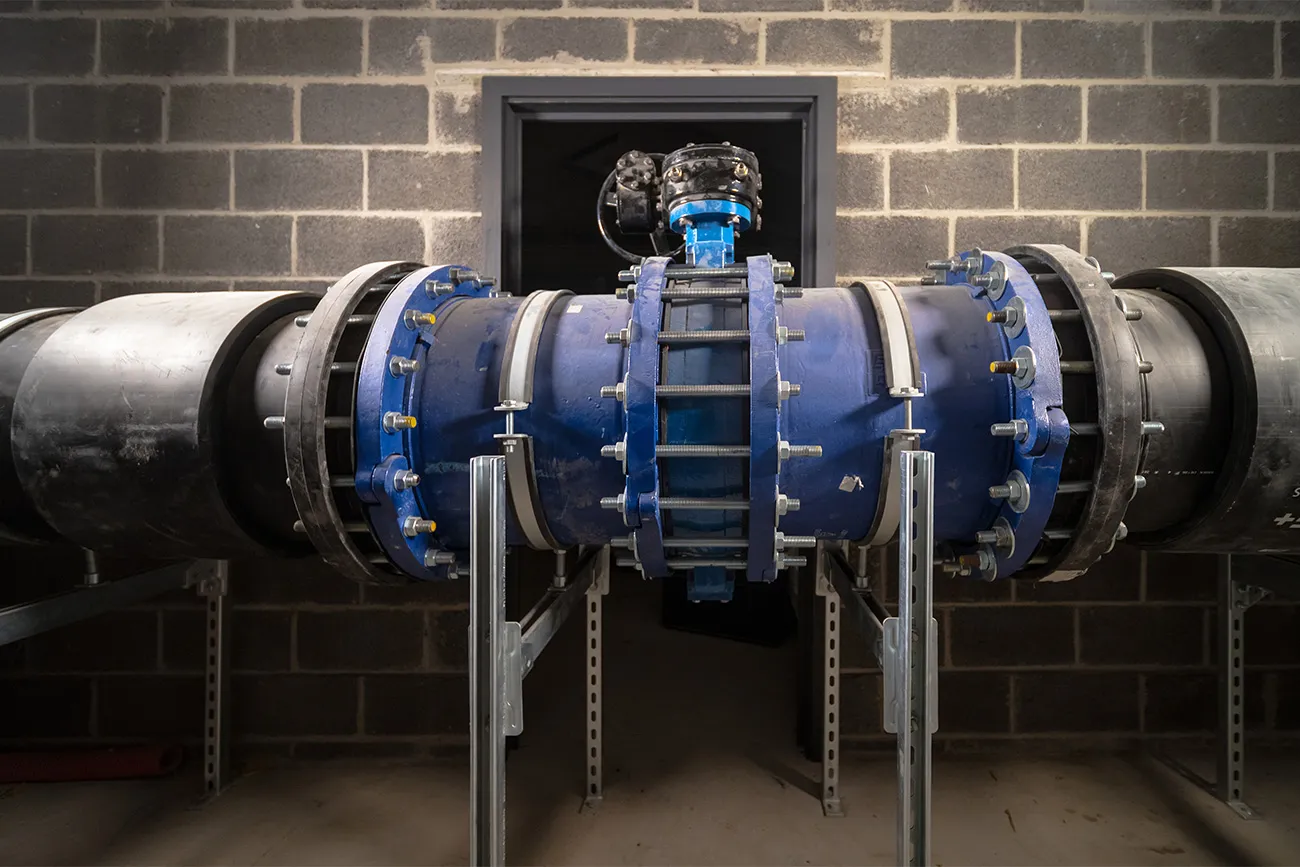
“Ribwall pipes connect the Meuse to a grille which, if needed, allows water to enter through 1000-diameter pipes. The water flows into a discharge chamber, then through a 500-diameter polyethylene overflow pipe that runs through all the floors, supported by a steel structure, before reaching the lowest level. The pipe includes bends custom-made by our sister company Collinet and is fitted with a 500-diameter butterfly valve. This valve will be opened in the event of a major flood.” “Level -4 of the car park will then be flooded to a depth of 1 m across the entire area (+/- 4000 m²), providing enough weight to prevent the car park from floating,” adds Colin Godefroid.
A close collaboration
This controlled flooding system was custom-designed by the SPW’s Hydraulic Research Department. Deschacht helped develop the technical solution, including the various ways of implementing the system. Vincent Therer: “We met this requirement by adapting the best solutions and products in our range. The responsiveness and creativity of our design team enable us to meet our clients’ specific needs.” “
Deschacht does more than simply sell products: it works with clients and provides them with professional technical support.” Colin Godefroid also describes the collaboration as excellent: “We work with Deschacht regularly on our various projects and have never had any problems. What is more, in recent times, the design and follow-up work provided when submitting a quotation has been a significant added value to the services on offer.”
Question about this story? Ask your question
Keep following this
Get an email when a new story is published. No account needed.
- SubjectConstruction







