











A unique analysis and design strategy brings clarity to circular construction
Texte Wouter Polspoel | Photos Sweco
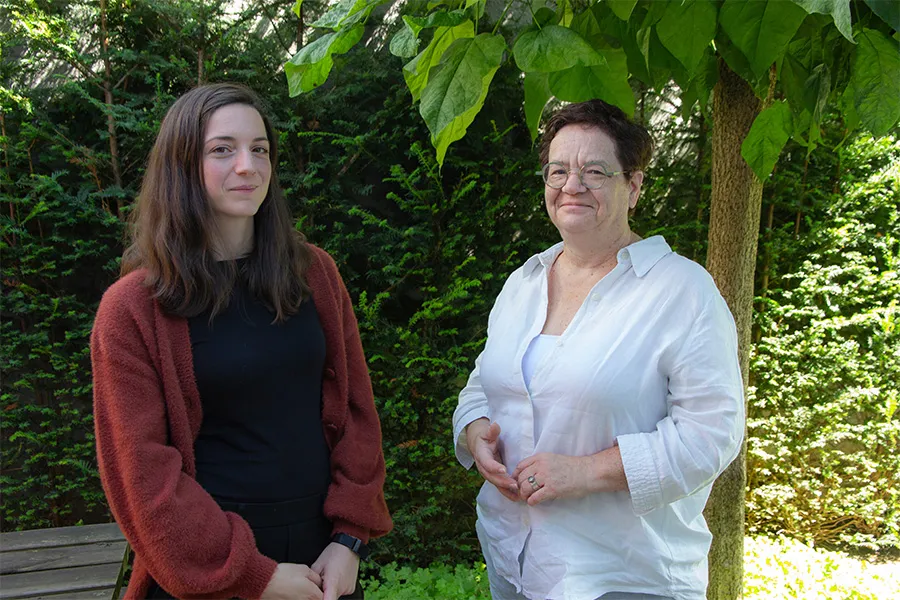
We currently use three times more raw materials than the Earth can sustain. Half of these material flows are attributable to the construction sector, which is also responsible for 30% of global water consumption and 40% of global greenhouse gas emissions every year. Circular construction, which aims to keep materials in circulation for as long as possible, offers huge potential to reduce these figures. But how can this be put into practice day to day? Architecture and engineering firm Sweco answers this question with TACLE, a unique analysis and design strategy that helps clients, engineers and architects assess the circularity of buildings and design them according to circular principles. Let’s hear from Ann Thys and Charlotte Goovaerts, two of TACLE’s creators.
How did you come up with the idea of creating this unique analysis and design strategy for circularity?
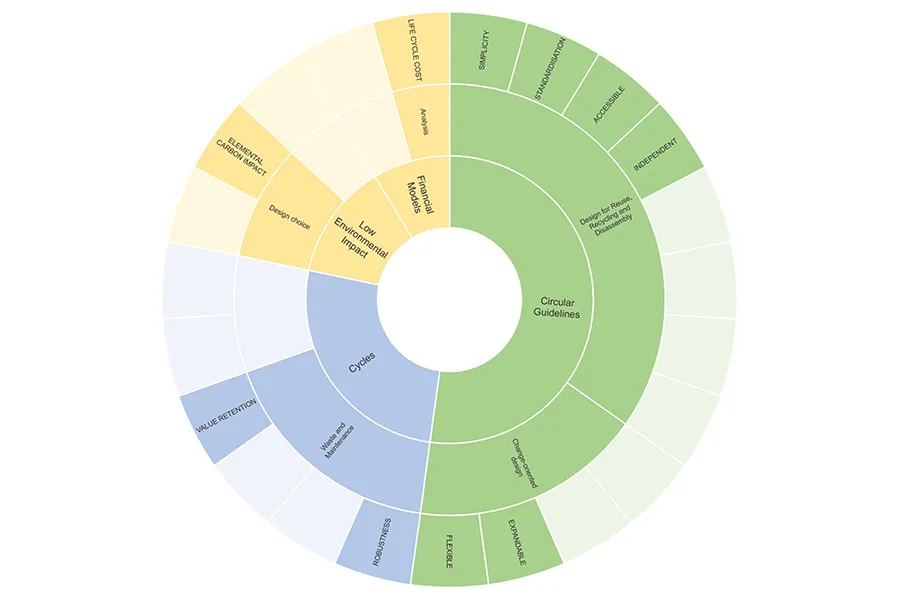
Ann Thys: “Circular construction is often limited to the use of materials, but this sustainable approach to building encompasses so much more. For example, it involves designing modularly so that a building can easily change function after five, ten or fifteen years, extending its lifespan. And as a designer, it is important to ask yourself about sustainability on every project: should an existing building be demolished and a new one built, or should the existing structure be retained? Our clients who opt for circular construction are increasingly asking us: ‘What exactly should we do?’ This prompted us to provide them with practical tools. That is how TACLE came about. The name stands for Towards A Circular Living Environment, a unique analysis and design strategy to promote circular construction and make it transparent. In practical terms, we start by mapping the circular potential of an existing building through an analysis. Then, using the TACLE design strategy, we translate the broad concept of circularity into SMART instruments: specific, measurable, acceptable, realistic and time-bound. We can also provide these instruments for entirely new buildings.”
Charlotte Goovaerts: “In the construction sector, we face a multitude of parameters when determining a building’s circular potential. Some parameters do not always reinforce one another. Moreover, the choice of a particular structure or technique is not necessarily the same when building for a long lifespan in the building’s first and only form as it is when designing for disassembly. This makes decision-making difficult for the client. With TACLE, we want to provide a structured tool for clients facing all kinds of questions about circular construction. We also want to offer architects and design teams a solid guide through our advice.”
Do you use a specific definition of circular construction yourselves?
Charlotte Goovaerts: “We firmly believe in three strategies: longevity, focusing on an extended lifespan and use; design for disassembly, emphasising modular construction with repurposing scenarios in the event of shorter use; and urban mining, meaning the dismantling of buildings in such a way that as many materials as possible can be reused or used as raw materials to manufacture new products.”
If someone calls you tomorrow, what exactly would you do?
Ann Thys: “If we are starting with an existing building, we begin with a bespoke analysis of the building, taking the client’s wishes into account. Our experts, including structural engineers, construction experts and architects, analyse the building’s intrinsic circular value. We examine every element: does the structure allow the building to be used differently or put to another purpose, which walls can be easily removed or penetrated, what is the value of the current technical installations and can they be extended, and so on?”
Charlotte Goovaerts: “At the client’s request, the analysis can be supplemented by our TACLE design strategy, tailored to the findings of the analysis. We then establish a basic strategy with the design team: longevity, design for disassembly or urban mining. We also examine the historical context and carry out an analysis of the surroundings. On the basis of these analyses, we develop various scenarios for the building, not only for today but also for five or fifty years’ time. Finally, a spatial analysis is carried out to determine how best to integrate the existing structure and building services across as many scenarios as possible. Think of an office building that could be converted into flats in the future.”
Ann Thys: “If the building does not yet exist, our TACLE approach naturally starts with defining the design strategy, based solely on the historical and environmental context and a few other conditions, rather than on an analysis.”
What about the use of materials?
Ann Thys: “A materials analysis is of course part of the design strategy. Which materials can we be certain of reusing in an existing building? This involves drawing up a demolition inventory. For new construction, choosing suitable reusable materials or sustainable alternatives is essential to minimise the use of primary raw materials. We also consider whether we can make the building modular, or whether there are smart solutions for reusing the material in its current form after its service life.”
Charlotte Goovaerts: “Sustainability before, during and after the construction phase is our guiding principle. Circularity is currently gaining momentum in the construction sector. We want to help strengthen this trend. Decision-makers’ ideas are already taking shape, particularly with the EU taxonomy and the M level for materials. With TACLE, we are responding to all these current and future initiatives and guidelines.”
Een zakelijke vraag aan Sweco Belgium? Get in touch
Companies in this story
Keep following this
Get an email when a new story is published. No account needed.
- ThemeBuilding with less carbon
- SubjectConstruction
- CompanySweco Belgium







