A project running like clockwork
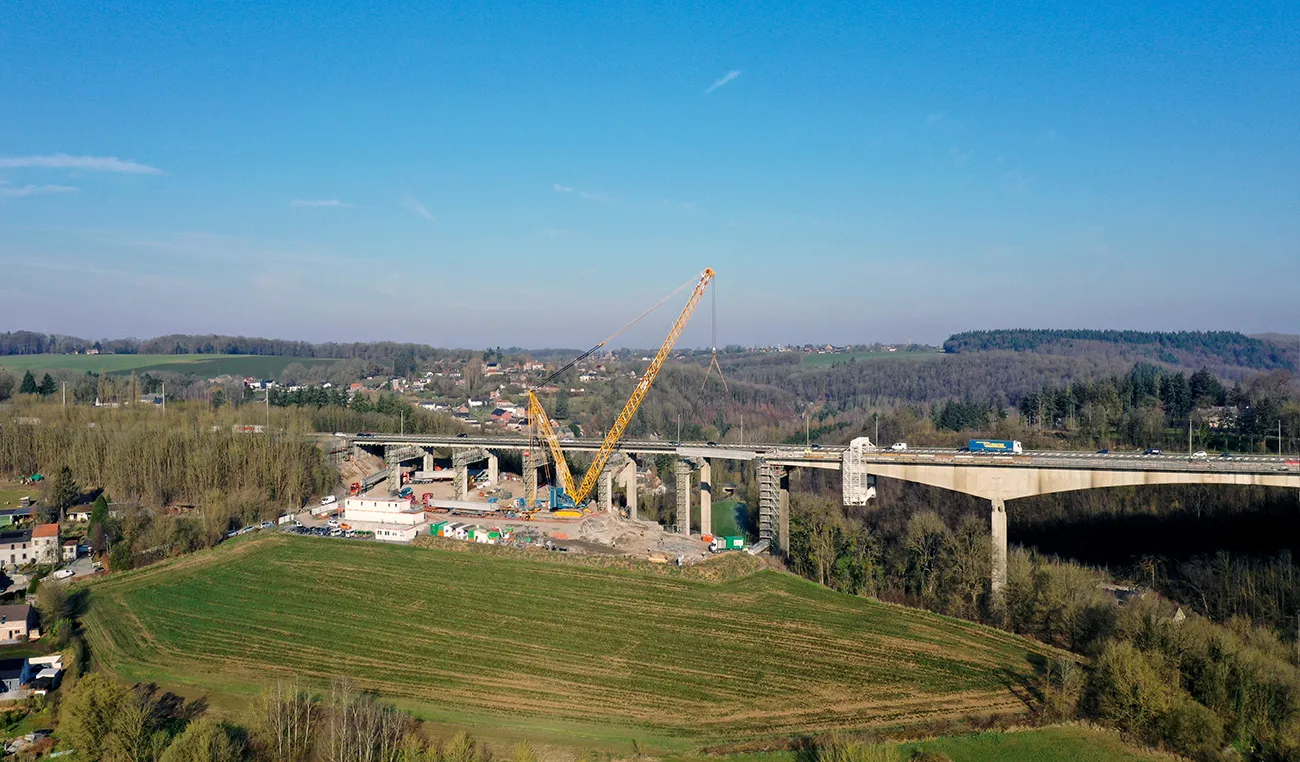
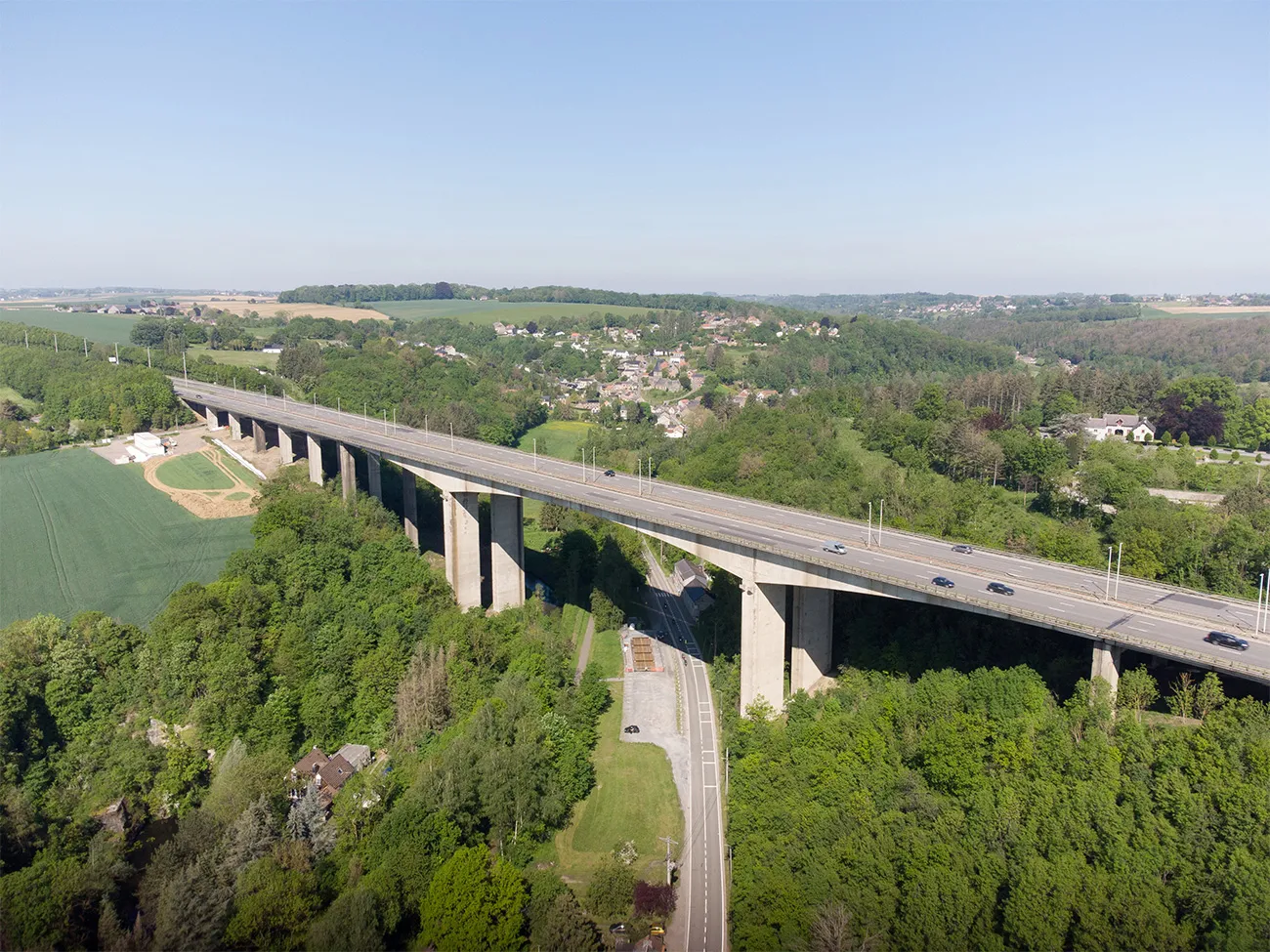
A major project is currently under way on the E42/A15 motorway near Wanze to give the Huccorgne viaduct a thorough facelift. In our previous issue, we looked at the demolition work. Now it is time for the reconstruction, being carried out jointly by teams from BESIX and Galère, two of the few Belgian players with the expertise needed to take on such a challenge.
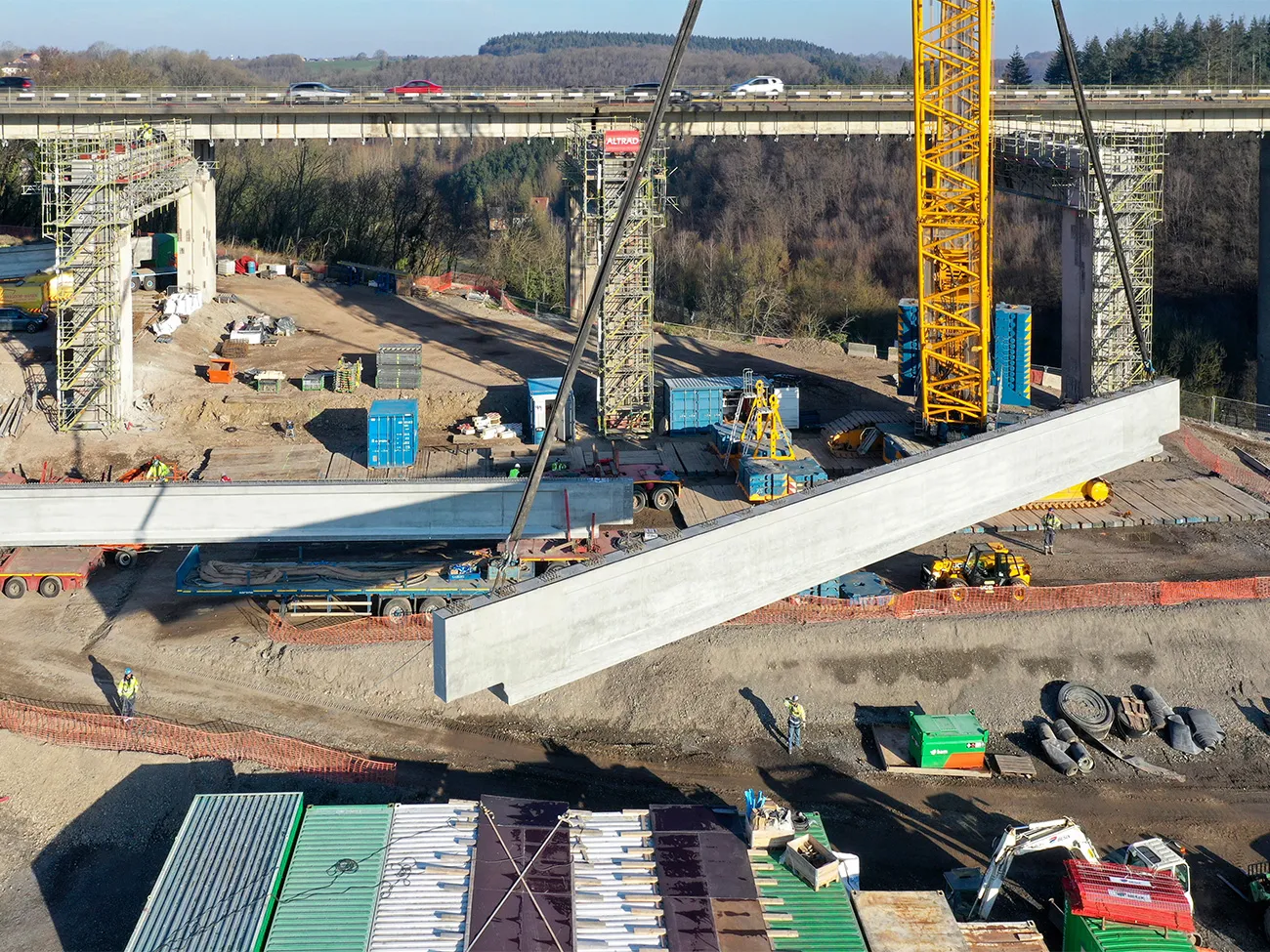
To avoid interrupting road traffic, this vast project has been spread over two years. This year’s work concerns the viaduct carrying traffic towards Liège, while the viaduct towards Namur will undergo a similar renovation in early 2023. At the time of the interview, in late March 2022, work was already well advanced and on schedule. All the beams had been removed and replaced with 36 new ones. The precast slabs forming the permanent formwork for the underside of the deck were in place. The first three sections of the deck towards Liège had just been concreted over a length of 90 metres. This work was due to continue over the following two weeks, finishing on 11 April. The next steps were to concrete the footways, install the waterproofing and fit the equipment, … with the aim of reopening the viaduct to traffic at the end of July. In other words, the complete demolition and reconstruction of the upper part of the structure towards Liège in just 6 and a half months.
The importance of the weather
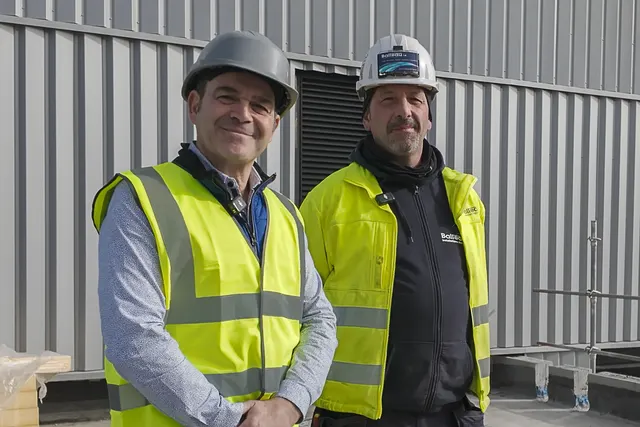
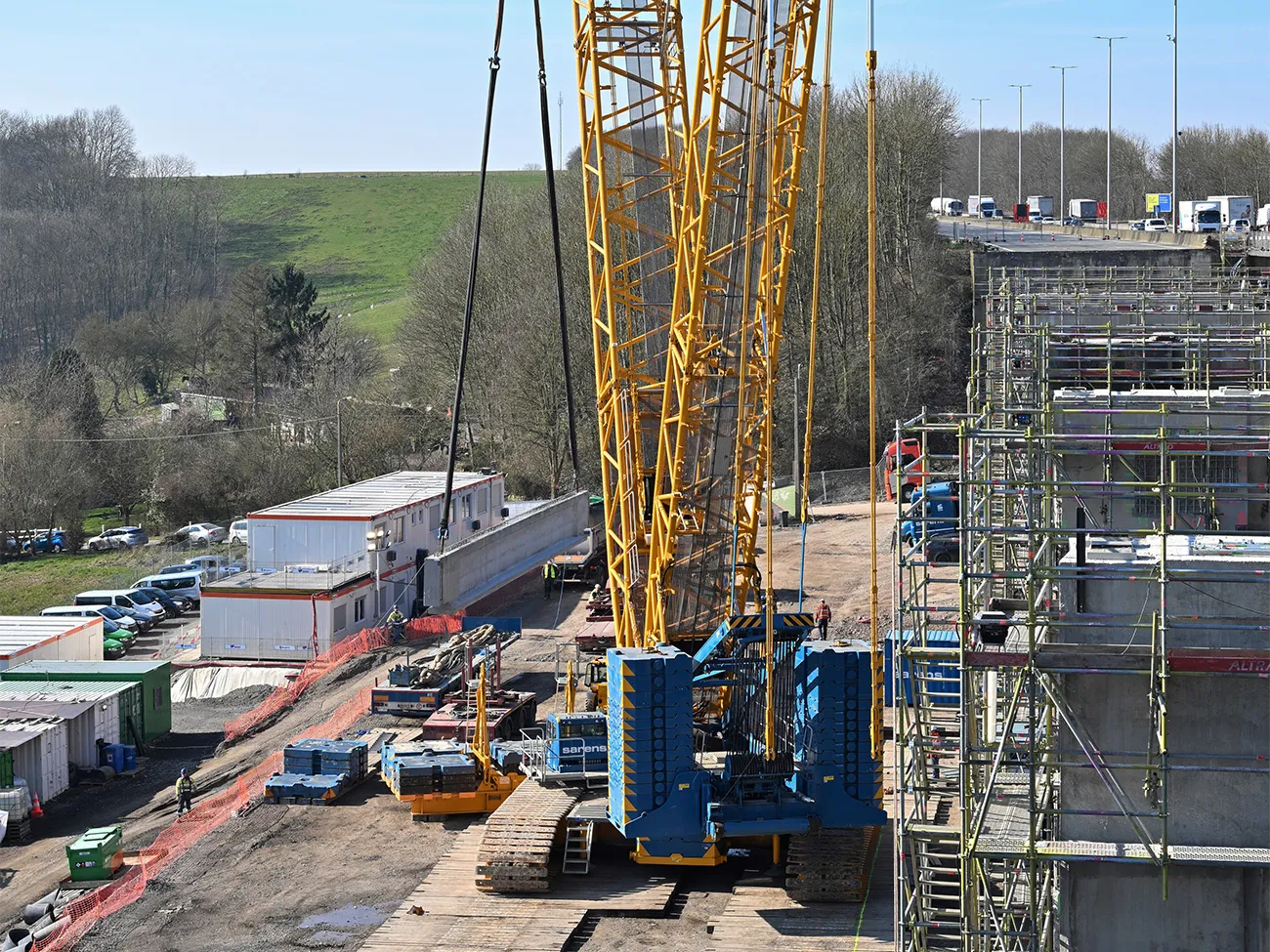
Denis Franssen, Project Manager at Galère: “The programme was developed at the tender submission stage, with the aim of minimising the number of calendar days on which motorway traffic would be disrupted. It turned out that the January to July period had the most working days. It also meant that we could start work on the waterproofing in early May, which is normally a drier period.” The importance of weather conditions should not be underestimated, as was confirmed during the removal and installation of the bridge beams. The 700-tonne cranes used can operate in wind speeds of up to 10 metres per second (36 km/h), so wind forecasts had to be monitored hour by hour, with every lull, even at night, used to keep to the schedule despite one day when work was not possible. “Worker safety remains paramount, with a relatively large supervisory team: 3 site managers and 2 foremen are on site at all times. There are frequent changes of work location, and conditions are constantly changing, so new collective safety measures always need to be put in place.”
Meticulous work out of sight
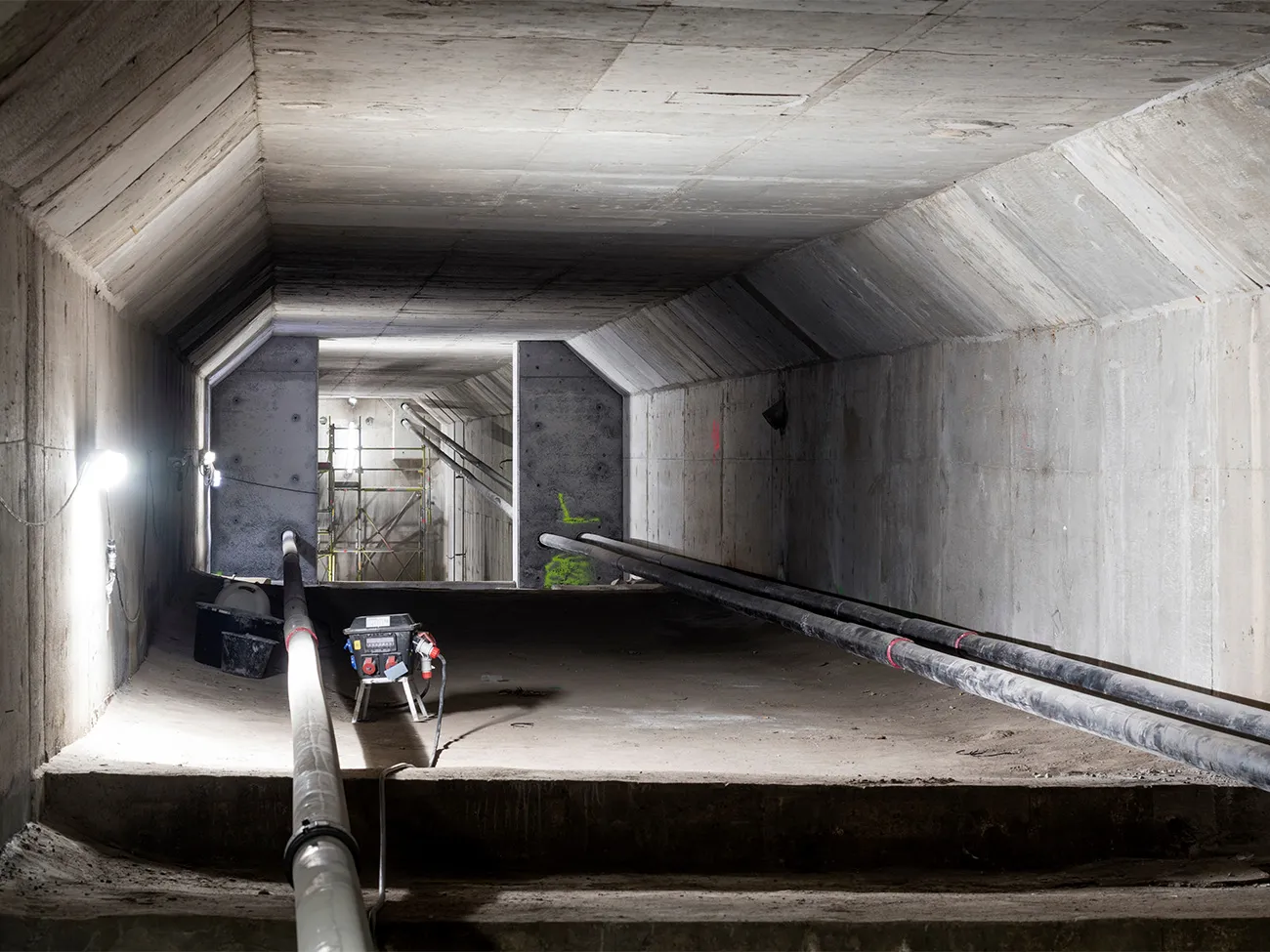
While the beam installation was particularly spectacular and received extensive coverage in the press, a less publicised but equally interesting part of the project involves a 280-metre-long, accessible box girder with variable stiffness at the centre of the structure. Repairs are also needed in this section, and their full extent is only becoming clear as concrete surveys are carried out. As a result, two shifts had to be introduced to deal with the volume of repairs uncovered. Sophie Grouvel, Project Manager at BESIX: “The repairs inside the box girder are painstaking work, with the crew having to tailor everything to the job. They are discovering the full extent of the damage as they go, even though they already had a general idea of the structure’s overall condition, which is actually quite good for its age.” “
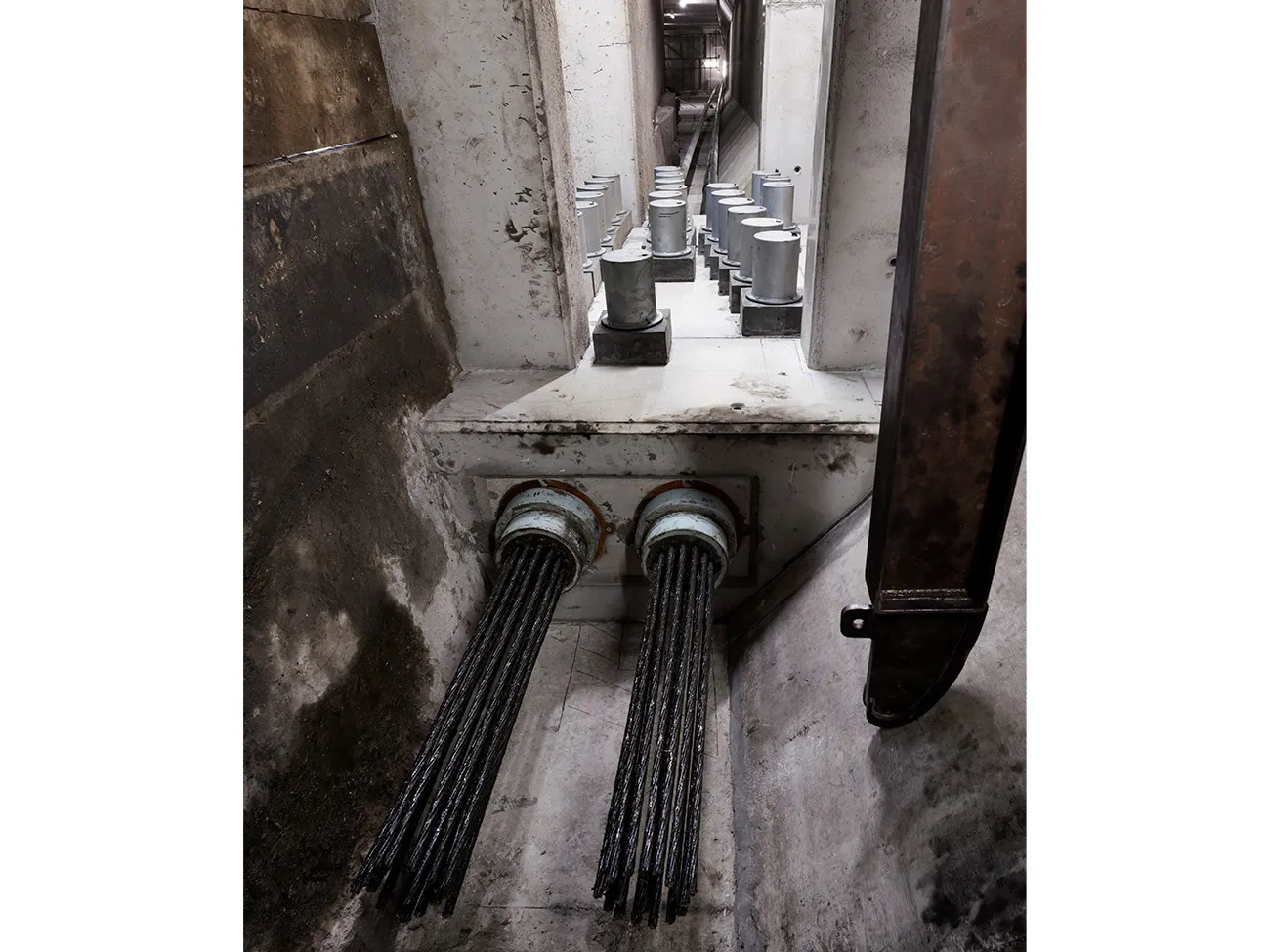
A range of works are being carried out inside the central viaduct’s box girder, including the installation and tensioning of 280-metre-long post-tensioning cables. Along their route through the structure, the cables are diverted through concrete anchor blocks, which have to be built by accessing the box girder through a 2-by-1-metre hatch at each end. Reinforcing bars, formwork panels, scaffolding tubes, drills, … everything has to be carried in by hand, as it is impossible to bring machinery inside the box girder. And all this work is completely invisible from the outside!
Another “sporting” aspect of the project that is rarely mentioned is the replacement of the bridge bearings. The central section of the viaduct had to be jacked up to remove the existing bearings and install the new ones. This is not a routine operation… “
Extensive preparation
The site team has been in place since January to finalise the work method in advance and prepare all the procurement. Galère and BESIX’s engineering teams worked hard alongside the site team to ensure everything was ready on time. Denis Franssen: “For example, approval of the design for the prestressed beams installed from February onwards had to be granted as early as November so they could be prefabricated in the factory. This was preceded by the full structural design and discussions on the subject with the client’s engineering consultant, … In short, a great deal of preparation during the first few months, with relatively little activity on site, in order to save time during construction.” This advance work has also helped ensure that supplies have not caused any problems so far, as prefabrication was unaffected by the current shortages.
The project is organised around close collaboration between the Galère-BESIX joint venture and its subcontractors (Eloy for demolition, Interspan for post-tensioning work, Sarens for lifting), as well as with engineering consultancies ARCADIS and SECO, and the SPW. Everyone is working together towards the shared goal of building a high-quality structure while minimising disruption to traffic. Galère and BESIX had not worked together before, but they soon hit it off. Sophie Grouvel: “A good atmosphere developed naturally. On projects like this, it is easy to get caught up in the challenge as professionals, and that is very motivating.”
That is just as well, because the Huccorgne viaduct is the first in a series of four major viaducts that the SPW has decided to renovate. There will be more challenges to take on in the future!
Question about this story? Ask your question
Keep following this
Get an email when a new story is published. No account needed.
- ThemeTransforming infrastructure and territories
- SubjectConstruction