A high-performance concrete slab reinforced with microfibres and macrofibres
Texte Niels Rouvrois | Photos Adfil
For a new concrete slab for processing recycling waste, Vanheede Environment Group, a specialist in sustainable waste management, was looking for a high-performance, durable solution. Adfil, a renowned manufacturer of polymer microfibres and macrofibres, was commissioned by main contractor TRBA to construct the 600 m² concrete slab. “The result is a joint-free slab that is resistant to impact and wear. Our microfibres and macrofibres played a part in achieving this,” explains Steven Anseeuw, Technical Sales Director at Adfil.
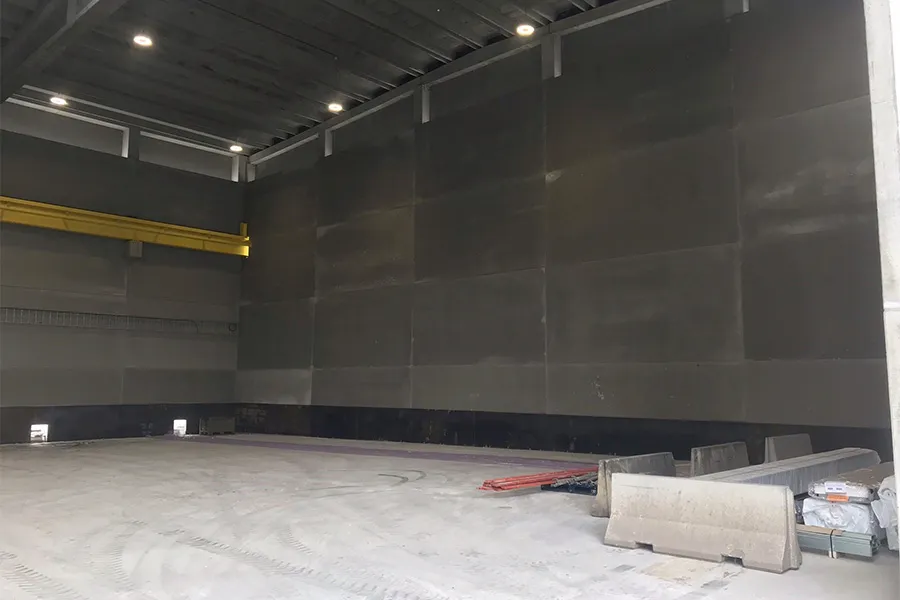
Flemish company Adfil, which develops and produces high-performance fibres for reinforcing ready-mix concrete, sprayed concrete and precast elements, has long advocated the use of fibres as a durable alternative. Steven Anseeuw: “The benefits are clear. Tying steel mesh takes many hours of labour. By choosing fibre-reinforced concrete, you can put those hours to other tasks. Fibres are durable over time because they retain their strength throughout the structure’s service life.”
The strength and added value of Adfil’s products were clearly demonstrated during construction of a concrete slab for waste processing at a Vanheede Environment Group site. Steven Anseeuw: “We already knew Vanheede Environment Group. We had worked together before, and when it became clear that Adfil could help them build joint-free concrete slabs, they were very interested. Recycling releases liquids and acids that can seep into the ground through joints, something Vanheede Environment Group naturally wants to avoid for environmental reasons. A joint-free slab would therefore add significant value.”
SRA, macrofibres and microfibres
But building a slab like this, in this case covering an area of 600 m² and 20 cm thick, takes careful planning. Steven Anseeuw: “Several factors need to be considered, and a complete system is required. On the one hand, shrinkage needs to be controlled; on the other, the slab must be able to move freely as required.”
To control shrinkage, it is essential to retain as much moisture as possible in the concrete, and five components of the system are key to achieving this. Steven Anseeuw: “The first two are a combination of our macrofibres and microfibres. Our ‘Durus Easyfinish’ macrofibres reinforce the concrete and help reduce stresses. ‘Crackstop M Ultra’ microfibres retain water for longer and also improve impact resistance, making the slab more resistant to wear. This is important because heavy equipment, such as a bulldozer, will be operating extensively on the slab. Another less well-known component that helps control shrinkage is ‘Crackstop Liquid’, or shrinkage-reducing admixture. This essential product reduces the concrete’s shrinkage potential, significantly lowering shrinkage stresses and reducing the risk of cracking.”
Every detail matters
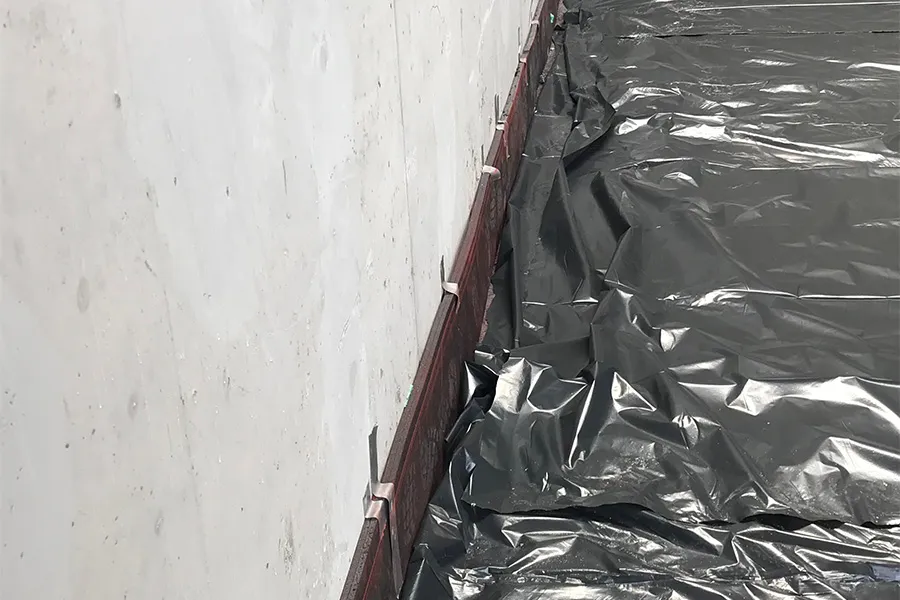
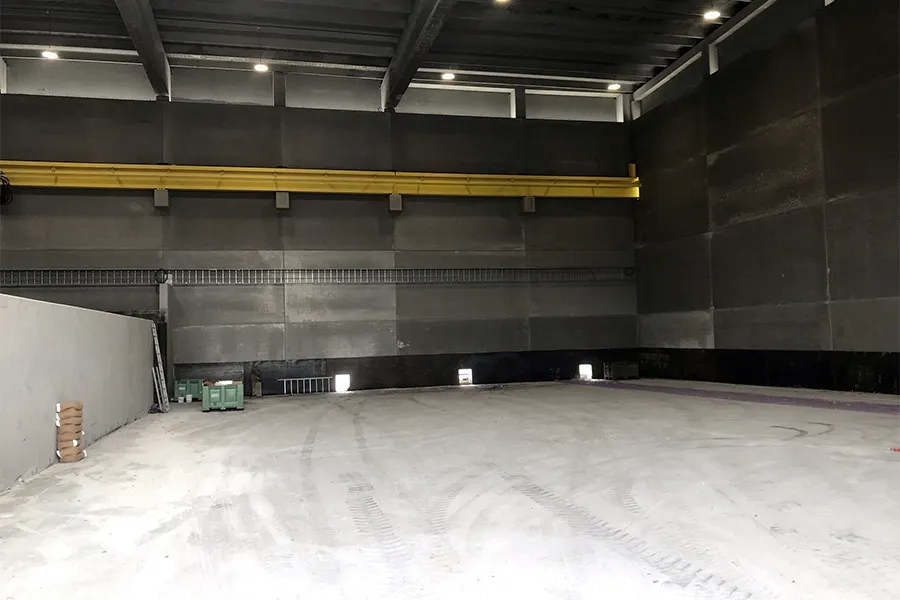
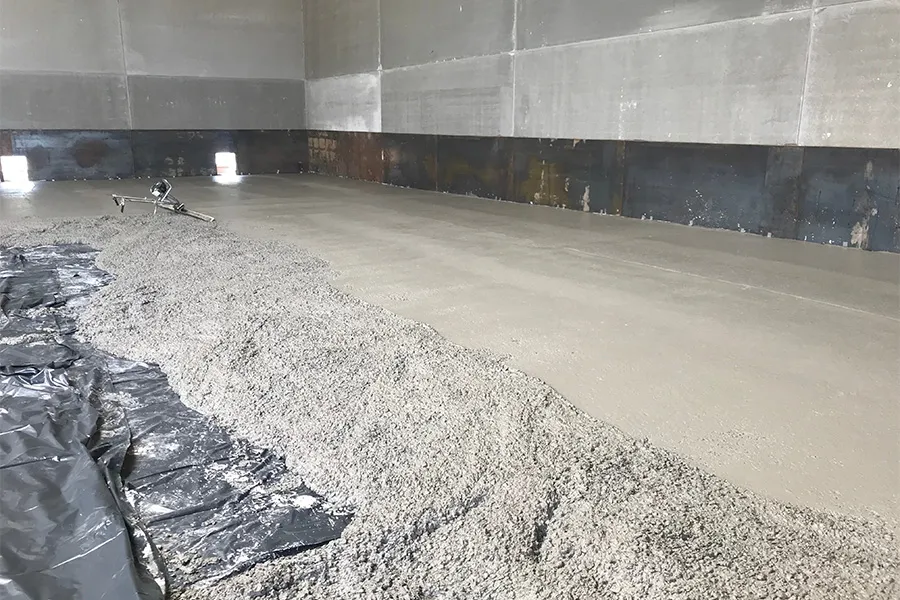
“Correct installation is absolutely crucial for this particularly technical application,” continues Steven Anseeuw. “Every stage must be carried out properly, from high-precision levelling and laying the plastic membrane and perimeter strips to polishing the concrete. Because every detail matters to achieve a good result, we advised the team at TRBA throughout the process. We were also present when the concrete was poured. I would also like to congratulate TRBA and subcontractor Carrofloor on both the preparatory work and the execution, as well as the very high quality of the concrete. Because placing the slab neatly is so important, particular attention was also paid to positioning the perimeter strips accurately. To optimise the transition from one slab to the next, sinusoidal joints were deliberately chosen here. This reduces wear and results in a more durable finished surface.”
A high-performance end result
Just before polishing began, our ‘Crackstop Ultra’ finishing product was also sprayed onto the slab on our advice. “This saves time and prevents the slab from losing moisture during polishing. It produces a slightly richer paste in the top layer of concrete, resulting in a better finish and an even harder surface layer. Together, all these steps resulted in a high-performance slab that is resistant to impact and wear, with no joints,” concludes Steven Anseeuw.
Question about this story? Ask your question
Keep following this
Get an email when a new story is published. No account needed.
- SubjectConstruction