Turnhout also opts for climate-resilient roads
Texte & photos LITHOBETON
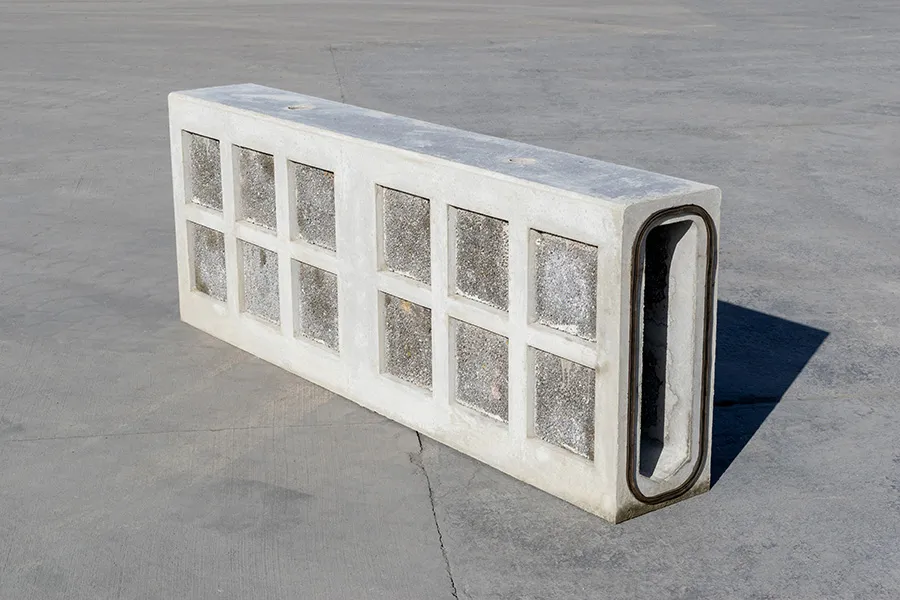
Several streets are being refurbished as part of sewer network renewal works. As Turnhout’s historic centre was built on a hill, groundwater levels rise the closer you get to the ring road and its associated waterways. Conventional construction methods, surface infiltration or the use of infiltration pipes can no longer provide a solution that ensures sufficient infiltration during heavy (and sudden) rainfall. The city of Turnhout has also been looking for solutions and found them in a climate-resilient road construction method.
Climate-resilient road construction is gaining ground
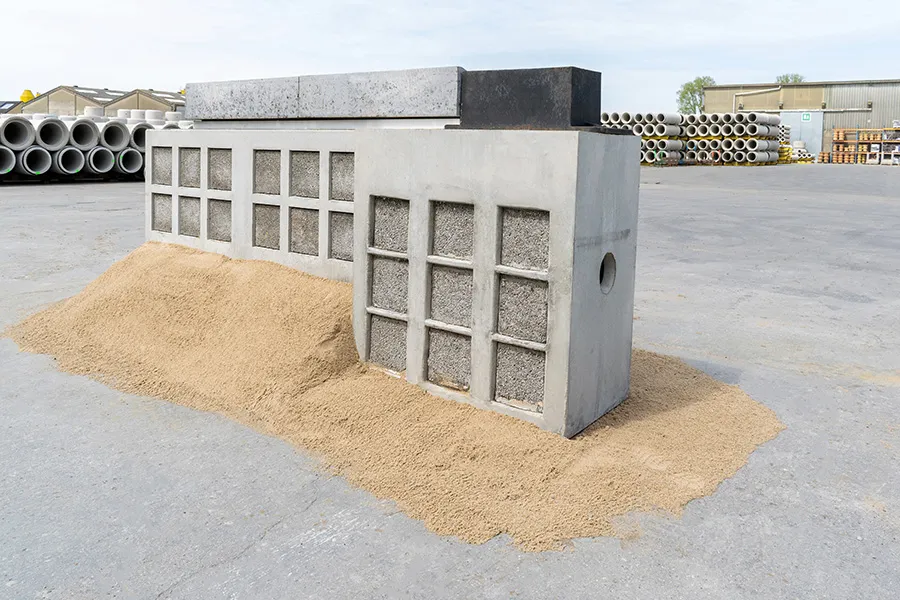
Steven Mateusen, roads and sewer coordinator for the city of Turnhout: “After installing this innovative system in Driezenstraat, a street in a flood-prone area, it is now the turn of Oude Beersebaan and Stoktsestraat. As soil conditions vary from street to street, the soil must first be analysed to determine the groundwater level. In Oude Beersebaan, this level is quite high, so infiltration must be achieved through climate-resilient road construction. Water runs off the road surface into a large infiltration gully, which acts as a pre-filter. The filtered water then flows through LITHOBETON’s new infiltration channels into the sub-base, where it can infiltrate. Rainwater is therefore not discharged into the sewer network. The Province of Antwerp has approved the delayed discharge of excess rainwater into the lower-lying Visbeek. The construction contractor BRUGGEMAN-MAES will carry out this project.”
Proven effectiveness
Rik Debusschere, project manager at AQUAFIN, is full of praise: “This system, for which sufficient safety margins are built into the calculation models, has already proved its effectiveness on several occasions. The sub-base is used as a temporary buffer, so that during heavy downpours, rainwater remains there temporarily until it has fully infiltrated into the soil. Using the entire road surface as an infiltration zone provides a very large infiltration area. This means that even during severe summer storms, the system allows a very large proportion of rainwater to infiltrate. Years of measurements, including those taken as part of the pilot project in Slijpestraat in Staden, show that the actual figures are even lower than the figures originally calculated.”
New infiltration channels
As well as infiltration gullies, LITHOBETON’s new infiltration channels are being used. These channels are an improved version of those used in previous projects. Their main advantage is that they are now manufactured as a single piece, saving a considerable amount of time during installation. LITHOBETON therefore continues to improve its products to meet its customers’ needs.
Question about this story? Ask your question
Keep following this
Get an email when a new story is published. No account needed.
- SubjectConcrete