Towards mandatory ‘End-of-Waste’ certification for production sites
An Order of the Walloon Government (AGW) came into force on 1 July, setting out the procedure for End-of-Waste status for certain waste materials, including recycled aggregates produced from inert construction and demolition waste.
Producers are now required to obtain ‘End-of-Waste’ certification and must bring themselves into compliance with the help of a notified body such as BE-CERT, which also played an active role in defining a practical framework to facilitate implementation of the Order.
Arnaud Martin, certification expert at BE-CERT: “The Order in question implements a 2012 decree, bringing it into line with the 2008 European Directive. The overall aim is to facilitate the circular economy by allowing material streams to shed their waste label. This AGW consists of a number of articles and two annexes, one of which deals specifically with recycled aggregates from inert demolition and construction waste. Developed in consultation with industry stakeholders, this annex provides quality and environmental guarantees for recycled aggregates placed on the market.”

In practical terms, all producers of recycled aggregates must send a registration application for End-of-Waste status by registered post to the Walloon administration (the DIGPD within the SPW). The application must demonstrate that the recycled aggregate producer meets all the criteria set out in this AGW. These include CE marking at AVCP level 2+ (known as ‘CE2+’) for the aggregates concerned, regular leaching tests and the implementation of a management system specific to End-of-Waste status. This management system must also be audited annually by an accredited certification body, such as the non-profit organisation BE-CERT.
CE2+ marking as a prerequisite
Arnaud Martin: “CE marking has been a requirement for 30 years, applying to all aggregates placed on the market, whether natural or recycled. CE2+ marking is also one of the requirements set out in the CCT Qualiroutes. Yet some recycled aggregate producers have still not brought themselves into compliance. For them, it is high time to put an appropriate quality system in place and apply for CE2+ certification from a notified body such as BE-CERT. By contrast, for a producer that already holds CE2+ certification, the new procedure required under the End-of-Waste regulations will involve few changes, apart from carrying out the new environmental analyses every 5,000 tonnes or, failing that, every 4 weeks.”
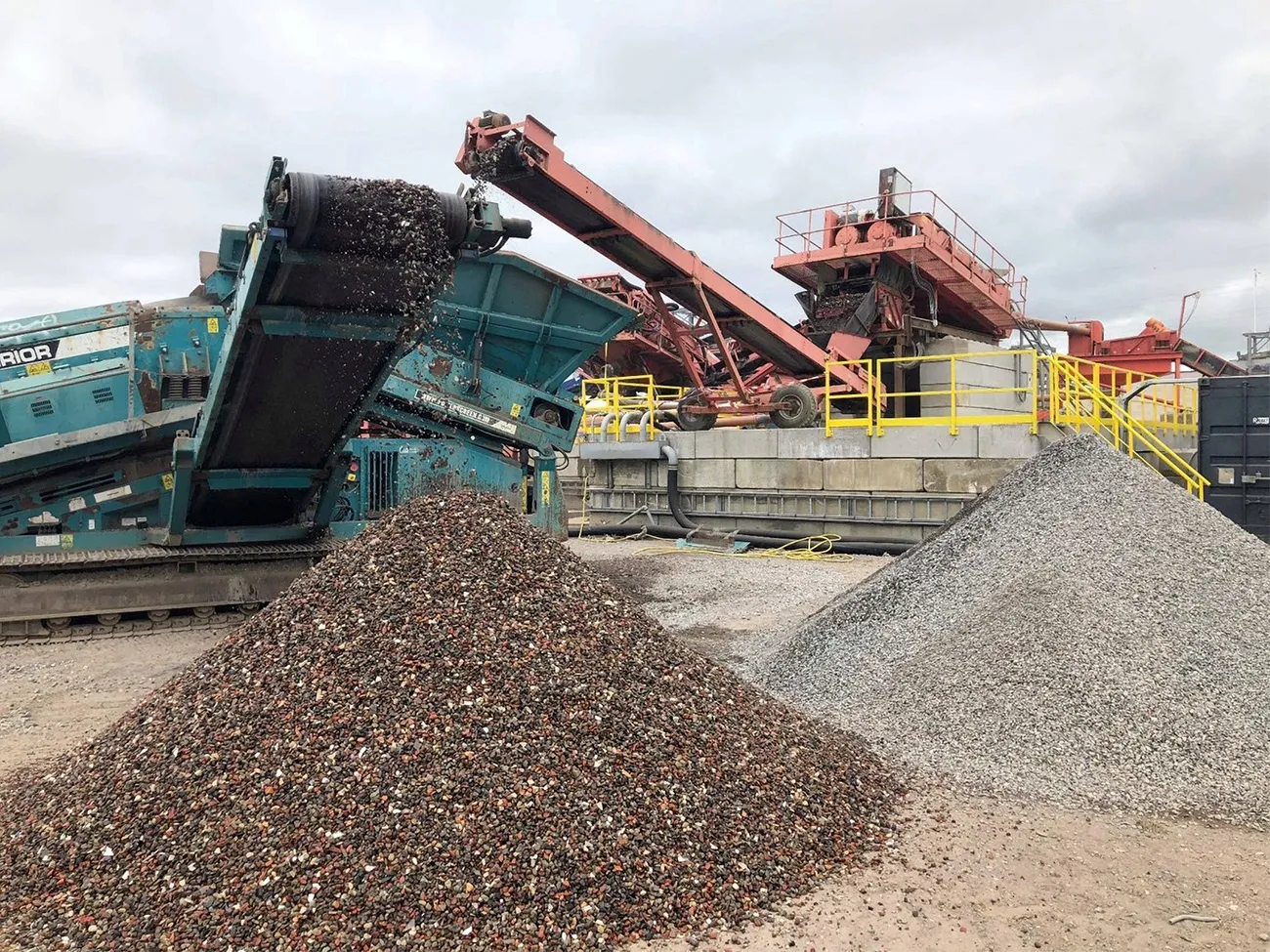
End-of-Waste certification
Following these analyses, the recycled aggregate producer must issue a declaration of conformity to its customer for each representative batch delivered. Until the analysis result is available and confirms compliance, the aggregate batch cannot cease to be classified as waste.
Arnaud Martin: “To implement the End-of-Waste certification referred to in the AGW, we had to establish a certification procedure. It was drawn up by a working group bringing together all stakeholders alongside the Walloon administration, which recently approved it. The working group is expected to continue operating, so that implementation of the AGW can be further optimised in light of conditions on the ground.”
In practice, recycled aggregate producers must apply for End-of-Waste certification from an accredited certification body such as BE-CERT. If the application is accepted, BE-CERT will arrange a date to inspect the producer’s environmental management system. The inspection can be combined with the CE2+ certification audit to
optimise costs.
Een zakelijke vraag aan PROCERTUS? Get in touch
Companies in this story

Keep following this
Get an email when a new story is published. No account needed.
- ThemeBuilding with less carbon
- SubjectConcrete
- CompanyPROCERTUS