











Thermal conductivity of hollow concrete masonry units
Texte & photos FEBE
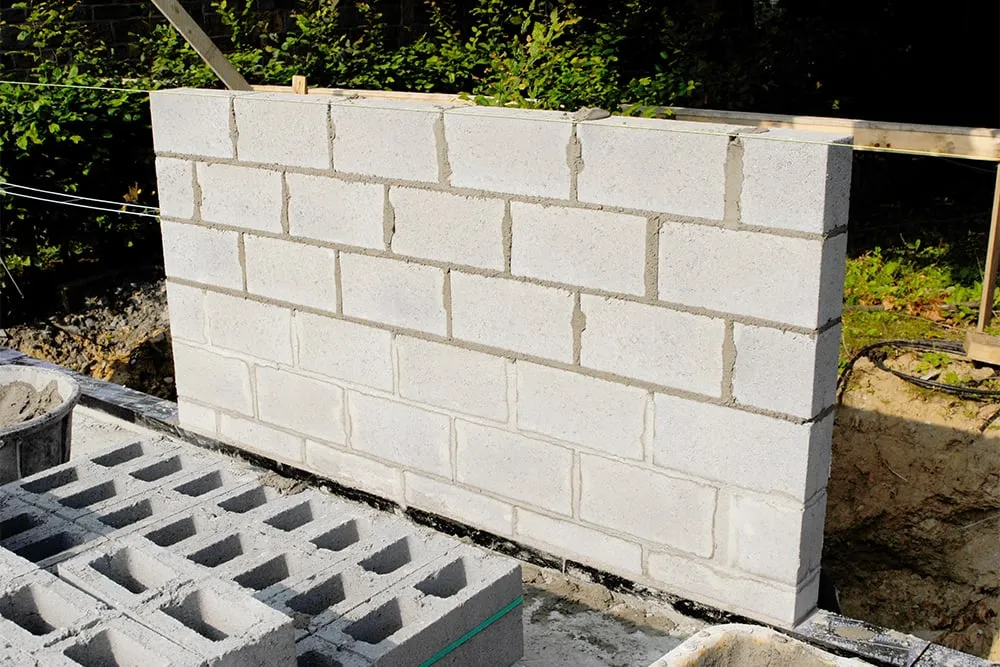
To limit buildings’ energy consumption, Belgian energy performance regulations specify maximum thermal transmittance values (Umax) for the building envelope, among other requirements. Assessing whether an external wall meets these requirements requires knowledge of the thermal conductivity values (λ) of hollow concrete masonry units.
The European standard for hollow concrete masonry units, NBN EN 771-3, and its Belgian application provisions, PTV 21-001, stipulate that manufacturers of hollow concrete masonry units must declare the thermal conductivity value λ10, sec, unit when the units are intended for parts of a construction subject to thermal requirements.
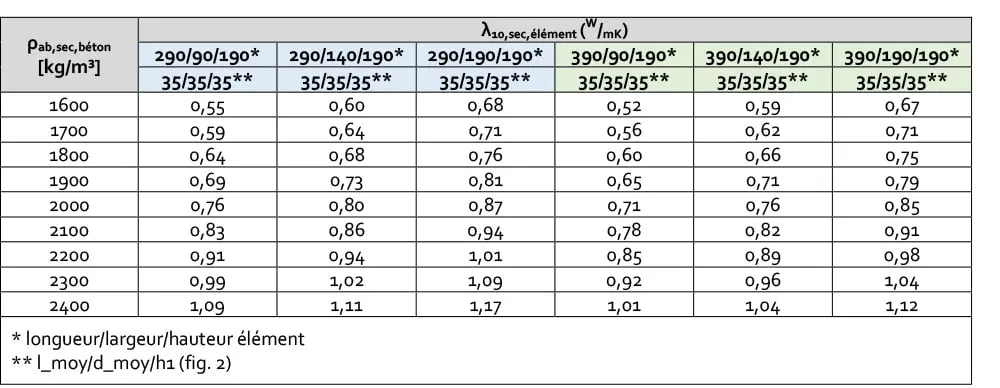
The value λ10, sec, unit cannot be used directly to assess the performance of a part of a construction. Therefore, under PTV 21-001, an additional λ value must be declared when λ10, sec, unit is declared. This is the value for which 90% of production, with a confidence level of 90%, has a λ value less than or equal to the declared value (λ10, sec, unit, 90/90).
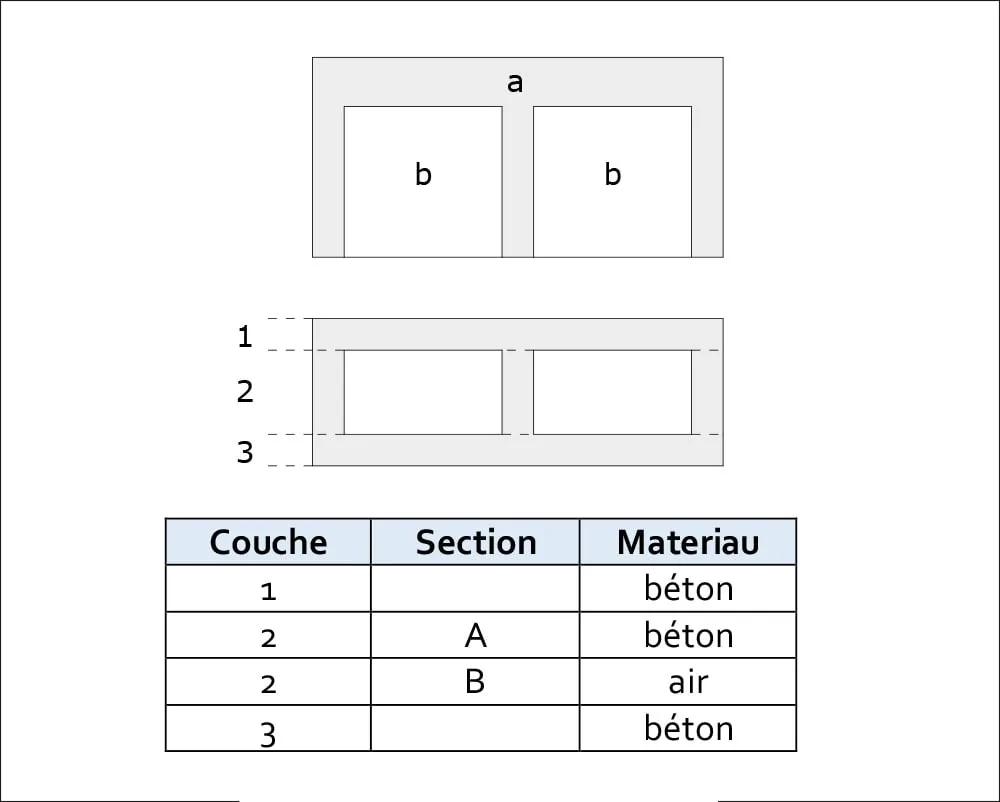
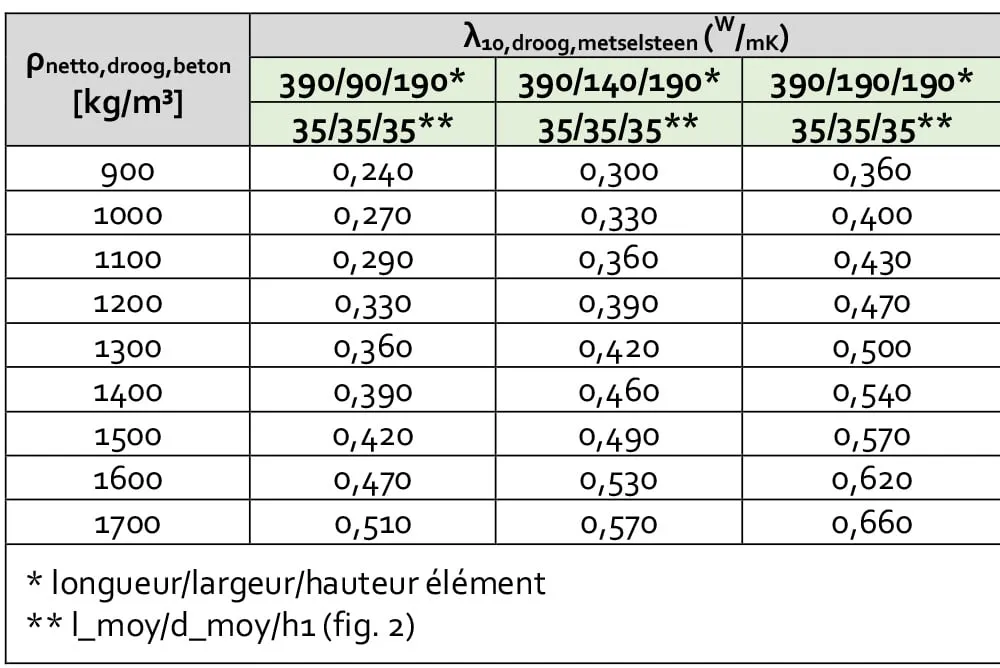
New tables have therefore been drawn up by the Belgian standardisation committee E125 “Masonry”, based on Belgian configurations. These tables will soon appear in the first national annex to NBN EN 1745. The λ values in the tables are calculated using the simplified method described in standard NBN EN ISO 6946. This method is permitted under energy performance regulations. Under this method, concrete masonry units are divided into layers and sections so that each unit consists only of thermally homogeneous parts, either concrete or air (Fig. 1). The tables give λ10, sec, unit values for different values of ρab,sec,concrete, based on the thickness of the transverse webs, longitudinal webs and top layer of the concrete masonry units.
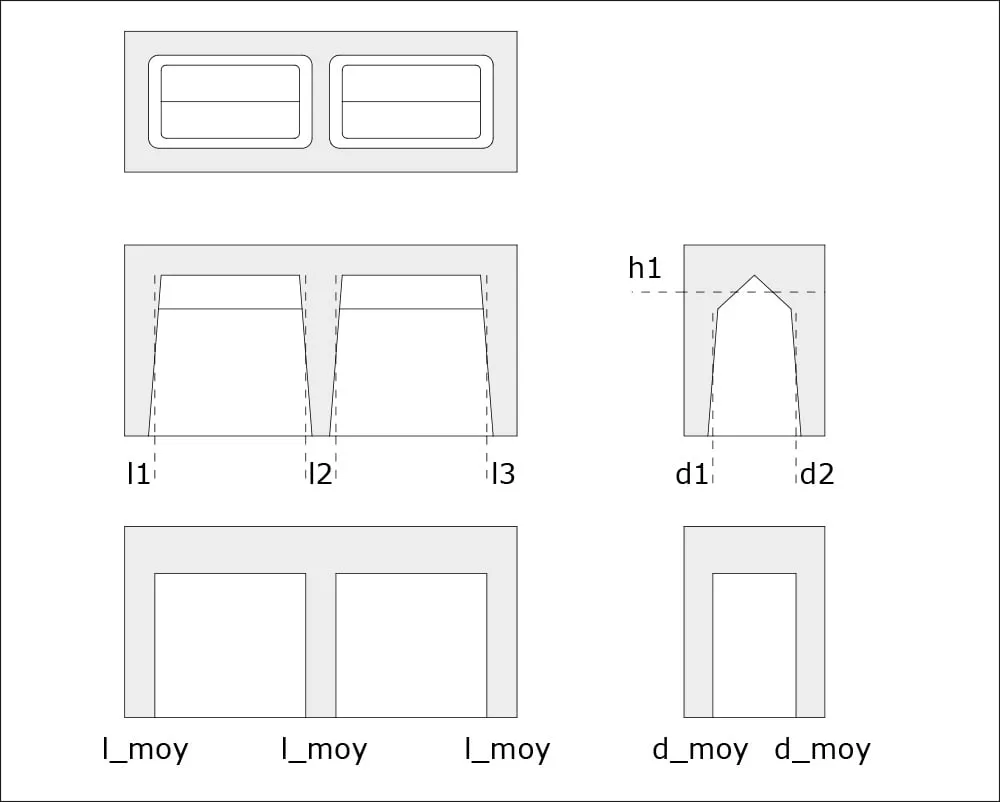
In practice, the thickness of the transverse webs, longitudinal webs and top layer of concrete masonry units varies. For simplicity, the average value must therefore always be used, calculated as half the sum of the smallest and largest nominal values. Tables have been drawn up for different sizes of concrete masonry units with one, two and three cores, using both ordinary aggregates and expanded clay aggregates. By way of example, Tables 1 and 2 show some values for concrete masonry units with two cores.
The contribution of hollow concrete masonry units to the thermal resistance of a building’s external envelope is limited. The new tables will make it much easier to declare the thermal performance of hollow concrete masonry units, and the values will be closer to reality. These values can then be incorporated into the energy performance product database and used under energy performance regulations.
Question about this story? Ask your question
Keep following this
Get an email when a new story is published. No account needed.
- SubjectConcrete







