The importance of infiltration channels
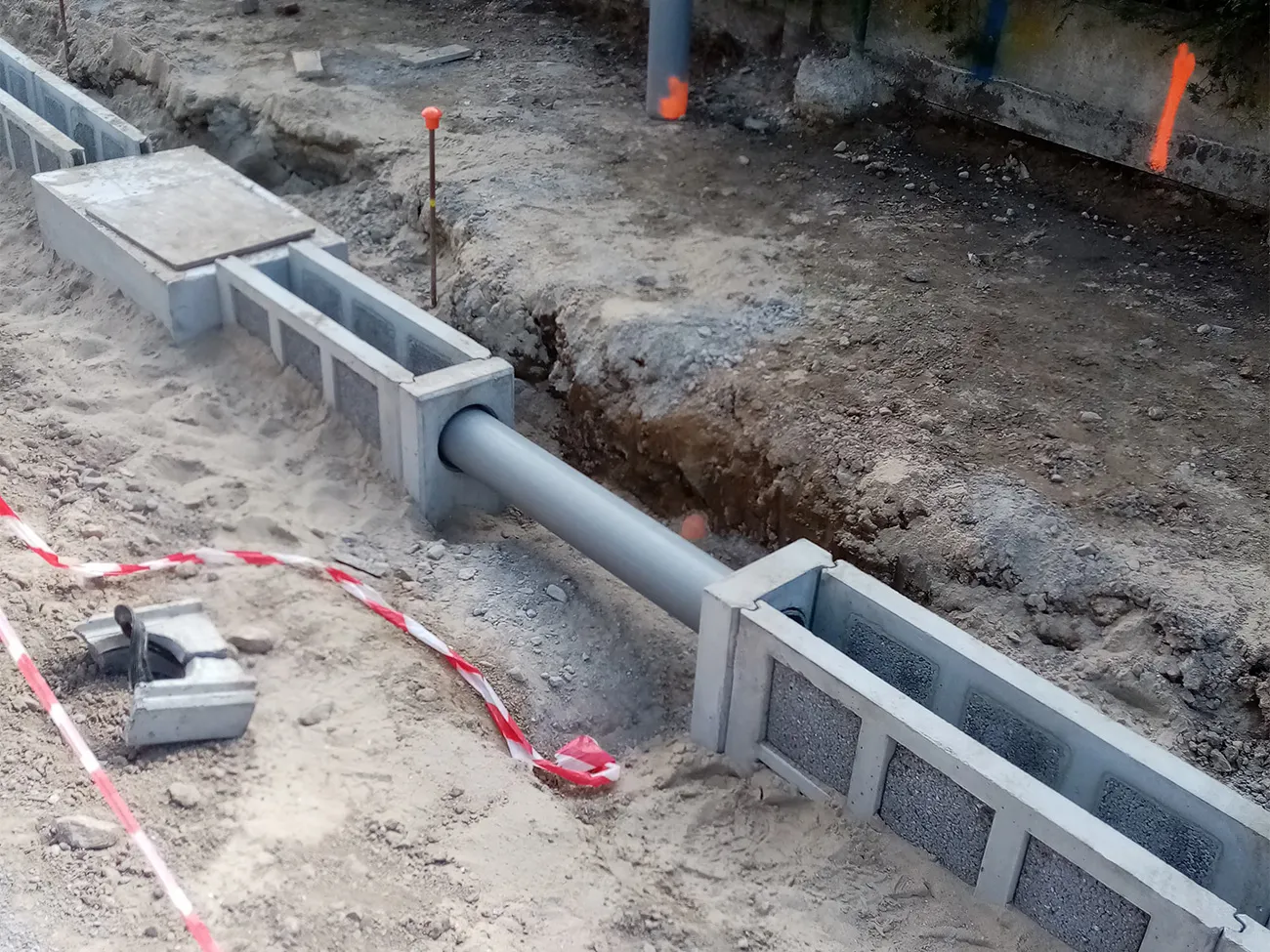
To meet the need for rainwater infiltration, Lithobeton launched a concrete drainage channel with infiltration openings almost 10 years ago.
Climate change has made infrastructure that allows rainwater to infiltrate into the ground where it falls and replenishes existing waterways essential.
The first concrete drainage channel was developed in consultation with engineering firm Jonckheere, at the request of VMSW/VIVENDO, for a housing development in Bruges. The concrete channel sections are 1.95 m long and U-shaped, with an internal width and height of 30 cm. Each section has 29 round infiltration openings, allowing the collected rainwater to seep into the ground through the permeable foundations. The channels’ shape, dimensions and tongue-and-groove joints ensure that the channel always follows a regular course. Maintenance is straightforward, using a mini excavator with a narrow bucket. The concrete channel is a clear environmental benefit in an urban landscape.
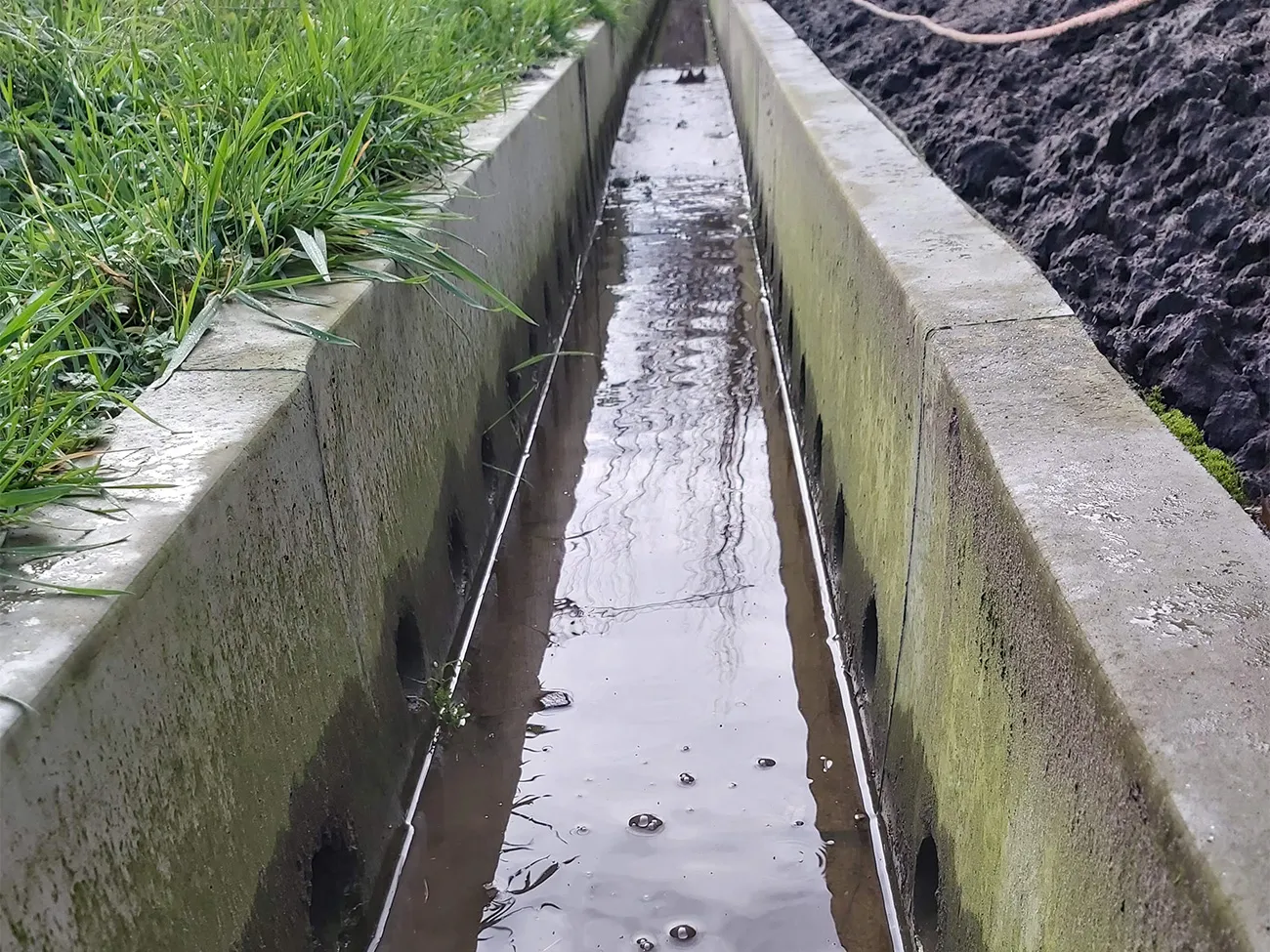
Over the years, Lithobeton has expanded its range of channel sizes: 195x60x60, 195x60x100 and 100x18x60, the latter with drainage openings. The channel sections can be supplied without openings, with unlined openings or with porous openings in the walls. These options within a single product range make the precast channels suitable for various applications, including cable ducts, waterway reinforcement and infiltration basins.
The latest model, the 100x18x60 channel with porous openings, was developed in close collaboration with Aquafin for climate-resilient road construction. This innovative system consists of a concrete or asphalt surface layer, a permeable foundation and a gravel and sand sub-base. The drainage channel is installed beneath the road drainage channels and connected to infiltration gully pots. As a result, collected rainwater flows into type A/I infiltration gully pots, which also filter polluted water. The clean water then flows through the 100x18x60 channels into the sub-base, where it can infiltrate into the ground. The concept was extensively tested using test configurations in collaboration with the Road Research Centre. The first project to apply climate-resilient road construction was in Staden (Roeselare).
Lithobeton’s precast infiltration channels are durable, respect existing drainage systems and help meet the water assessment requirements.
Question about this story? Ask your question
Keep following this
Get an email when a new story is published. No account needed.
- SubjectConcrete