











The CO2-neutral label: challenge or opportunity?
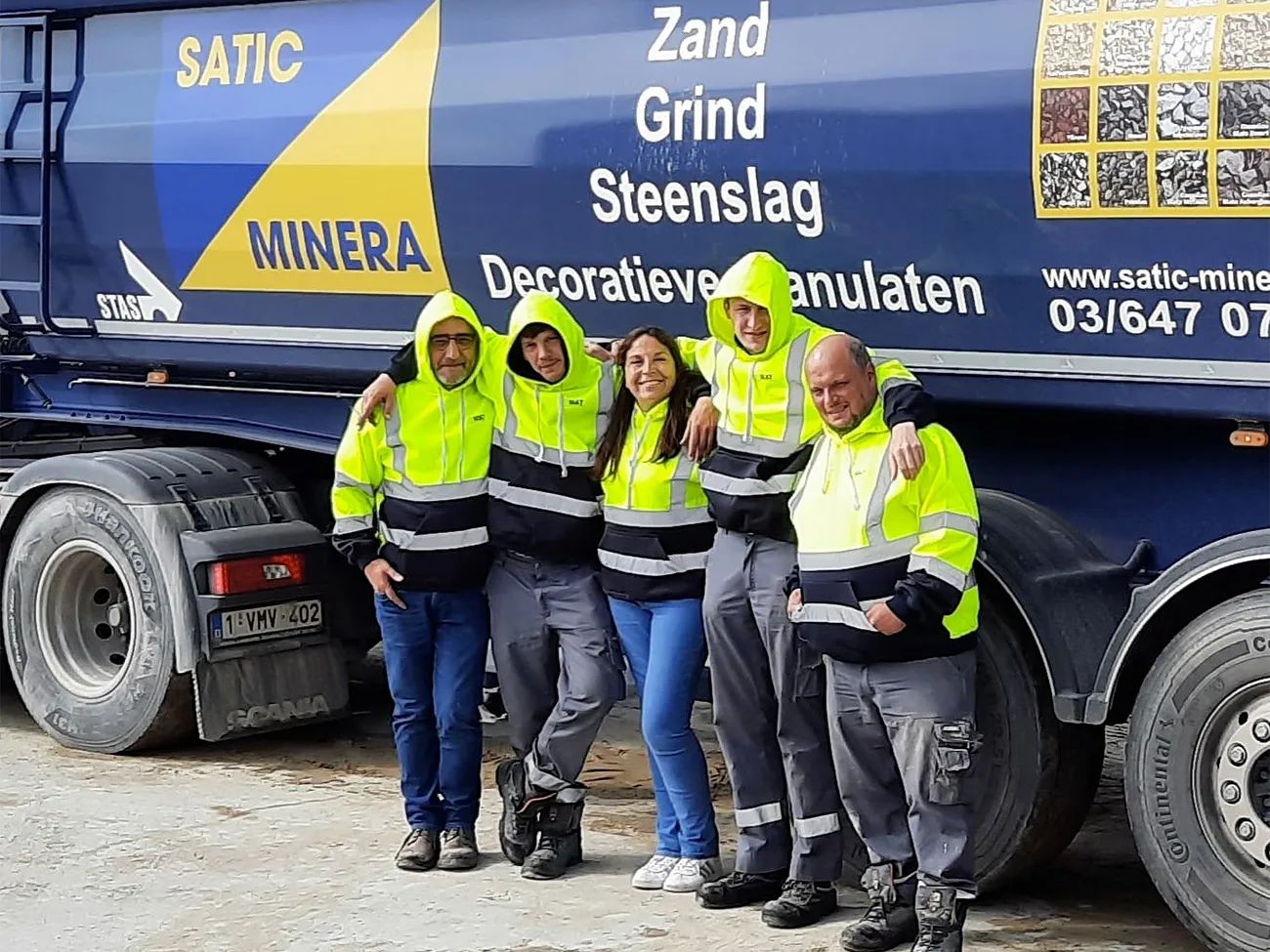
By 2050, CO2 emissions will have to be brought down to zero, and more and more businesses are stepping up their efforts to achieve this.
Ready Beton and Satic-Minera, two companies in the Dutch De Hoop Terneuzen group operating in the Belgian market, have adopted an ambitious but realistic approach.
“It is very important to approach a task of this kind with a clear vision that takes account of economic and environmental realities. Scientists are sounding the ‘climate alarm’, and everyone, whether or not they work in business, has a part to play,” says Herman De Backker, Managing Director of Ready Beton and General Manager of Satic-Minera. “We are anticipating measures that the public authorities have taken, or will take, in the future. We ask our clients and customers to take an active approach to limiting the impact of our activities on the environment and nature as much as possible and, where feasible, to achieve complete carbon neutrality. In the Netherlands, ‘green public procurement’ is already commonplace. Public tender bids are assessed using the environmental cost indicator ‘MKI’: anyone wishing to take part in a tender has an incentive to perform well in this area.”
From extraction to the construction site
Those who drew up our CO2 emissions reduction plan started by considering the specific characteristics of the two Belgian subsidiaries’ activities. Satic-Minera trades in construction raw materials, while Ready Beton produces ready-mixed concrete at its plants in Roulers, Brussels and Anderlecht and supplies nearby construction sites. Both companies have sites connected to waterways, including in the port of Brussels. Satic-Minera’s raw materials are delivered by boat wherever possible and by lorry when this is not an option.
“Certain factors are fixed for our businesses, such as the location of quarries and customers. These are mainly concrete or asphalt batching plants, concrete product factories and construction sites,” explains Jurgen Lufin, Logistics Manager at Satic-Minera. “They are a long way from one another, so speed and logistics costs are important considerations. Concrete is transported from Ready Beton’s batching plants to construction sites in mixer trucks. Our ready-mixed concrete has to be delivered immediately.”
“Ready Beton and Satic-Minera aim to coordinate orders themselves as far as possible, for both waterborne and road transport, working with our logistics partners where necessary. At present, around 30% of lorries are running empty! This figure needs to be reduced by improving information sharing between companies, so that a lorry can carry another company’s load on its return journey. This is a daily challenge for our logistics staff,” explains Jurgen Lufin. “Greater use of combined transport nevertheless remains an important option for the future. More rubble and cement should be transported by water.”
Reduce first, then offset
“In 2010, our group set itself the target of reducing its carbon footprint by 20% by 2020, or 2% per year,” continues Jurgen Lufin. “By tackling various aspects of our operations, including energy consumption, reject costs, transporting raw materials by boat, internal logistics flows, fleet upgrades, and the reuse of recycled water and surplus concrete from construction sites … we were able to meet this target with ease. We also reviewed our energy contracts and switched to 100% green energy. And at the end of 2020, we opted for carbon-neutral fuel for our fleet of mixer trucks and for the machinery operating at our sites.”
Jurgen Lufin: “Together with our business management initiatives, these measures have reduced most of our carbon footprint to an absolute minimum. To obtain the CO2-neutral label, we offset a tiny residual fraction of CO2 emissions by supporting a tropical forest conservation project in Nicaragua. The project was set up to make a lasting contribution to the local population’s social and environmental footprint. A wonderful example of CSR. CO2logic supported us throughout the process.”
The fight against CO2 emissions is a long-term undertaking that requires the involvement of every business, every worker and every citizen. The result will be a combination of many modest measures, each bringing opportunities to optimise the way we run our business.
Question about this story? Ask your question
Keep following this
Get an email when a new story is published. No account needed.
- SubjectConcrete







