











The cement industry is tackling CO2 emissions
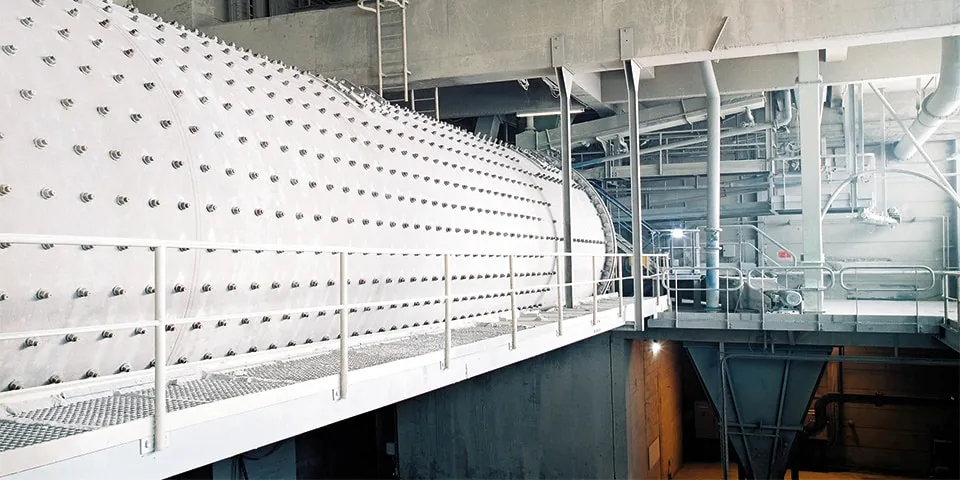
Innovation is a key driver of development in the cement industry. Building on its ongoing efforts to reduce its carbon footprint, the cement industry took a further step in 2016 towards greater energy efficiency and lower CO2 emissions, with a Roadmap to 2050 drawn up as part of the second-generation sector agreements with Wallonia. The Roadmap focuses on three main levers and reflects the significant efforts being made by the sector in these areas.
Lever 1: making rational use of resources
At a time when the circular economy is spreading across all sectors, the cement industry has been embracing this approach for a long time. The specific characteristics of the cement manufacturing process, combined with the non-renewable nature of primary resources such as limestone, have led the industry to develop and prioritise the use of secondary materials and alternative fuels. With alternative fuels already accounting for more than 50% of its energy mix, the cement sector is a pioneer in recovering and making use of substitute fuels and secondary materials, such as waste biomass, which accounts for 30% of the fuel mix at Belgian cement plants.
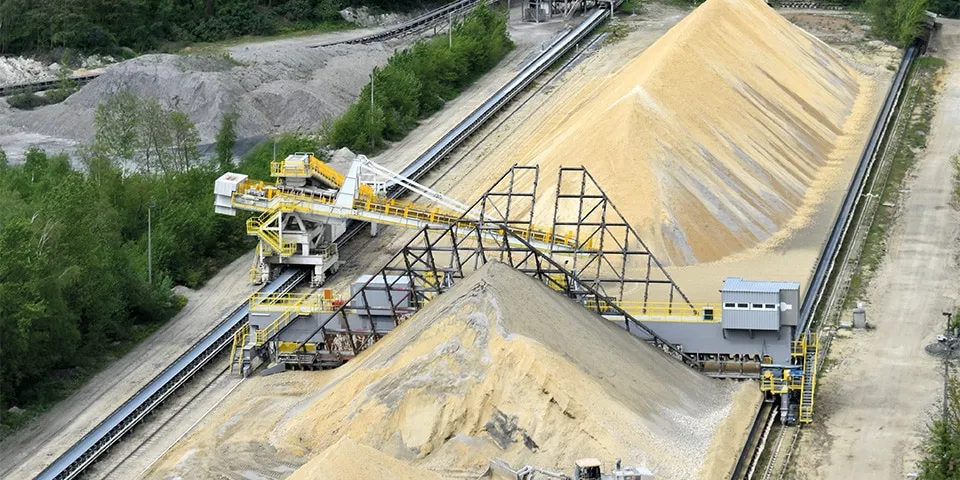
Blast furnace slag can replace limestone in the cement manufacturing process.
As regards raw materials, the decarbonation of limestone aggregate accounts for two-thirds of CO2 emissions from cement manufacture. Measures are being taken to replace these materials with alternative material streams or already-decarbonated by-products that provide useful minerals, such as fly ash, blast furnace slag, crushed sand and cellular concrete.
Directly incorporating already-decarbonated secondary materials in place of clinker, the main component of cement, reduces CO2 emissions and energy consumption associated with cement manufacture without changing the cement’s hydraulic and mechanical properties. Blast furnace slag and fly ash are the most suitable materials for this purpose. This process produces what are known as composite cements.
The cement sector is also exploring the potential for producing new types of cement and clinker using manufacturing processes that require much less energy, for example, lower-temperature processes and different mineralogical compositions. Their deployment on an industrial scale is not yet assured, but it is only a matter of time.
Lever 2: improving energy efficiency
Improving the energy efficiency of production processes and equipment is one of the cement industry’s preferred ways of reducing its environmental footprint by 2050. To cut electricity consumption, the sector regularly invests in equipping cement plants with the best available technologies. In Belgium, specific electricity consumption is around 110 kWh per tonne of cement, compared with a European average of around 120 kWh per tonne. As for thermal energy, plant upgrades are ongoing and have halved energy consumption since the 1960s.
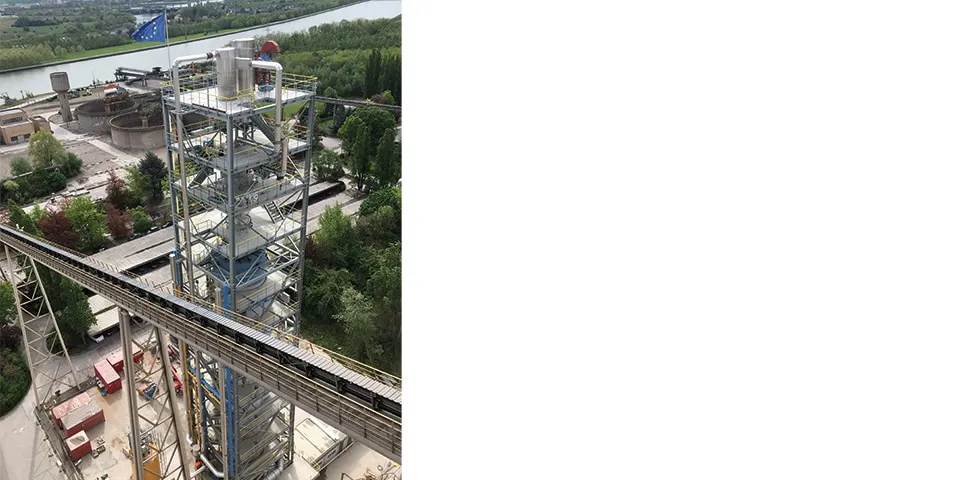
At CBR’s Lixhe plant, the new tower used
to capture CO2.
Lever 3: capturing, storing and using CO2
The cement industry is currently conducting extensive research into the CO2 capture technologies best suited to its industrial processes. Capturing, storing and using CO2 are promising options for drastically reducing its carbon footprint.
In this regard, the European-funded research and innovation project « LEILAC » (Low Emissions Intensity Lime And Cement) was developed for 2020. This carbon capture pilot project, set up at the CBR-Heidelberg Cement Group cement plant in Lixhe (Visé), will enable the cement and lime industries to significantly reduce their carbon dioxide emissions.
In a rapidly changing world, the cement industry is playing an active role in reducing CO2 emissions. Using three key levers, the industry is investing actively to minimise its environmental impact.
Question about this story? Ask your question
Keep following this
Get an email when a new story is published. No account needed.
- SubjectConcrete







