











Thanks to their long service life, concrete pavements are more cost-effective and have a lower environmental impact!
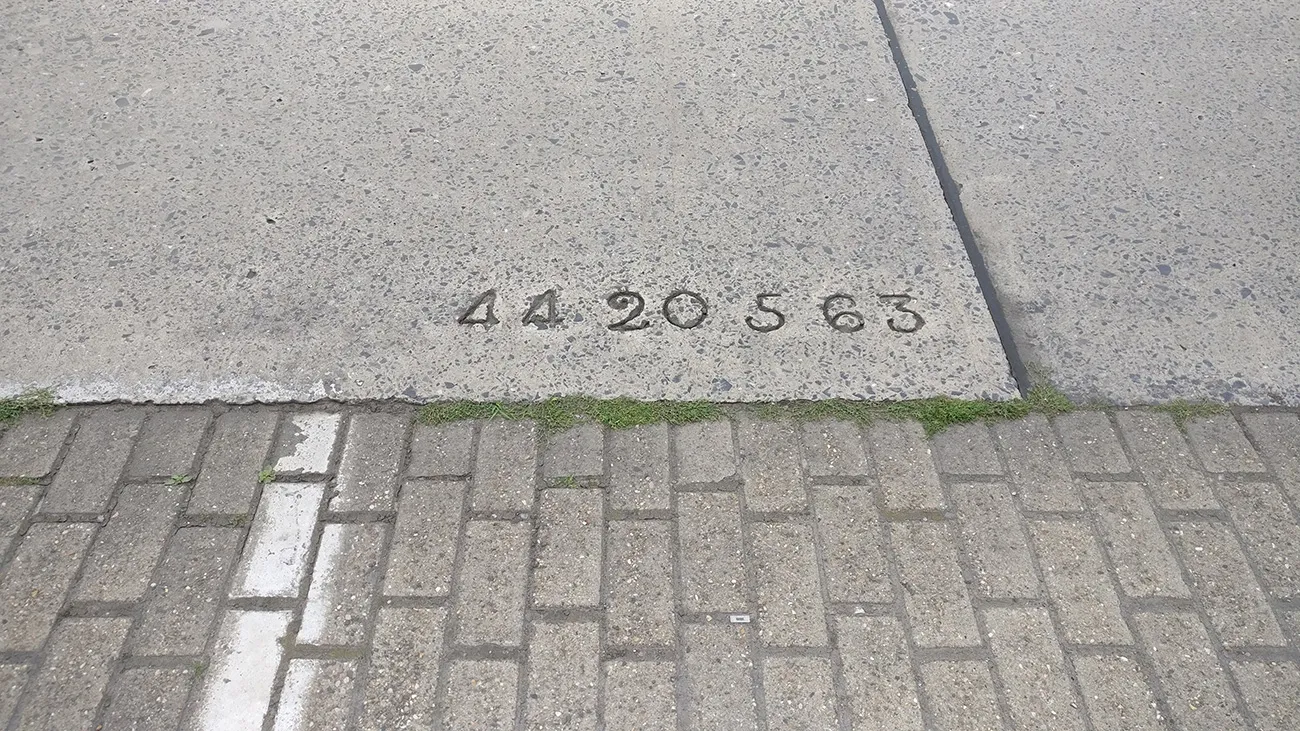
Road infrastructure is essential for the transport of goods and people, and therefore plays an important role in a country’s economic and social development. We therefore need roads that keep traffic flowing smoothly by ensuring a high level of availability. This also means limiting the number of repair, maintenance and reconstruction works.
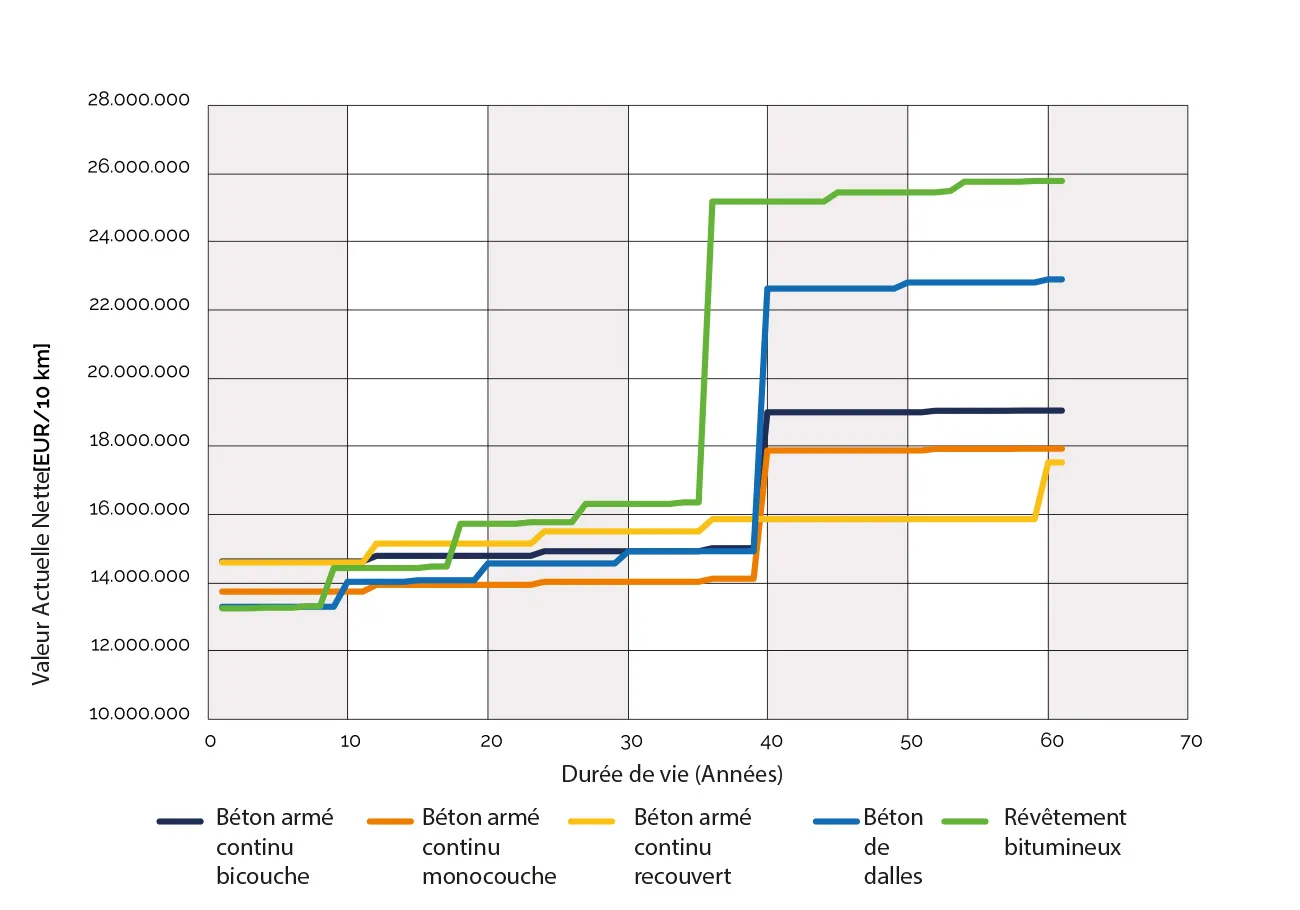
Concrete pavements can easily achieve a service life of 30 to 40 years or more without structural damage. Their long service life and low maintenance costs mean that the whole-life cost of concrete roads is low. With minimal closures needed for maintenance work, traffic disruption is reduced, bringing significant environmental and economic benefits.
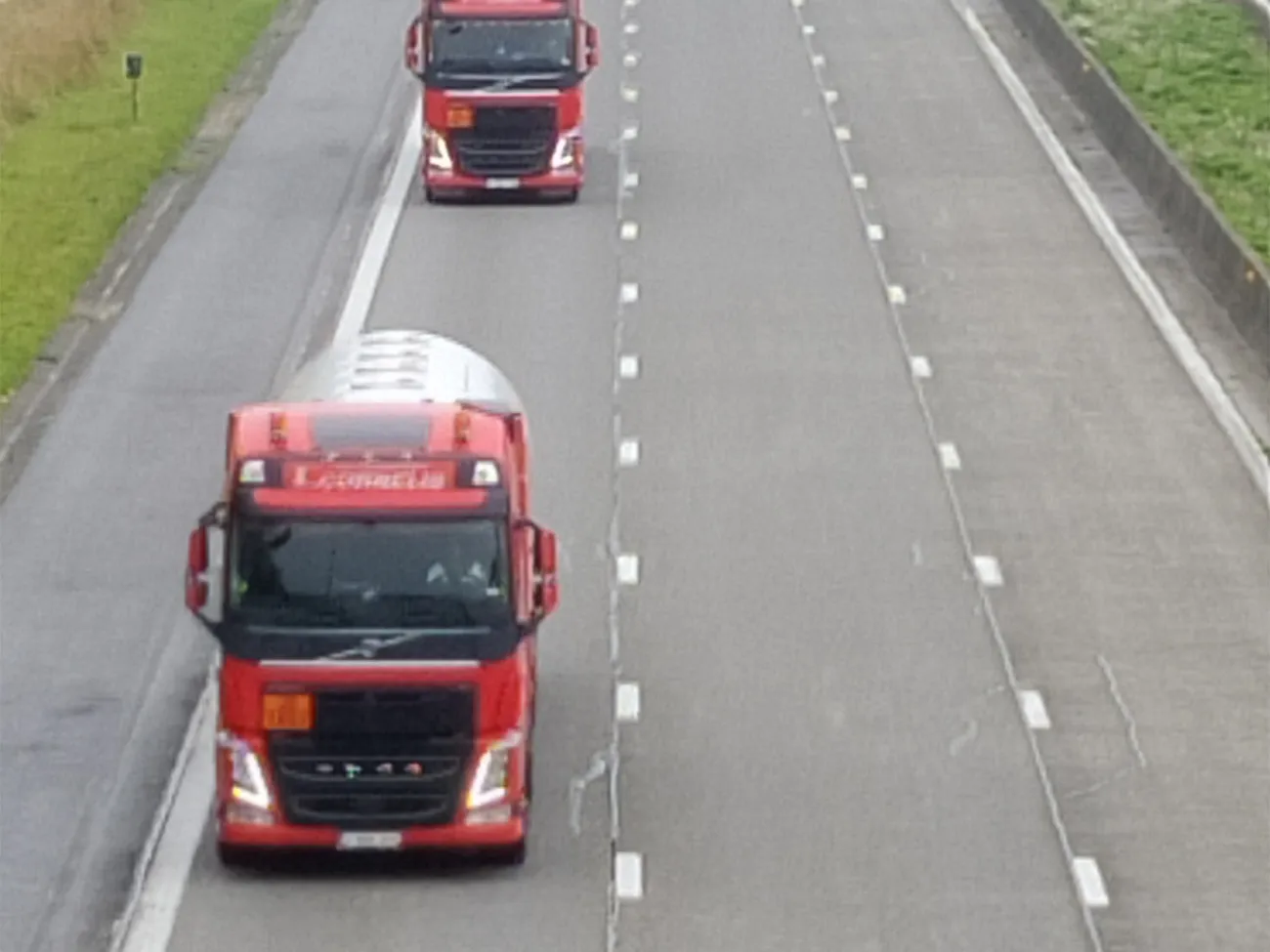
Long-life pavements and their impact on sustainability
Service life is the period from a road’s construction to the end of its use. In technical terms, this is also known as the durability of a structure. Keeping a pavement in service requires different maintenance activities for the two main construction materials, concrete and asphalt. Over their theoretical service life, which is generally 30 years, concrete pavements require virtually no scheduled maintenance, apart from renewing the joint sealant. In practice, concrete pavements are also generally used for much longer, sometimes for more than 50 years on motorways and even up to 100 years on low-traffic roads.
The longevity of concrete pavements proves advantageous when comprehensive life-cycle analyses are carried out. This applies both to economic analysis (LCCA) and environmental impact assessments (LCA). This holistic approach is the right way to compare different alternatives, such as pavement choices or rehabilitation methods, with a long-term perspective. With similar initial costs for asphalt and concrete road structures, but significantly lower maintenance costs for concrete, the overall life-cycle cost always favours concrete.
Service life and circularity
A long service life requiring little maintenance also extends the period before construction materials are needed again for a new build. After demolition, the concrete is crushed and screened, then reused as recycled concrete aggregate in the construction of the new road, either in the foundation or sub-base layer, or as a replacement for virgin aggregate in a new concrete mix for the pavement or linear elements. Long service life and recycling are two criteria for circular construction: natural resources are conserved and the unavoidable emissions generated during the production of construction materials are reduced.
Finally, modern construction techniques enable concrete pavements to significantly reduce tyre-road noise emissions, rolling resistance and fuel consumption. They also provide a skid-resistant, deformation-resistant and light-coloured surface that is much safer to drive on.
Question about this story? Ask your question
Keep following this
Get an email when a new story is published. No account needed.
- ThemeTransforming infrastructure and territories
- SubjectConcrete







