











Removing damaged concrete without collateral damage
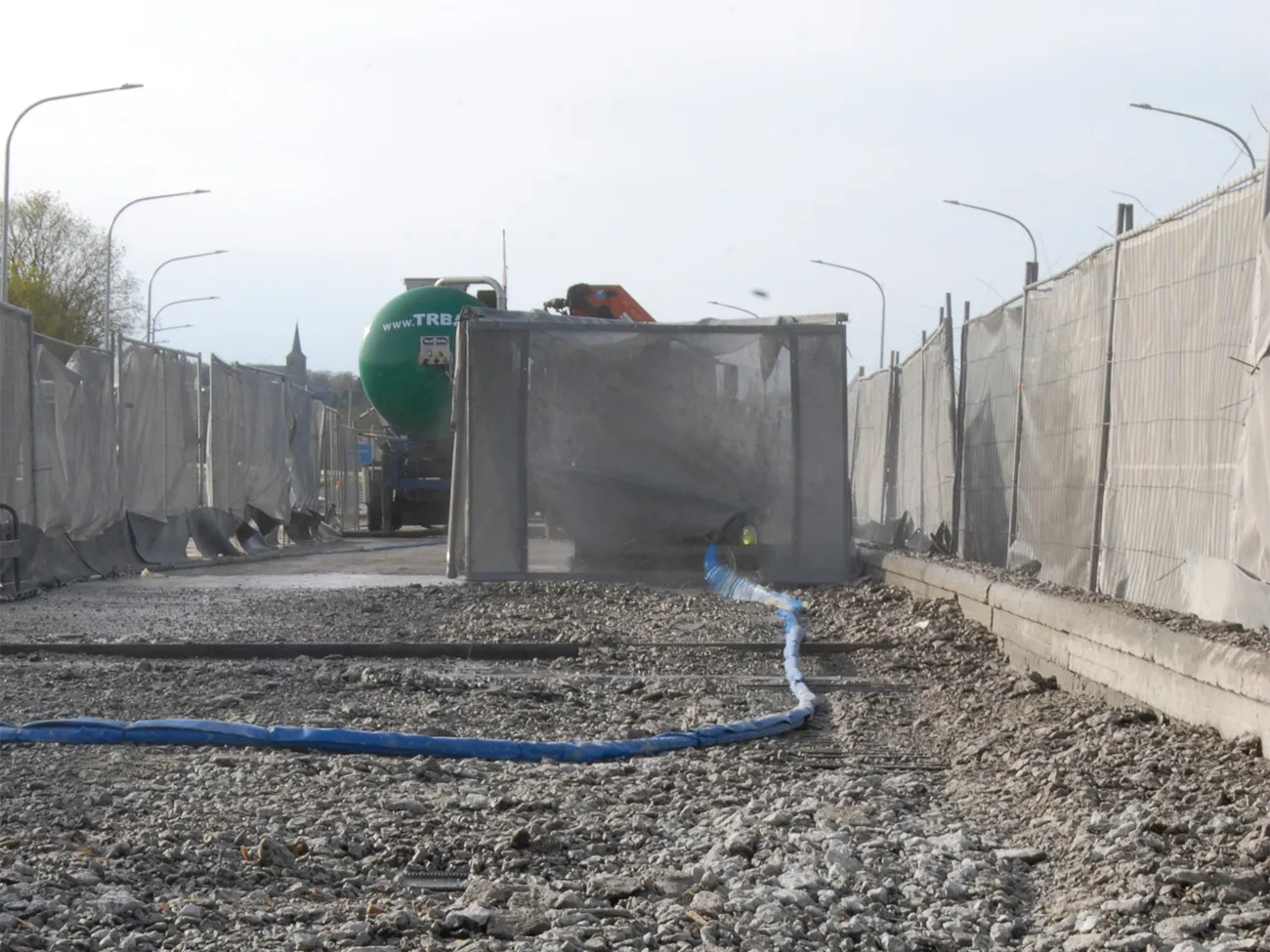
Most reinforced concrete road bridges in Belgium are showing their age. Refurbishing them calls for a specific technique that protects the reinforcement and sound concrete. Public works contractor TRBA has recognised this and equipped its Civil Engineering division with a machine unique in Wallonia, enabling powerful yet precise hydrodemolition.
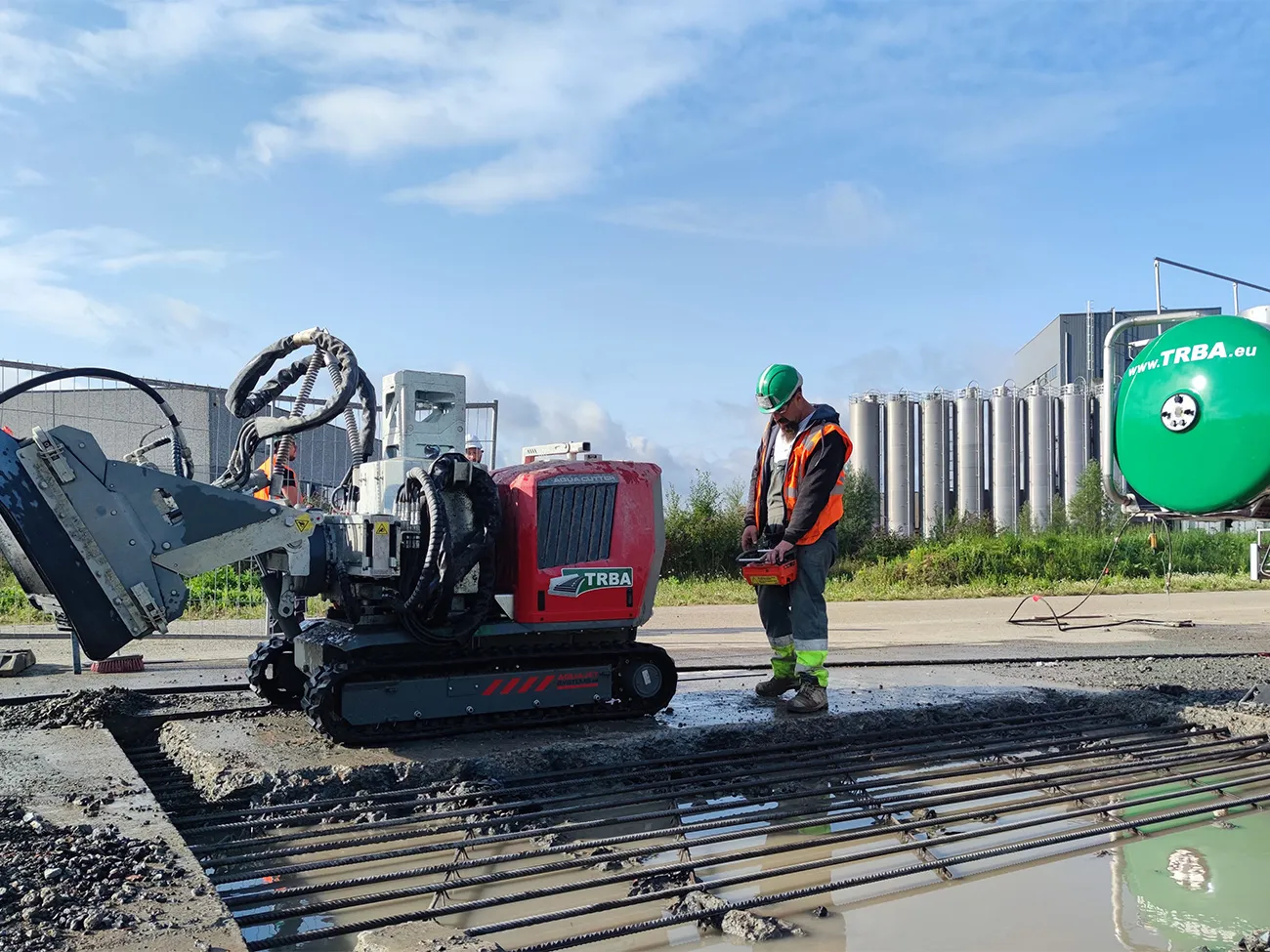
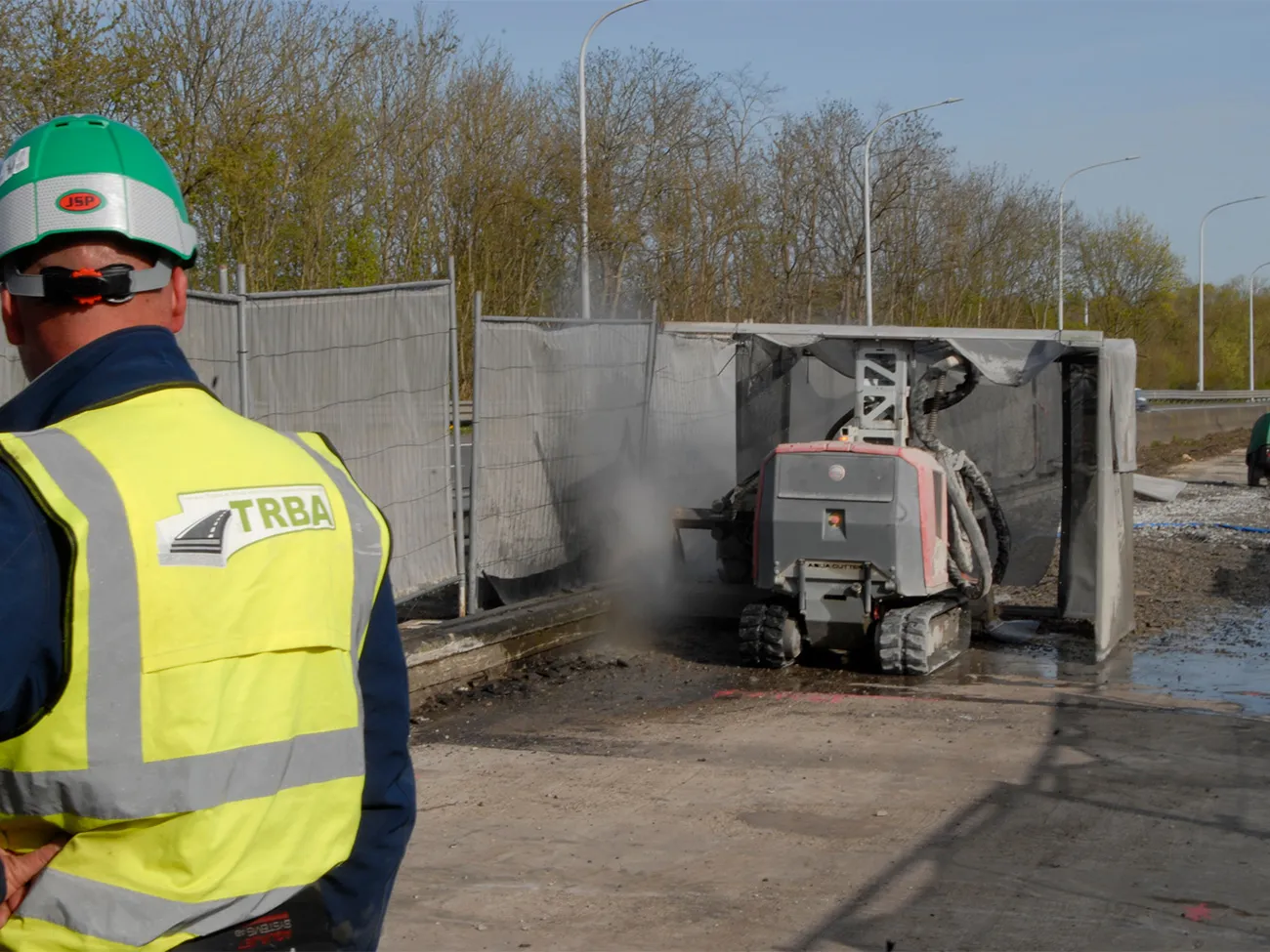
The Aquacutter 710 is a tracked robot with a programmable injection head, connected to a powerful compressor. It can deliver flow rates of up to 260 litres/minute at pressures of up to 2500 bar. Matthieu Merlevede, Project Engineer at TRBA, explains: « One of the main problems we encounter on bridges is the deterioration of the waterproofing beneath the deck’s asphalt surface. Water then comes into contact with the concrete, accelerating its deterioration. The work involves stripping the bridge deck by removing the surface layers and waterproofing, then repairing the upper part of the deck. »
Hydrodemolition
That is exactly what TRBA is currently doing at the Familleureux interchange and on the Pont de Conti on the A54 in Gosselies. The process involves injecting water at a precisely controlled flow rate and pressure to attack the concrete along its microcracks. Water penetrates the concrete surface and creates tensile forces, causing the concrete to break away. The advantage of hydrodemolition is that it does not damage the reinforcement at all. On the contrary, it cleans the bars before repair mortar or new concrete is applied. Matthieu Merlevede explains: « This technique is increasingly being specified for civil engineering structures because, unlike conventional demolition using an excavator and hydraulic breaker, it does not create microcracks in the rest of the structure. »
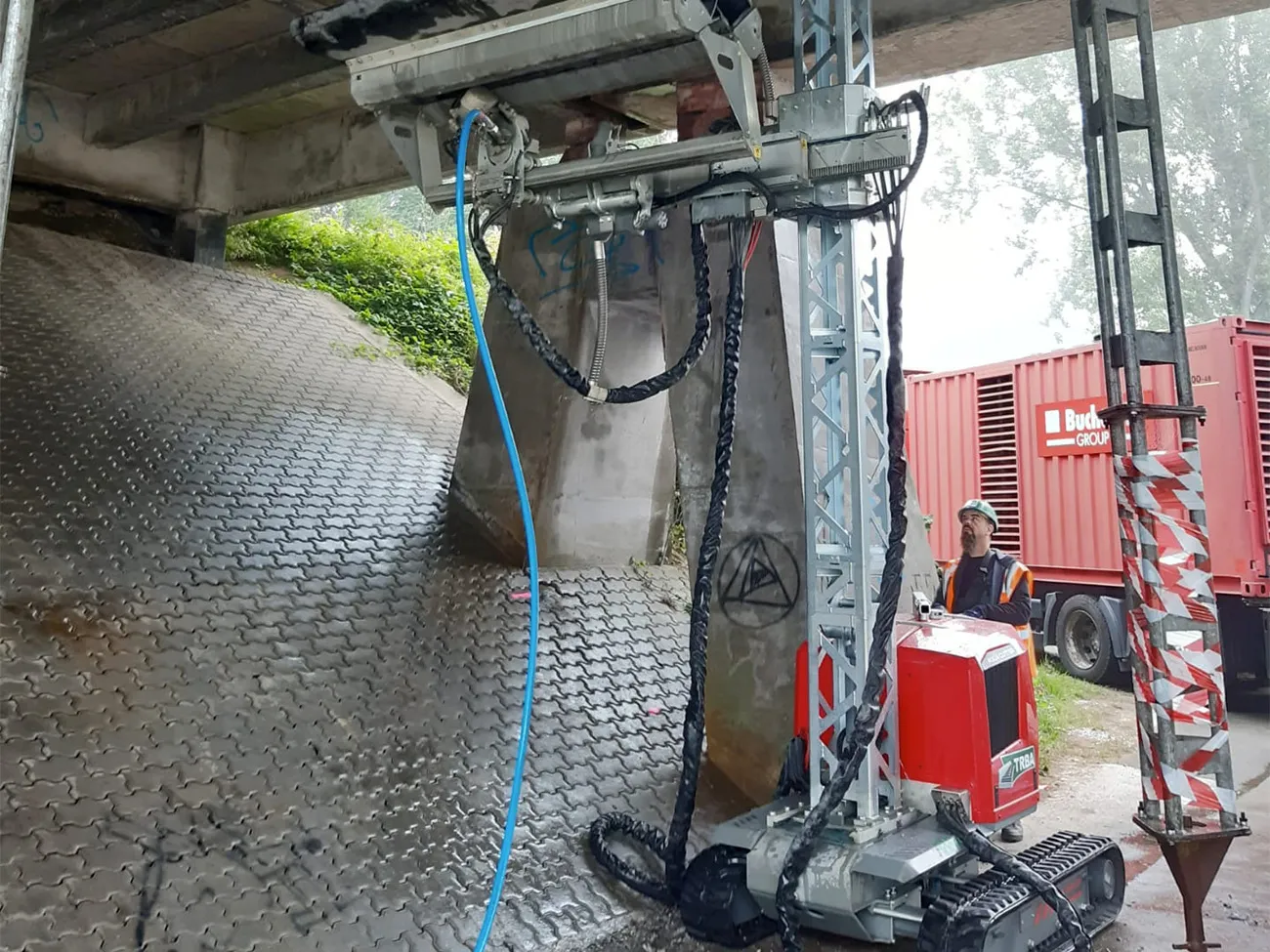
Where previously an operator would handle a high-pressure lance, the robot can work at a considerably higher pressure. Each project generally begins with half a day of testing to fine-tune the settings to suit the concrete being demolished. The operator then programs the robot with a set travel speed, as well as the flow rate and pressure, oscillation, brush speed, and so on. The operator starts the work and monitors it from a safe distance. The robot is also fitted with a mast that can reach 7 m in height, allowing it to hydrodemolish the underside of a bridge, a beam or a tunnel wall.
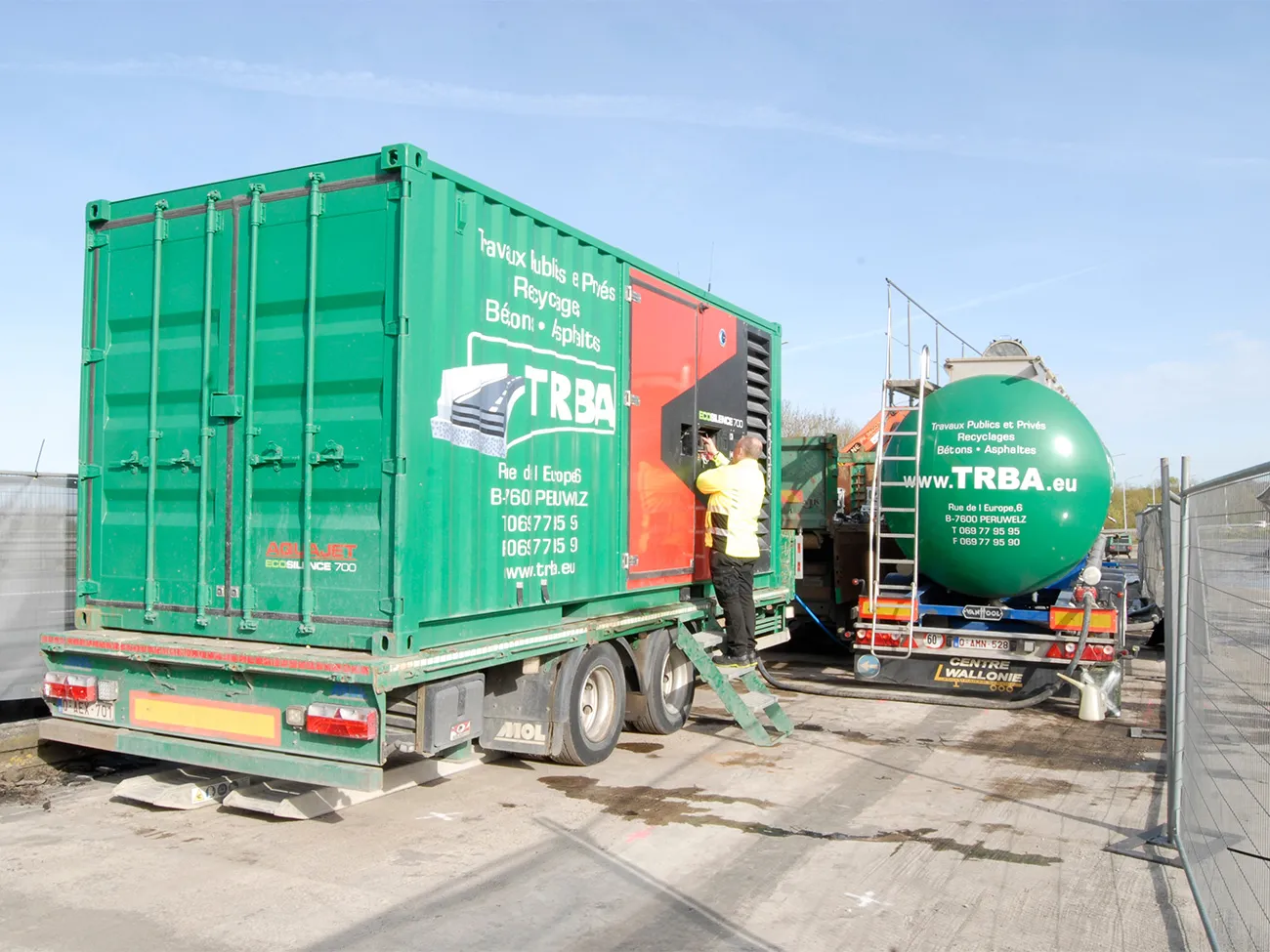
TRBA has also invested in specialist hydrodemolition tanks holding very clean water, free of impurities that could damage the system.
A wide range of applications
The first project on which TRBA used its Aquacutter was a national road where the continuously reinforced concrete pavement had been damaged by a vehicle fire. TRBA was able to remove the damaged concrete without touching the reinforcement, then pour new concrete, all without using a hydraulic breaker. For the client, this technique also saves time and money.
Hydrodemolition with the Aquacutter is also suitable for demolishing concrete walls without jeopardising the rest of the structure. It can even be used to create openings of a precise size and shape in a wall.
In-house and subcontracted projects
A pioneer in the field, TRBA bought the Aquacutter in Sweden, where several of its employees completed a training course lasting just over a week. An investment of this scale deserves to be used to its full potential. To offer a comprehensive service to its public- and private-sector clients, TRBA deploys the machine on its own projects. It also makes this unique technology available to other companies in the sector, carrying out hydrodemolition work for them as a subcontractor.
Question about this story? Ask your question
Keep following this
Get an email when a new story is published. No account needed.
- ThemeTransforming infrastructure and territories
- SubjectConcrete







