











Reducing the carbon footprint without compromising performance
Texte Philippe Selke Photos IA
Widely regarded as an essential material, yet a major source of CO2 emissions, concrete is now undergoing significant technological change. In Belgium, materials producers, research centres and construction companies are stepping up initiatives to reduce its environmental impact while preserving its mechanical properties. From new formulations and the use of industrial waste to carbon capture, the sector is accelerating its transition to more sustainable production.
Cement production is the main source of CO2 emissions associated with concrete. These emissions come both from the fuel burned to fire clinker and from the decarbonisation of limestone during the industrial process.
To address this challenge, Belgian producers are developing cements with a lower clinker content. These formulations incorporate more alternative cementitious materials, such as blast furnace slag, fly ash and certain limestone fillers. This approach significantly reduces production-related emissions while retaining the performance required for many construction applications.
Research centres are also continuing their work on new low-carbon binders that can partially or entirely replace clinker in specific applications.
The circular economy is gaining ground
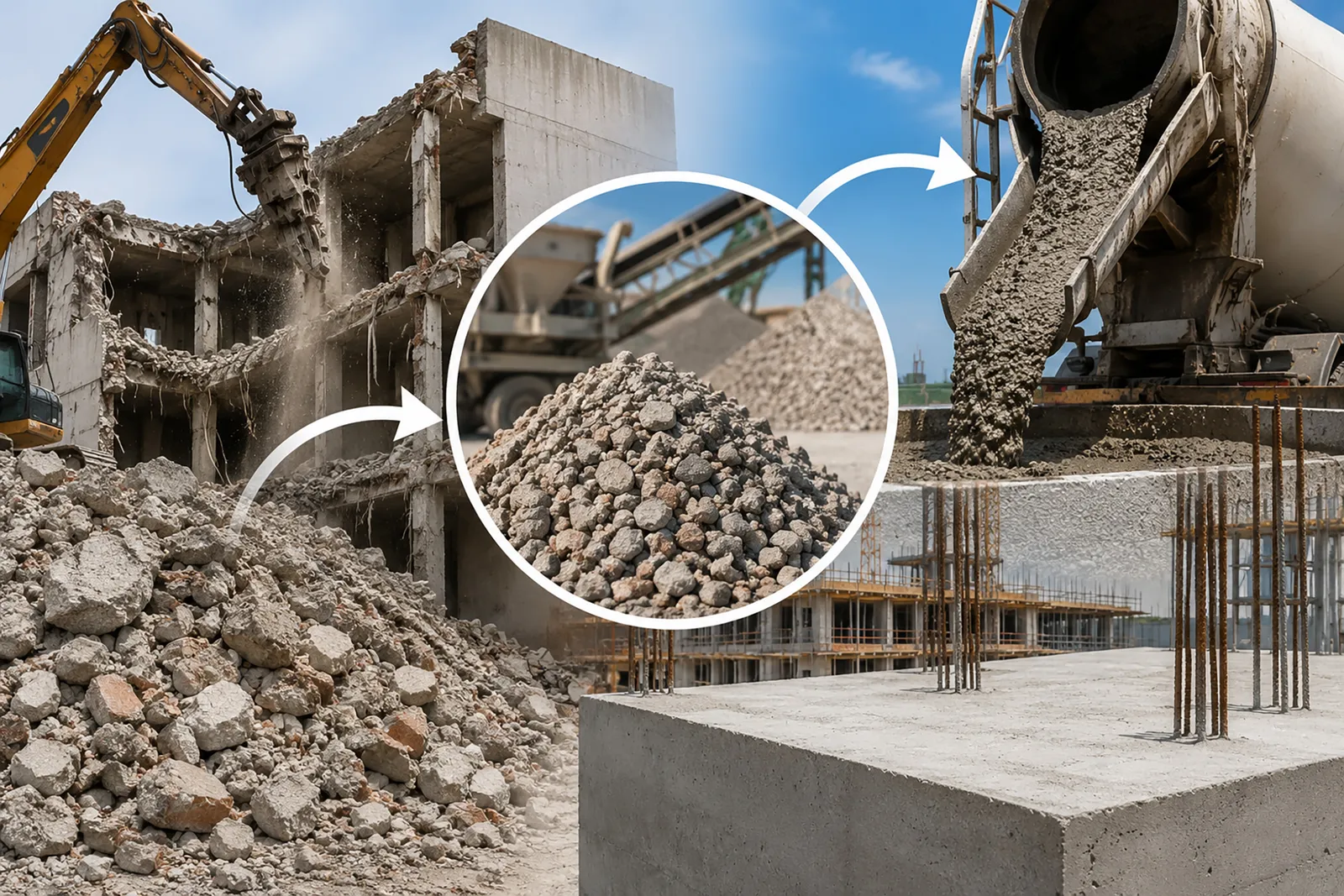
The incorporation of recycled materials is another major advance. Aggregates from building demolition are increasingly being used to make new concrete. This practice reduces the consumption of natural resources while limiting the volume of waste sent for disposal.
In Belgium, several projects have demonstrated that these solutions are technically viable on a large scale. The performance of recycled aggregates has improved considerably thanks to more effective sorting and treatment processes. Their use is still subject to controls to ensure the quality and durability of structures.
CO2 capture opens up new possibilities
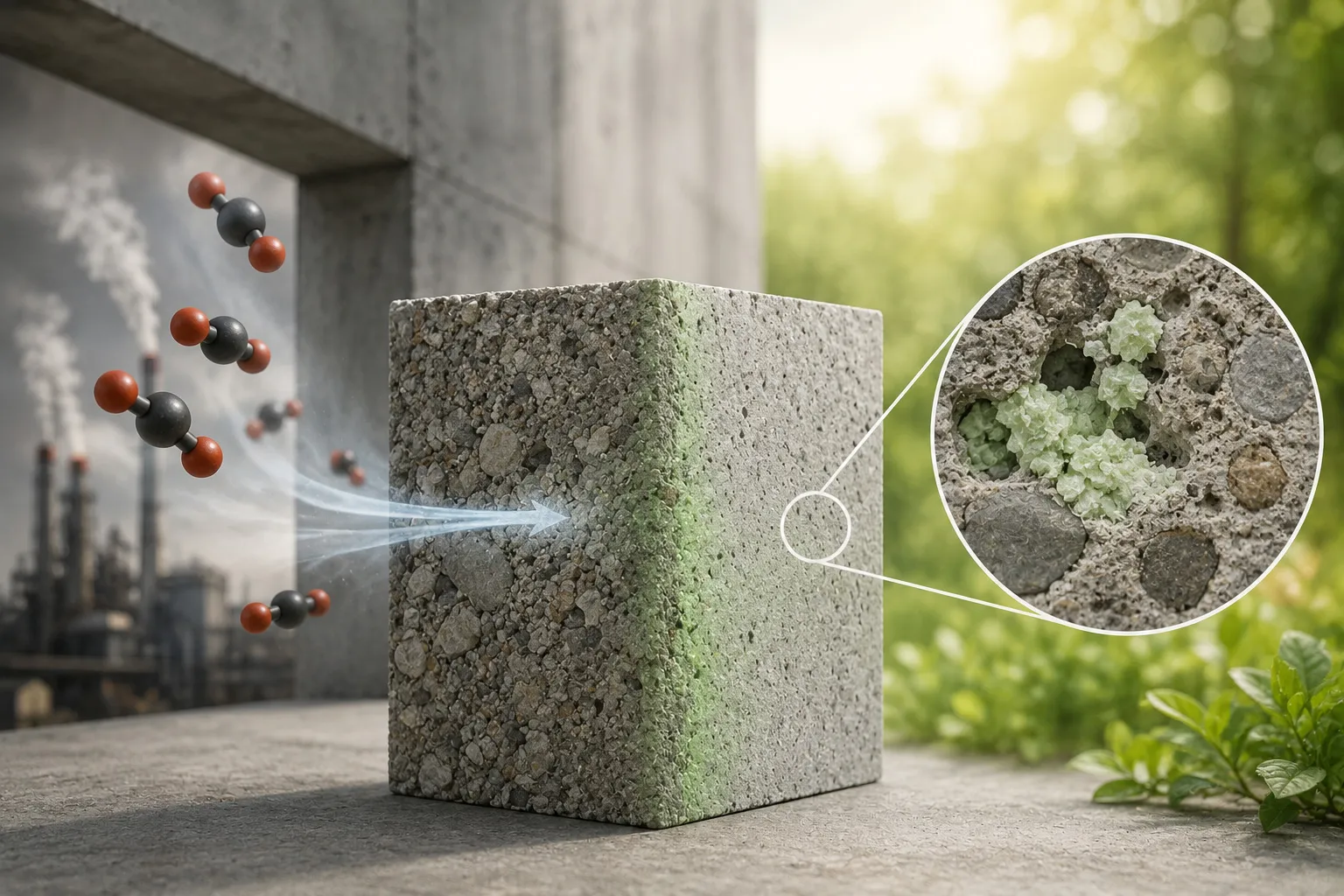
One of the most promising technologies is concrete carbonation. The process involves injecting carbon dioxide into certain precast elements or recycled aggregates. The CO2 is then trapped in the material in mineral form.
This technology offers two advantages. First, it enables some of the carbon to be stored permanently. Second, it can help improve certain properties of concrete. Several pilot projects are under way to assess the industrial potential of these solutions.
Meanwhile, major producers are investing in carbon capture and utilisation programmes at cement production sites. These projects could play an important role in meeting Europe’s climate targets by 2050.
Digitalisation supports environmental performance
The transition to more sustainable concrete is not based on materials alone.
Modelling technologies and data management platforms make it possible to optimise formulations according to the actual needs of construction sites. This approach limits the overuse of raw materials and reduces production waste.
In addition, life-cycle assessment is becoming an increasingly important criterion in the design of structures. Clients now have access to more precise tools for comparing different construction solutions based on their overall environmental impact.
A gradual but far-reaching transformation
Despite this progress, decarbonising concrete remains a complex challenge. The availability of certain alternative materials, regulatory constraints and technical requirements continue to influence the pace at which innovations are adopted.
As environmental regulations become more stringent and clients’ expectations evolve, sustainable concrete is gradually establishing itself as an essential part of the construction industry of tomorrow. More than a simple technological evolution, it represents a structural transformation of the sector’s entire value chain.
Question about this story? Ask your question
Keep following this
Get an email when a new story is published. No account needed.
- ThemeBuilding with less carbon
- SubjectConcrete







