Concrete that is naturally more sustainable, with no constraints
Texte Philippe Selke Photos Ets Ronveaux
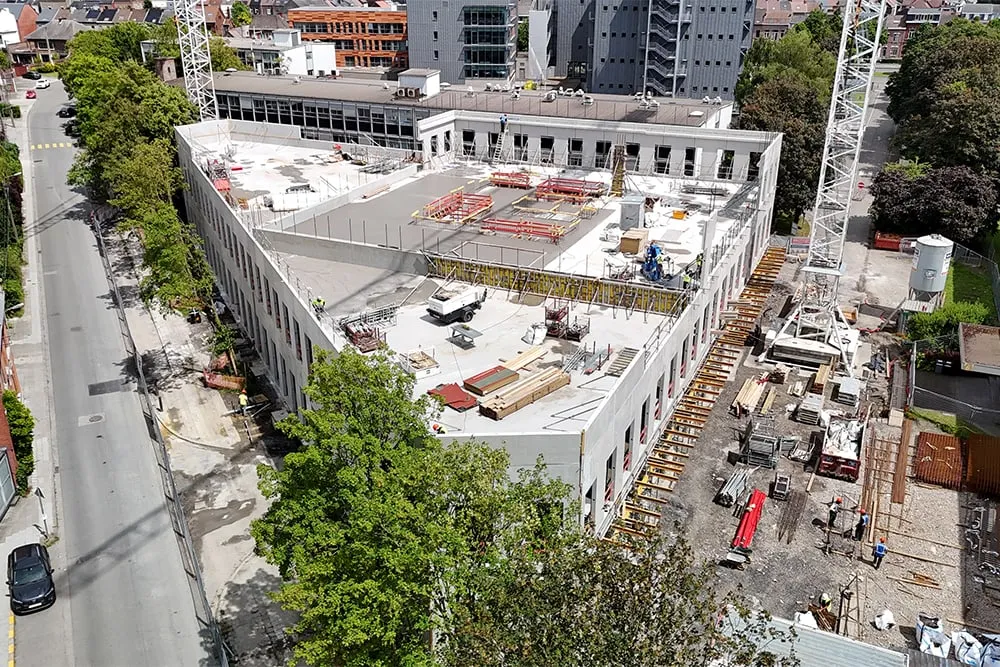
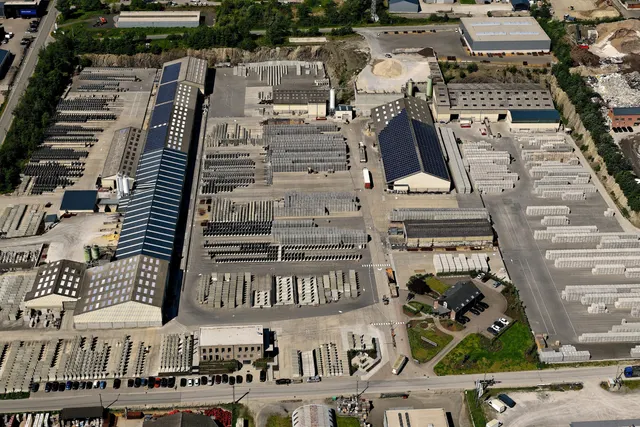
A Walloon leader in high-value precast concrete products, Etablissements Ronveaux is continually improving product quality to meet customer needs and keep pace with evolving environmental standards. The Ciney-based company is therefore ahead of the standards and tender requirements. It also takes a broader view of sustainability than simply reducing CO2 emissions.
Over the years, extensive in-house research has led to CEM I being replaced by other pozzolanic components, and to reductions in the company’s water and energy consumption (including through photovoltaic panels, which generate 40% of the company’s requirements). As a result, achieving C2C (Cradle to Cradle) Silver certification a few years ago came almost naturally. Jean-Baptiste Lansival, Technical Director of Ronveaux’s design office, says: «Rather than pursuing a green certification at all costs and communicating extensively about it, it was our sustained efforts to improve our products across the board that led to this certification.»
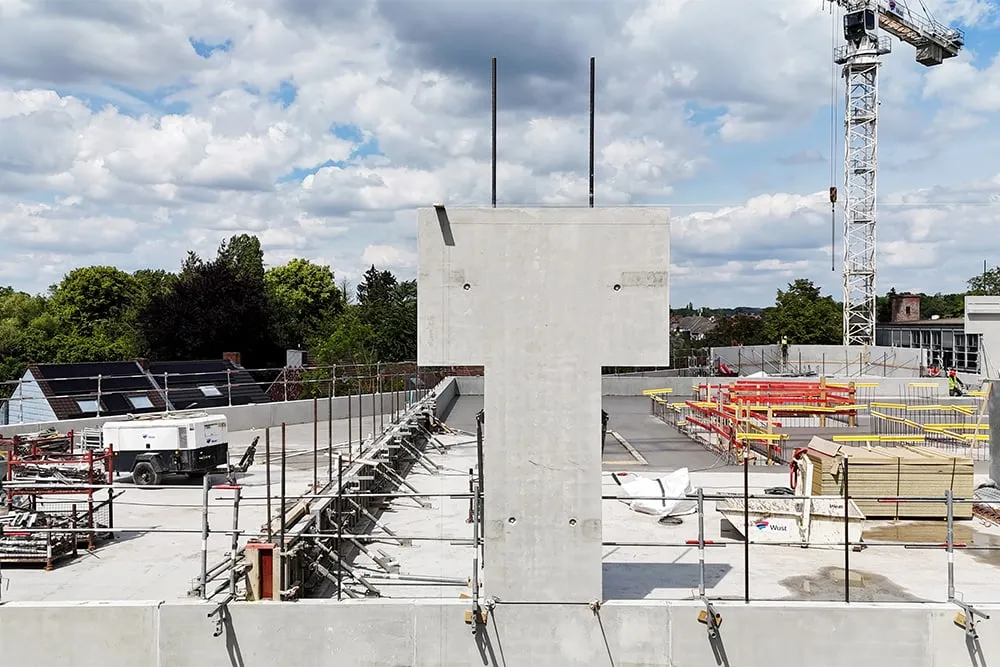
A holistic approach
The «Cradle to Cradle Certified Product Standard» is billed as the world’s most ambitious and widely applicable standard for designing and manufacturing products that enable a healthy, equitable and sustainable future. Products are assessed against five critical sustainability performance categories: Material Health, Product Circularity, Clean Air & Climate Protection, Water & Soil Stewardship, and Social Fairness. Each category is awarded a level: Bronze, Silver, Gold or Platinum. The product’s overall certification corresponds to the lowest level achieved in any of the five categories. More than a label based solely on CO2 emissions, C2C takes a broader view of sustainability, one that better reflects Ronveaux’s philosophy.
Decarbonisation and responsible use of resources
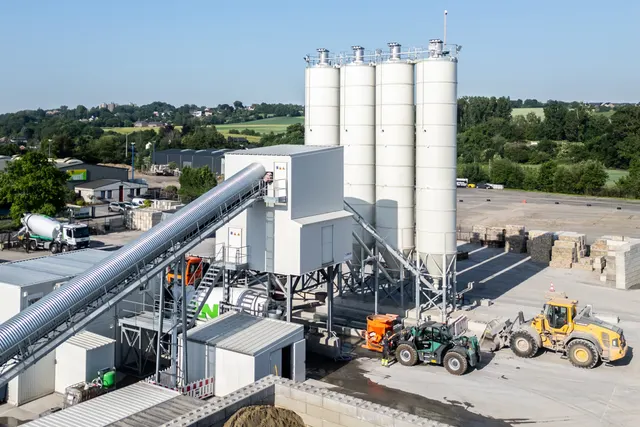
The Ciney-based company uses alternative cements to reduce the carbon footprint of its concrete: CEM II and CEM III. This has been standard practice at Ronveaux for several years. Simon Hanchir, Head of Testing and Quality, says: «For some reinforced concrete elements, we have switched to 100% CEM III, with no risk or restrictions under the applicable standards. This represents a reduction of almost 40% in CO2 emissions compared with CEM I.»
At Ronveaux, there is satisfaction at seeing things move in the right direction. Some tender specifications, for example, are changing to allow cements other than CEM I to be used in the manufacture of prestressed concrete elements, including for civil engineering structures.
Even the French market, where the Walloon company has a strong presence, seems to be moving in the same direction, no doubt encouraged by the Olympic spirit…
Ronveaux is also involved in research projects aimed at improving the sustainability of precast concrete. One such project focuses on using crushed sand and recycled gravel. The aim is to reduce consumption of natural materials and promote resource circularity.
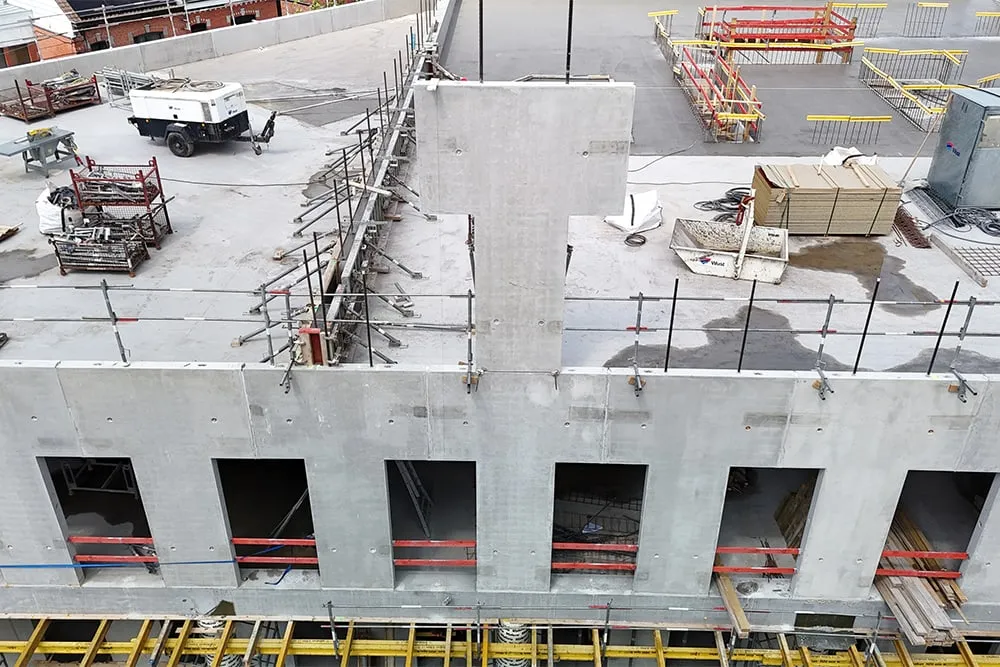
Built to last
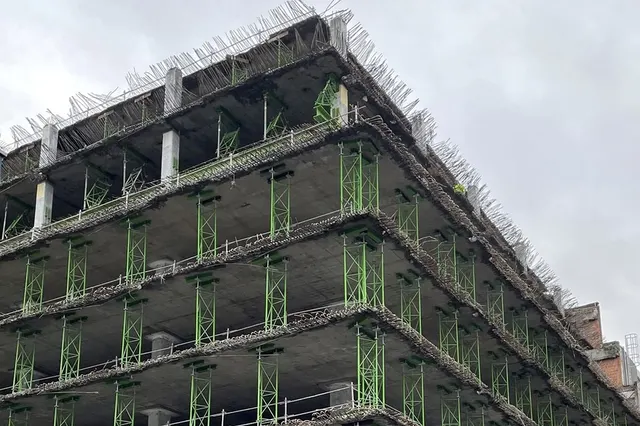
Jean-Philippe Debaty, Director of Design and Sales, takes a pragmatic view. «As well as improving concrete’s environmental impact by focusing on its most problematic component, namely cement, sustainability should be understood in the word’s original sense: the longevity of products and buildings. In Brussels and elsewhere, office buildings, and even industrial buildings, are increasingly being converted into residential developments. Without a quality concrete structure in the first place, it would not be possible to give these buildings a new lease of life.»
Similarly, the growing scarcity of river sand and its replacement with recycled sand is a long-term initiative, but one that currently appears to be recognised by no certification scheme, as these are based mainly on CO2 emissions.
Communicating about sustainability is therefore a delicate matter for a company, as sustainability can be assessed in many different ways. Ets Ronveaux has never sought to present itself as «greener» than its peers, even though the continuous improvement of its products has long led it to incorporate sustainable initiatives into its practices.
Wanty Group, which includes the Ronveaux subsidiary, is also a pioneer in this field. It will be making headlines again in the near future, notably with its new sorting centre. This will be the first time in Europe that different technologies have been brought together to recycle as many materials as possible. Watch this space.
Question about this story? Ask your question
Keep following this
Get an email when a new story is published. No account needed.
- SubjectConcrete