“Concrete remains the ultimate building material”
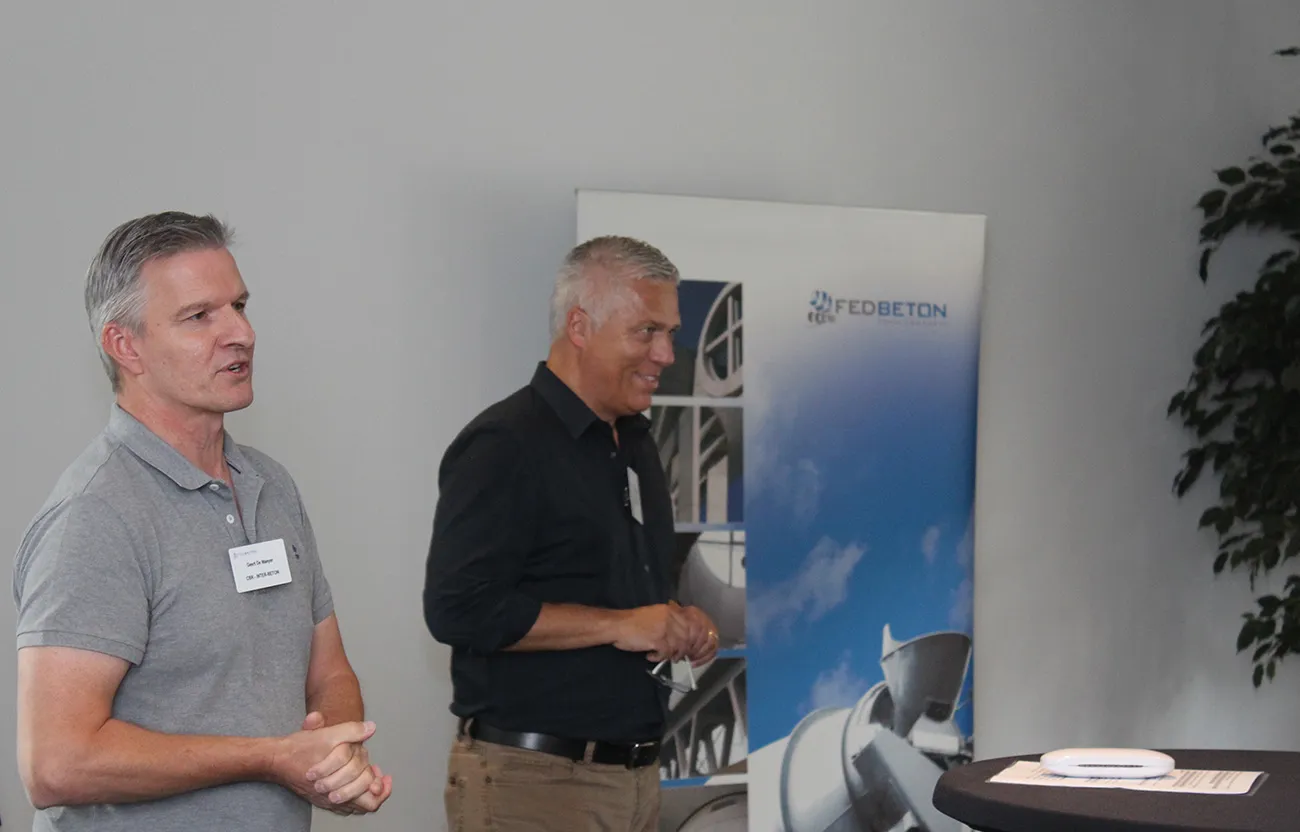
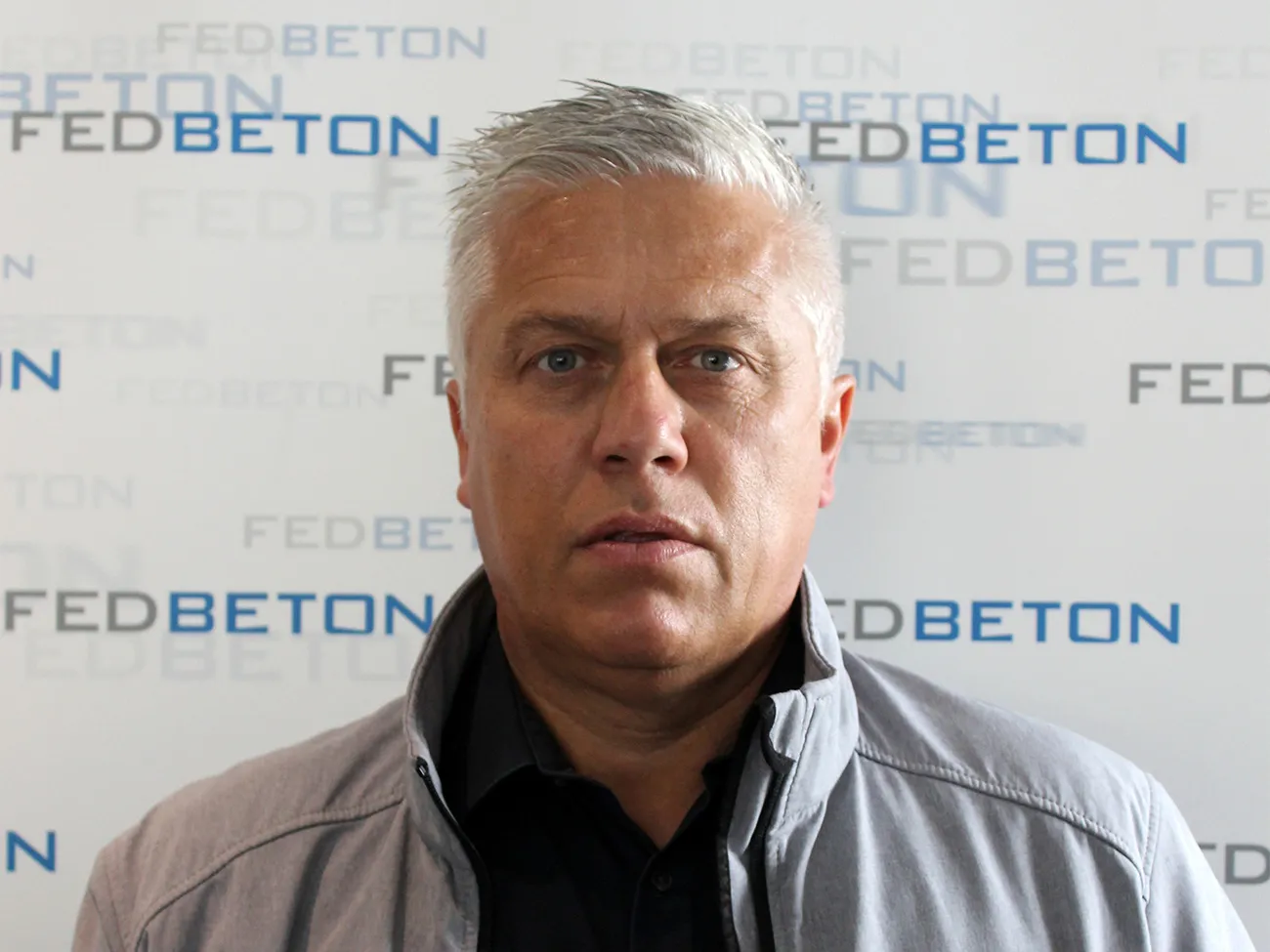
Digitalisation, staff shortages, sustainability and circularity. For Geert De Maeyer and Peter De Vylder, president and director of Fedbeton respectively, the concrete sector’s current challenges are clear. As a federation, Fedbeton is determined to play an active role in overcoming these obstacles. “Concrete’s sustainability, quality and versatility make it ideally suited to meeting any challenge,” says Geert De Maeyer.
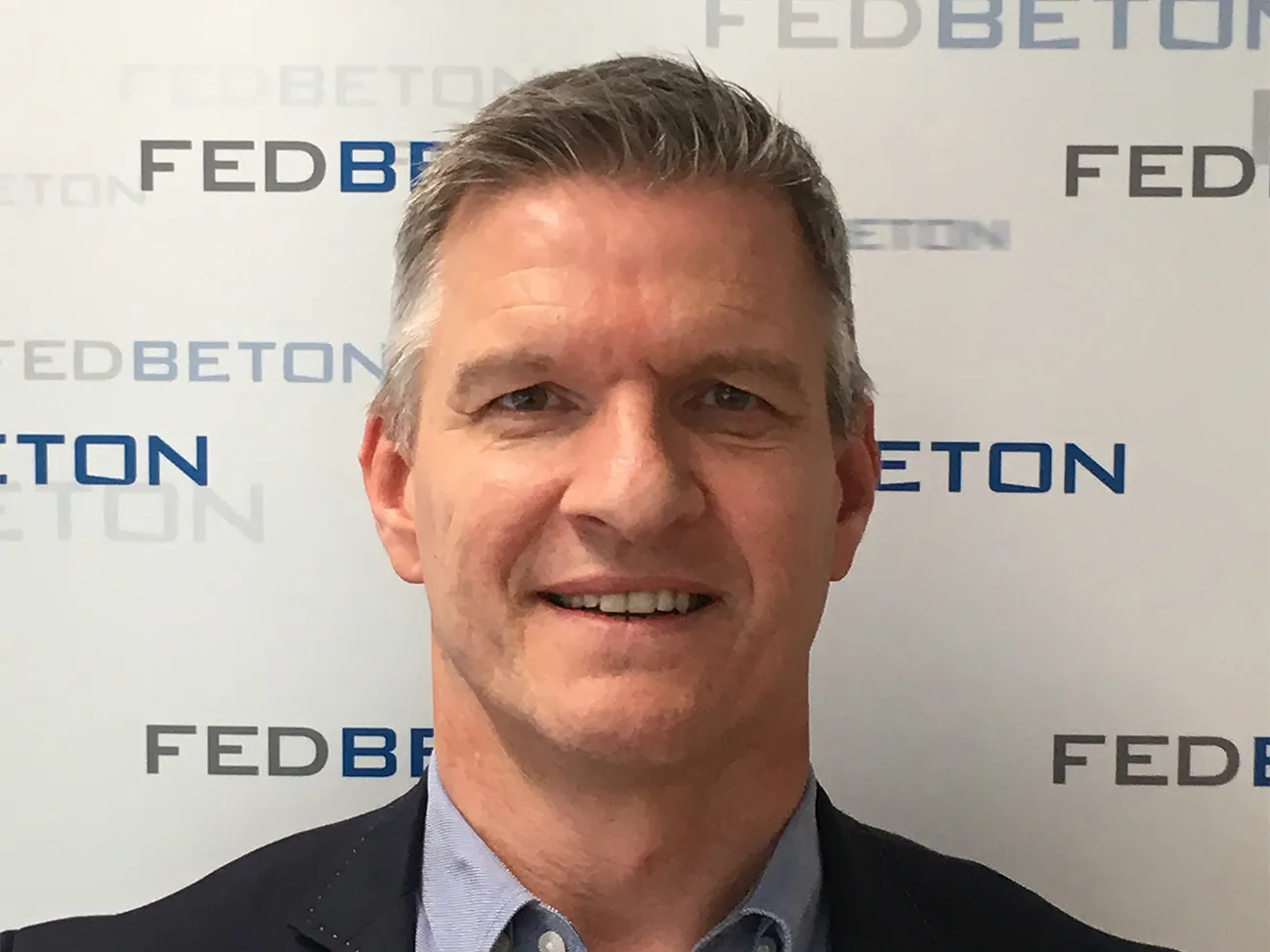
Fedbeton represents companies in the ready-mixed concrete production, transport and pumping industry. Geert De Maeyer, managing director of Inter-Beton since 2017, was elected president of Fedbeton in April 2021. As a board member and chair of Fedbeton’s Operations Commission, Geert De Maeyer knew the federation inside out and, as president, is determined to tackle the challenges ahead. Geert De Maeyer: “The construction sector in general, and the concrete industry in particular, are currently in transition. One of the first challenges we face is sustainability and circularity, an area to which we are fully committed as a federation. This applies not only to our members, but also to other stakeholders such as public authorities and contractors.”
CSC certification
Fedbeton is involved in a working group on circular construction in Flanders. “We are even a driving force within this working group,” says Geert De Maeyer. “Fedbeton also acts as a Regional System Operator (RSO) for the Concrete Sustainability Council (CSC) certification. This means companies can come to us for information and support with obtaining certification. CSC certification recognises not only how a company is organised, but also its commitment to social legislation and sustainability. By adding modules and making sustainability and circularity tangible, companies gain a much clearer understanding of the steps they need to take.”
Peter De Vylder adds: “We focus on the sector as a whole. So we look beyond ready-mixed concrete to include the cement and precast industries, sand quarries, aggregate quarries and so on. What’s more, concrete plants that work with CSC-certified suppliers can achieve higher scores and qualify for silver, gold or even platinum certification. More than 70 certificates have been awarded to date. This makes us the fastest-growing country per capita in the world.”
Inspiring young people
The second major challenge is a longstanding issue affecting the entire construction sector: replacing older workers with young people. Geert De Maeyer: “We are looking for workers at every level, from drivers to managers, who are interested in working in construction and concrete. We are running a number of projects with various organisations, including Constructiv, to showcase jobs in the construction sector. We will also hold a ‘safety day’ at a number of schools, focusing on blind spots. We bring in equipment such as concrete mixers for interactive exercises with students. In Sint-Niklaas, for example, 5,000 primary school pupils will learn about blind spots over five days.”
Peter De Vylder: “Our workforce is ageing significantly, and this is a real problem. Meanwhile, a lot is changing in terms of work-life balance, and we as a sector need to take that into account. We work in an industry that demands a great deal of flexibility from its employees, and that is becoming increasingly difficult. The sooner we can get boys and girls interested in construction, the better. We need to show young people how attractive the sector is.”
Digitalisation
As president, Geert De Maeyer also wants to focus on a third key area: digitalisation. Geert De Maeyer: “At Inter-Beton, we recently appointed a new sales director, who was extremely surprised by the digital progress being made in the concrete sector. We are gradually shedding the image of a conservative construction sector. Concrete production in particular involves a great deal of innovation and a complex recipe. However, there is still plenty of room for progress in reducing administrative work through digitalisation. The administrative burden on both customers and concrete plants needs to be eased.”
As a product, concrete remains the ultimate building material for supporting and accommodating population growth and modernisation. Geert De Maeyer: “But the way we build is changing. People are moving back to cities, and renovation in urban centres is needed. The energy transition is also driving us to build more energy-efficiently. Concrete’s sustainability, quality and versatility make it ideally suited to this.” Peter De Vylder agrees: “Concrete is and remains a top-quality product, with major advantages in terms of recycling, circularity, fire safety and its range of applications. Properly used, concrete is a very durable material with an exceptionally long service life. And that is something everyone, producers and contractors alike, must continue to ensure.”
Question about this story? Ask your question
Keep following this
Get an email when a new story is published. No account needed.
- ThemeBuilding with less carbon
- SubjectConcrete