











Concrete, a considered and sustainable choice, backed by evidence
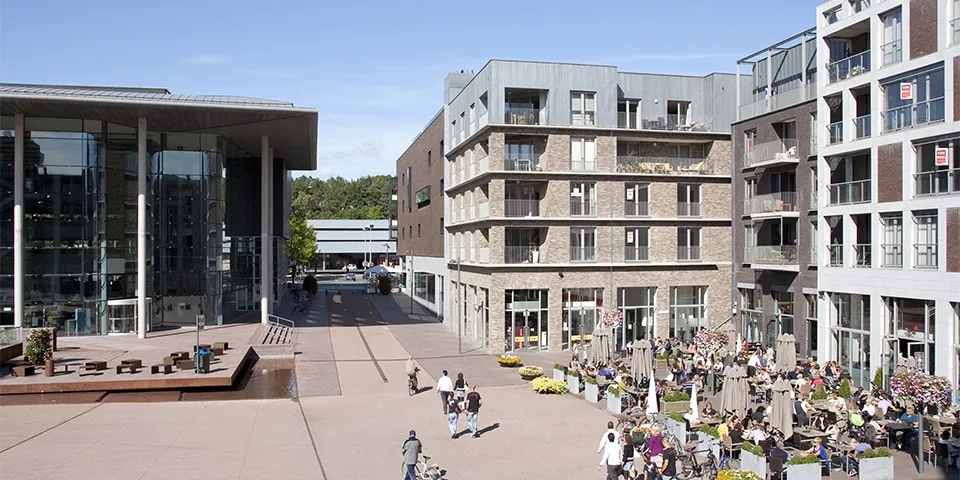
In response to demographic change, we need to build ever more homes, and ever taller ones. At present, there is no alternative to concrete that can meet this major challenge, particularly when it comes to building the many structures essential to the proper functioning of our society: water infrastructure, civil engineering structures, buildings, etc.
It is therefore unrealistic to stop building with concrete, whether in Europe or elsewhere in the world, where demographic growth is greatest. Efforts to reduce CO2 emissions must focus on the manufacture of the material itself, particularly its most energy-intensive component: cement.
The cement industry is actively helping to reduce CO2 emissions. By using alternative fuels and substitute primary and secondary raw materials, the industry is investing to minimise its environmental impact. This impact should not, however, be measured solely in terms of CO2 emissions during production. The entire life cycle of a building or structure must be considered.
A practical application of the new TOTEM tool
At the request of FEBELCEM, the University of Leuven (KUL) applied the TOTEM tool to a terraced house and an apartment building. The TOTEM library used as the basis for the modelling contains various combinations of materials for floors, roofs, façades (including windows) and internal walls.
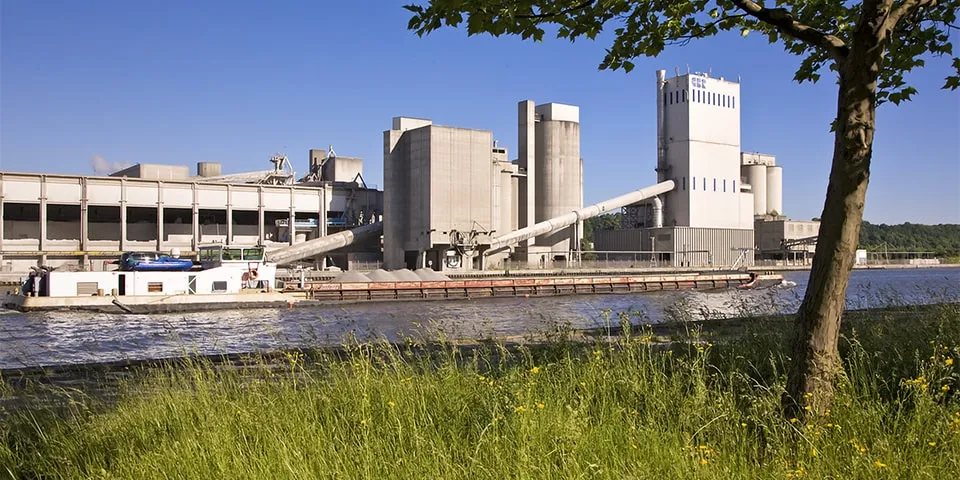
The CBR plant in Lixhe, Visé. (Photo: CBR)
For the terraced house, three construction methods were compared: brick, concrete and timber frame. The difference in environmental costs between the three options proved insignificant, at less than 5%. Concrete came between brick and timber frame. On average, 85% of the environmental cost comes from materials and 15% from energy consumption during the use phase. It should be noted, however, that the current version of TOTEM does not yet allow the benefits of thermal mass to be taken into account.
For the apartment building, too, three construction options were compared: steel, concrete and CLT (‘cross laminated timber’). On average, materials account for around 90% of the environmental impact, while energy consumption during the use phase accounts for 10%. However, there are clear differences between the three options, particularly in terms of environmental costs during the production phase. For concrete, these are almost half those for steel and almost 30% lower than those for CLT.
The TOTEM studies provide objective confirmation that concrete is sustainable and performs very well compared with competing construction materials. With this tool, Belgium is one of Europe’s pioneers in promoting the use of life cycle assessment (LCA) in the construction sector, and in objectively assessing and reducing its environmental impact.
Question about this story? Ask your question
Keep following this
Get an email when a new story is published. No account needed.
- SubjectConcrete







